
01A CLEARER CASTING PURCHASE
ADI Support Brackets with Finished Connections
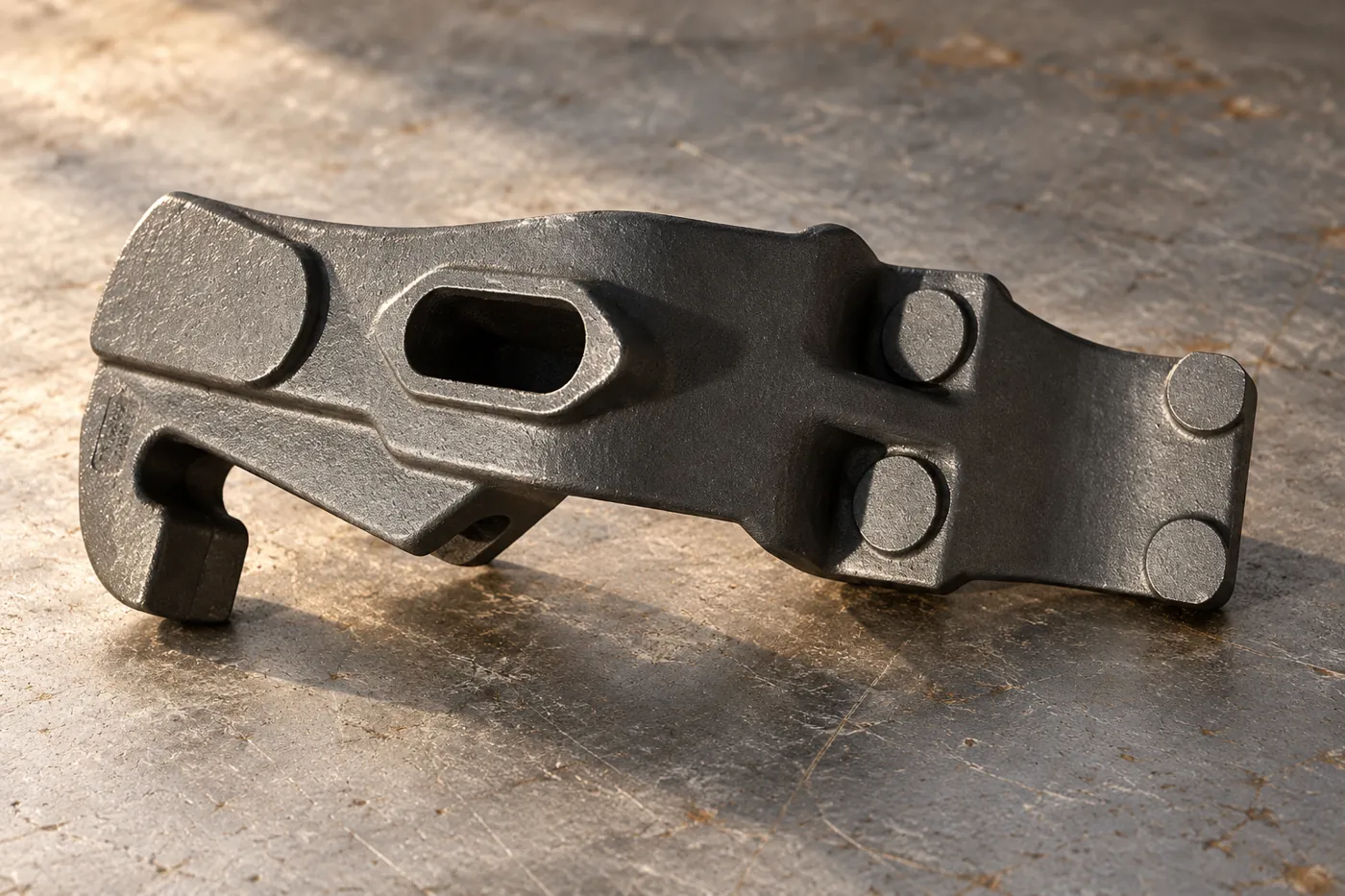
Buy an ADI bracket as a material condition and a usable connection together. Relia supplies austempered ductile-iron support parts, including brackets, rods and plates for machinery applications. Identify the working loads, local sections and finished pads or holes. The casting, treatment and machining proposal should preserve those interfaces, with sample and material evidence supporting your acceptance of the selected component.
- Material
- Selected ADI grade
- Connection
- Pads, holes + datums
- Sequence
- Treat + finish + inspect
02A CLEARER CASTING PURCHASE
Translate the bracket’s load path into features
Relia’s ADI component offering connects our casting and machining scope with the selected treatment condition. The design’s grade and local section requirements determine the proposal; a generic ductile-iron label does not establish the requested ADI properties.
Show where forces enter and leave the bracket, how bolts or pins transfer them and which faces bear against the surrounding structure. Include the relevant load cases and allowable movement from the design requirement. A mounting pad, opening and rib can have different structural roles even within the same casting. Those roles help identify the dimensions and material evidence needed for acceptance. They also show which regions may be considered for manufacturing changes without altering a fixed connection or the intended structural behaviour.
03A CLEARER CASTING PURCHASE
Select a complete ADI requirement
Austempering changes the ductile-iron matrix, and its time/temperature choices influence the resulting material properties. Specify the governing grade and required condition rather than order only “ADI” or select by appearance. Our ADI listing is customized to the component drawing. For the order, identify the required mechanical properties and any hardness or microstructure evidence, using the applicable specification and test basis. This lets the treatment proposal address the actual bracket rather than apply an undefined high-strength label to every support part.
| Material requirement | Useful order definition |
|---|---|
| Grade and document | Complete ADI designation and governing edition. |
| Delivered condition | Required austempered state of the ordered component. |
| Property evidence | Specified mechanical/hardness/microstructure requirements as applicable. |
| Sampling basis | How the results represent the supplied bracket and treatment group. |
04A CLEARER CASTING PURCHASE
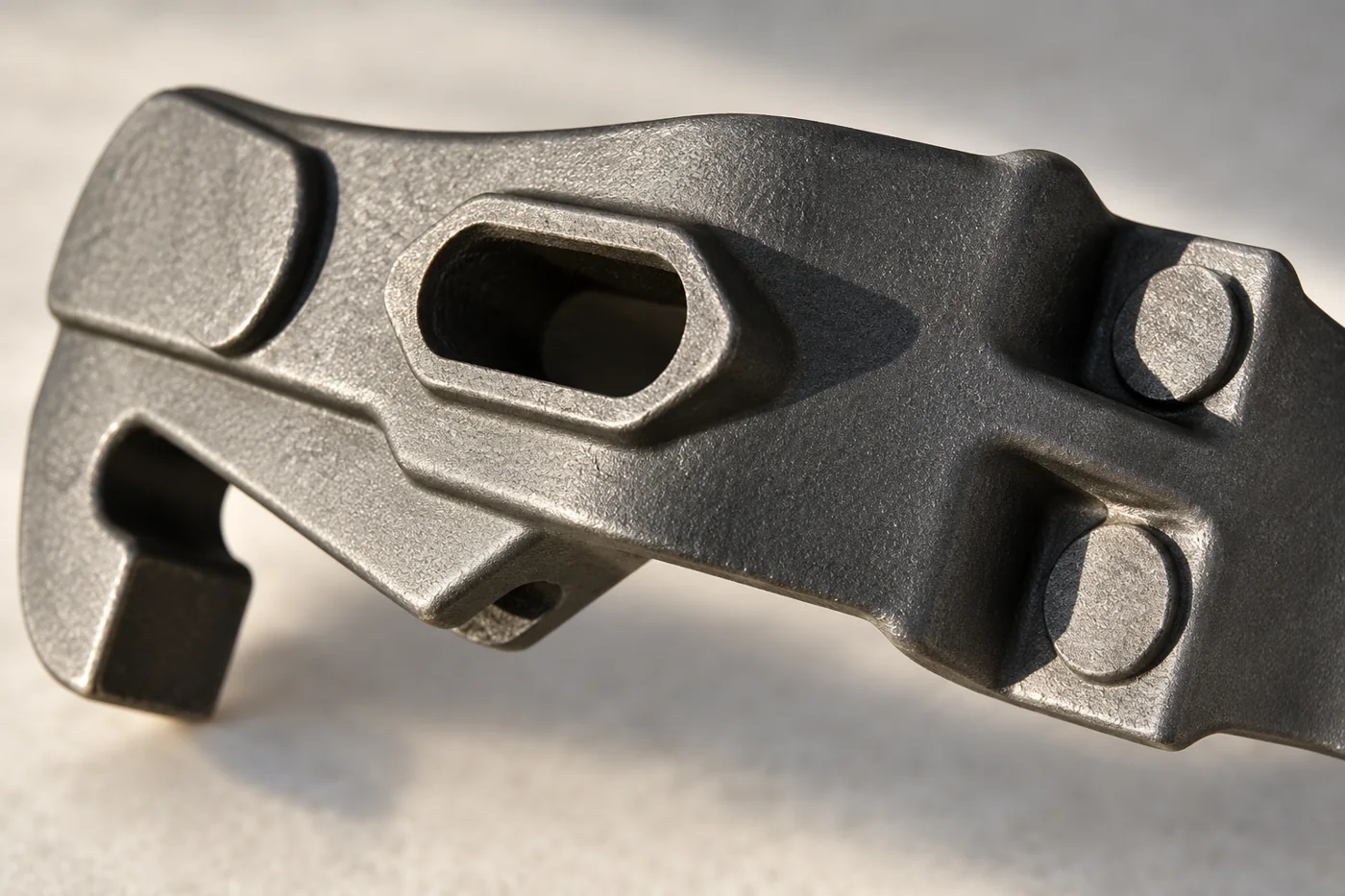
Review the thick pad and thin rib together
The bracket’s local sections affect the proposed casting and treatment route, so show their actual geometry instead of quoting an overall envelope alone. A thick connection pad and a slender rib need to be considered as one component. Identify critical regions and any permitted changes, then agree how the selected material condition will be evidenced. The purpose is to connect the grade requirement to the real bracket and its acceptance basis, not assume that a small external test piece describes every local condition without interpretation.
05A CLEARER CASTING PURCHASE
Plan machining around the treatment transition
Compare which operations can be completed before austempering and which interfaces need their final acceptance after the treatment sequence. Published ADI process development includes machining, austempering and finishing as connected stages; the actual allocation must suit your bracket. Pre-treatment work can establish useful geometry, while later finishing can address the required delivered interface. Define the local stock and datum continuity so a treatment-related dimensional change does not leave a finished pad or hole without a credible completion plan.
- 01Cast and prepareProduce the selected ductile-iron blank and required stock.
- 02Initial machiningCreate the planned references and features before treatment.
- 03AustemperApply the specified ADI treatment and material evidence scope.
- 04Finish interfacesComplete nominated pads, holes and fits in the required condition.
- 05AcceptCheck material and dimensions against the final bracket definition.
06A CLEARER CASTING PURCHASE
Use material and dimensional evidence for different decisions
A material result supports the specified ADI condition; a dimensional report supports the finished connection geometry. Keep both linked to the component, with a clear sample or test-piece arrangement for the material evidence. ASM’s treatment guidance shows why the treatment parameters matter to the result, but the supplier record should report the requirements actually specified for your order. A hardness value alone should not be asked to establish every design property, and a correct bore reading does not establish the selected heat-treated material.
07A CLEARER CASTING PURCHASE
Make the joint fit in the final supplied condition
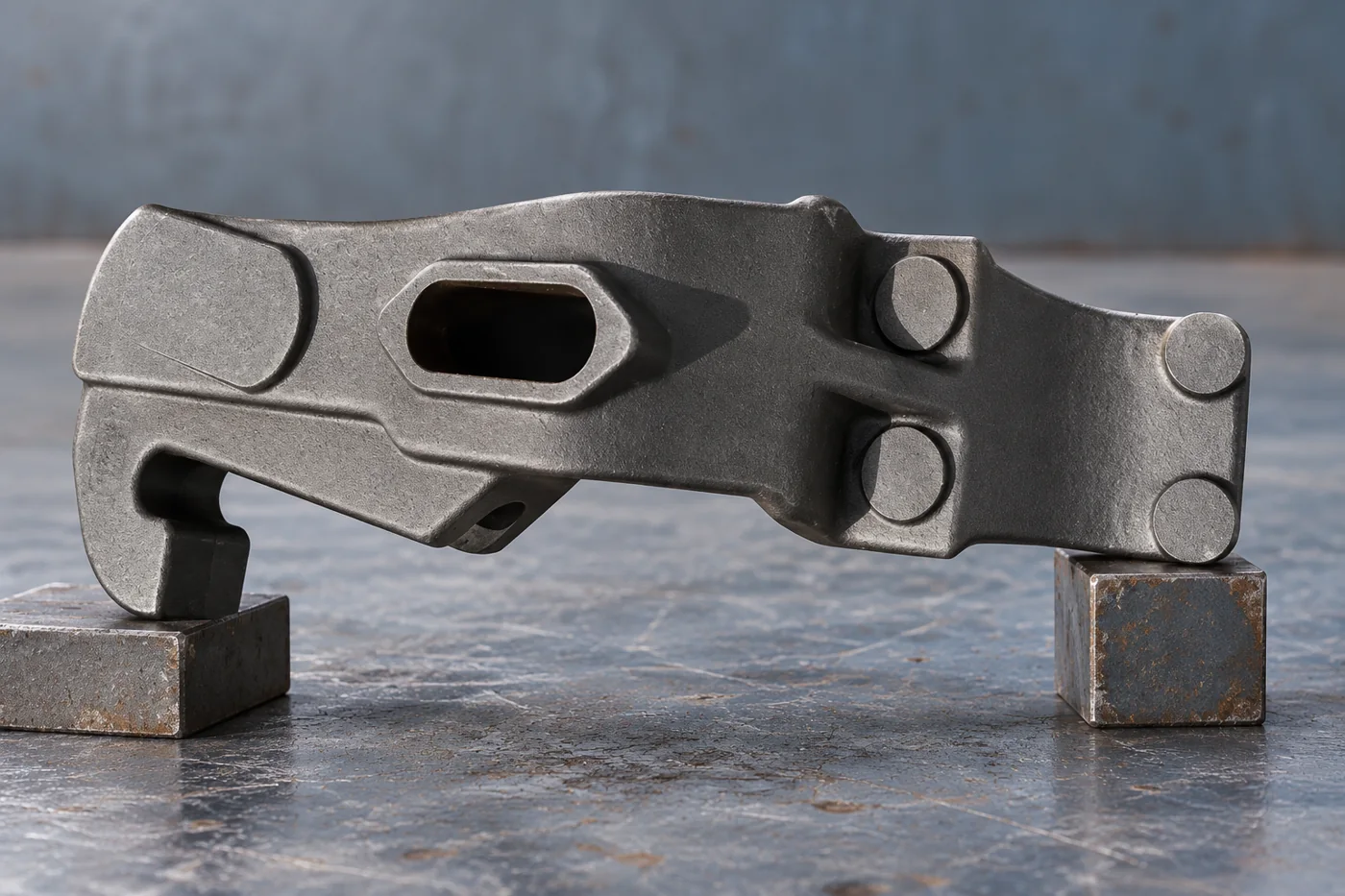
The bracket may fit its outer envelope while a pad or pin interface still needs a tighter relationship. Define the features that locate and secure the connection, including face contact, hole size and relative position. State the condition in which those relationships are accepted after the agreed treatment and finishing sequence. This lets the manufacturing proposal preserve the joint’s purpose, rather than optimize an easy outside dimension while the loaded connection remains insufficiently defined.
08A CLEARER CASTING PURCHASE
Approve the prototype with linked material identity
The prototype package should identify the casting, material requirement, treatment evidence and finished-feature results together. Your engineering team can then complete the specified assembly or duty validation on a part whose supplied state is known. If a finding changes the pad geometry, material grade or machining sequence, identify which evidence needs to be repeated. A first approval becomes useful for repeat supply when it describes the bracket and route actually accepted, including any limits on a temporary concession.
- 0101Release the bracket drawing, ADI grade and final connection requirements.
- 0202Define treatment representation and material verification.
- 0303Review finished geometry and complete the required assembly/duty evaluation.
- 0404Release the accepted revision and manufacturing/inspection scope.
09A CLEARER CASTING PURCHASE
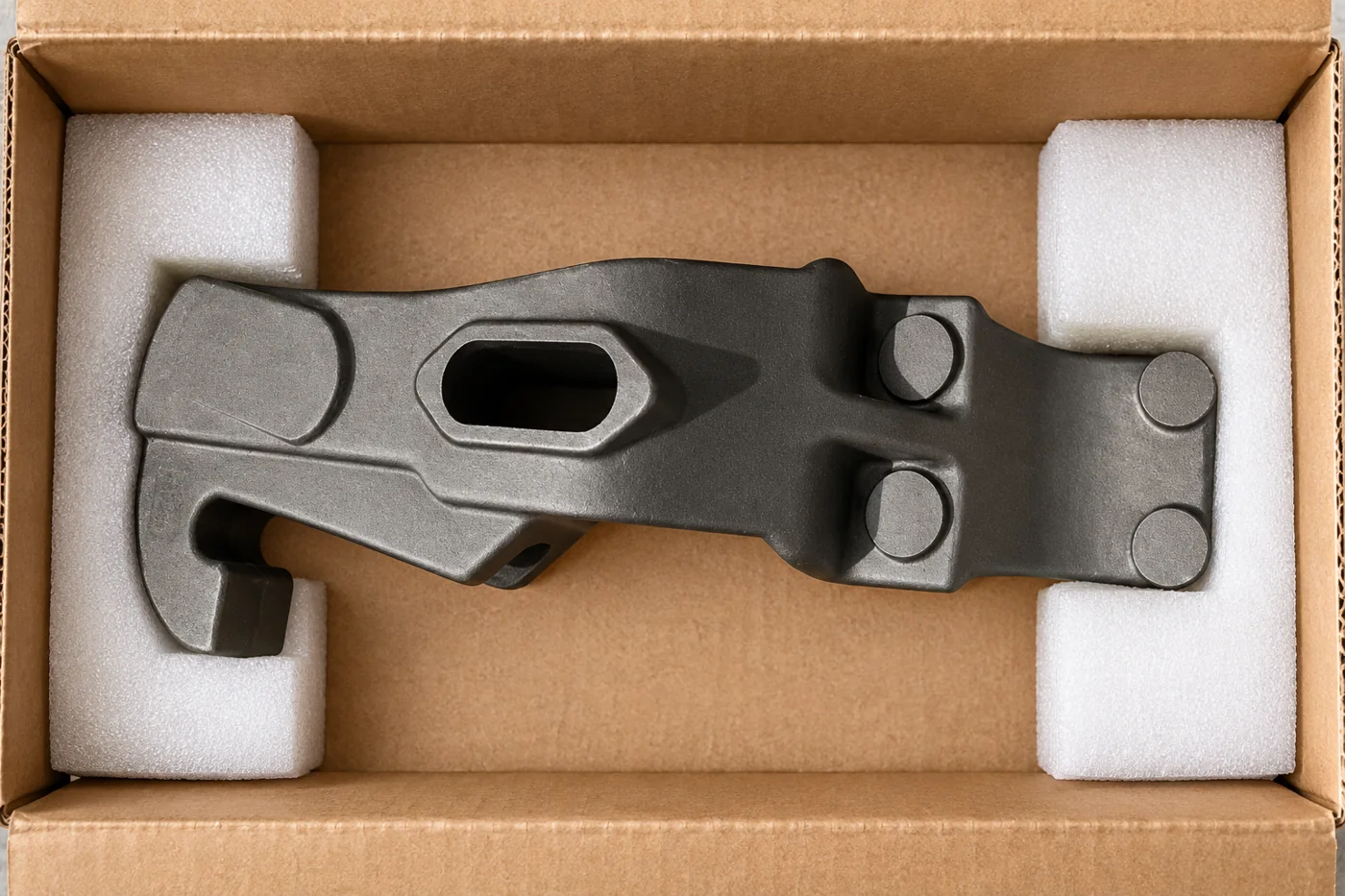
Protect the surfaces that carry the connection
Support the bracket through robust regions and keep packing loads away from finished pads or thin edges. Protect the holes and contact faces in a condition your receiving team can inspect and prepare for assembly. Keep the part identity with the relevant records after unpacking, especially where samples and repeat components travel together. The packing brief should preserve the material-and-geometry decision made during development rather than introduce contact damage at the joint before the part is used.
10A CLEARER CASTING PURCHASE
Request an ADI bracket with a defined process decision
Send the bracket drawing and model, the full ADI requirement and the relevant duty inputs. Identify the finished joint features and the evidence needed to approve material and geometry. We can then develop the casting, treatment and requested machining scope around the actual component. Your quotation can show a meaningful process sequence and sample package, supporting a purchasing decision based on the specified bracket rather than an unqualified general claim of high-load capacity.
11 YOUR NEXT STEP
Bring your component into the conversation
Tell us which component you need, the material, quantity and required supplied condition. Relia will connect your enquiry with the casting, machining and evidence relevant to that part.
Technical reading and scope
Technical references explain the process. Component specifications and agreed order records define the actual supply.
Austempering Temperature and Time — ASM InternationalEngineering Components from ADI — CSIR-CMERI- [email protected]
- Phone
- +86 18561762631
- +1 404 203 0971
- Company and address
- Qingdao Relia Industries Co., Ltd.
Shuyuan Road, Qingdao, Shandong, China