
01A CLEARER CASTING PURCHASE
Harvesting Connecting Rod Castings
Connect the mechanism’s motion and loads with a defined cast link. Relia offers coated-sand iron casting enquiries for harvesting machinery and connecting-rod parts, with samples and stated component inspection. Resolve the selected material reference, end connections and supplied condition on the drawing. The sample can then be measured and evaluated in the intended mechanism.
- Process
- Coated-sand casting
- Define
- Grade + link geometry
- Approve
- Sample + component inspection
02A CLEARER CASTING PURCHASE
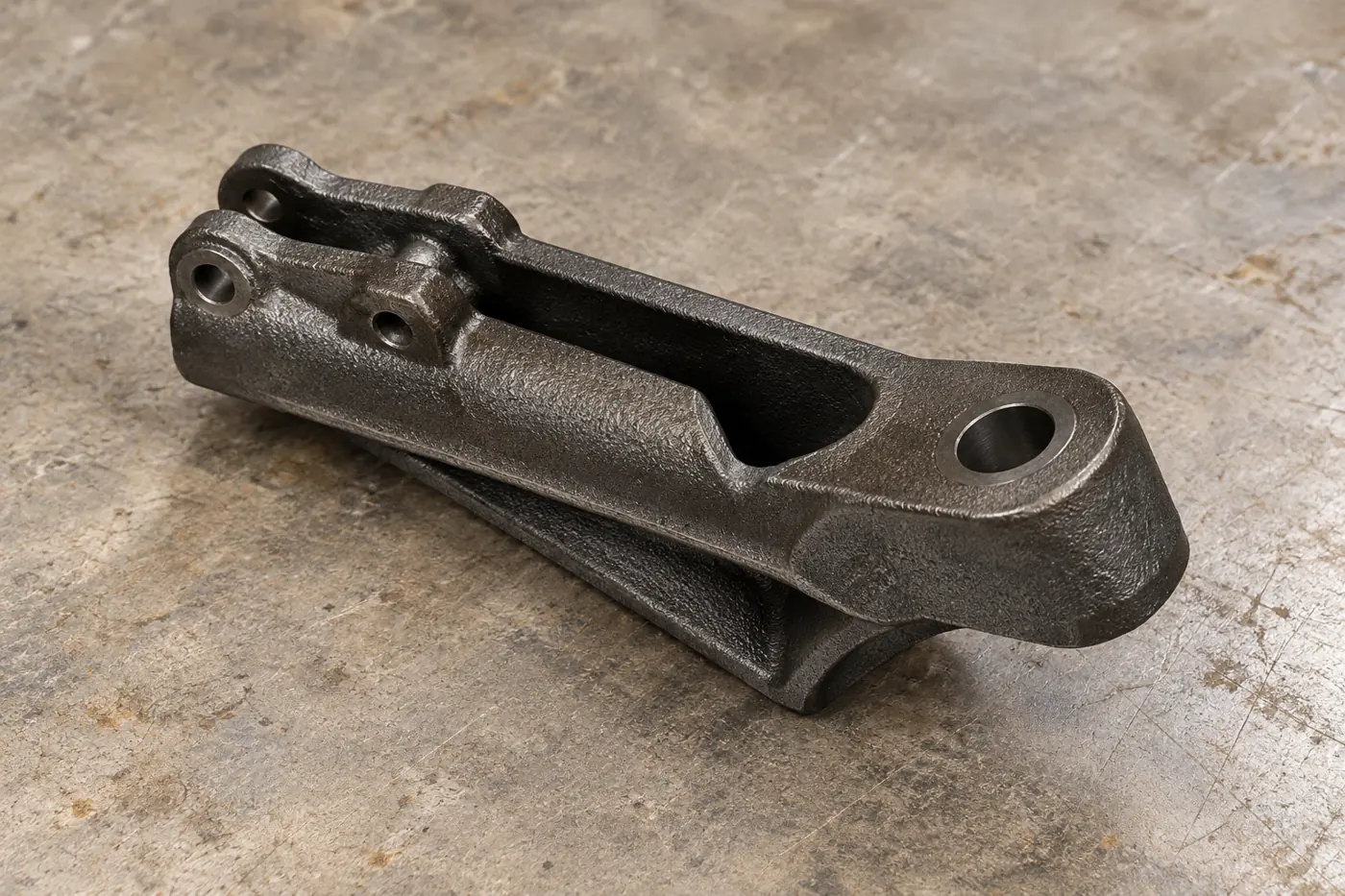
Coated-sand links with selected finished connections
Relia Casting's harvesting-component offer names QT900-2, FC400 and FC350 as separate material references for the actual design. Coated-sand forming fits our main factory route, alongside our own machining production for nominated connection features. Samples and 100% component inspection are part of this specific offering.
A useful link package preserves the body sections, end transitions and the relationship between its connections. We can provide real workshop/equipment photographs and material/dimensional reports to support assessment. The new-part route moves from drawing review to sample manufacture and inspection, your confirmation, then batch production, keeping any accepted mechanism changes with the final component revision.
03A CLEARER CASTING PURCHASE
The actual iron family and condition selected first
Keep QT900-2, FC400 and FC350 as distinct material references, with the full governing specification for the selected component. Grey and ductile irons have different material classifications; one grade name should not be substituted because it appears close to another in a product list.
Define the required supplied condition and evidence. Grey-iron characterisation and ductile-iron property classification use specified specimen bases, so identify the record needed for the actual chosen grade. Material approval should connect to the sample or batch being evaluated in the mechanism.
| Material decision | Development-order definition |
|---|---|
| Material family | Selected grey/ductile or other specified request |
| Grade | One full designation and governing requirement |
| Condition | Required treatment/state for that component |
| Evidence | Specified material result and sample/batch identity |
04A CLEARER CASTING PURCHASE
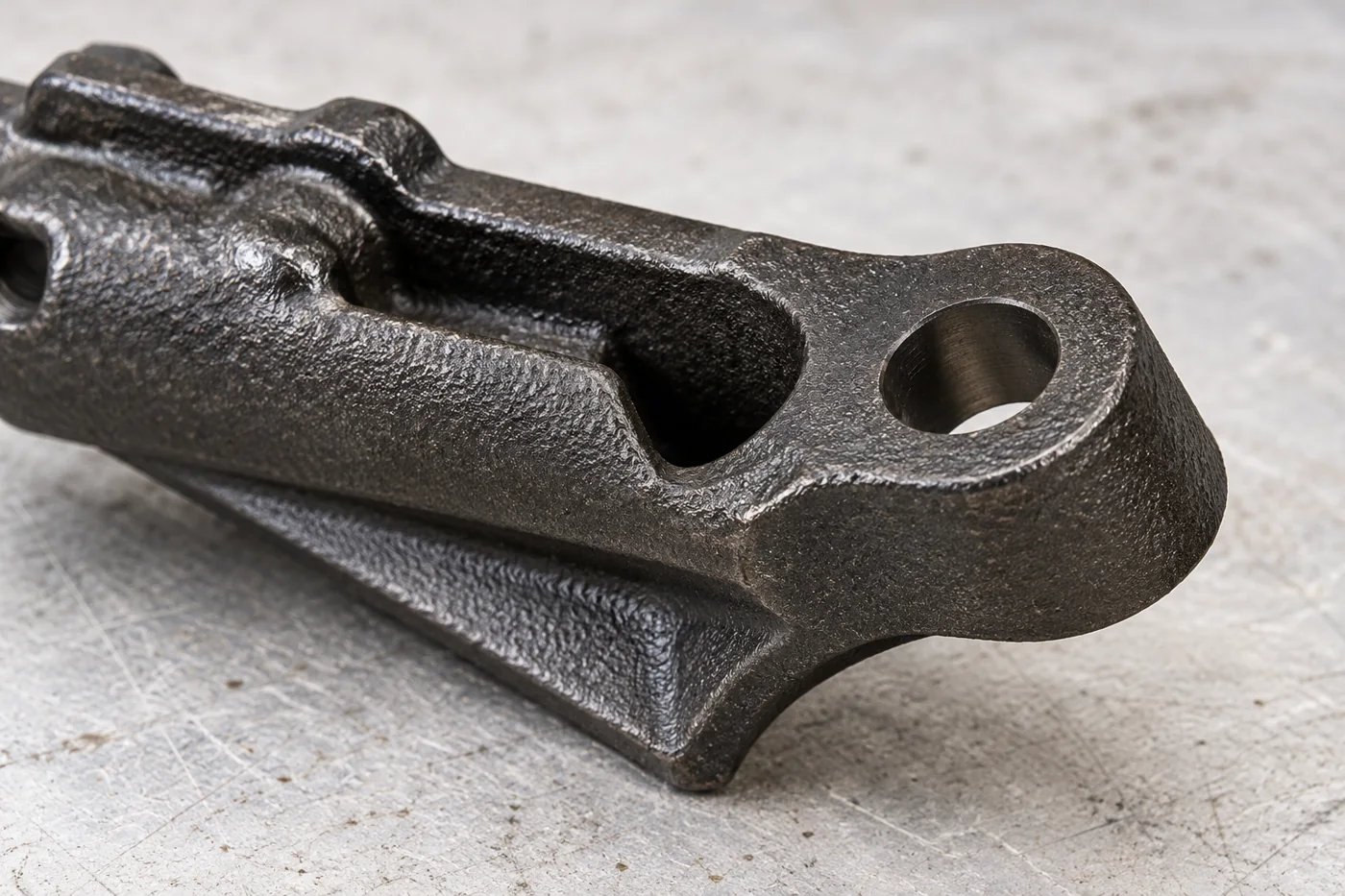
End transitions and ribs preserve the load path
Include the complete connection ends, ribs, local sections and transitions in the controlled model. Mark fillets and regions that are fixed by the design. A change near a connection can alter the geometry carrying the load even when the outside envelope remains similar.
Retain stock for the finished interfaces without creating an unapproved thin region after cutting. Any manufacturing proposal at a rib or transition should be assessed against the released link design and incorporated as a controlled change before the sample is made.
- Load path
- End transitions and rib sections
- Final stock
- Material retained around connections
05A CLEARER CASTING PURCHASE
Form the load path and machine the end relationships
The coated-sand mould/core arrangement must preserve the released ribs, end transitions and local sections. Any parting, feeding or machining-stock proposal needs to leave the material required around the final connection, rather than only match the outer envelope. The exact tooling and core plan follows the actual drawing.
After casting and preparation, the machining plan establishes the connection datums and completes the nominated features. For a pinned design, these can include bore fit, centre distance, axis relationship and contact faces; a different connection uses its own controls. Keep the end-to-end relationship through repositioning and measurement. The useful output is a selected-material link with measured interfaces and body geometry. Your mechanism trial then evaluates movement and load under its specified assembly conditions; the dimensional report is not a substitute for that duty evidence.
- 01Coated-sand blankRibs, transitions and local finishing stock
- 02Machine actual connectionsDatums, mating fits and contact features
- 03Measure the relationshipRequired end-to-end distance and orientation
- 04Identify the trial componentMaterial, revision and final supplied state
06A CLEARER CASTING PURCHASE
Coated-sand geometry and final machining have different limits
The listing's ±1 mm reference concerns allocated casting dimensions and stages. Final connection features require their own machining and geometric limits. State which surfaces remain cast, which are supplied finished and which operations your plant will perform after delivery.
A changed machining allowance affects the remaining section around the end feature. Keep the final geometry visible when agreeing the cast blank, especially where fit and material section must be achieved together. The order then describes one useful handover rather than a casting tolerance applied to every finished connection.
07A CLEARER CASTING PURCHASE
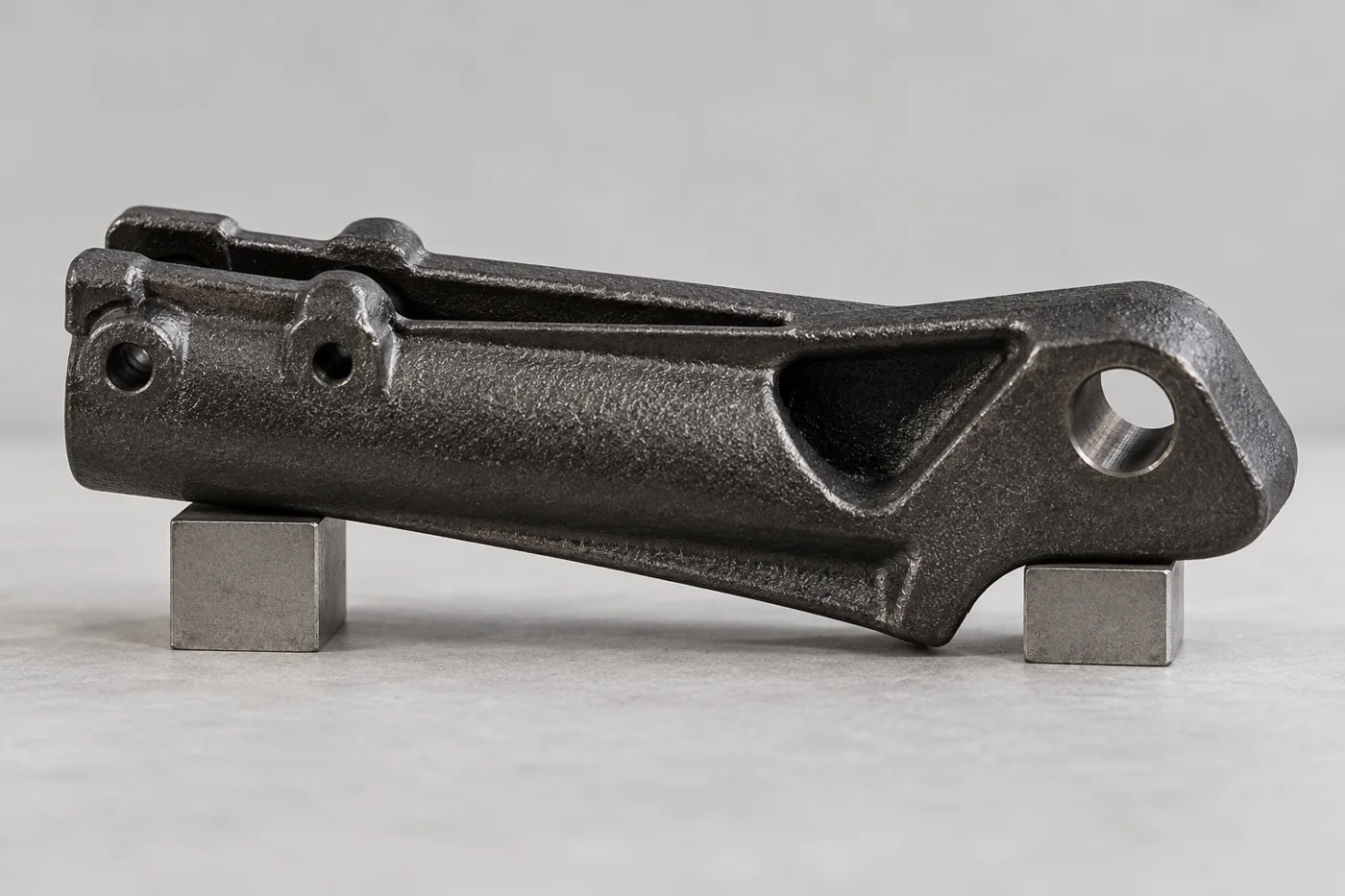
The whole link compared against the mechanism envelope
A local connection detail cannot establish clearance over the complete range of movement. Keep both ends and the body in the full model and use the relevant assembly views to identify nearby parts. Show any region that must remain clear during operation.
For a sample fit, record the installed orientation and mating-part references. If the trial needs an adjustment, retain it in the design record and assess its effect on the cast section and other end. That avoids releasing a repeat component from a sample that was altered without documentation.
- Full component
- Body and both end relationships
- Trial reference
- Actual mating parts and movement
08A CLEARER CASTING PURCHASE
Material and dimensional evidence support the mechanism trial
The offer includes samples, a listed ten-piece minimum order and 100% component inspection. Relia can direct the agreed checks at the cast sections, finished connections and their relationship, with material and dimensional reports available. Keep the exact inspected characteristics and results in the sample record.
The inspected component then enters your fit and motion trial. If repeated-load evaluation is required, define the load direction and variation, fixture/mating arrangement, cycle basis and acceptance endpoint. Keep the tested configuration tied to the selected material and drawing so any design change is assessed before customer confirmation and repeat production.
- 0101Verify material condition, sections and finished-feature report
- 0202Trial installation, motion clearance and connection freedom
- 0303Apply the specified repeated-load or mechanism evaluation
- 0404Record tested configuration and release the accepted revision
09A CLEARER CASTING PURCHASE
Surface work and delivery preserve the accepted connections
Painting and electroplating are named treatment requests; select coverage and the final condition for the actual substrate and service. Anodizing belongs to an appropriate separately selected material rather than an assumed treatment for the iron link. Mask fit and contact areas where required.
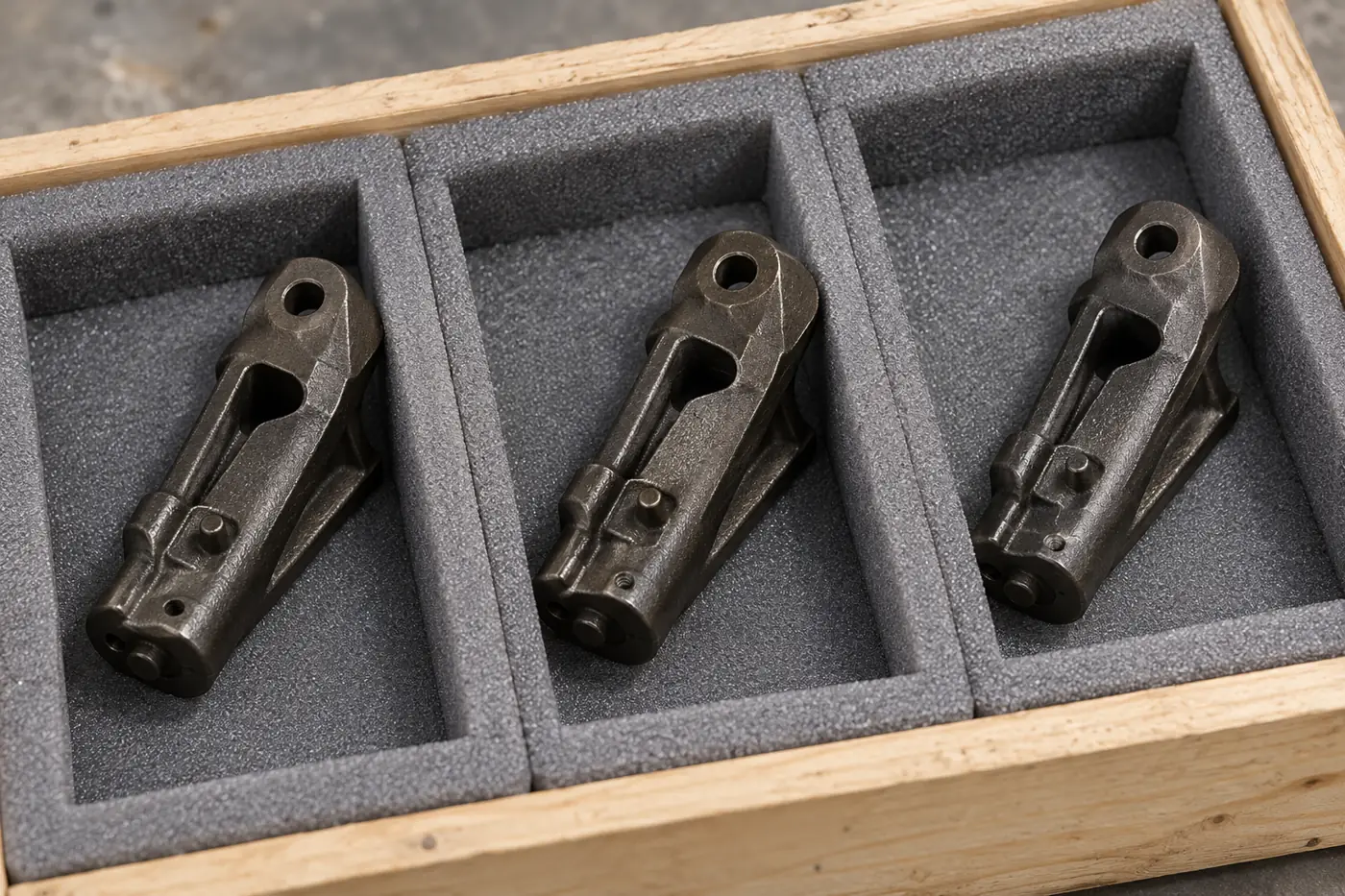
Separate components so connection edges and machined faces cannot strike one another. Keep sample or batch identity linked to material and dimension records. The receiving team should be able to distinguish the tested revision from another similar casting before assembling the harvesting mechanism.
- Finish
- Selected process and masking
- Identity
- Sample or batch with material record
10A CLEARER CASTING PURCHASE
A harvesting link released with a usable sample record
Relia can supply the coated-sand casting and nominated machining as one link definition, with the material, critical sections and connection geometry joined in the handover. That gives your equipment team a clear component to inspect and trial in the actual mechanism.
Retain the sample's feature map, mating-part references and any accepted movement or load-related change with the released drawing. Batch orders then follow the component you confirmed. This keeps the factory's dimensional/material evidence connected to your mechanism decision without treating an altered sample or an unperformed life test as the repeat-order reference.
11 YOUR NEXT STEP
Bring your component into the conversation
Tell us which component you need, the material, quantity and required supplied condition. Relia will connect your enquiry with the casting, machining and evidence relevant to that part.
Technical reading and scope
Technical references explain the process. Component specifications and agreed order records define the actual supply.
ISO185 — grey-iron property characterisationISO1083 — spheroidal-graphite-iron classification- [email protected]
- Phone
- +86 18561762631
- +1 404 203 0971
- Company and address
- Qingdao Relia Industries Co., Ltd.
Shuyuan Road, Qingdao, Shandong, China