
01A CLEARER CASTING PURCHASE
Thick-Section Steel Castings for Heavy Equipment
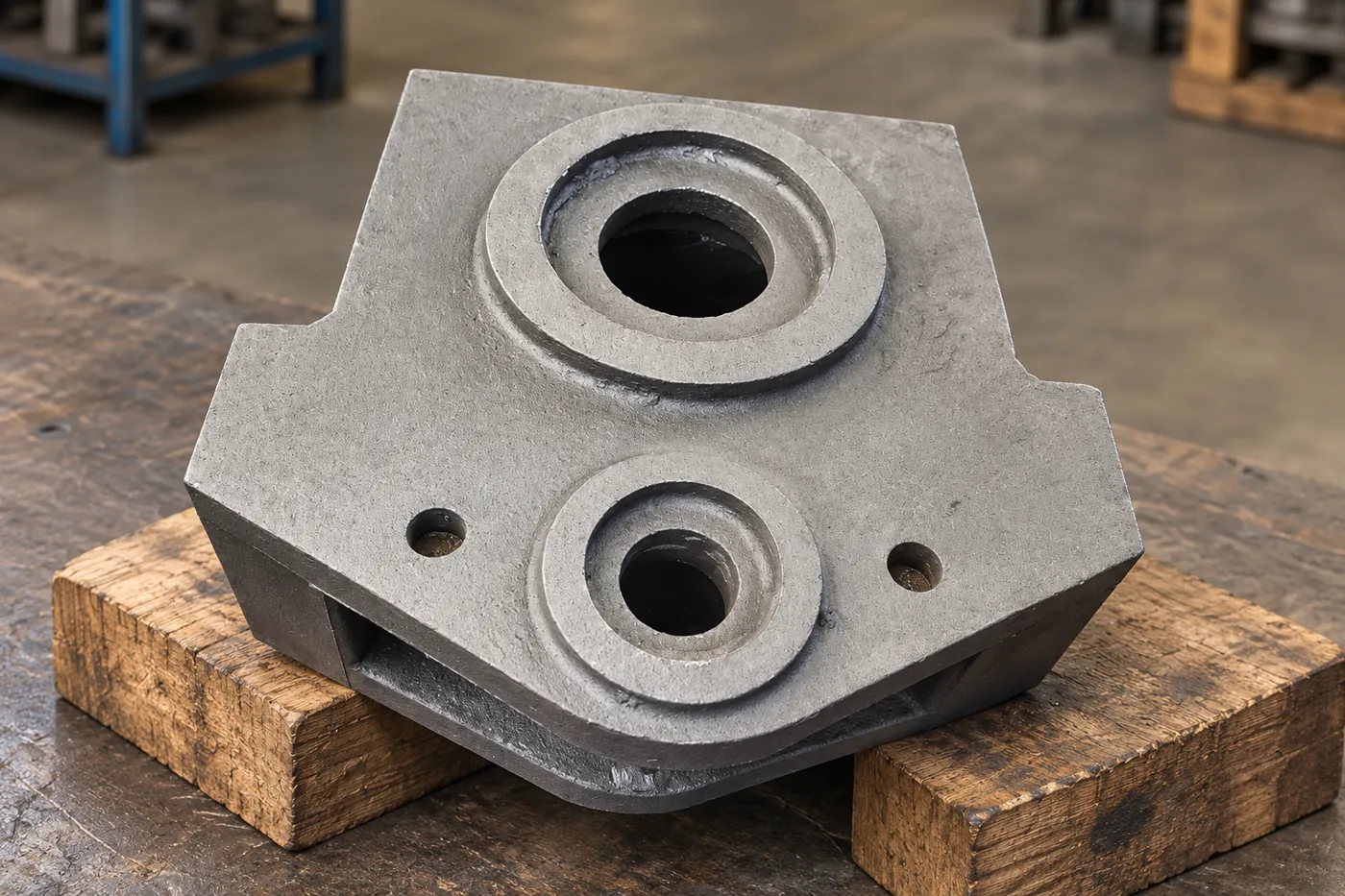
Define a heavy casting by its difficult sections and working interfaces, as well as its overall size. Relia’s mining and heavy-industry range includes steel casting enquiries with treatment, machining and specified examinations. Show heavy bosses, loaded connections, machining stock and the required material condition. The proposed route and sample or release evidence can then address the part your machine actually needs.
- Geometry
- Heavy sections + connections
- Material
- Grade + treatment state
- Evidence
- Dimensions + specified examinations
02A CLEARER CASTING PURCHASE
Describe the section that drives the manufacturing problem
Relia’s heavy-industry catalogue includes water-glass or resin-sand routes and selected machining and examination requirements. These component-specific offerings remain distinct from our general main coated-sand and shell route; the actual heavy-part proposal needs its own process and handling assessment.
Provide the model, overall dimensions and known or estimated mass, then mark local sections that govern the part’s function. A thick boss joined to a thinner arm can create a different manufacturing challenge from a uniform block of similar weight. Identify the loaded connections, wear-exposed surfaces and any regions that cannot change. This makes prequalification concrete: the proposed route can be evaluated around the difficult geometry, the required handling and the finished interfaces rather than an undefined claim of large-part capability.
03A CLEARER CASTING PURCHASE
Select one material specification and delivered condition
Our heavy-industry steel range references ASTM A148, A732, A958 and EN 10293 for separately selected grades. The WCB mining enquiry and separate 42CrMo request in another listing also need their own material form and route. Choose the actual specification and condition for this component rather than treat those names as equivalents. Your order should define the required properties and the evidence representing the thick-section part, including any particular test location or sampling arrangement that the design requires.
| Material input | Decision required |
|---|---|
| Standard and grade | One governing requirement for the selected casting. |
| Treatment condition | Required final state and associated property evidence. |
| Sampling basis | How material results represent the supplied component. |
| Alternative material | A separate engineering decision with its route and property assumptions. |
04A CLEARER CASTING PURCHASE
Address feeding and treatment at the heavy junction
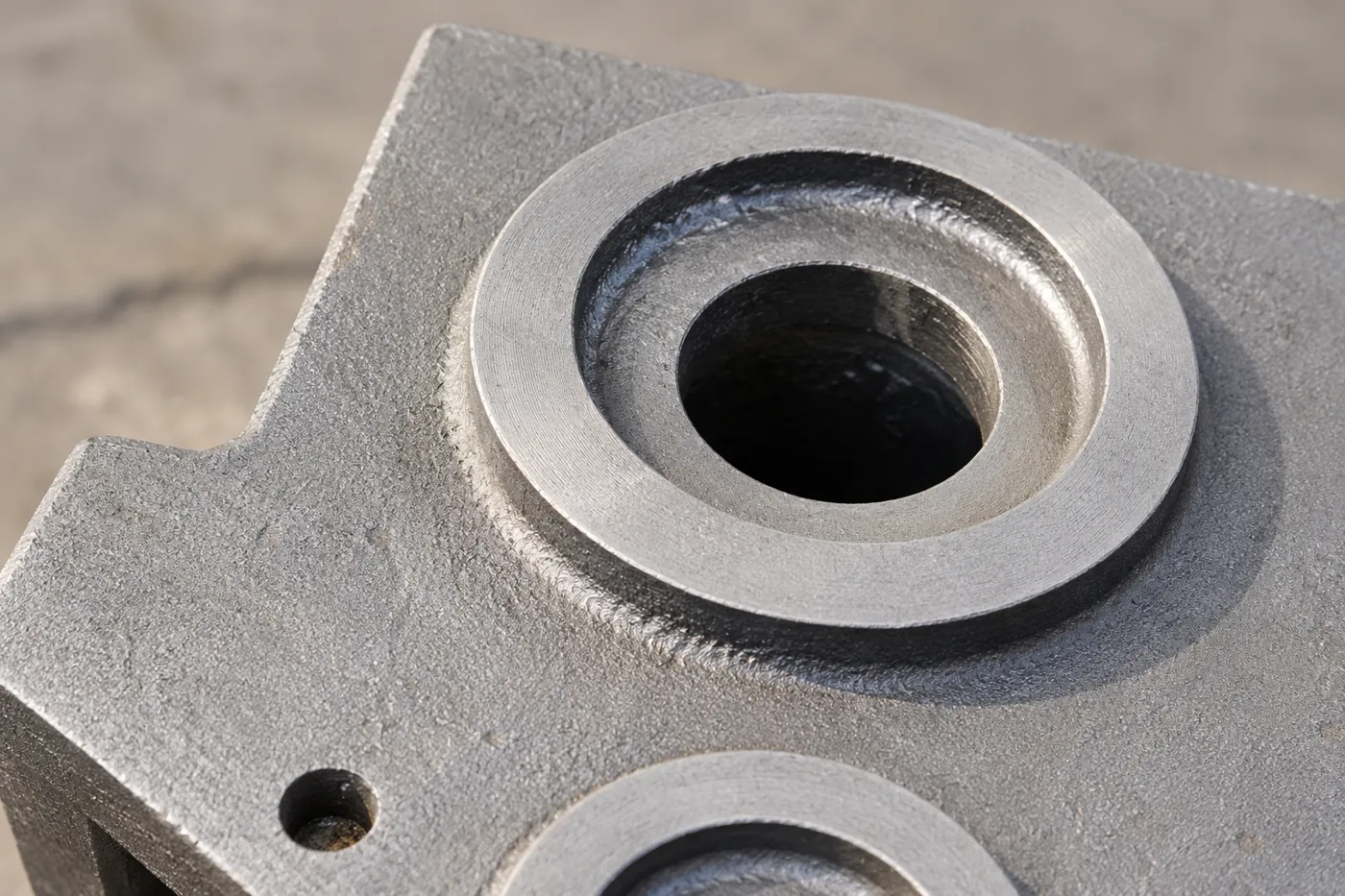
As steel solidifies, a heavy region needs a feed path that remains useful while surrounding metal contracts. A thick boss beyond a prematurely frozen narrow section is therefore a meaningful route-review point. SFSA discusses this relationship between section design and feeding. For your component, show the critical regions and permitted changes so the proposal can address their production geometry. Keep the required material condition and inspection areas connected to those same regions rather than evaluate casting and heat treatment as unrelated purchasing lines.
05A CLEARER CASTING PURCHASE
Carry the cast form into a practical machining setup
Our related mining offer lists CNC, turning, drilling and grinding, and the large-casting range includes CMM inspection and selected heat treatment. Assign these operations to the actual bores, faces and attachment regions. Show the datum structure and the surfaces available for support so the route can retain the required relationships through handling and repositioning. Keep material-removal stock visible at those interfaces, with the final measurement state defined after the operations that can alter it.
- 01Blank geometryDefine cast sections and local stock for finished interfaces.
- 02Material stateSelect treatment and the stage required for final acceptance.
- 03Locating approachUse stable references with access to the needed features.
- 04Finished workComplete the nominated bores, faces and connections.
- 05VerificationReport the required geometry and material/NDT evidence.
06A CLEARER CASTING PURCHASE
Choose NDT by the defect region and material
Surface and internal examination answer different acceptance needs. Magnetic-particle testing applies to ferromagnetic material and principally addresses surface or near-surface indications; penetrant testing addresses surface-open indications. UT and RT serve internal examination decisions with their own access and interpretation limits. Select the method, examined region and acceptance basis on the drawing or inspection specification. Our catalogue includes MT, UT and RT enquiries, but the correct choice depends on the selected steel, local geometry and the condition to be assessed.
| Examination target | Order definition |
|---|---|
| Surface region | Method suited to the material, prepared surface and stated limits. |
| Internal section | Required method, coverage and usable examination access. |
| Critical attachment | Region marked by function, with specified acceptance criteria. |
| Report | Part identity, examination map, results and disposition of relevant indications. |
07A CLEARER CASTING PURCHASE
Provide access for both manufacturing and examination
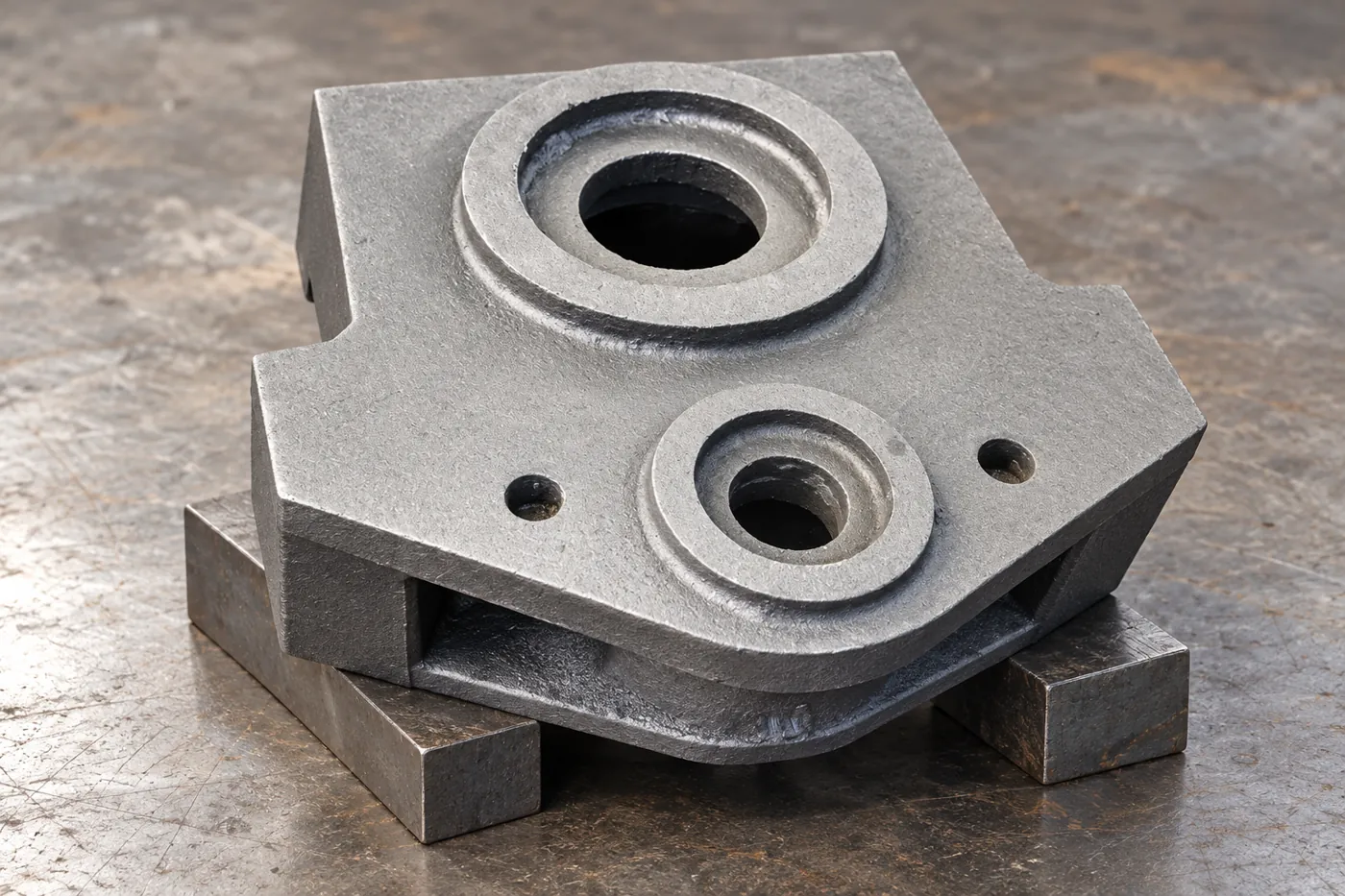
A support arrangement must stabilize the actual component while keeping machining and examination regions accessible. Identify protected contact surfaces and any location that cannot carry a handling load. The large-casting inspection proposal should explain how the selected features can be reached and referenced; listing CMM or NDT alone does not resolve access. These decisions are useful early because a support or preparation feature may be easier to incorporate before casting than to improvise after a heavy component is complete.
08A CLEARER CASTING PURCHASE
Prequalify the route against a specific component
Ask for the proposed material, treatment, machining and examination sequence for your drawing, with responsibility for the requested evidence identified. Establish what the initial component must demonstrate and which records your approval team will review. Keep dimensional capability, material condition and internal examination as separate qualification questions. A sample or first-component release can then close the highest-impact uncertainties without assuming that a general mining application label proves every grade, size and inspection combination.
- 0101Submit the geometry, section map, grade and required delivered state.
- 0202Assess the proposed casting/treatment route and access for critical work.
- 0303Agree material representation, NDT regions and dimensional evidence.
- 0404Release the initial component against the defined qualification decision.
09A CLEARER CASTING PURCHASE
Plan transport support around the delivered component
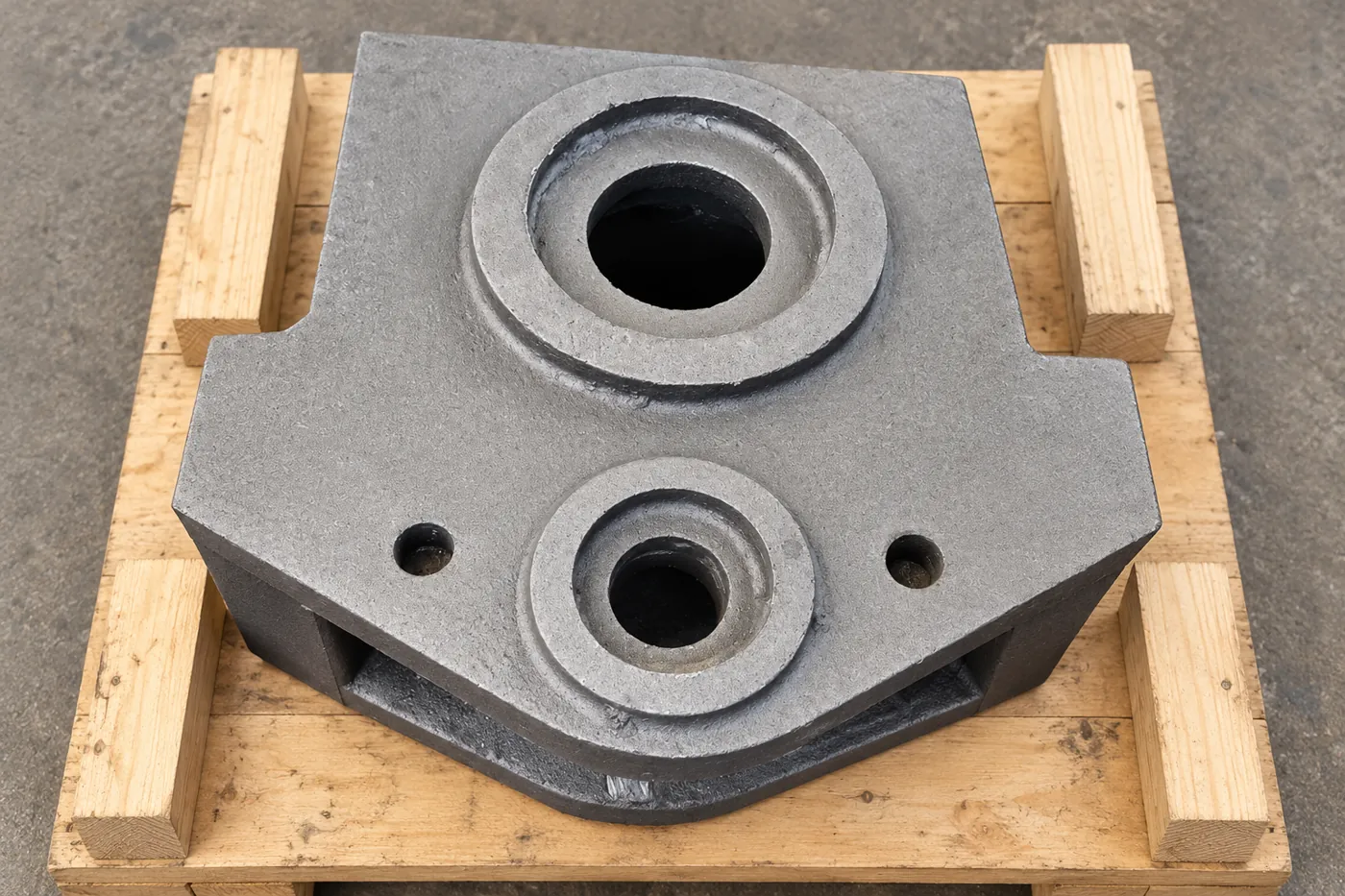
The large-casting offer includes wooden-case packing, while the actual support and protection arrangement must follow the component. Identify the regions that can carry packing and handling loads, the machined areas requiring protection and the receiving method at your plant. Keep any lifting requirement in the engineering/handling definition rather than infer it from a convenient hole or boss. Packing should preserve the accepted condition and make the component identifiable when the receiving team connects it to its material and inspection records.
10A CLEARER CASTING PURCHASE
Request a thick-section casting with a complete evidence plan
Send the model and drawing with mass, selected steel and treatment condition, critical sections and required machining. Add the NDT map and the material or dimensional records your approval needs. We can then assess the component-specific route and quotation scope. Your sourcing decision becomes a comparison of how the difficult sections, finished interfaces and acceptance evidence are addressed, rather than a choice based only on the largest weight stated in a catalogue.
11 YOUR NEXT STEP
Bring your component into the conversation
Tell us which component you need, the material, quantity and required supplied condition. Relia will connect your enquiry with the casting, machining and evidence relevant to that part.
Technical reading and scope
Technical references explain the process. Component specifications and agreed order records define the actual supply.
Ordering Steel Castings — SFSANondestructive Testing of Steel Castings — SFSA- [email protected]
- Phone
- +86 18561762631
- +1 404 203 0971
- Company and address
- Qingdao Relia Industries Co., Ltd.
Shuyuan Road, Qingdao, Shandong, China