
01A CLEARER CASTING PURCHASE
Agricultural Ring Wheels with Defined Hub Fits
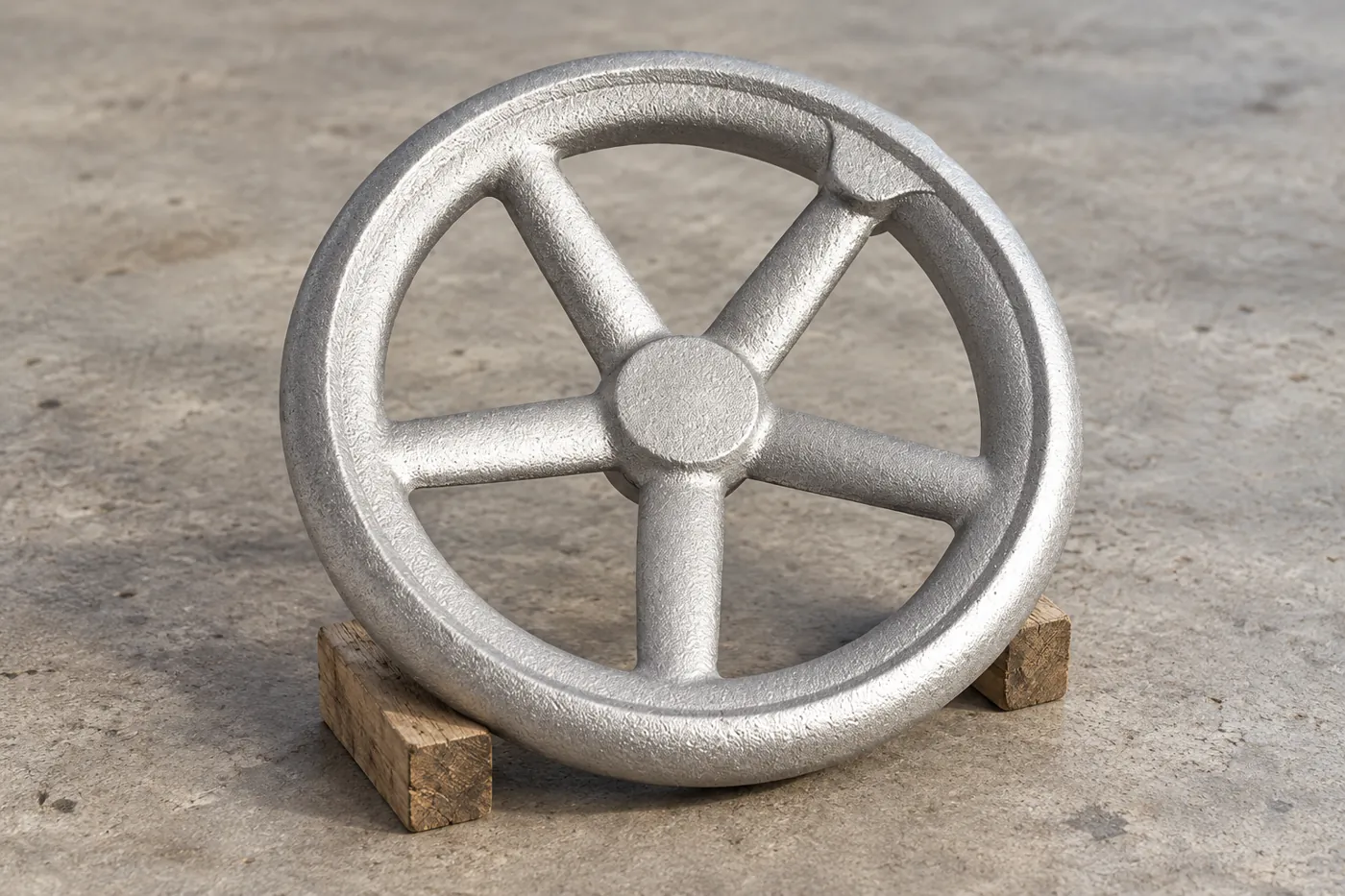
Source the ring profile and mounting interface together. Relia offers agricultural ring-wheel castings in selected GG25 or ductile-iron grades, with sand casting and CNC machining. Catalogue sizes include 500 mm, 700 mm or custom drawings. Keep the hub, spacing and material requirement alongside diameter so repeat supply serves the actual implement design.
- Material
- Selected grey / ductile iron
- Geometry
- Ring profile + hub
- Supply
- Casting + nominated CNC
02A CLEARER CASTING PURCHASE
Ring wheels with material and mounting scope connected
Relia Casting offers agricultural ring wheels in GG25 grey iron or GGG40, GGG45 and GGG50 ductile iron, selected for the actual component design. The range combines sand casting and CNC work with 500 mm, 700 mm or custom outside diameters. Those material choices and sizes remain distinct wheel versions.
Our own casting and machining production can supply a raw hub or the nominated finished mounting interface. The implement's ring profile, axle relationship and spacing define the useful component. We retain those relationships through the sample and inspection stage, with material and dimensional reports available so your team can assess the wheel before confirming repeat batches.
03A CLEARER CASTING PURCHASE
Grey and ductile iron require different material decisions
GG25 and GGG40/GGG45/GGG50 are separate catalogue material references. Select the full governing grade and condition for the wheel rather than combine them in one order. The design's load and section requirements should guide that choice.
Grey-iron and spheroidal-graphite-iron standards classify their materials through defined property and specimen bases. If material testing is required, identify the applicable standard, test basis and relationship to the supplied casting or batch. Do not turn a similar number in another designation system into an assumed material equivalence.
| Material choice | Practical acceptance input |
|---|---|
| Selected family | Grey iron or ductile iron for the actual design |
| Complete grade | Governing material specification and condition |
| Property evidence | Required test/result and defined specimen basis |
| Order traceability | Wheel/batch identity retained with grade and revision |
04A CLEARER CASTING PURCHASE
Ring sections and spoke transitions retained in the model
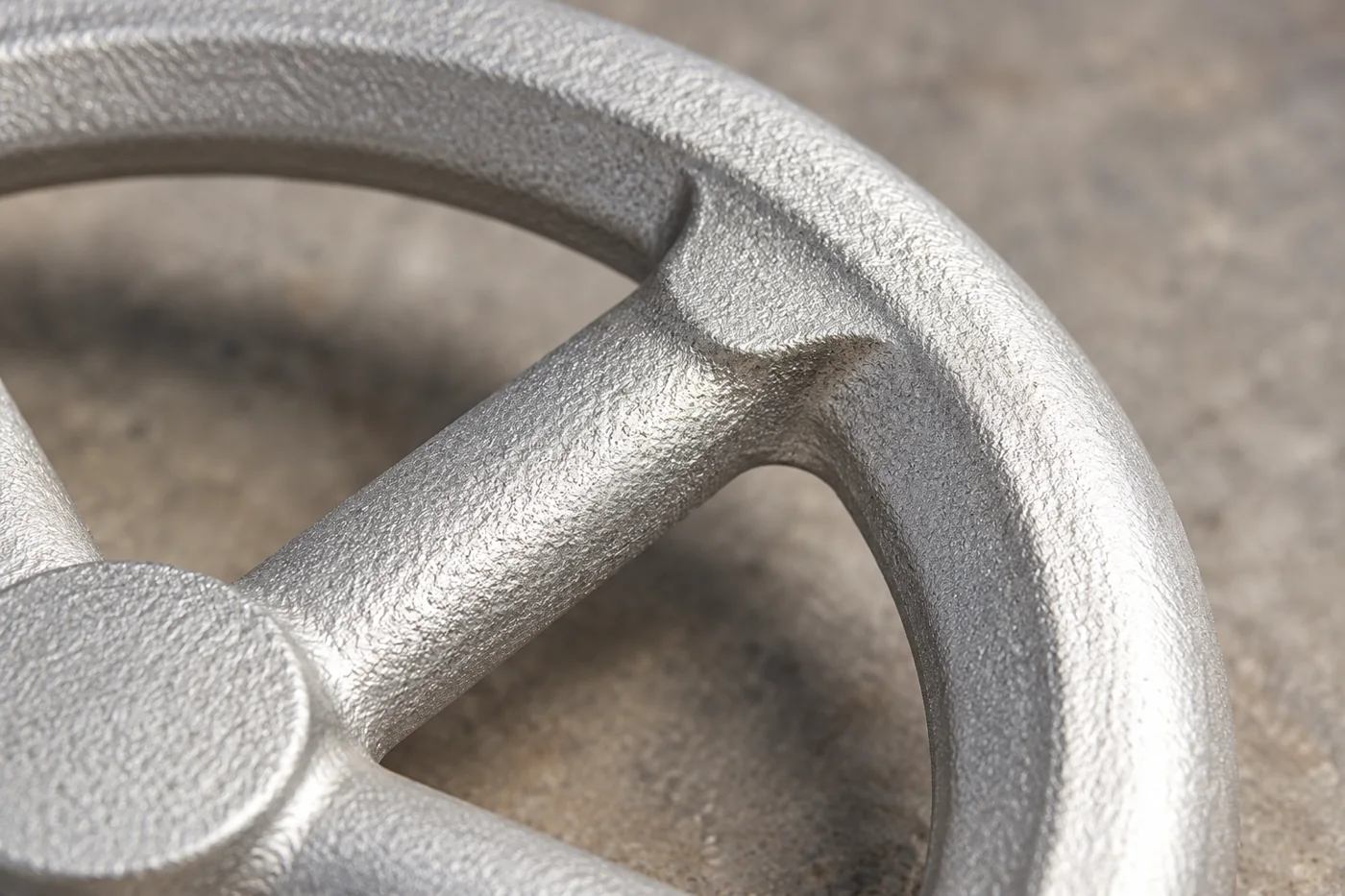
Show the complete outside section, supporting spokes or web and hub transitions. Those features connect the working ring to the mounting arrangement. A manufacturing change at a junction can affect the component even if the wheel's outside diameter stays unchanged.
Distinguish geometry accepted as cast from surfaces needing CNC work. Retain required local sections and any machining stock on the hub. The model should preserve the intended working profile, with approved changes recorded before tooling or casting revision.
- Cast structure
- Working ring and spoke junctions
- Hub state
- Raw form or nominated machining
05A CLEARER CASTING PURCHASE
Raw hubs and finished bores leave different work downstream
A wheel supplied with a raw central hub is not the same handover as a wheel with a finished shaft connection. Specify the actual bore or other mounting form, fit, contact length and axial-location features where the design uses them. Define any machining retained at your plant.
The catalogue's CT8 reference belongs to casting acceptance. Its ±0.02 reference needs a unit, dimension and supplied stage before use; it does not describe every feature of the ring. Final mounting geometry should follow the drawing that establishes the implement connection.
06A CLEARER CASTING PURCHASE
Carry the ring and hub into one controlled mounting geometry
The moulding plan follows the complete working ring, spokes or web and hub junctions. Preserve those sections and leave local stock where the mounting interface will be completed. Pattern parting and any core use follow the actual design; an illustrated solid hub does not imply an already finished bore.
After preparation, the CNC plan establishes the required mounting reference and completes the selected bore, faces or other connection. Relate the working outside profile to that reference so the accepted wheel describes how it will run in the implement. Check the drawing-defined geometry and selected material, then retain the sample identity for your installation and spacing trial. If coating follows, its masking and final dimensions need to preserve the accepted contact surfaces.
- 01Form the complete wheelWorking profile, junctions and local stock
- 02Finish the selected mountActual bore/connection and locating faces
- 03Inspect connected geometryRing/profile relationship to mounting reference
- 04Confirm the implement versionSample fit, spacing and protected final state
07A CLEARER CASTING PURCHASE
The outside profile and hub share a mounting reference
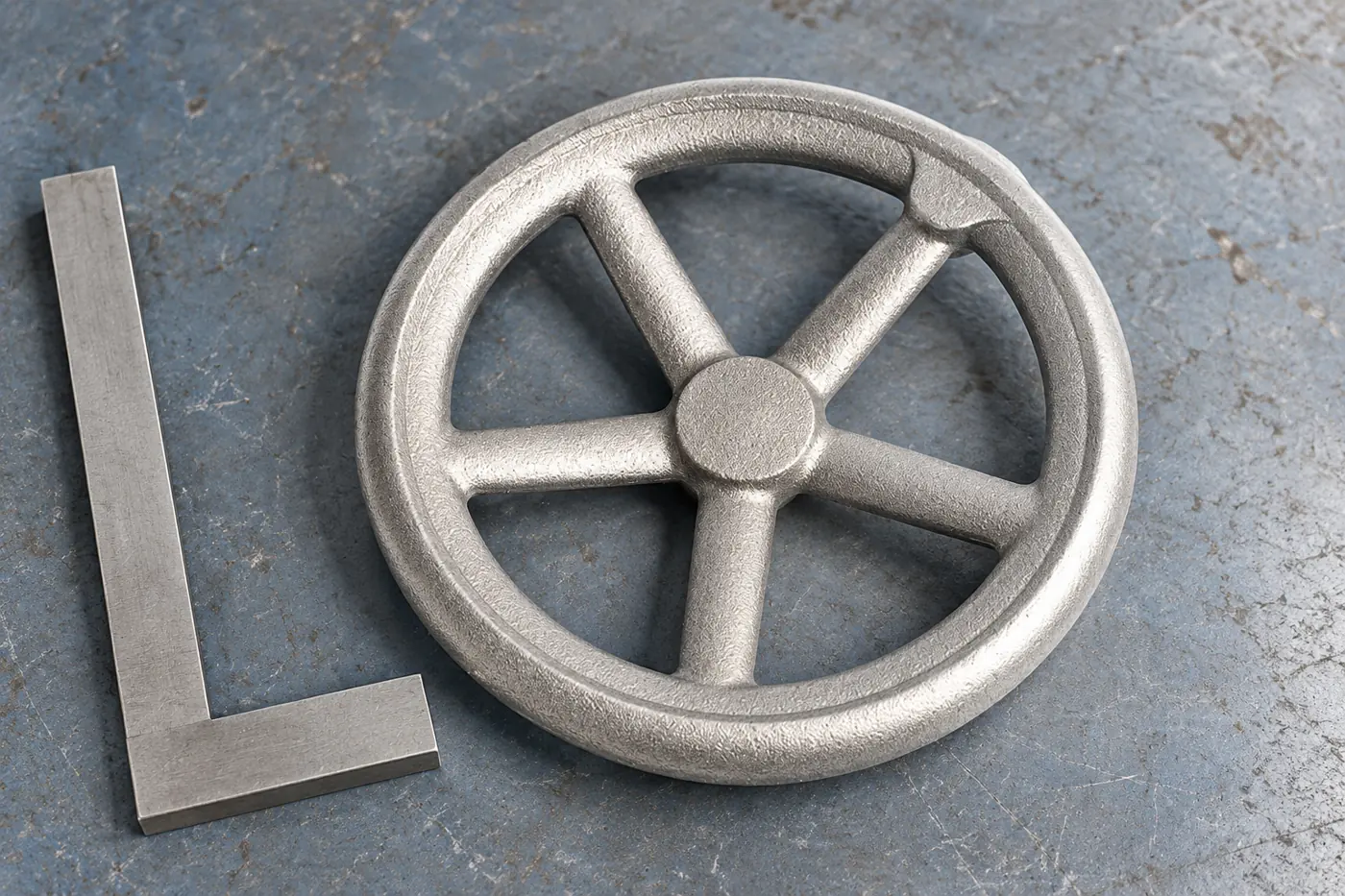
Relate the ring's working geometry to the actual mounting axis or locating features. Include the dimensional and geometric controls that determine how the wheel runs in the implement. A diameter checked without the hub relationship may not represent the installed wheel.
Where multiple wheels form a row or assembly, include axial faces, spacers and the stack relationship used by the design. Keep these requirements attached to the finished drawing so machining the hub later does not become a separate task disconnected from the accepted cast profile.
- Mounting reference
- Actual axle or locating features
- Working profile
- Relationship to that reference
08A CLEARER CASTING PURCHASE
Repeat orders distinguish every size and mounting version
Create a schedule by part number with diameter, working profile, mounting interface, selected grade, finish and quantity. Keep the 500 mm, 700 mm and custom versions distinct. A common material description or similar wheel image should not merge their tooling or machining definitions.
After sample approval, retain the accepted revision and report map for each version. If you change wheel spacing, axle arrangement or required material, assess the affected version before repeating the order. This keeps batch purchasing aligned with the actual implement programme.
- 0101Approve each wheel profile and mounting version separately
- 0202Retain grade, final condition and feature-report references
- 0303Schedule quantities by part number and controlled revision
- 0404Reassess axle, spacing or material changes before repeats
09A CLEARER CASTING PURCHASE
Finish and packing preserve mixed wheel identities
The catalogue names powder-coating and other treatment enquiries that need a defined actual process and compatible substrate. Specify coverage and masking so a finish does not change the final mounting contact. Include the appearance and delivered condition used for approval.
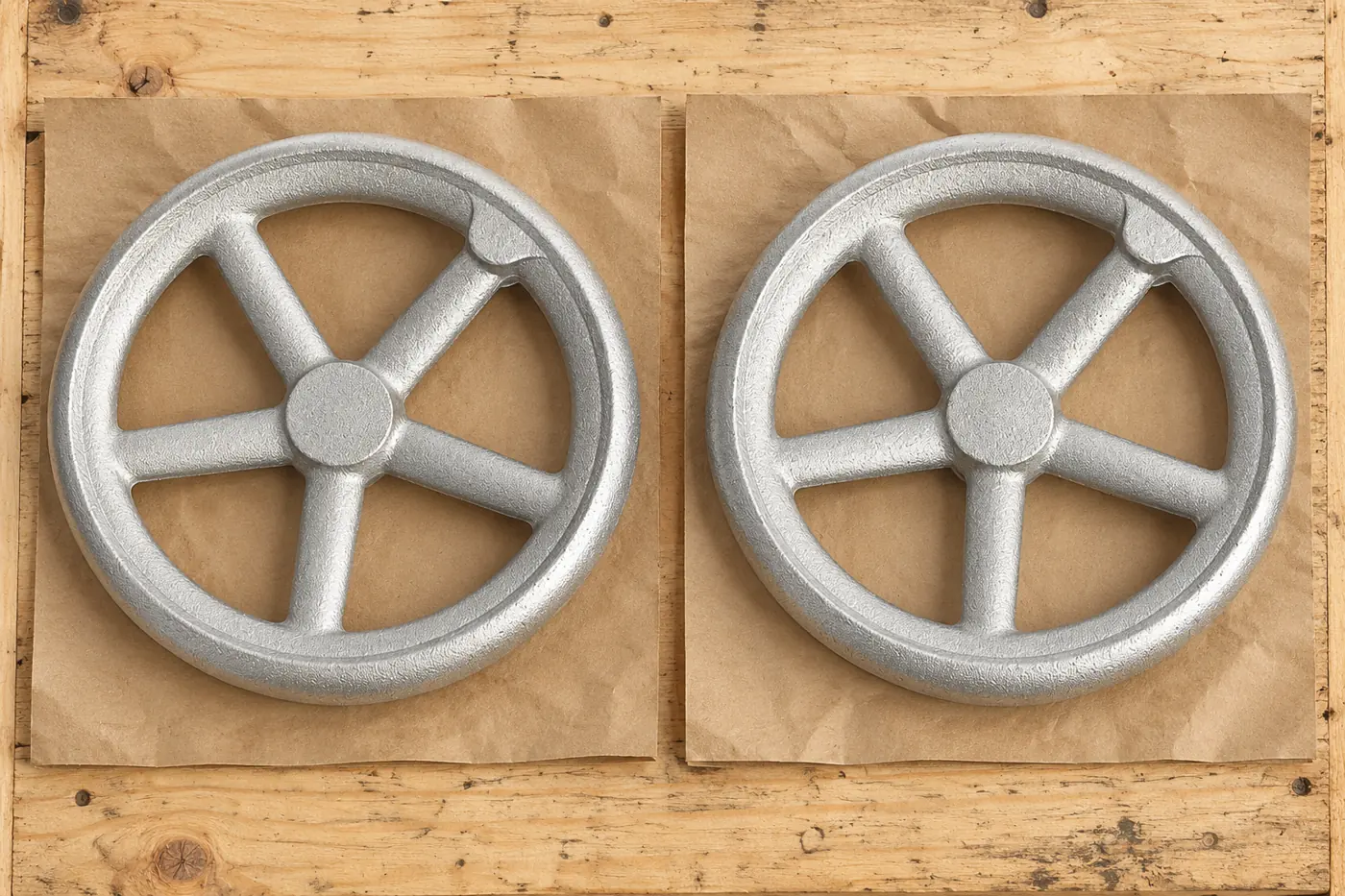
Separate different wheel versions and protect any machined bores or axial locating faces against contact damage and corrosion. Clear part and batch identification lets receiving connect a delivered wheel to the correct implement, material and dimension records before assembly.
- Mixed sizes
- Separate part and grade identities
- Protection
- Mask and protect finished contacts
10A CLEARER CASTING PURCHASE
A repeat wheel version that remains clear at assembly
Relia can manufacture the selected iron ring and nominated CNC mounting features as one defined wheel version. The useful handover connects the working profile, mounting geometry, surface condition and material evidence rather than relying on outside diameter alone.
Use drawing review, sample manufacture and inspection, then your confirmation before batch production. Keep each diameter, axle arrangement and grade under its own part revision. If the implement trial changes spacing or mounting, carry that decision into the final drawing so receiving and assembly use the wheel that was actually accepted.
11 YOUR NEXT STEP
Bring your component into the conversation
Tell us which component you need, the material, quantity and required supplied condition. Relia will connect your enquiry with the casting, machining and evidence relevant to that part.
Technical reading and scope
Technical references explain the process. Component specifications and agreed order records define the actual supply.
ISO185 — grey-iron classification and test basesISO1083 — spheroidal-graphite-iron classification- [email protected]
- Phone
- +86 18561762631
- +1 404 203 0971
- Company and address
- Qingdao Relia Industries Co., Ltd.
Shuyuan Road, Qingdao, Shandong, China