
01A CLEARER CASTING PURCHASE
Replacement Roller Sleeves for Vertical Mills
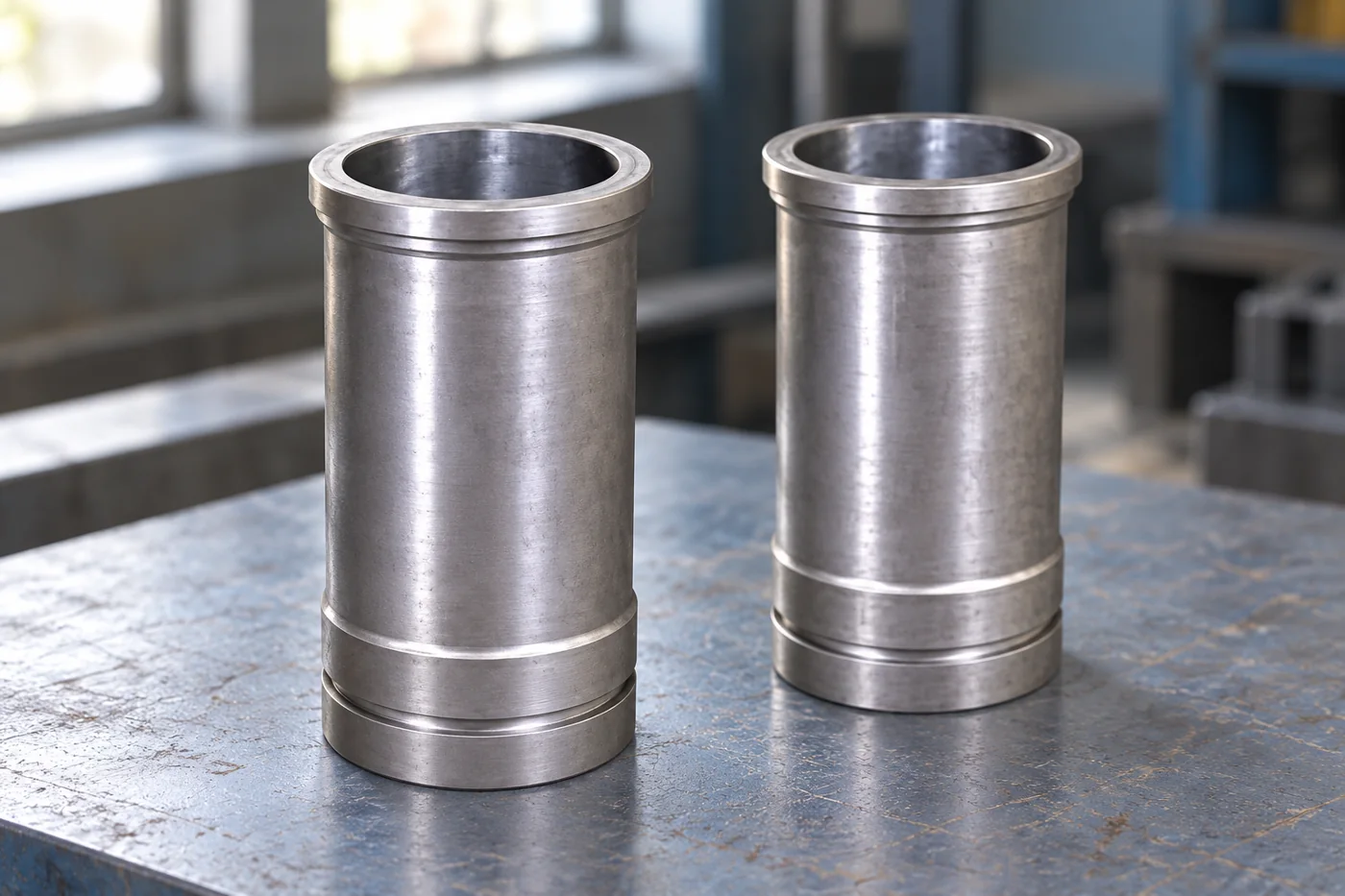
Buy the new grinding profile and installation interfaces together. Relia offers drawing-based sand-cast roller-sleeve spare parts for vertical mills with OEM/ODM support. Use the worn sleeve as service evidence, then establish the intended new contour, internal fit and selected material. A controlled replacement definition lets the sample address the actual installation and grinding requirement.
- Recover
- Intended new profile
- Retain
- Internal + end interfaces
- Select
- Grade + delivered condition
02A CLEARER CASTING PURCHASE
Operating information explains the replacement priority
Relia’s roller-sleeve scope starts with your defined replacement geometry and material. Our casting and machining discussion connects the working profile with the support and locating interfaces, and the new-part approval sequence provides a point to resolve fit before batch release.
Record the processed material, feed condition, available throughput and the operating settings relevant to the worn sleeve. Add the wear pattern of the opposing grinding surface where available. A local groove, uneven shoulder or asymmetric profile is more informative when its position is related to the mill assembly and service history.
Mill technical guidance treats internal wear profiles alongside operating and product-quality data. Use the same principle in procurement: distinguish a scheduled worn replacement from a component removed because of cracking, poor fit or an altered process. That distinction changes what the first replacement needs to demonstrate.
03A CLEARER CASTING PURCHASE
The new profile comes from an approved design
Use an original drawing or an engineering-approved reconstruction to establish the required outside profile. Measurements on the worn sleeve should retain their status as observations. An unworn end or local land can help locate a measurement, but it does not automatically establish the missing working contour.
Define section profiles and their relationship to the mounting axis. Where a reference sample is used, record which dimensions were accepted and which were revised. This creates a durable new-part definition, rather than passing a worn component between suppliers and receiving several different interpretations of its original form.
04A CLEARER CASTING PURCHASE
Mounting fit is independent of the grinding surface
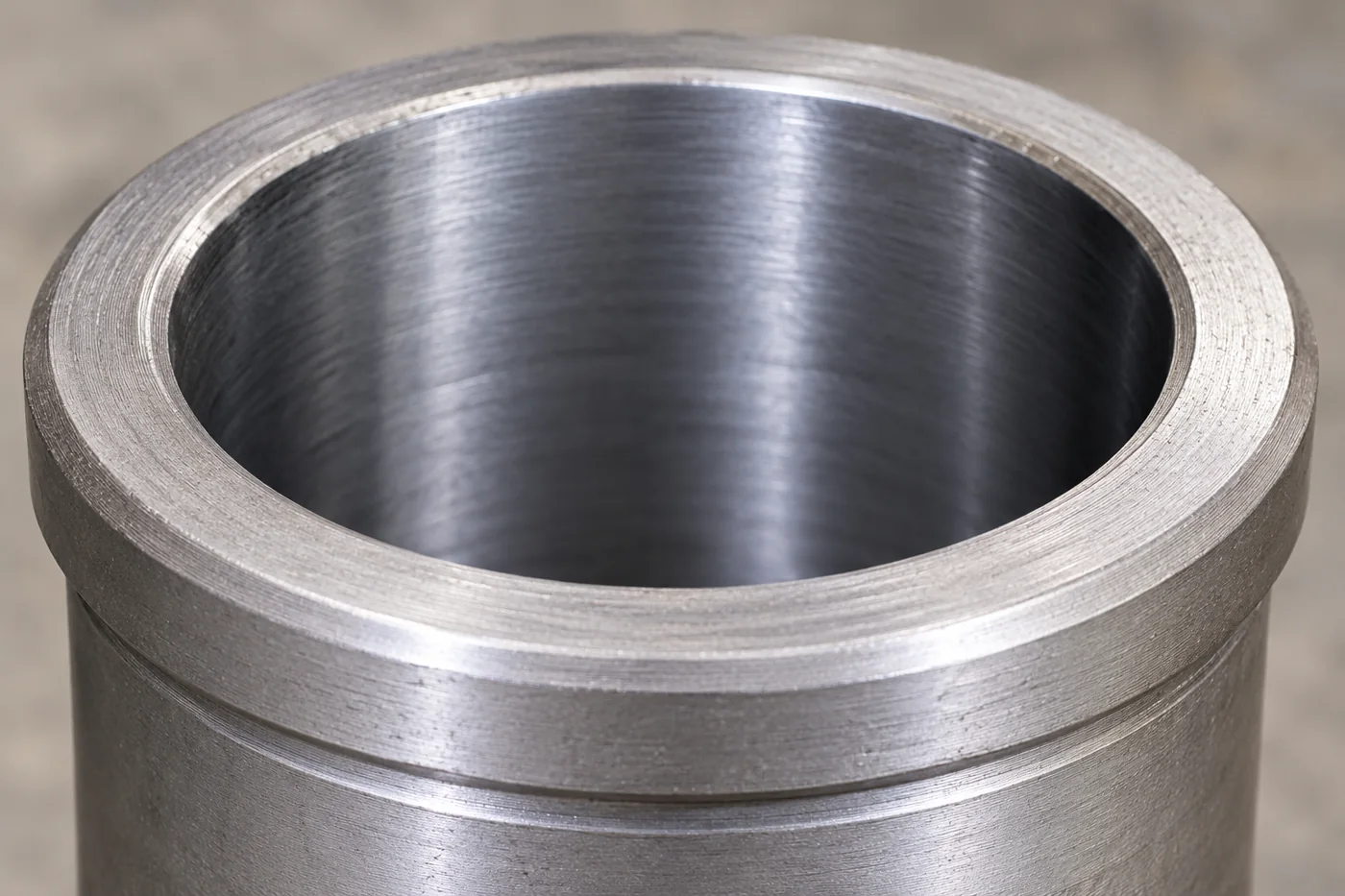
Identify the actual locating arrangement, including bore, taper, shoulders, retaining features or other interfaces shown in your design. Keep the required size fit separate from position and orientation. A bore that meets its diameter limit can still be incorrectly related to the working profile.
State the mating-part information and final condition in which the fit is measured. ISO size-fit notation describes size relationships; it does not by itself control the outside profile’s runout or axis relationship. Those characteristics need their own drawing requirements. The cylindrical illustrations explain sleeve interfaces without establishing compatibility with a particular mill.
05A CLEARER CASTING PURCHASE
The material specification contains the wear requirement
The sleeve catalogue names sand casting and GB, ASTM, AISI, DIN and BS standard families. Choose a specific document, grade and material condition for the order. Those families are not equivalent grades, and the listing does not establish that every sleeve is high-chromium iron or manganese steel.
Where your design requires hardness, give the method, test locations and acceptance basis. Where toughness, microstructure or another material characteristic matters, identify it separately. This keeps a material proposal tied to the failure or wear mechanism being addressed, instead of treating a single hardness reading as a complete description of the component.
| Material input | Required definition |
|---|---|
| Grade | Complete material designation and governing document. |
| Condition | Required treatment and supplied material state. |
| Working properties | Specified hardness or other properties with method and location. |
| Alternative | Separate material proposal assessed against the actual grinding duty. |
06A CLEARER CASTING PURCHASE
The supply boundary identifies every finished interface
The quotation should state whether the sleeve arrives as a casting or with specified additional work at its mounting features. Mark machining stock and final acceptance dimensions on separate references where needed. Include any operation your own workshop will complete so the delivery inspection uses the correct state.
Our listing includes powder coating in red or customized colours. Define its coverage around the sleeve’s nonworking regions, with exclusions at fits and working surfaces as the design requires. A colour request should not overwrite the grinding or mounting requirements, and a coated surface should not be accepted using an unqualified bare-part dimension.
- 01Cast geometryApproved new contour and stock for included finishing work.
- 02Mounting workDefined bore, shoulder or retaining features at the quoted stage.
- 03Surface coveragePowder-coated areas, colour and functional exclusions.
- 04Delivery stateOperations completed by us and those retained by your team.
07A CLEARER CASTING PURCHASE
The datum axis connects bore and working profile
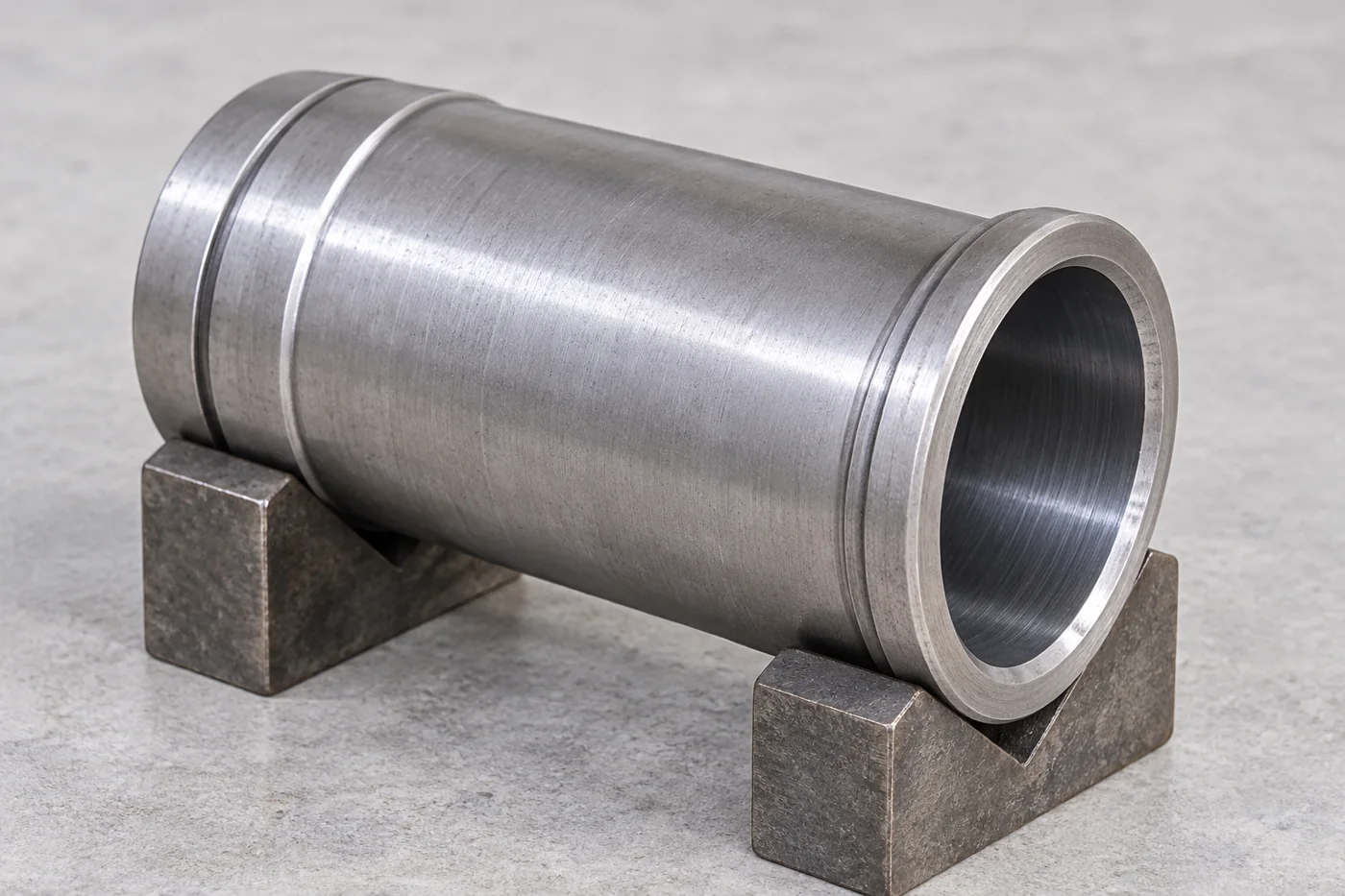
Show the complete component and the axis used to relate its internal interface to the outside working shape. Section views should identify wall changes, shoulders and the limits of the profile that require control. Overall diameter alone may miss a local feature that determines how the sleeve sits or grinds.
Use a measurement plan that corresponds to those features. If profile measurements are needed at several axial locations, identify them on the drawing and report. That gives the first-part review repeatable results and makes later wear measurements easier to compare to the actual new component.
08A CLEARER CASTING PURCHASE
Installation approval and wear evaluation have separate results
The catalogue states 100% inspection. Translate that into an agreed set of characteristics and records for the selected sleeve: material identity, relevant dimensions, final surface and any specified property checks. Installation can then evaluate fit against the actual supporting assembly.
A service trial answers a later question about behaviour under recorded grinding conditions. Measure wear at identified locations and relate it to processed quantity and operating history. Keep changes to feed, settings or the mating grinding surface visible. A successful installation and a completed wear trial support different purchasing decisions and should not be collapsed into one approval.
- 0101Accept the agreed material and new-part measurements.
- 0202Check installation against the actual mating assembly.
- 0303Record service conditions and repeatable profile measurements.
- 0404Use the observed wear and removal condition for the next release.
09A CLEARER CASTING PURCHASE
Protection keeps mounting references usable
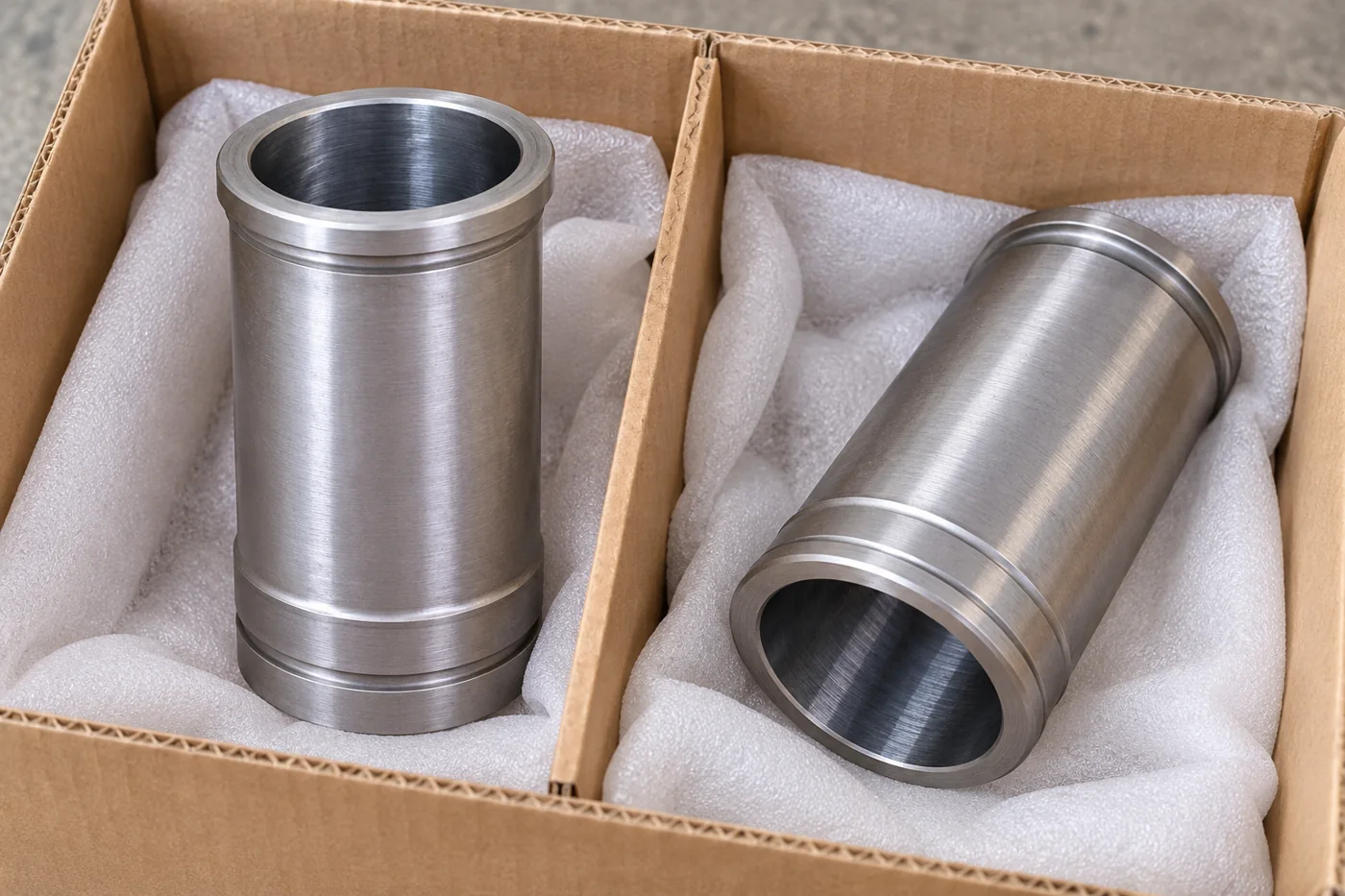
Crate packing is listed for the completed cast parts. Select supports that avoid damage to the bore, locating shoulders and any finished profile areas. Separate sleeves so their edges cannot strike each other during handling, and identify the surfaces that need corrosion protection before transport.
The pack list should retain the sleeve part number, revision, material and order reference. On receipt, your team can then compare the protected component to the right inspection package before installation. This is particularly helpful where old and new sleeves look similar but have different working profiles or fitting dimensions.
10A CLEARER CASTING PURCHASE
A replacement brief supports a useful first order
Provide the approved new-part drawing, worn-part photographs and relevant mating dimensions. Add the operating context and the selected grade with its required condition. We can quote the custom sand-casting scope with the requested finishing, inspection and packing boundaries.
The listing allows a one-piece enquiry, making it possible to discuss an initial component separately from repeat quantities. Define what that first part must establish: manufacturing acceptance, installation fit and, where required, a controlled service trial. The resulting record becomes a concrete basis for the next sleeve order.
11 YOUR NEXT STEP
Bring your component into the conversation
Tell us which component you need, the material, quantity and required supplied condition. Relia will connect your enquiry with the casting, machining and evidence relevant to that part.
Technical reading and scope
Technical references explain the process. Component specifications and agreed order records define the actual supply.
Technical reference: Vertical mill wear-profile reviewISO 286-1: Size tolerance and fit concepts- [email protected]
- Phone
- +86 18561762631
- +1 404 203 0971
- Company and address
- Qingdao Relia Industries Co., Ltd.
Shuyuan Road, Qingdao, Shandong, China