
01A CLEARER CASTING PURCHASE
Reuse Existing Casting Patterns with a New Foundry
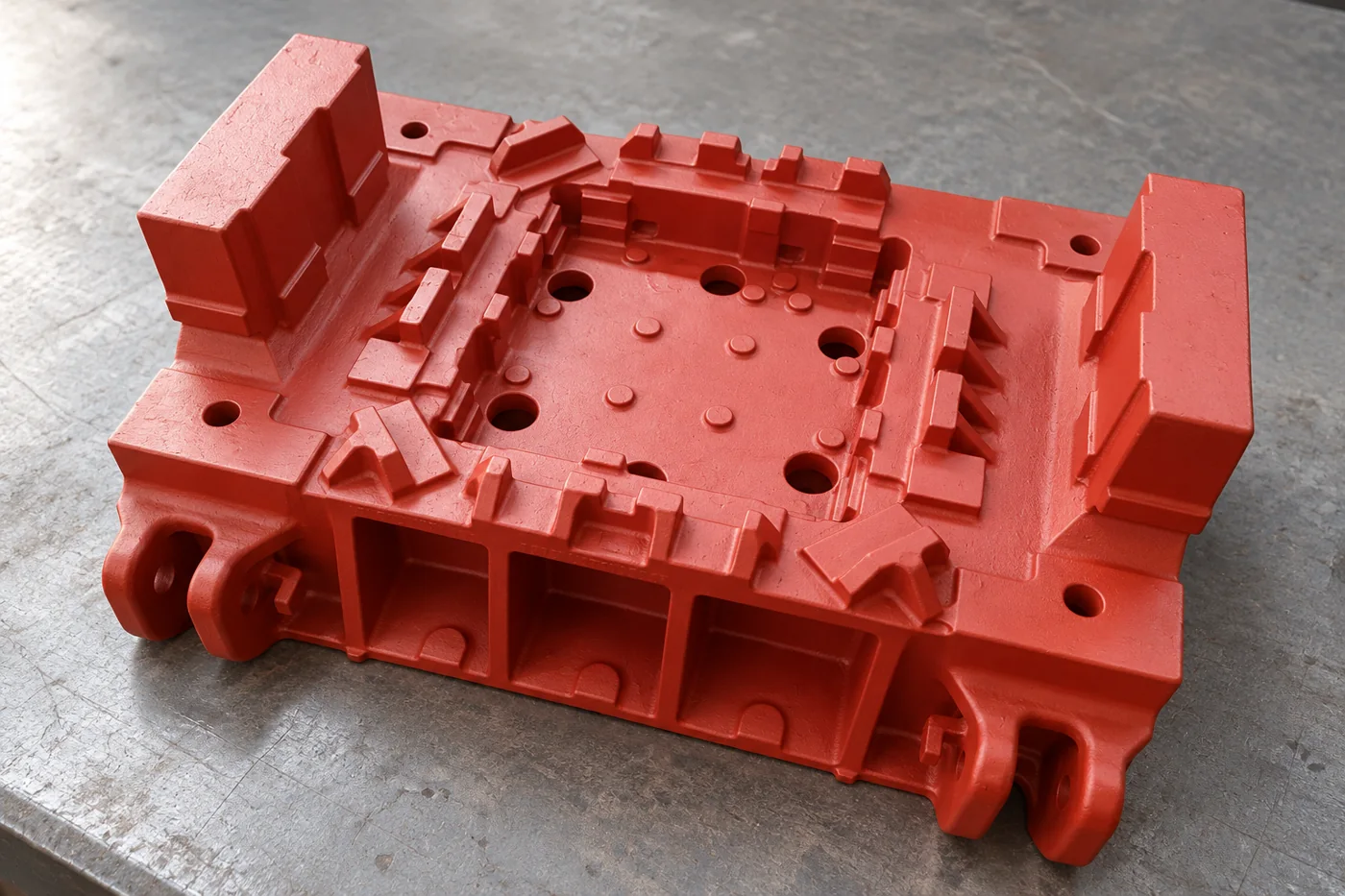
An existing pattern is valuable when it can make the casting your current drawing requires. Relia’s industrial range includes tooling design, mould manufacture, prototyping and CNC work. Send the pattern and core-box inventory with photographs and the released part definition. We can discuss direct reuse or visible adaptation around moulding, stock and finished interfaces before the transferred tooling becomes a production commitment.
- Tool package
- Pattern + core boxes
- Evaluate
- Condition + route fit
- Prove
- Sample to current drawing
02A CLEARER CASTING PURCHASE
Inventory the complete forming package
Relia’s own casting and machining production connects tooling assessment to the blank and finished part. Coated-sand and shell routes are our main sand processes; a transferred tool still needs its actual support, parting and core arrangement assessed for the proposed component route.
A main pattern may depend on core boxes, loose pieces, matching equipment or locating features that were not included in the first transfer list. Identify every object and its role, with photos, known revision and condition. Record ownership and permitted modification separately from its physical state. This lets the tooling assessment distinguish a complete reusable set from a partial package that still needs engineering or manufacture. A clear inventory also gives receipt and return handling a practical reference.
03A CLEARER CASTING PURCHASE
Compare the pattern with the required casting
The tool carries production geometry, including draft and allowances; the finished-part drawing carries the required delivered result. They should not be treated as identical objects. Check which revision the tool represents and how its dimensions relate to the requested grade, casting route and machining stock. SFSA’s dimensional guidance separates those allowances from finished geometry. For your transfer, that means a measured tool size is interpreted through the intended casting rather than copied directly onto the component acceptance drawing.
| Reference | Transfer decision |
|---|---|
| Finished drawing | Required fit, datums and delivered interfaces. |
| Casting definition | Cast geometry, local stock and accepted surface state. |
| Pattern condition | Existing production form and known modifications. |
| Core arrangement | Internal geometry and the locating relationships it depends on. |
04A CLEARER CASTING PURCHASE
Retain stock at the interfaces that matter
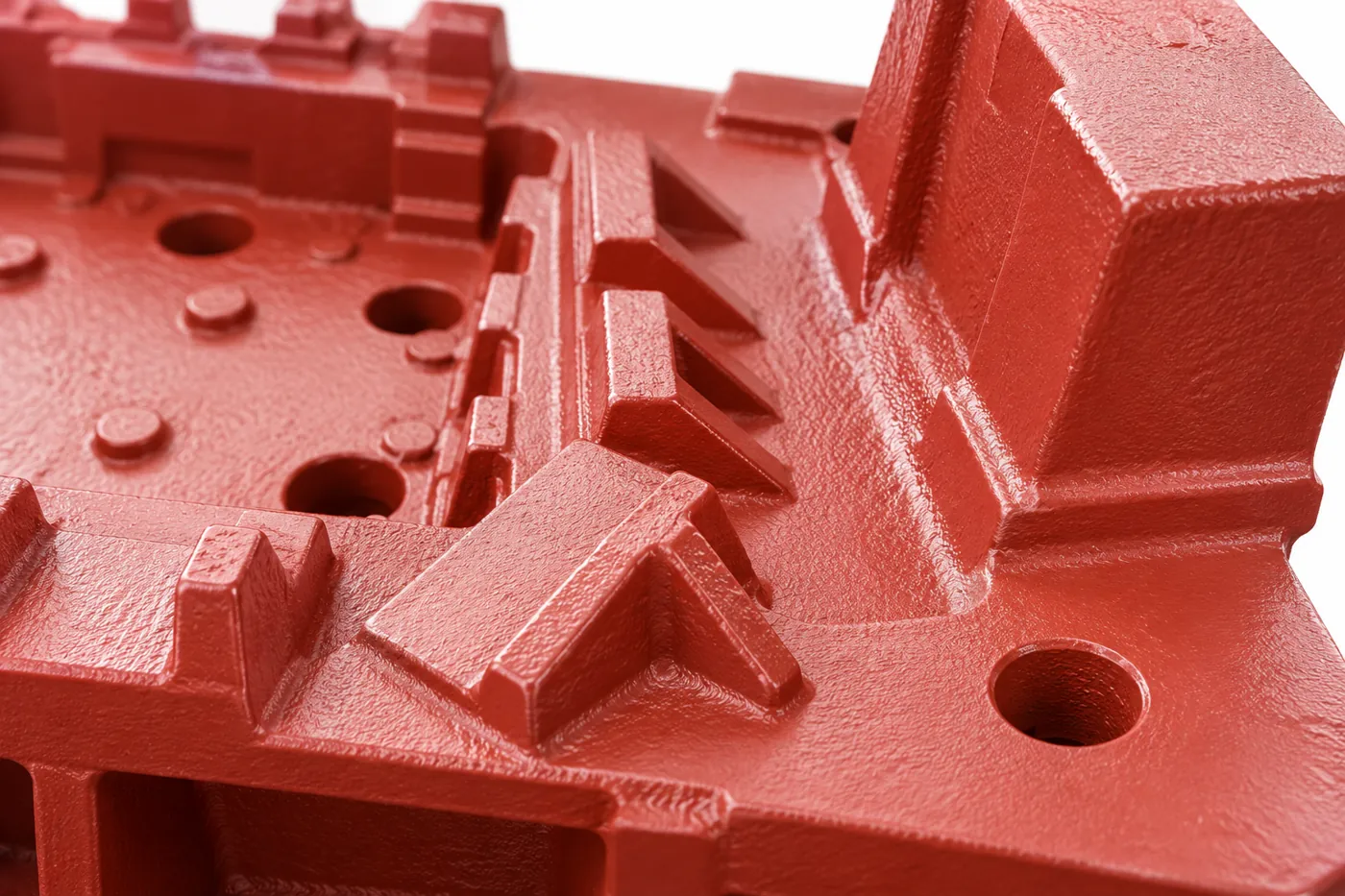
A raised boss or rib junction can look unchanged while the stock around its later hole has shifted. Identify the finished dimensions that matter to installation and compare them with the casting produced by the transferred tool. A new molding arrangement may need a revised locating or feeding approach even when the pattern remains usable. The decision should preserve the mounting relationship and clean-up requirement, while separating a tool adaptation from a permanent change to the component design.
05A CLEARER CASTING PURCHASE
Evaluate reuse within the new molding arrangement
Review the pattern’s parting arrangement, draw direction and core location against the proposed process. A tool that previously worked in one setup can require adaptation to its new support and locating method. If a feature prevents clean withdrawal, the decision may involve a loose piece, revised tooling or another forming approach. Our in-house tooling and prototyping scope supports this development discussion. Choose direct reuse only when the actual arrangement is understood, and quote adaptations as tangible tooling work.
- 01MatchCompare target casting, available tooling and molding arrangement.
- 02LocateEstablish pattern/core positioning and reference relationships.
- 03AdaptDefine necessary repairs or modifications without hiding design changes.
- 04TrialProduce the agreed casting and assess its stock-sensitive features.
06A CLEARER CASTING PURCHASE
Separate repair from a change of production geometry
Repairing damage and changing an allowance can have different consequences. Record the area affected, the proposed restored or modified shape and the part characteristics it can influence. A repaired locating feature may require a trial of core position; a changed machining pad may require an updated blank drawing. Approve these changes before the trial so the resulting part can be interpreted correctly. The tooling record then explains the new baseline rather than leaving production geometry dependent on an undocumented workshop adjustment.
07A CLEARER CASTING PURCHASE
Handle the tooling as its own deliverable
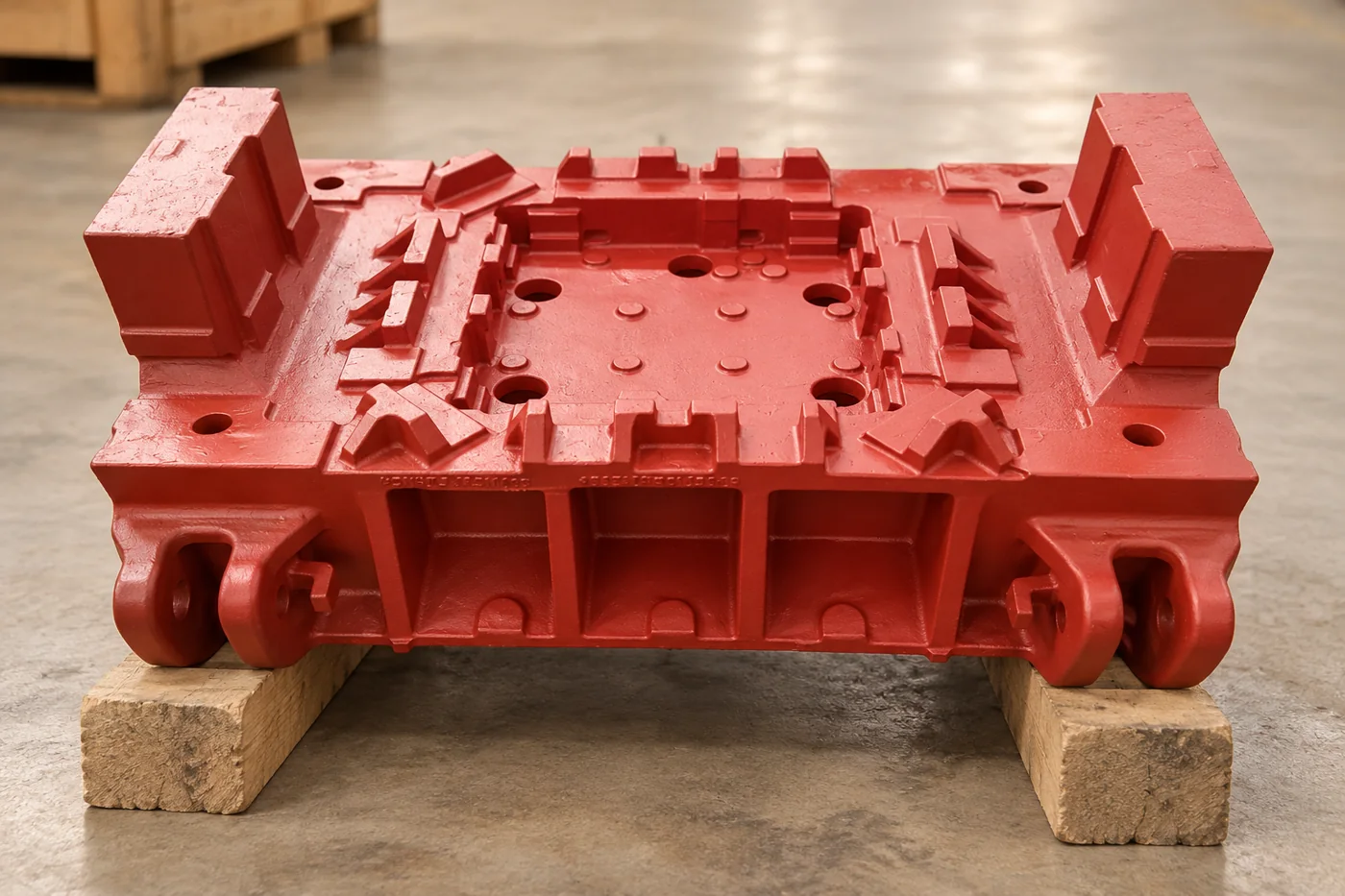
The casting shown here provides component context; transferred patterns and core equipment need their own dimensions, mass and handling information. Pack related pieces so locators and mating edges are protected, and keep the inventory available at receipt. Identify any storage-sensitive surface and the required preservation or return arrangement. A practical transfer plan keeps tooling identity separate from sample-casting identity, which is especially useful when multiple variants or spare loose pieces arrive in the same shipment.
08A CLEARER CASTING PURCHASE
Use the trial to qualify reuse rather than appearance
The first casting should establish whether the reviewed tool and new route deliver the required blank and finished features. A sample layout can reveal insufficient stock, core displacement or a mismatch with the target drawing before a repeat release. Measure the characteristics most affected by the transfer and perform the specified machining where necessary to demonstrate clean-up. Keep tooling findings separate from component design changes, then release a baseline that explains what can be repeated.
- 0101Inspect trial cast geometry and stock around critical machined interfaces.
- 0202Complete the specified machining and dimensional checks.
- 0303Resolve tool-condition and setup findings against their affected features.
- 0404Release the updated tooling record and component acceptance definition.
09A CLEARER CASTING PURCHASE
Keep finished machining beyond the pattern boundary
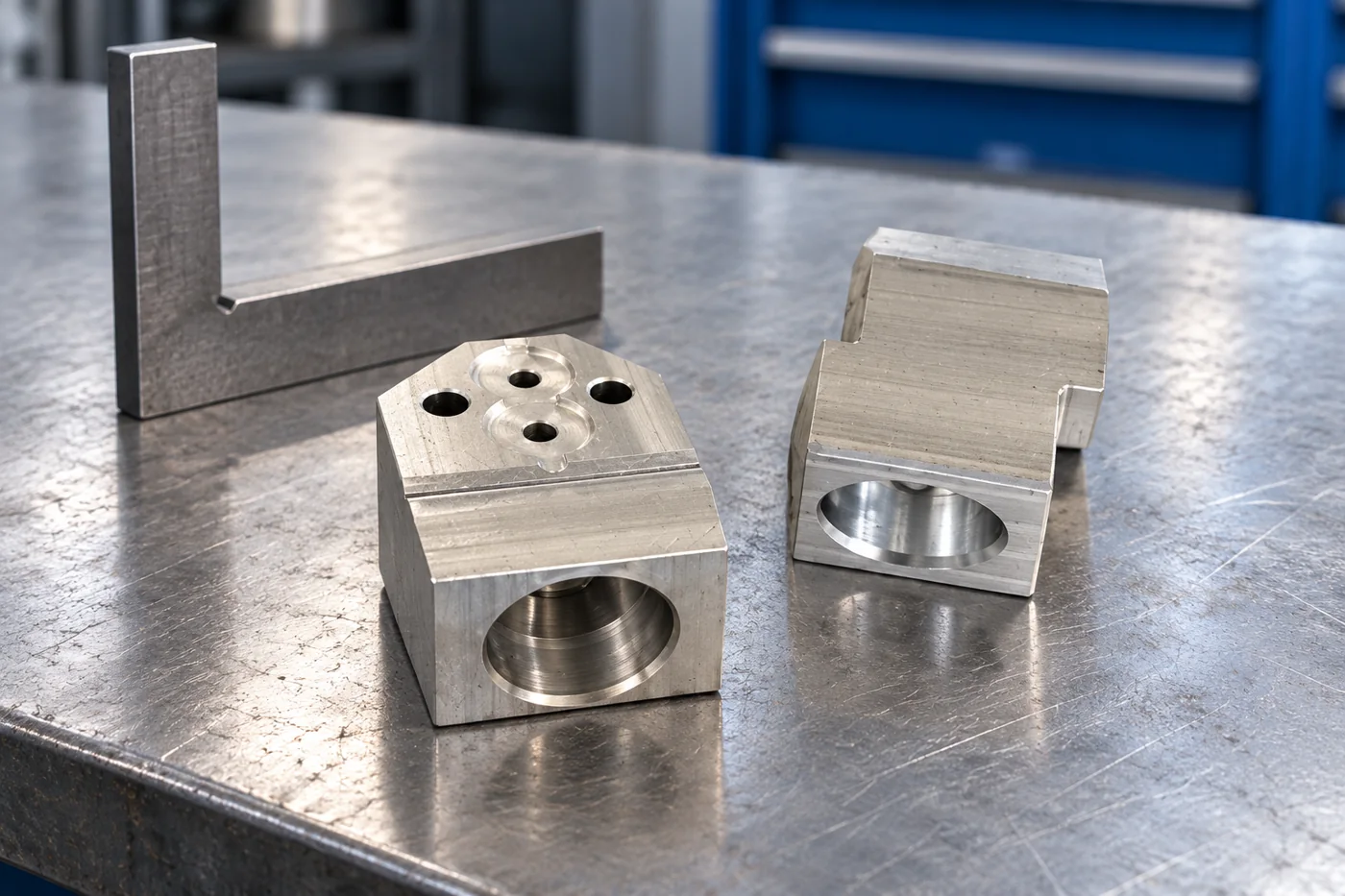
Existing tooling does not supply the final bore, face or port by itself. Our gearbox casting scope includes CNC work, and the industrial tooling range lists three-, four- and five-axis milling, turning and EDM. Select only the operations needed by the component and retain their finished acceptance requirements separately from tool reuse. This makes a transferred-pattern quotation comparable with new tooling: both must deliver the same part condition even when their initial forming investment differs.
10A CLEARER CASTING PURCHASE
Request a transfer assessment with a usable trial plan
Send the tooling inventory and photos with the released casting and finished drawings, selected grade and quantity. Add the previous process information you hold and the modifications you can authorise. We can assess the reuse scope, the required adaptation work and a trial that addresses the affected geometry. Your purchasing decision then compares a qualified reuse route with the alternatives rather than assuming that possession of an old pattern guarantees an economical new production source.
11 YOUR NEXT STEP
Bring your component into the conversation
Tell us which component you need, the material, quantity and required supplied condition. Relia will connect your enquiry with the casting, machining and evidence relevant to that part.
Technical reading and scope
Technical references explain the process. Component specifications and agreed order records define the actual supply.
Dimensional Capabilities of Steel Castings — SFSA Supplement 3Ordering Steel Castings — SFSA- [email protected]
- Phone
- +86 18561762631
- +1 404 203 0971
- Company and address
- Qingdao Relia Industries Co., Ltd.
Shuyuan Road, Qingdao, Shandong, China