
01A CLEARER CASTING PURCHASE
A356 Water Manifold Castings
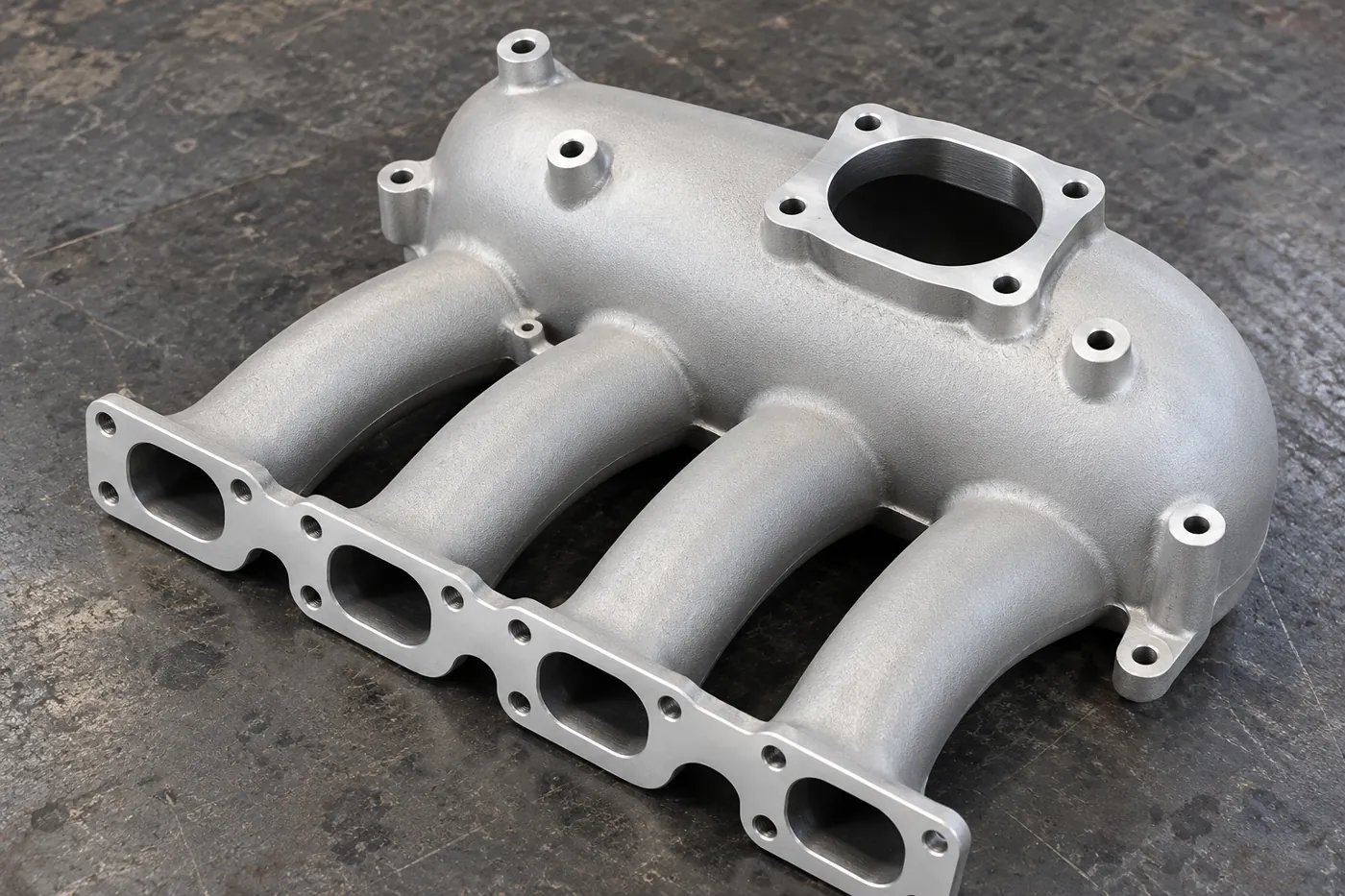
Source the passage body and finished ports in one manifold order. Relia offers A356 aluminum water-distributor castings for equipment and industrial-plumbing enquiries. Define which branches connect, where the ports locate and the final material and surface condition. Our casting and machining scope can then be evaluated against a component your team can install.
- Material
- Selected A356 condition
- Body
- Defined passage connections
- Finish
- Nominated port interfaces
02A CLEARER CASTING PURCHASE
Multi-port distributors with a selected alloy and route
Relia Casting offers OEM aluminum water manifolds through sand casting, with separately selected permanent- or pressure-die routes in the catalogue. A356, ZL101, A360 and AC2C are separate alloy requests; T5/T6 choices belong to the chosen alloy and process. Our own sand-casting and machining production covers the relevant component work, without treating every route as one interchangeable configuration.
For your equipment layout, number each inlet and outlet and identify which passages communicate or stay isolated. We can supply the selected casting, nominated port work and finish, with dimensional/material reports available. The numbered port schedule makes that evidence useful to your assembly team.
03A CLEARER CASTING PURCHASE
A356 and its condition form one material requirement
A356 is the alloy request; the temper states a different part of the supplied condition. T5 and T6 describe different thermal histories, so they should not appear as interchangeable entries on one order. Specify the chosen alloy-temper combination using its governing casting specification and required property evidence.
The Aluminum Association distinguishes property evidence from separately cast specimens and material taken from a casting. If mechanical testing is ordered, identify which specimen basis applies. A general alloy table should not silently become an acceptance promise at every section of your manifold.
| Material field | Useful purchase definition |
|---|---|
| Alloy | A356 with complete governing casting specification |
| Condition | One selected delivered temper and treatment requirement |
| Evidence | Composition and specified material/property records |
| Specimen basis | Identify casting location or separate specimen as required |
04A CLEARER CASTING PURCHASE
Port seals need finished geometry rather than cast appearance
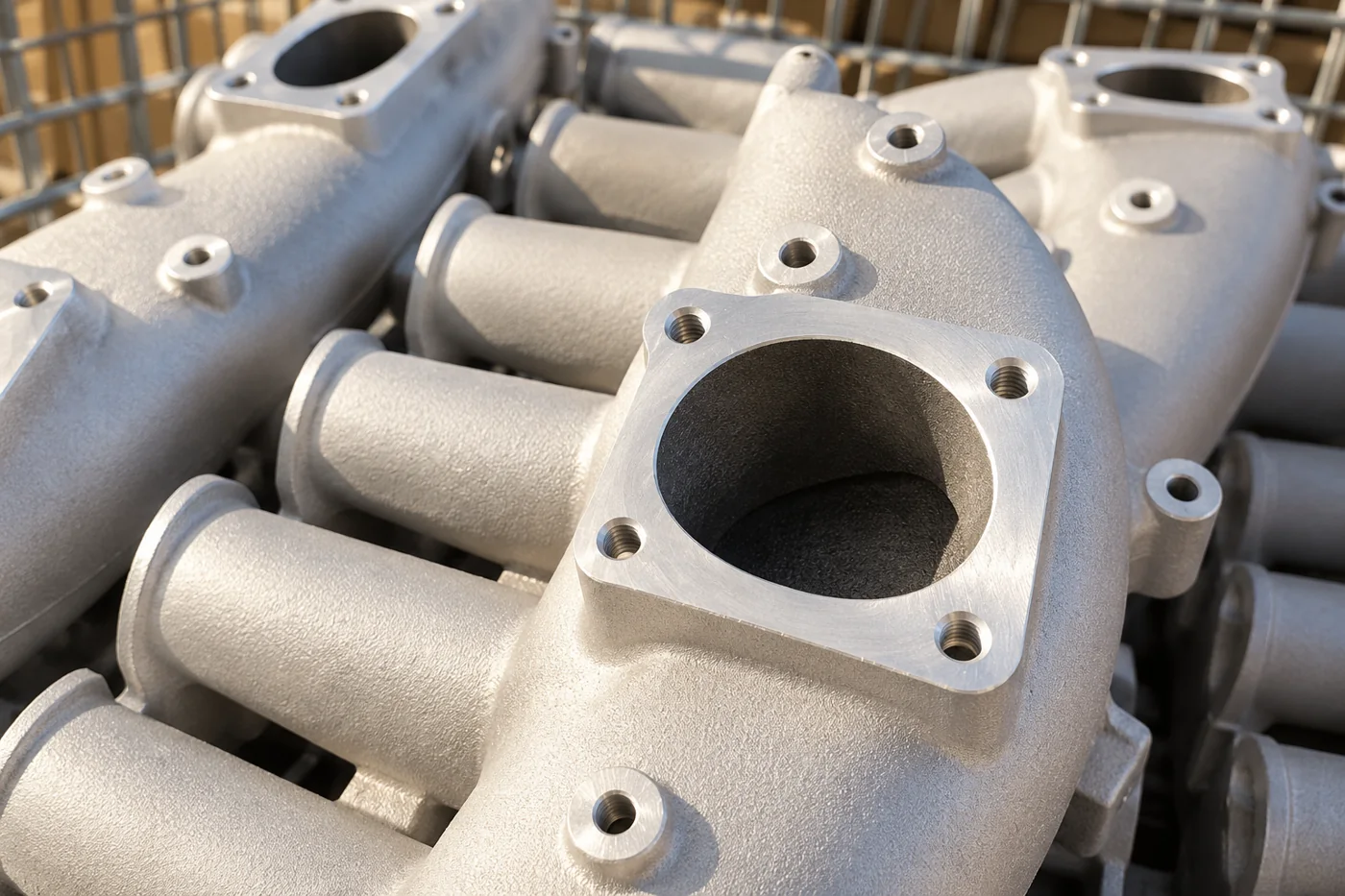
Specify the seal used at each port: gasket face, O-ring land, threaded fitting or another designed arrangement. Include its diameter, depth, entry and surface requirements as applicable. The branch wall must leave sufficient material for the finished interface and any thread engagement.
For an oval or flanged main opening, control the bolt pattern and sealing land against the same mounting reference as the branches. Machining then preserves the required arrangement instead of producing individually correct openings in the wrong relative positions.
- Port seal
- Actual gasket, O-ring or fitting geometry
- Location
- Branches tied to the mounting reference
05A CLEARER CASTING PURCHASE
Create the passage body before the final port geometry
For a sand-cast manifold, the pattern and internal forming arrangement need to keep branches, junctions and minimum walls together. Core seats establish passage location; the tooling proposal should also leave a route for removing internal sand. Retain local stock around the flange and port features that will be cut. Permanent- and pressure-die alternatives need their own tooling assessment rather than inherit that same sand-core plan.
The selected alloy condition then determines where treatment belongs relative to final machining. Complete the specified port faces, threads or seal lands from the mounting datum scheme, after any operation that affects their final acceptance. A useful release connects material condition, numbered port positions and passage communication; a leakage result alone cannot show that every outlet connects to the intended branch.
- 01Form branchesCore location, junction walls and removal access
- 02Obtain material stateSelected alloy/temper and relevant evidence
- 03Machine connectionsPort/seal features from mounting references
- 04Accept the distributorPort matrix, material condition and selected communication/leak checks
06A CLEARER CASTING PURCHASE
One datum scheme connects all the branches
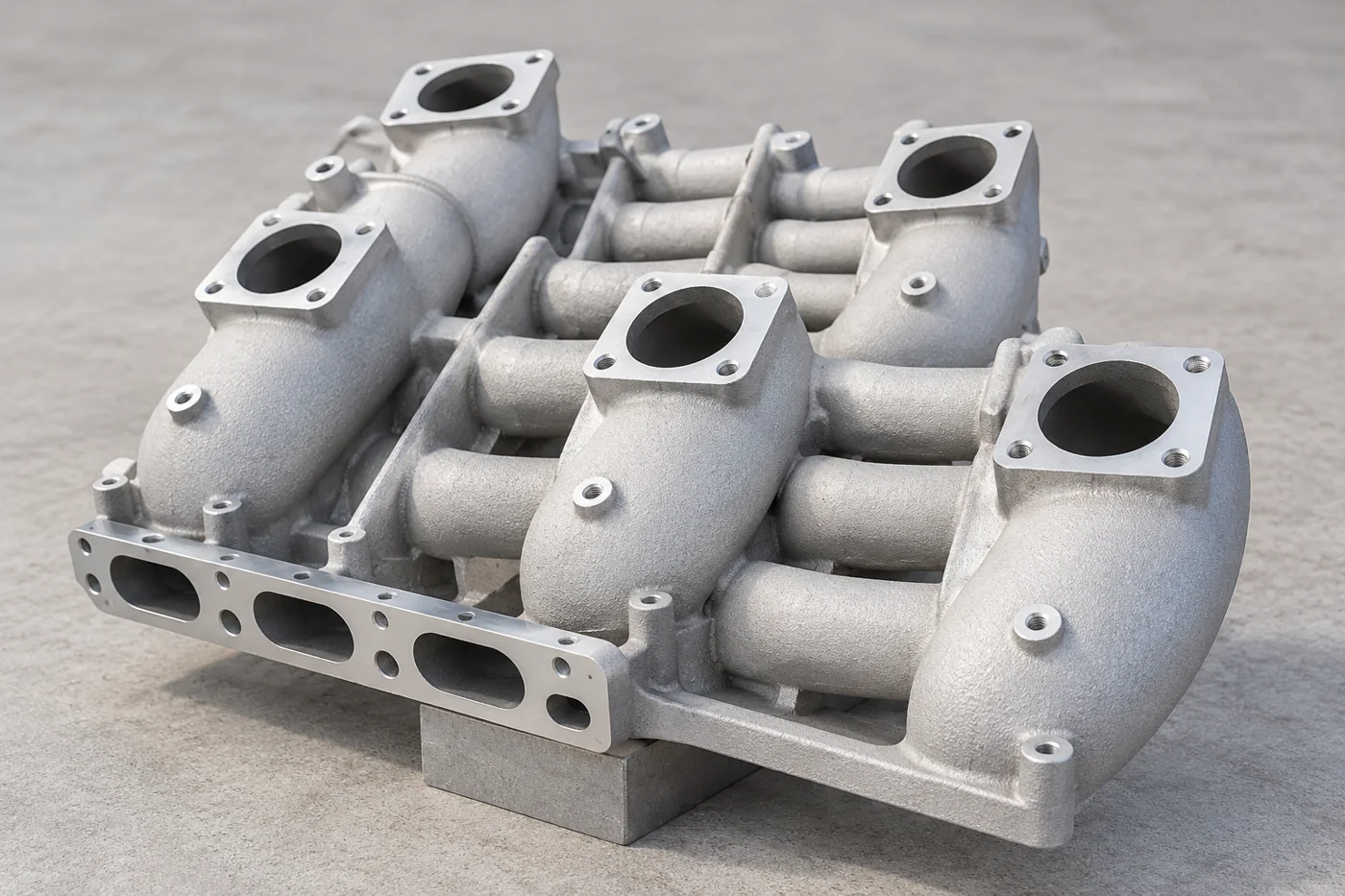
Use a mounting plane and suitable locating references to define the port arrangement. Identify the branch axes, flange clocking and distance to mating equipment. The connection pattern is an assembly requirement, not simply a set of independent diameters.
Check the final positions after the specified treatment and machining sequence. Where repeated manifolds will connect to a rigid piping or equipment layout, retain the accepted drawing revision and report the features that determine that fit. This makes repeat supply easier to assess than an outside-envelope check alone.
- Datum scheme
- One reference for the connection pattern
- Final check
- Port axes and clocking in supplied condition
07A CLEARER CASTING PURCHASE
Leakage and flow communication require different checks
A containment test checks whether fluid escapes from the pressure boundary. A communication check establishes whether the intended ports connect or remain isolated. A housing can pass one and fail the other. Identify both requirements if the distributor design needs them.
State the supplied configuration, plugs, test medium, pressure, hold time and acceptance for any specified leakage test. Keep surface repair or impregnation permissions explicit where relevant. The Aluminum Association's casting-quality guidance treats special pressure-testing requirements as drawing callouts, rather than an automatic result of naming the alloy.
08A CLEARER CASTING PURCHASE
The first manifold approved against a port matrix
Create a first-part matrix that pairs each port number with its position, connection geometry and required check. Add the material condition and any specified containment result to the same component identity. This prevents a measurement record for one branch from standing in for all outlets.
If the sample needs a port repositioned, trace the change through tooling, model and machining data. Keep approved changes to the route or temper visible too, so repeat parts are evaluated against the same supplied definition rather than an earlier sample assumption.
- 0101Check every numbered port and mounting relationship
- 0202Verify material condition and required surface state
- 0303Record communication and specified leakage results
- 0404Release one model, route and alloy-condition revision
09A CLEARER CASTING PURCHASE
Protection follows the cleaned passage and sealing regions
Sandblasting, painting and polishing are finish options in this manifold listing. Define coverage and masking so the treatment does not change the finished sealing contact or leave abrasive residue inside a branch. Finish internal preparation before applying the agreed opening protection.
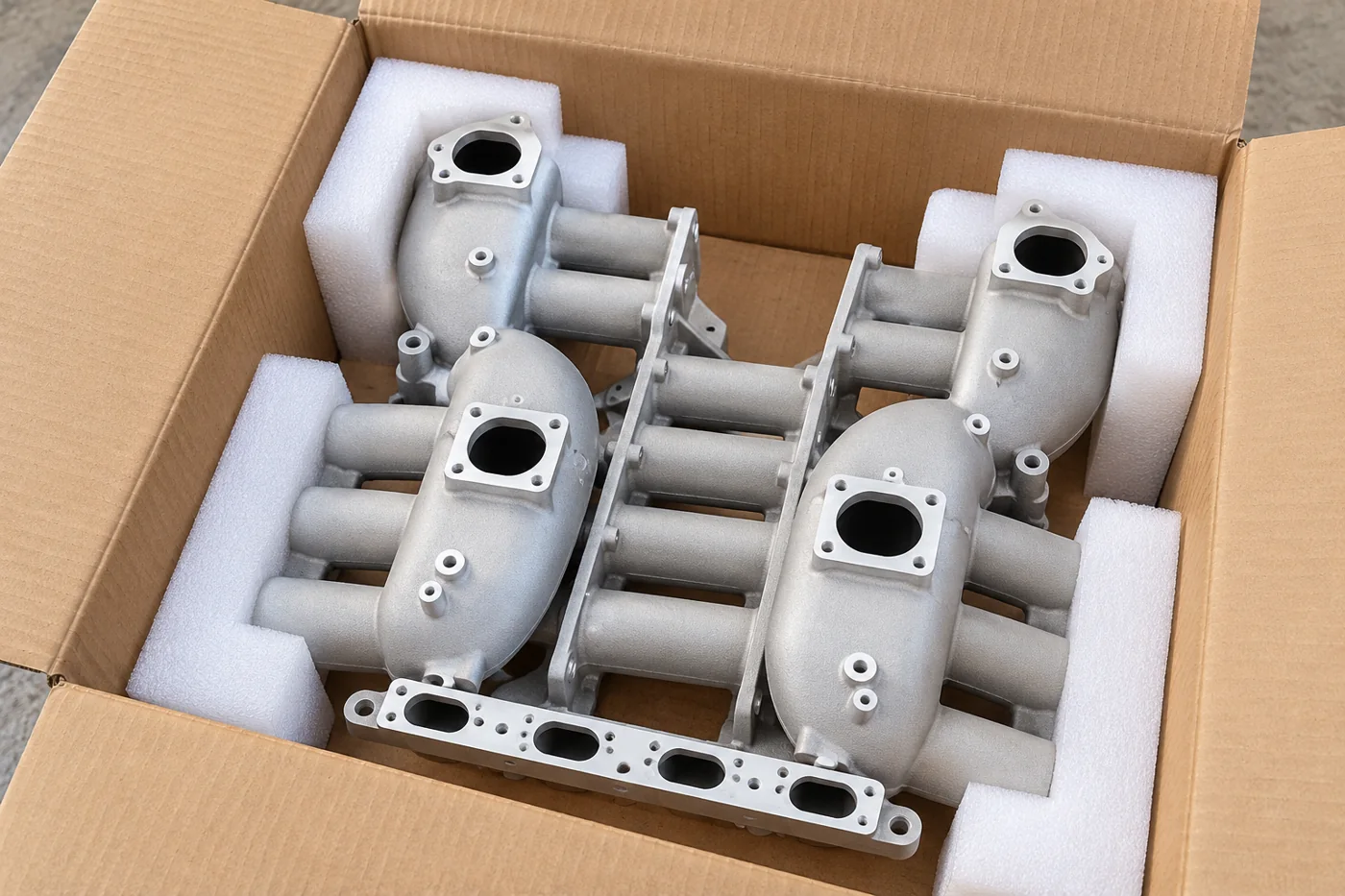
Packing uses an inner plastic bag and multilayer wooden box. Separate flange faces and outlet edges against contact damage. Keep the part identity and accepted port configuration with the package so receiving can inspect the finished interfaces without confusing similar-looking revisions.
- Surface
- Selected blasting, paint or polishing
- Packing
- Inner bag and multilayer wooden-box scope
10A CLEARER CASTING PURCHASE
A distributor definition your installation can repeat
Relia can manufacture the manifold around the complete installation relationship, including passage layout, selected material condition and usable connections. The new-part route begins with drawing review and an inspected sample, followed by your confirmation before batch production. This is especially useful where repeated manifolds join a rigid piping or equipment arrangement.
Keep the port matrix and accepted revision with repeat releases. If an outlet moves, trace that change through the model, forming arrangement, machining and checks. Your buying comparison then concerns a defined distributor rather than several similar-looking castings with different internal and connection assumptions.
11 YOUR NEXT STEP
Bring your component into the conversation
Tell us which component you need, the material, quantity and required supplied condition. Relia will connect your enquiry with the casting, machining and evidence relevant to that part.
Technical reading and scope
Technical references explain the process. Component specifications and agreed order records define the actual supply.
Aluminum Association — casting properties and quality calloutsAluminum temper designation principles- [email protected]
- Phone
- +86 18561762631
- +1 404 203 0971
- Company and address
- Qingdao Relia Industries Co., Ltd.
Shuyuan Road, Qingdao, Shandong, China