
01CHINA CASTING AND MACHINING
Casting Materials Selected for Your Component
The useful material choice is the one that suits your component’s load, environment and manufacturing condition. Relia’s catalogue includes grey iron, ductile iron, ADI, aluminum, steel and copper-alloy component enquiries. This guide helps you connect the exact grade to casting, treatment, machining and the records needed at acceptance. A familiar grade name alone does not establish that two specifications are interchangeable.
- Select
- Duty + exact grade
- Include
- Treatment condition
- Verify
- Material test basis
02CHINA CASTING AND MACHINING
Compare the requirement before comparing grade names
Relia selects the casting and machining proposal around your released material requirement and component duty. Grey iron, ductile iron and ADI are separate choices; A356-T6 includes a stated final condition; copper alloys need an environment-specific selection. The catalogue entry points below identify choices to evaluate, rather than certify equivalence between standards.
Our own casting and machining production lets us discuss how the material condition affects the supplied interfaces. We can provide material test reports and agree the test and component identity required for your order.
| Duty and material option | Selection consequence and evidence |
|---|---|
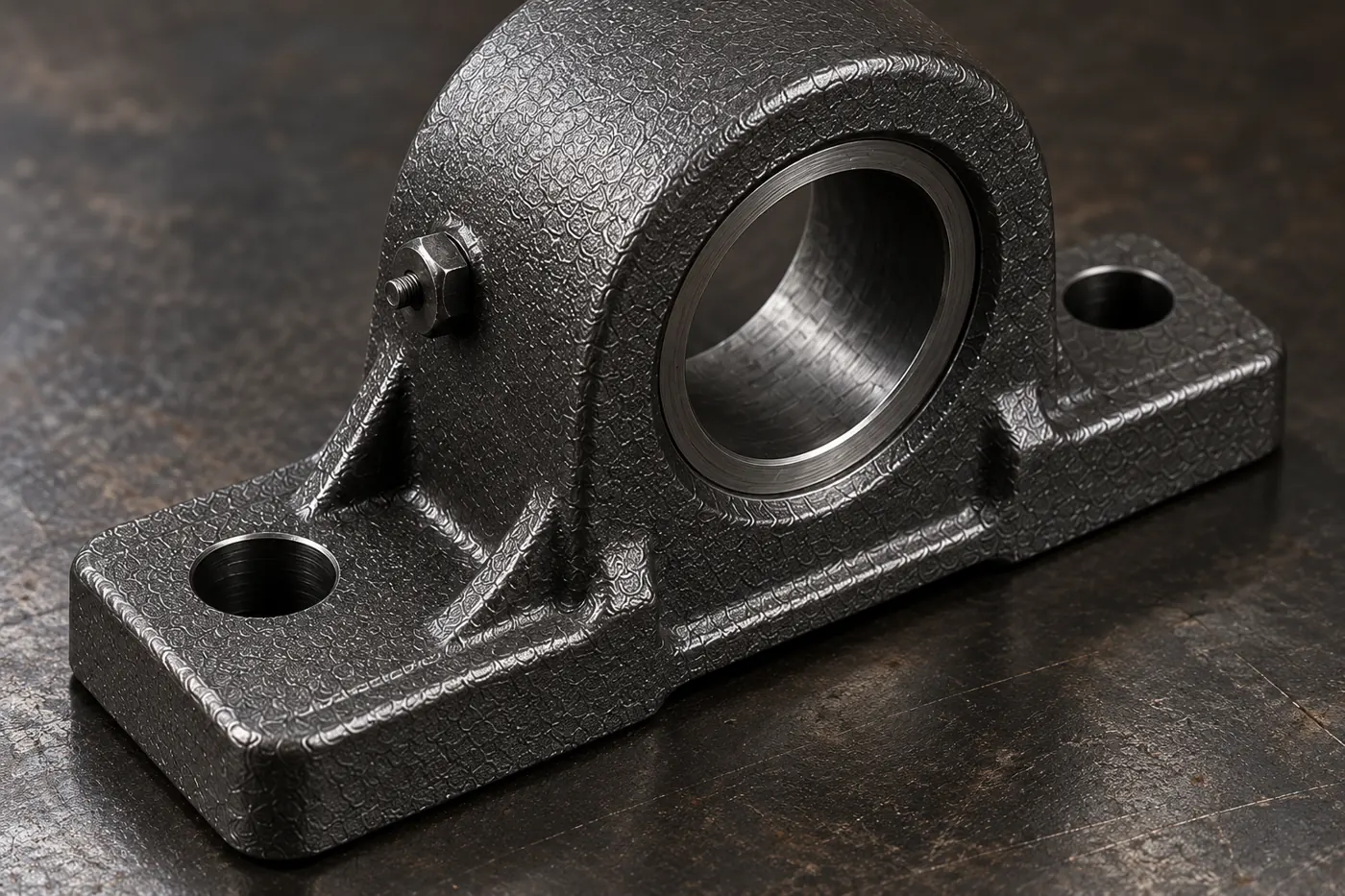
| Housing or support — HT200 / HT250 grey iron | Compare the design’s stiffness, damping and machined-seat requirements; retain the complete grade and specified hardness or material results. |
| Connection requiring ductility — QT500-7 ductile iron | Retain the required strength and elongation basis as well as the finished mounting geometry. |
| Wear or strength-led bracket — ADI | Select the complete austempering grade; plan material acceptance and final machining around that condition. |
| Lighter housing design — A356-T6 aluminum | Connect alloy and temper with the wall geometry, finish and final interface measurements. |
| Fluid or heated component — bronze | Choose the actual alloy against the medium and thermal duty, with its required material evidence. |
03CHINA CASTING AND MACHINING
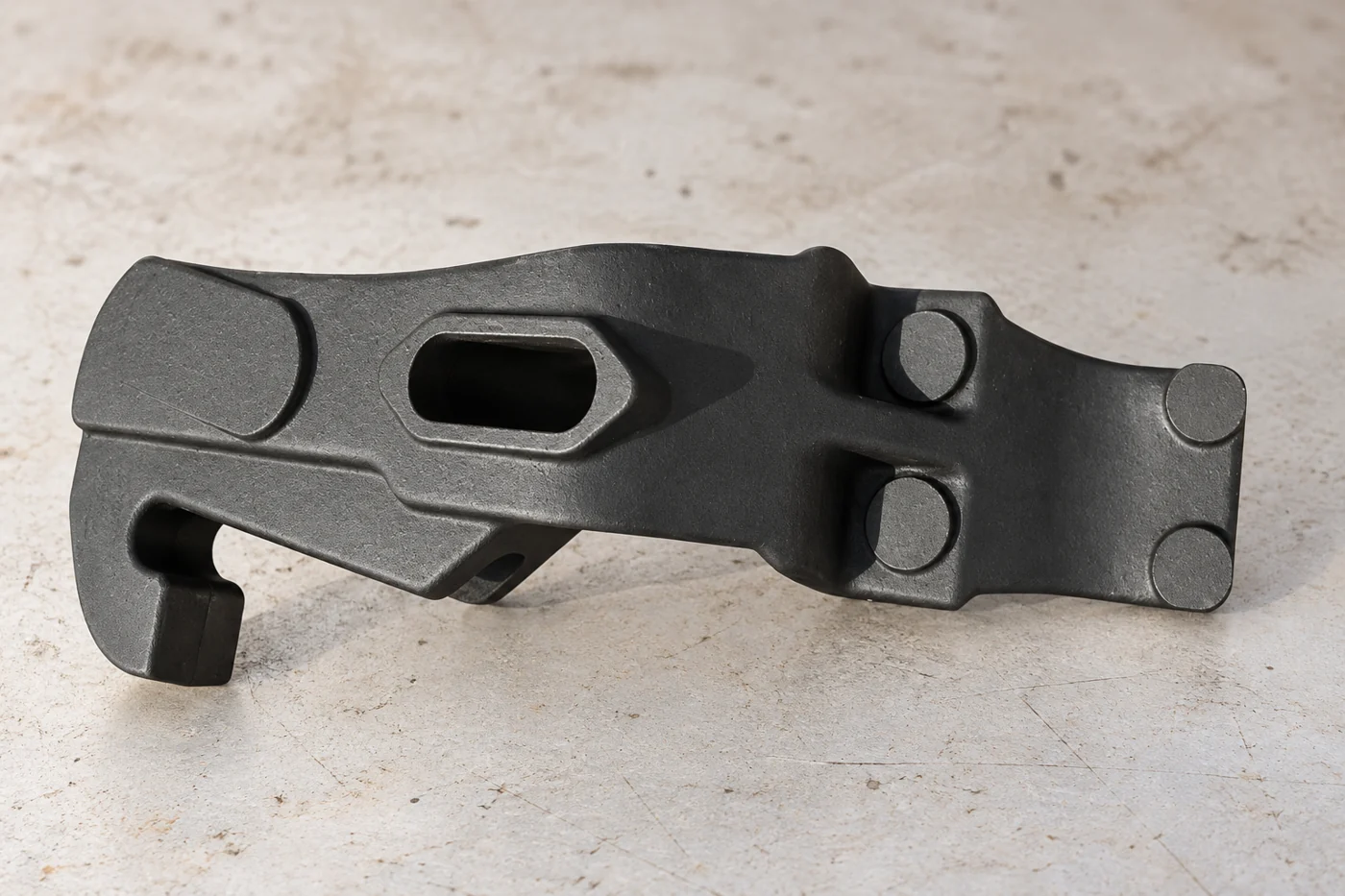
ADI requires a complete treatment and property basis
Our ADI range includes connecting rods, support plates and brackets for machinery, mining and agricultural applications. Austempering makes the treatment condition part of the material selection. A complete enquiry therefore retains the governing grade and the property requirements used by the component design, rather than assume that any ductile iron can be substituted.
For a loaded bracket, identify how forces enter and leave the mounting areas. Then keep material acceptance, final geometry and any design-specific validation as related but separate parts of the purchase brief.
04CHINA CASTING AND MACHINING
Select steel with its component route and condition
Our low-carbon alloy-steel service combines investment casting and CNC machining, with quenching and tempering named in that offering. The catalogue also contains separate steel sand-casting enquiries. The full alloy designation and delivered condition determine which route is being evaluated for the actual component.
When section changes, a heavy boss or a critical loaded region matters to the design, show it in the drawing and acceptance brief. A general steel description should not hide the required material condition, heat-treatment stage or examination region.
- 01DutyMechanical loading, temperature and contacting environment
- 02MaterialComplete designation and required condition
- 03GeometrySection changes, loaded regions and finished interfaces
- 04EvidenceAgreed mechanical records and examination scope
05CHINA CASTING AND MACHINING
Keep substitutions visible in the order
A substitution can change machining behaviour, treatment, coating or the property balance needed by the design. Preserve the original designation and describe the proposed alternative with its own standard and delivered condition. Compare the actual requirements rather than match similar-looking numbers.
The engineering decision should also identify which documents change. If the material selection changes after a sample was accepted, the sample approval and later production order need to refer to the newly approved basis. This keeps the commercial comparison connected to the component that will actually be manufactured.
06CHINA CASTING AND MACHINING
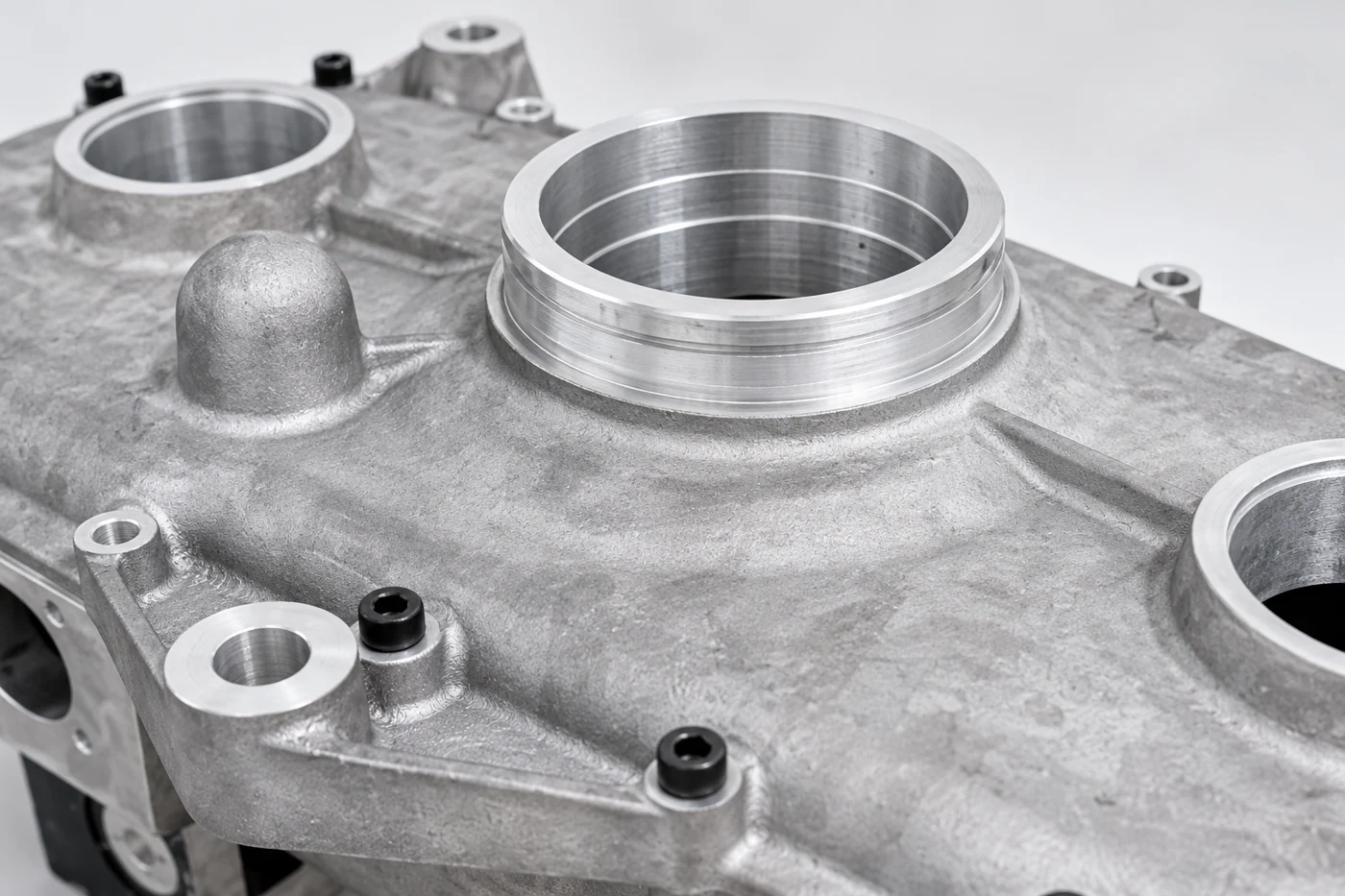
A356-T6 joins alloy choice with final machining
Our A356 sand-casting offering names T6 heat treatment, CNC machining, CMM inspection and shot blasting. For a housing, that combination is useful when a cast wall structure must carry precise assembly interfaces. The chosen material condition should remain visible when those bores and faces are machined and accepted.
Anodizing, plating, powder coating and polishing are separately listed finishing options in the machining range. Select the relevant treatment and coverage for the actual alloy and part; the material choice and finish choice together define the surface your assembly will receive.
07CHINA CASTING AND MACHINING
Copper alloys are selected against the fluid environment
Our bronze impeller and flame-diffuser ranges address different component duties. For a fluid part, describe the medium, its temperature and relevant contamination or cleaning conditions alongside the alloy designation. For a heated component, the thermal cycle and mechanical role matter as well.
A broad copper-alloy name is therefore the start of the conversation. Keep the actual grade, interface design and acceptance criteria together, then use the component-specific guide to examine vane geometry, mounting features or other functional details.
08CHINA CASTING AND MACHINING
A material record and a dimensional report have different jobs
The iron machinery offering lists HB 170–240 as a hardness reference and available material documentation, including a mill certificate or EN 10204 3.1 requirement. Hardness, material test results and a dimensional report describe different characteristics. Preserve their part or batch identity and the condition to which each result applies.
When preparing the order, identify the required document type and the results needed for the selected grade. This gives your incoming team an understandable link between the material designation, the supplied component and its acceptance records.
| Record | Information it contributes |
|---|---|
| Material designation | The selected alloy or iron grade and supplied condition |
| Mechanical or hardness result | Specified property, test location or specimen basis and unit |
| Material document | Required document type and relevant heat or batch identity |
| Dimensional report | The drawing features measured on the supplied component |
09CHINA CASTING AND MACHINING
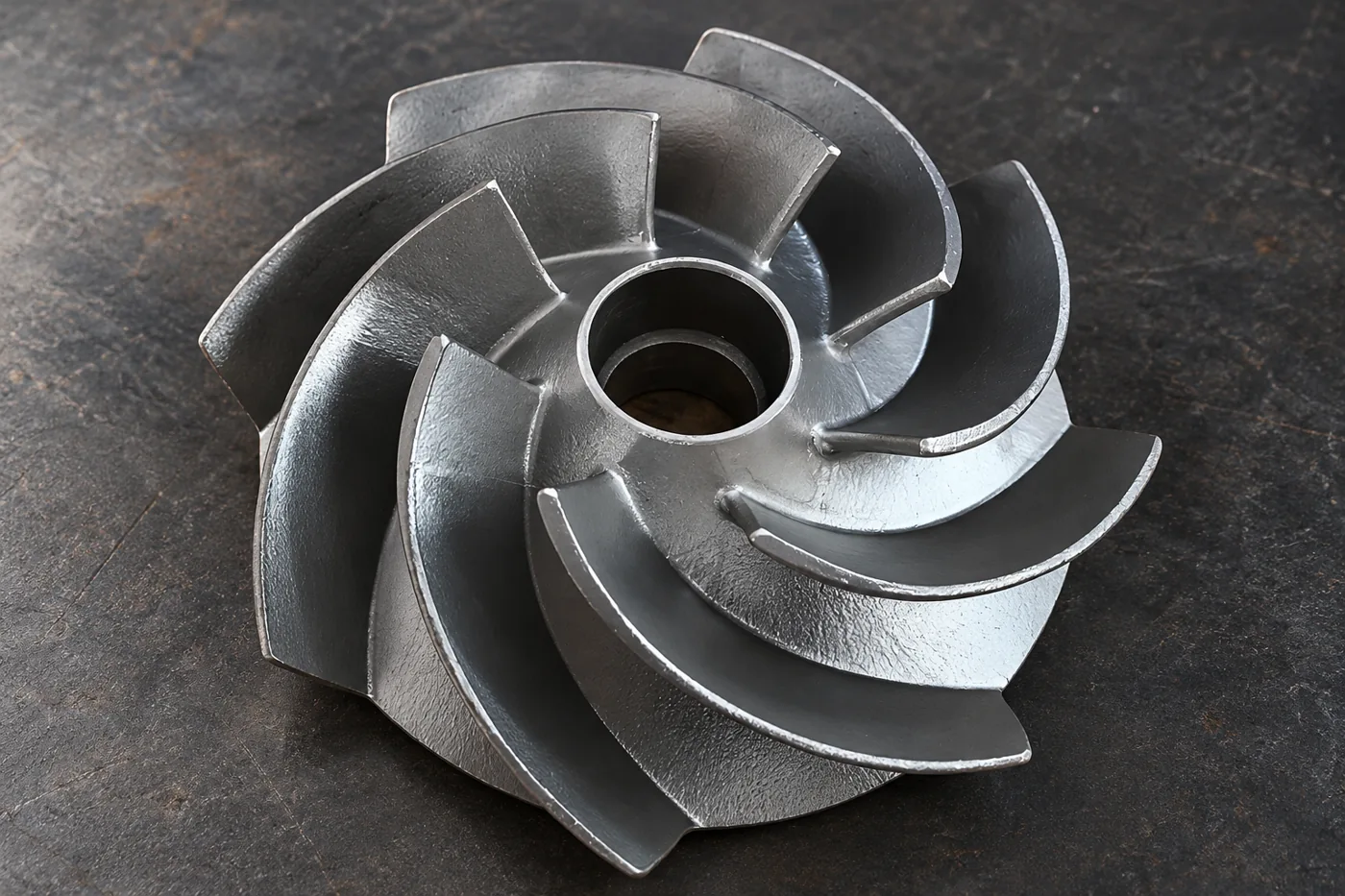
An impeller combines material and hydraulic geometry
Our bronze sand-cast impeller range offers drawing-based size, shape and tolerances. The selected alloy should be evaluated with the actual vane form and mechanical connection, because a material change does not by itself preserve the pump requirement. Keep the bore, axial location and important clearances with the same revision as the vane model.
If a replacement is being developed, identify the intended geometry separately from wear. That gives the material comparison a stable component definition and makes a later trial easier to interpret.
10CHINA CASTING AND MACHINING
Write a material line that can travel through production
A practical material line contains the complete designation, governing specification, required delivered condition and the evidence needed for acceptance. Add the component number and drawing revision so the material decision stays attached to the right design.
For example, an A356-T6 housing enquiry can name the aluminum condition, then separately identify the machined bore requirements and coating boundaries. An iron-support enquiry can name the chosen HT or QT grade, its required hardness or mechanical basis and the records to accompany the batch. These are different briefs with the same clear structure.
11 YOUR NEXT STEP
Bring your component into the conversation
Tell us which component you need, the material, quantity and required supplied condition. Relia will connect your enquiry with the casting, machining and evidence relevant to that part.
- [email protected]
- Phone
- +86 18561762631
- +1 404 203 0971
- Company and address
- Qingdao Relia Industries Co., Ltd.
Shuyuan Road, Qingdao, Shandong, China