
01A CLEARER CASTING PURCHASE
Develop a Family of Related Cast Components
Coordinate a casting family while keeping each size and cavity technically distinct. Relia develops custom machinery components with part-specific materials and finished interfaces. Map what stays common, what changes and which differences affect the mould, core or machining access. This gives shared tooling and preparation a practical basis and prevents one member’s revision from quietly changing an already approved part.
- Map
- Common + variable features
- Plan
- Tool and core dependencies
- Release
- Each family member
02A CLEARER CASTING PURCHASE
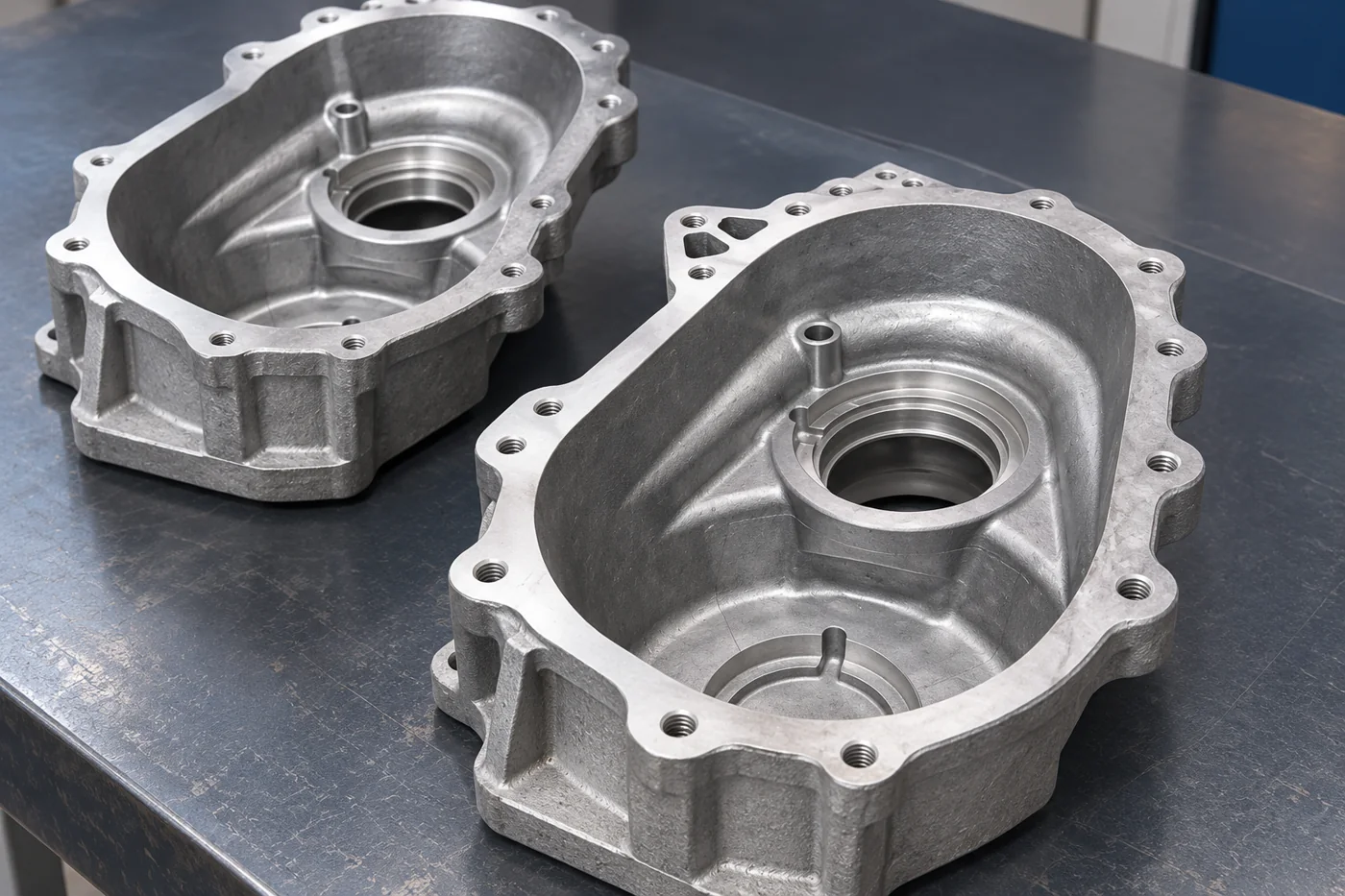
Map the features that are truly common
Relia’s own casting and machining work can be coordinated around the family’s feature matrix. Sample manufacture and inspection should confirm the relevant members before customer approval releases their defined batch requirements.
Start with a feature matrix rather than a list of similar photographs. Identify unchanged interfaces and the dimensions that vary across the series. A shared bolt pattern may support common checking, while a deeper cavity changes core geometry or tool access. A longer span can also change the relationship between a locating feature and the rest of the casting. The matrix should distinguish common requirements from merely similar forms so shared preparation has a technical basis.
| Feature group | Family distinction to record |
|---|---|
| Mounting interface | Identical, scaled or individually located by variant. |
| External envelope | Length, height and sections changed for each member. |
| Internal geometry | Cavity/core layout and access differences. |
| Delivered state | Grade, treatment, machining and finish for each part number. |
03A CLEARER CASTING PURCHASE
Release each member as a complete component
Give every variant a unique part number with an aligned drawing and model revision. A family drawing can present common information efficiently, but it still needs to define one unambiguous delivered part for each selected line. Separate trial quantities from repeat demand and identify which variants are ready for tooling. Configuration management supports coherent product information over time; for this programme, the practical output is a released family schedule that purchasing, manufacturing and receiving can all interpret in the same way.
04A CLEARER CASTING PURCHASE
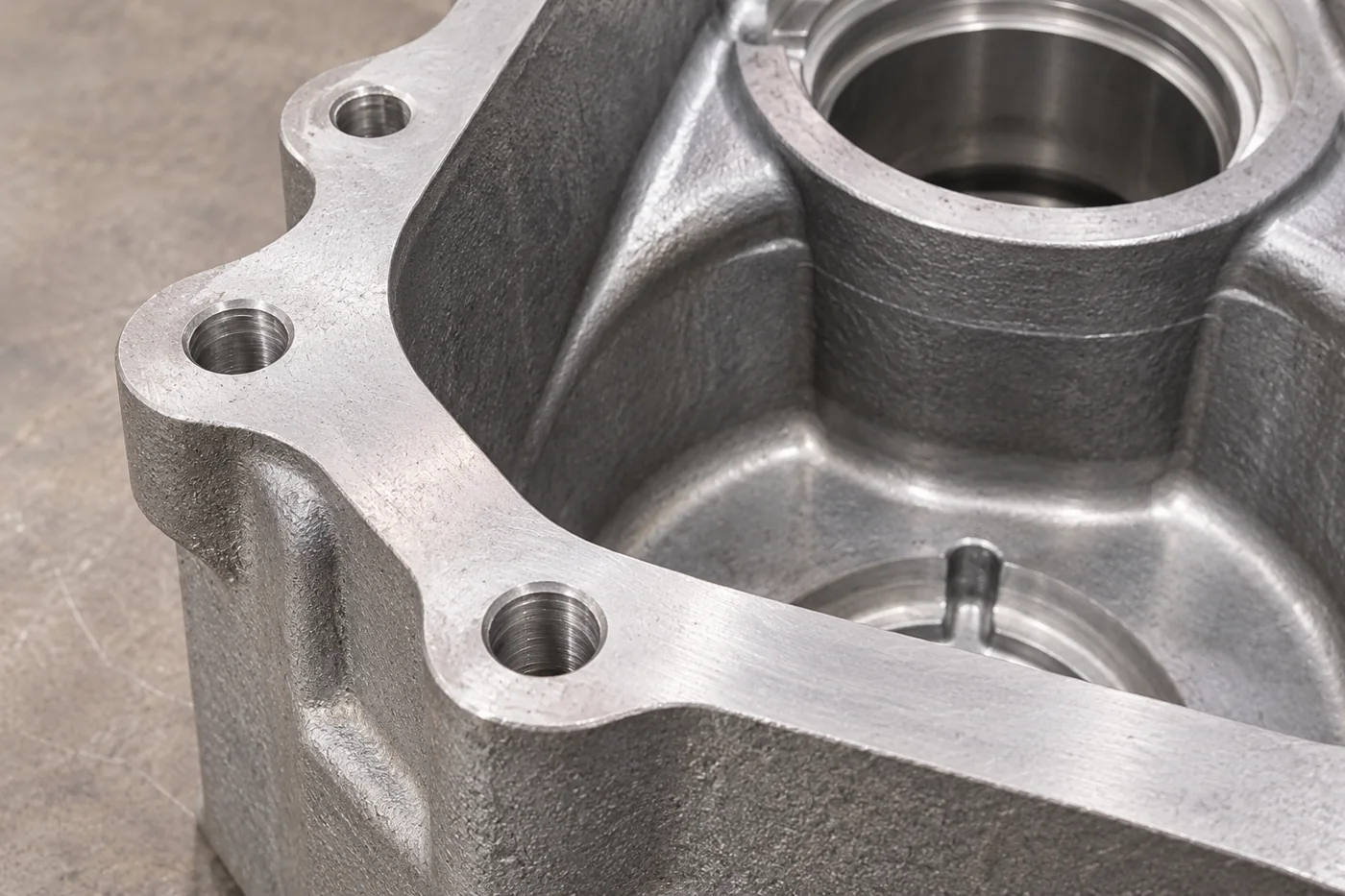
Check the shared interface from each variant’s datum
A common flange detail does not necessarily occupy the same position in every housing. Retain the intended datum relationship on each member and identify which dimensions remain identical. This lets machining and inspection use shared logic where appropriate without assuming that one accepted size qualifies the location on every other size. Where interchangeability is part of the family’s purpose, give that requirement its own clear feature definition rather than rely on a broad statement that all members use the same connection.
05A CLEARER CASTING PURCHASE
Choose shared tooling only where changes remain controlled
A common preparation approach can reduce duplicated work, while dedicated tooling may better suit a cavity, section or envelope that differs substantially. Compare whether an insert or interchangeable element can make the required variant without disturbing shared references. Then identify what a later change affects. The value of common tooling comes with a need to understand that change dependency; an adjustment intended for one size must not silently alter an already approved member. Ownership, identification and modification arrangements belong in the tooling quotation.
06A CLEARER CASTING PURCHASE
Select sample coverage around manufacturing differences
A sample plan should test the differences that could change the result, not merely choose one convenient mid-size part. A different core layout, thicker junction or longer span may justify its own evidence. Use casting-tolerance and allowance requirements on the relevant member’s dimensioned drawing; a family label does not define those limits. Agree which part numbers and characteristics each sample decision covers, so programme approval can expand in a controlled way instead of jumping from one attractive sample to the entire series.
- 01Map differencesIdentify section, core, access and interface changes.
- 02Choose samplesSelect members that represent the important manufacturing differences.
- 03Check per drawingApply the member’s own dimensions and delivered condition.
- 04Release coverageRecord exactly which parts/revisions and characteristics are accepted.
07A CLEARER CASTING PURCHASE
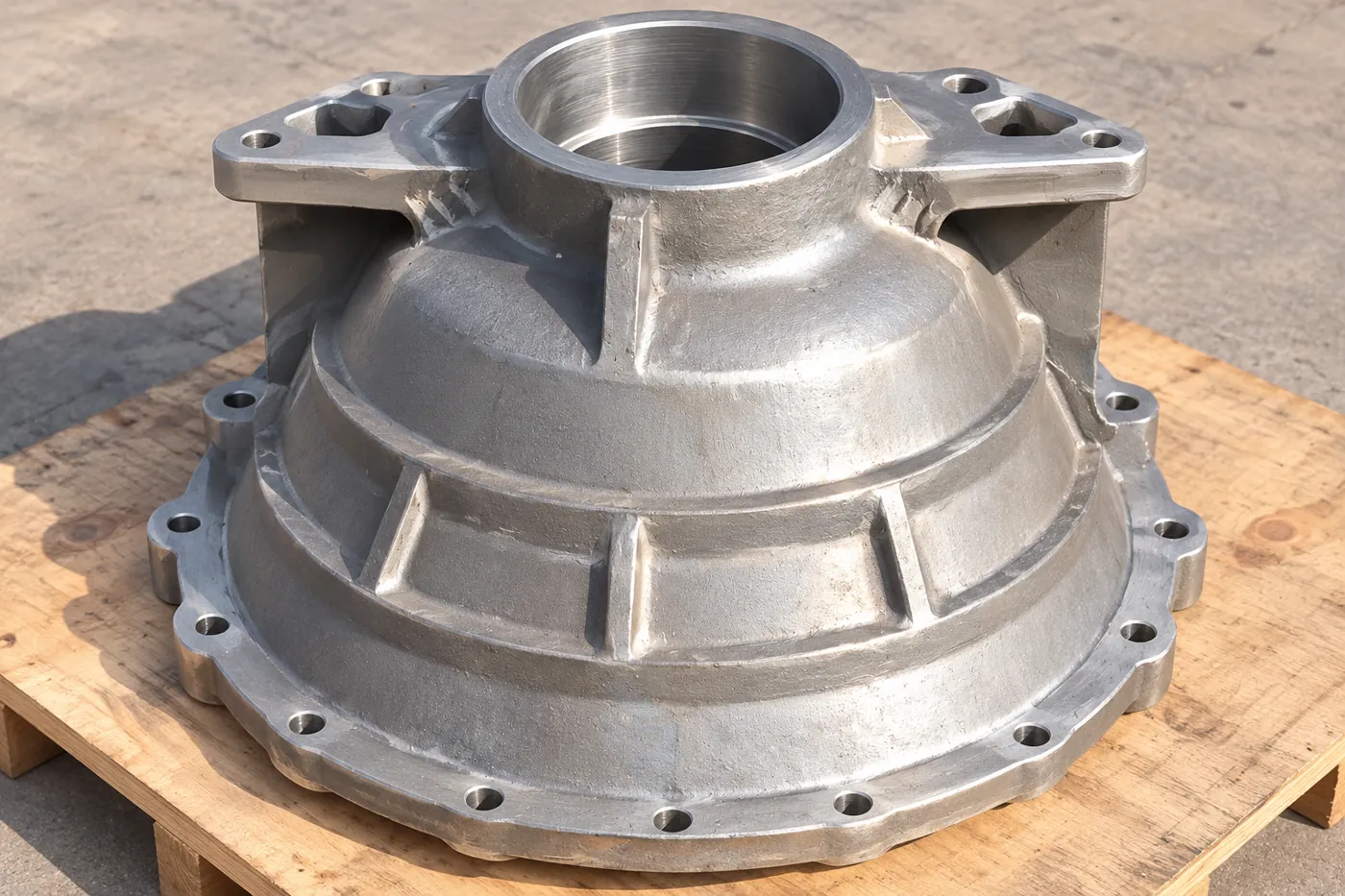
Quote the complete delivered state for each member
Our steel and ductile-iron service customizes size, wall thickness and surface treatment to the component drawing. Use that part-level approach within the family quotation. Show the selected material, machining and finish for every line, even where common notes are used. One member may require a finished locating bore while another is supplied as a blank. Keeping those differences visible makes the price schedule useful and prevents a shared programme description from hiding different amounts of remaining work at your plant.
08A CLEARER CASTING PURCHASE
Review a shared change across affected members
When a revision affects a common interface or tooling element, identify every member that uses it. Check the effect on existing tools, approved samples, open work and future releases before the change becomes effective. Keep unaffected parts on their own released definitions. This makes a family programme easier to maintain: you can reuse valid engineering decisions without forcing every improvement into a complete redevelopment, while still rechecking the characteristics whose manufacturing or fit has actually changed.
- 0101Identify the altered feature and the members using it.
- 0202Assess effects on shared tooling, fixtures and accepted samples.
- 0303Define the recheck or additional sample evidence required.
- 0404Release the correct member revisions and effective order boundary.
09A CLEARER CASTING PURCHASE
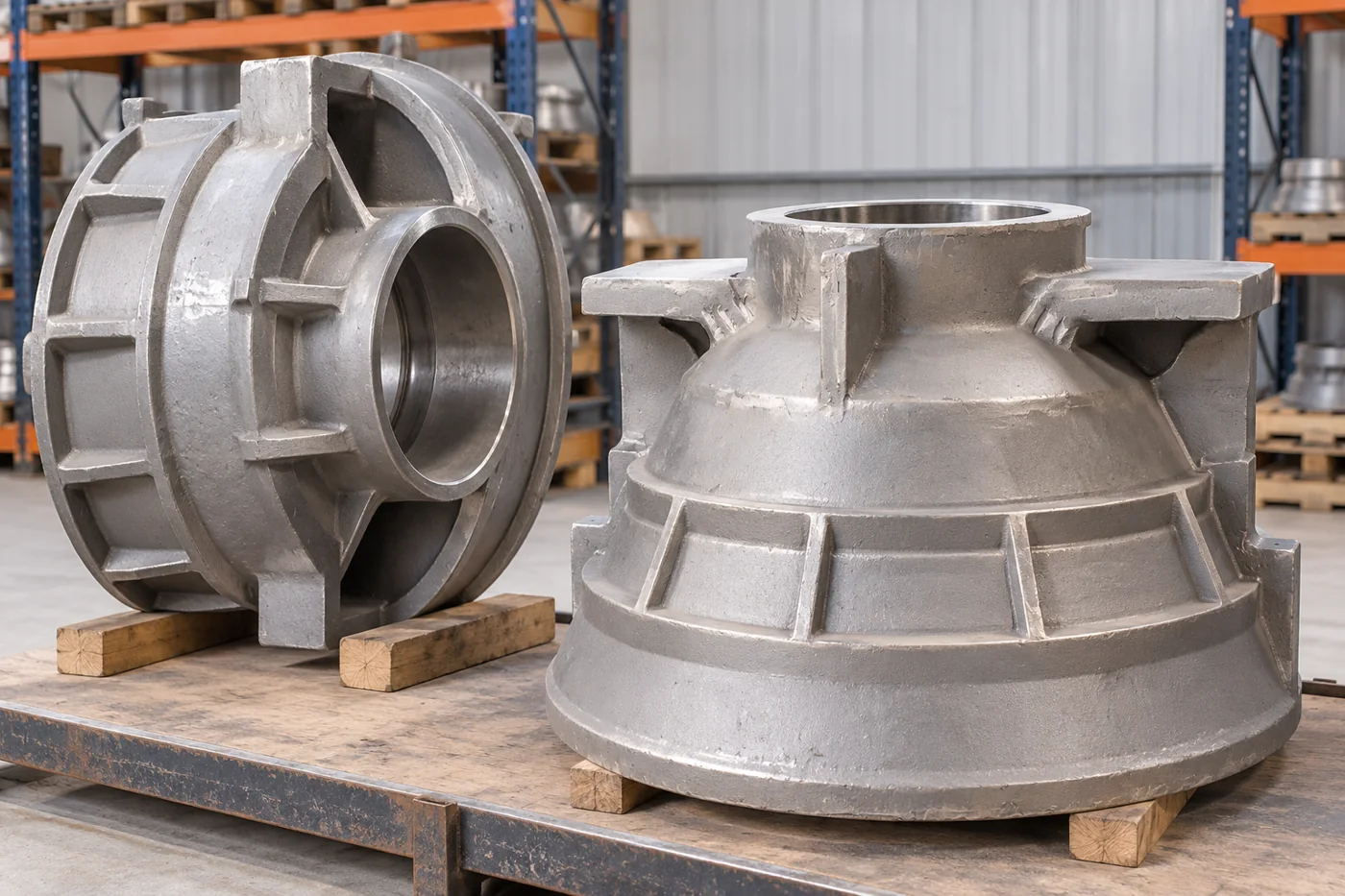
Separate near-identical variants at handover
A mixed family release can contain parts whose visible difference is small. Define identification and grouping that remain clear after transport and unpacking. Keep part/revision and quantity linked to the corresponding reports, and protect the interfaces used to distinguish or assemble each member. Where variants can be accidentally substituted, use a receiving reference that does not depend on visual memory alone. An orderly handover preserves the distinctions established in the feature matrix and the sample approvals.
10A CLEARER CASTING PURCHASE
Send a casting-family RFQ with a feature map
Provide the family schedule, drawings and models with trial and repeat quantities by member. Mark the shared features, the known differences and any interchangeability requirement. We can then assess common preparation, member-specific tooling and sample coverage as a coordinated programme. Your purchasing team gains a clear line for each component and a reasoned basis for deciding which development work can be shared, which must remain separate and how later revisions will be managed.
11 YOUR NEXT STEP
Bring your component into the conversation
Tell us which component you need, the material, quantity and required supplied condition. Relia will connect your enquiry with the casting, machining and evidence relevant to that part.
Technical reading and scope
Technical references explain the process. Component specifications and agreed order records define the actual supply.
ISO 10007:2017 — Configuration ManagementISO 8062-3:2023 — Casting Tolerances and Machining Allowances- [email protected]
- Phone
- +86 18561762631
- +1 404 203 0971
- Company and address
- Qingdao Relia Industries Co., Ltd.
Shuyuan Road, Qingdao, Shandong, China