
01A CLEARER CASTING PURCHASE
Valve Body Castings for Your Process Fluid
Source the valve body around its actual fluid, pressure duty and sealing connections. Relia offers selected grey- and ductile-iron valve parts and separate stainless-steel casting enquiries. Connect the wetted chamber with the machined seats, ports and mounting interfaces. The material and manufacturing proposal can then address the same component your team will install and validate.
- Select
- Fluid + material grade
- Connect
- Chamber + sealing features
- Supply
- Casting + selected CNC
02A CLEARER CASTING PURCHASE
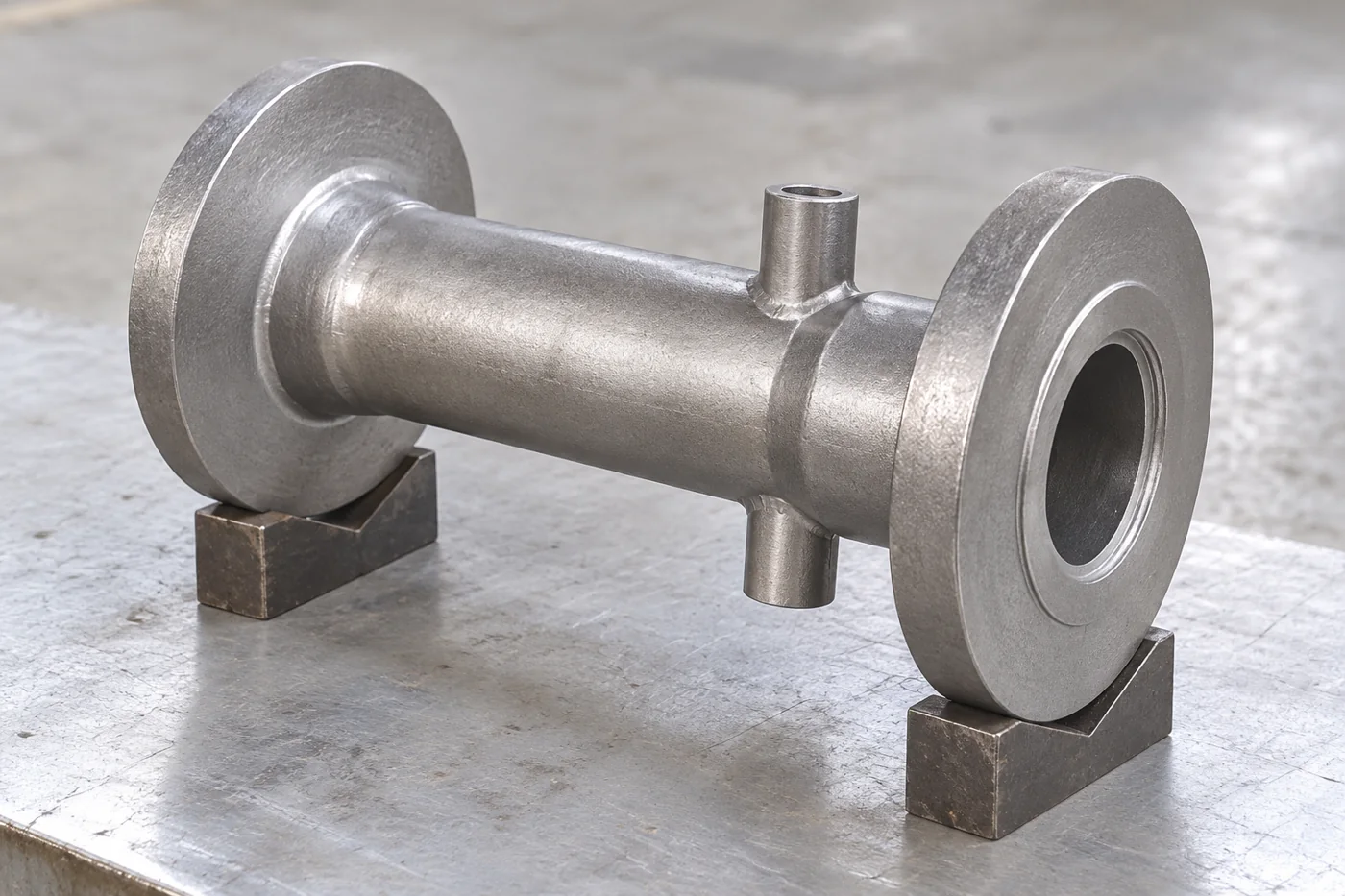
Valve components supplied with material and machining choices
Relia Casting has its own sand-casting and machining production. Our iron valve-component offer includes drilling, milling, boring, tapping and painting; the separate stainless offer includes sand or investment casting, CNC work, passivation and polishing. Each route is selected for the actual body instead of combining every material and method into one configuration.
For a valve OEM or process-equipment builder, that means one component brief can connect the wetted geometry, selected alloy condition and finished interfaces. We can provide dimensional/material reports and real production photographs for source assessment. The fluid brief still matters: include concentration, temperature, cleaning chemicals and relevant upset or stagnant conditions when choosing the alloy.
03A CLEARER CASTING PURCHASE
Iron and stainless options lead to different specifications
For the iron route, select grey iron or a complete GGG40, GGG50 or GGG60 ductile-iron requirement, with governing standard and delivered condition. For stainless, turn an SS304 or SS316 request into the required cast-grade specification. These names do not establish equivalence between wrought and cast forms.
Compare candidates using service chemistry, temperature and required mechanical properties. Keep any liner or internal coating in the same design decision, including interfaces and inspection, rather than relying on an external painted finish for internal chemical resistance.
04A CLEARER CASTING PURCHASE
The wetted path and sealing lands have separate boundaries
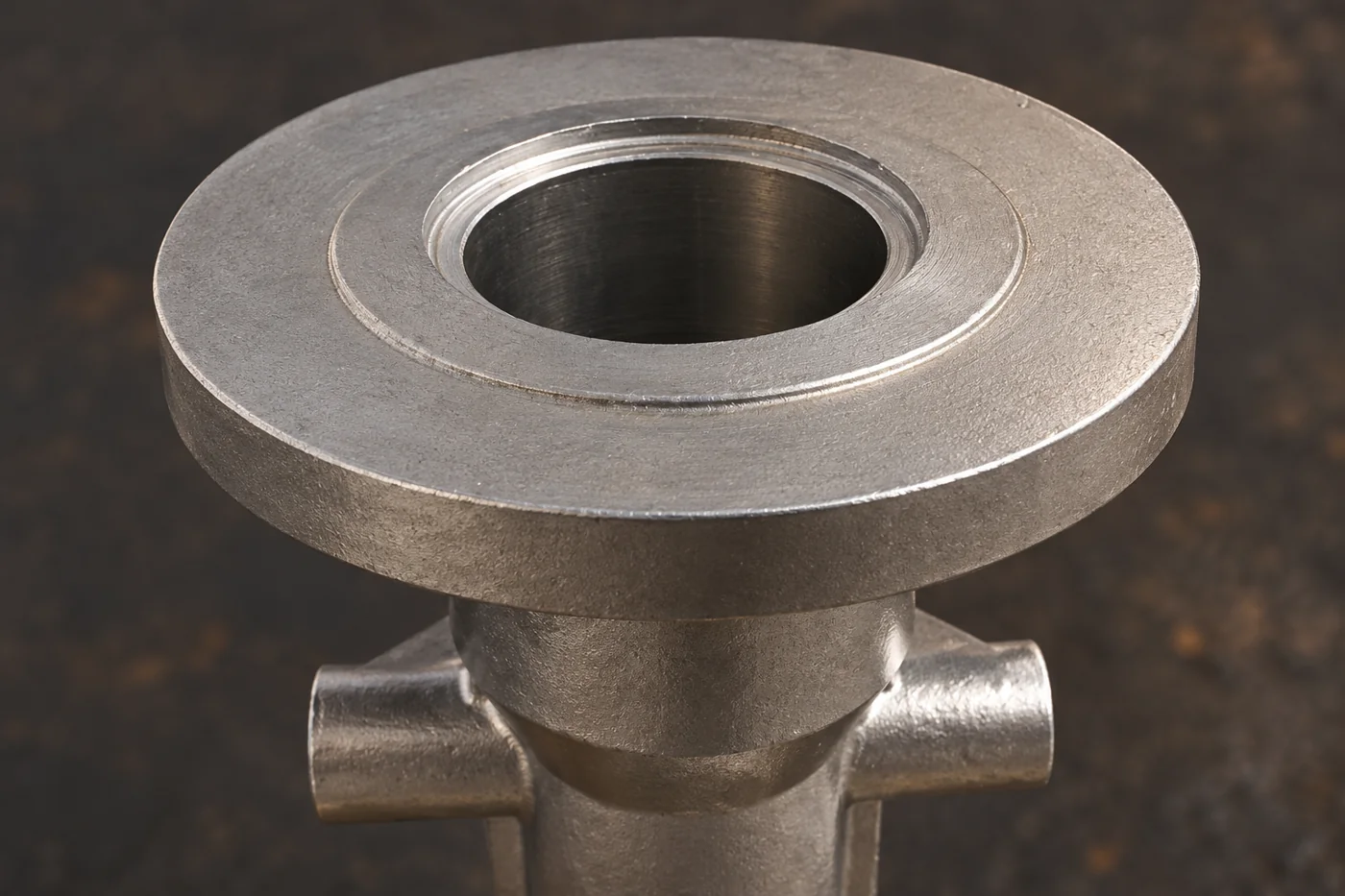
Show the wetted chamber, connections and sealing regions in the model. Identify dead spaces, gasket crevices and areas where solids can collect if these matter to the process assessment. Retain sufficient section around ports and machined seats for the selected pressure-boundary design.
CNC drilling, milling, boring and tapping are offered for our iron valve components. Allocate those operations to the actual port, seat and mounting geometry, with paint or other treatment masked from final contact areas where the design requires it.
- Wetted body
- Chamber, passages and local pressure sections
- Joint features
- Seats and connections finished separately
05A CLEARER CASTING PURCHASE
Form the wetted body before finishing the sealing interfaces
The selected valve route has to form the chamber and retain metal around seats, ports and bolt bosses. For a sand-cast body, pattern parting and core seats establish that internal-to-external relationship. Changes at a thick boss or passage junction also affect feeding and cleaning access. Resolve those regions in the proposed tooling route while the functional datum system stays fixed.
Once the blank is cleaned, establish stable machining references, then finish the seats, flanges or threaded ports in a sequence that preserves their relationships. The component plan should place specified treatment, passivation or polishing at the appropriate stage and inspect the final surface that will contact the process or joint. This connects operation to evidence: usable sections, accessible clean passages and measured mating features. The CT4–CT8 handle reference in the stainless listing remains a handle reference, not a valve-body limit.
- 01Form the chamberParting/core location and local sections
- 02Prepare the blankFeeding-sensitive regions and cleaning access
- 03Finish the interfacesDatum-related seats, ports and connections
- 04Verify the supplied stateMaterial condition, final surfaces and agreed body examination
06A CLEARER CASTING PURCHASE
Sealing and connections translated into feature checks
The gasket face, seat, port and fastener pattern do not share one acceptance requirement. Give each feature its appropriate size, surface texture and geometric relationship to a datum. Include thread form, engagement length and gauging where threaded ports are used.
ASME B16.34 has a defined valve specification scope covering ratings, materials, dimensions, examination and testing. Cite the actual applicable valve/product specification and edition in the order; a material grade alone does not state the valve's pressure-temperature design basis.
| Feature | Useful drawing or inspection definition |
|---|---|
| Gasket joint | Face geometry, surface condition and usable land |
| Seat or register | Location and finished fit within the body |
| Port or flange | Connection standard, orientation and dimensional checks |
| Pressure wall | Sections and governing valve-design requirements |
07A CLEARER CASTING PURCHASE
Material records support a traceable service decision
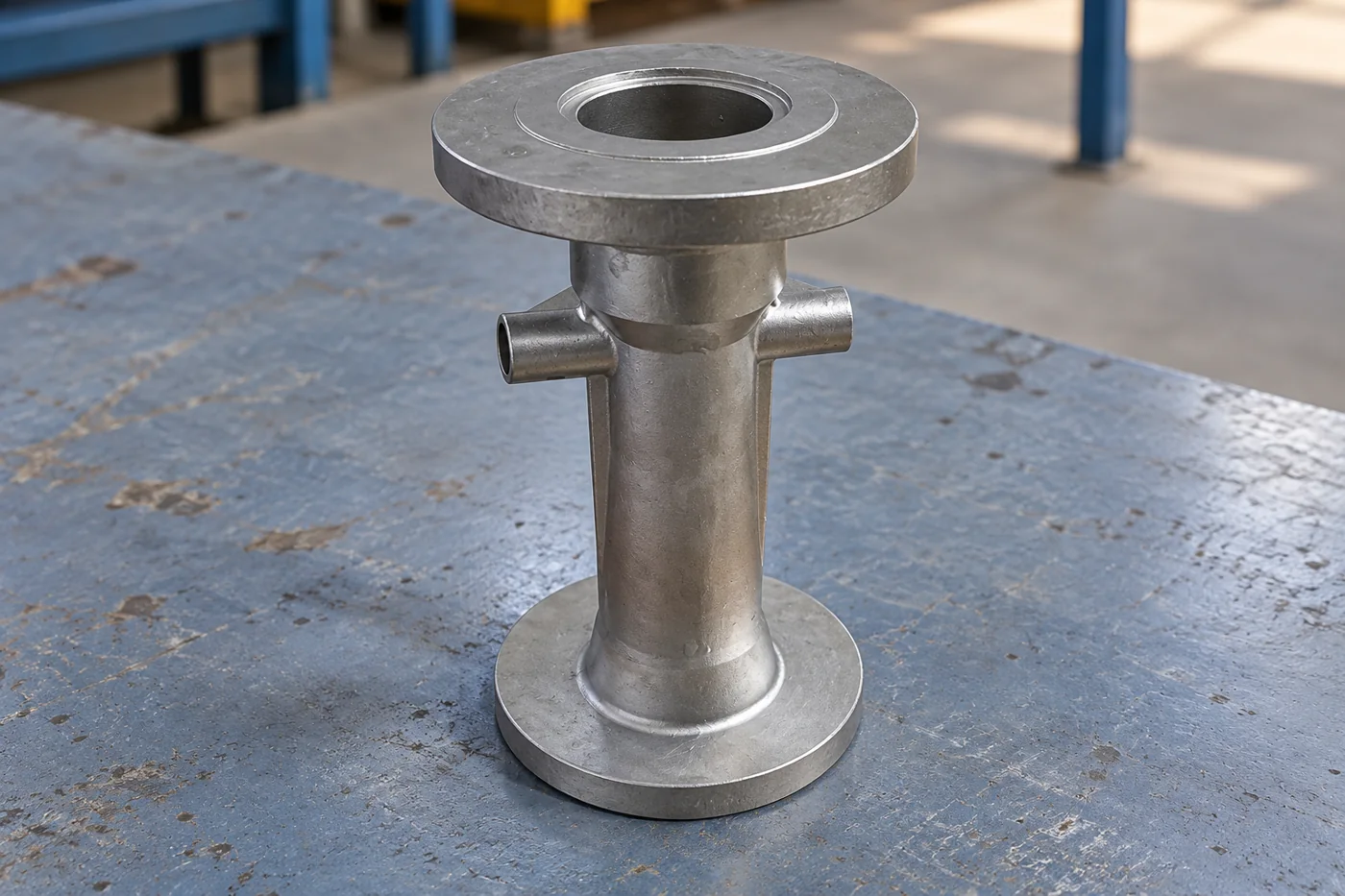
Link the supplied casting to the selected material specification and required condition. A useful record identifies the part or batch, material reference and inspection results requested by the project. If chemistry, mechanical properties or heat-treatment evidence is needed, name it in the purchase package.
For stainless components, passivation and polishing are catalogue options. Define the resulting surface condition and treatment coverage, including treatment after machining where required. This makes the delivered condition understandable without turning a surface operation into a universal chemical-service guarantee.
- Material record
- Selected cast grade and part/batch link
- Final condition
- Specified passivation or polishing where chosen
08A CLEARER CASTING PURCHASE
Pressure-boundary and closure checks kept distinct
A pressure-boundary test evaluates containment; a closure-tightness test evaluates the closed valve path. ISO 5208 distinguishes these functions and is applied with the relevant valve product standard. Select the test object and acceptance before comparing suppliers.
The instruction should identify medium, pressure, duration, preparation and permitted leakage or observation criteria. State whether this casting order supplies the body only, a plugged component for testing or an assembly for later valve testing. Each choice changes the useful evidence delivered with the part.
- 0101Select the valve/product specification and exact test object
- 0202Define pressure-boundary examination and material evidence
- 0303Allocate closure testing to the assembled valve where applicable
- 0404Retain identity, conditions and result in the accepted report
09A CLEARER CASTING PURCHASE
The final surface condition preserved through delivery
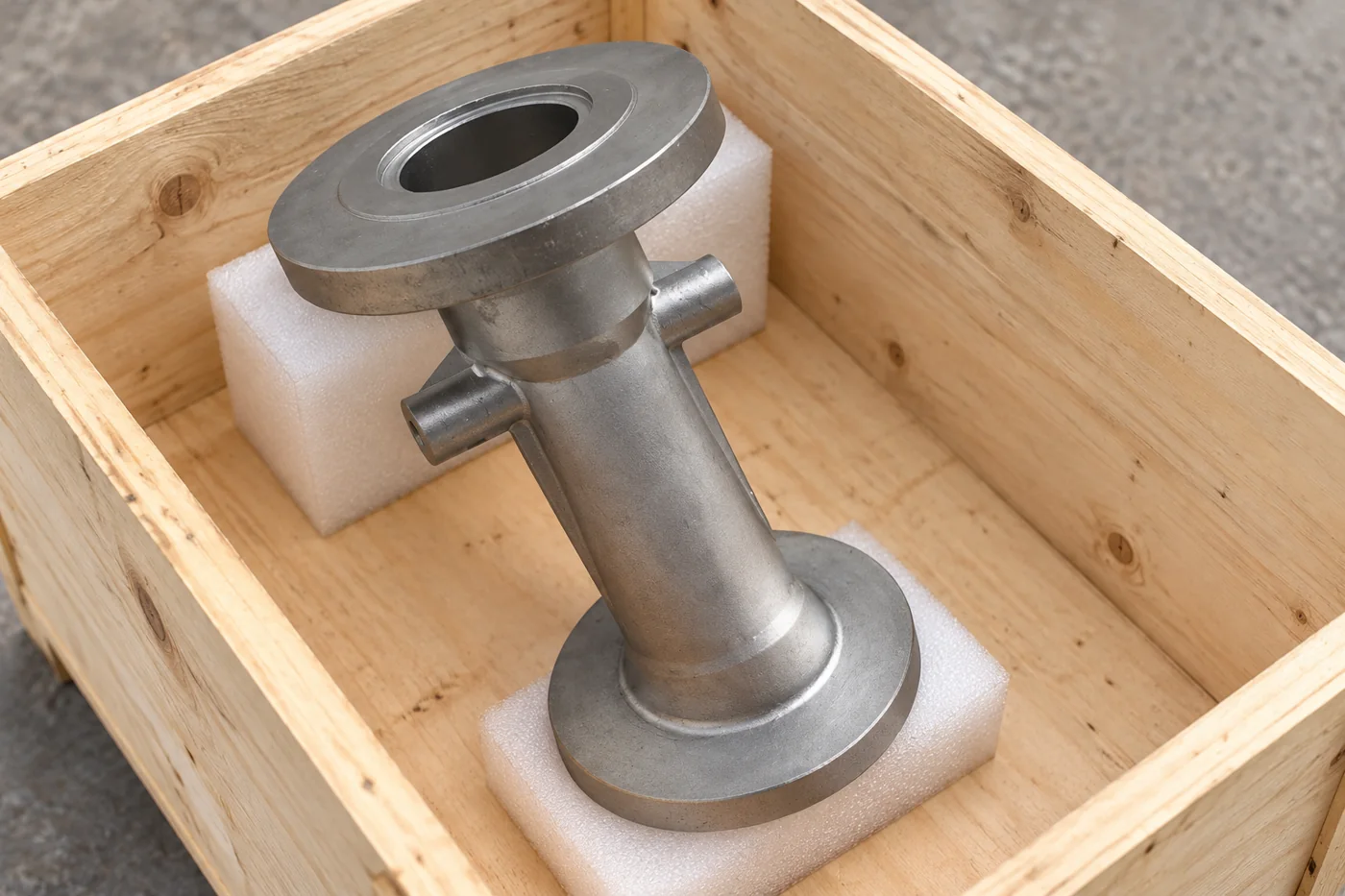
Protect gasket faces, machined registers and threaded connections against impact and contamination. Specify transport preservative where compatibility with the process matters. Stainless passivated or polished surfaces and painted iron bodies need different receiving and handling instructions.
The stainless listing offers multilayer wooden-box or pallet packing with an internal plastic bag. Keep openings covered after final cleaning and connect package identity to the material and inspection records. Your receiving team can assess the supplied condition before assembly or further processing.
- Protection
- Gasket lands and threads kept usable
- Packing
- Selected stainless scope uses wooden box or pallet
10A CLEARER CASTING PURCHASE
A valve-body purchase tied to its actual service
The useful outcome is a body with the selected material condition, correct wetted form and usable sealing and connection geometry. Relia can supply that casting-and-machining package while your valve design retains its own pressure-temperature and service basis. Material records, feature results and any selected body test should identify the same component.
This lets you compare suppliers on the delivered part rather than an alloy shortlist. For a new body, the path is drawing review, sample manufacture and inspection, your confirmation, then production. Keep any chemistry, treatment or interface change visible before that approval is used for repeat supply.
11 YOUR NEXT STEP
Bring your component into the conversation
Tell us which component you need, the material, quantity and required supplied condition. Relia will connect your enquiry with the casting, machining and evidence relevant to that part.
Technical reading and scope
Technical references explain the process. Component specifications and agreed order records define the actual supply.
BSSA — interpreting corrosion-selection dataASME B16.34 — valve specification scopeISO 5208 — metallic-valve pressure testing- [email protected]
- Phone
- +86 18561762631
- +1 404 203 0971
- Company and address
- Qingdao Relia Industries Co., Ltd.
Shuyuan Road, Qingdao, Shandong, China