
01A CLEARER CASTING PURCHASE
Container Hardware Castings by Part and Function
Coordinate the order while retaining the different jobs of each hardware item. Relia’s range includes cast-steel twist-lock foundations, carbon-steel door hinges and cast-steel fixing-cone enquiries. Give each one a drawing, material, mating reference and delivered finish. The package can then be compared as identifiable components rather than assume that a shared container application makes their fit or acceptance interchangeable.
- Schedule
- Individual hardware items
- Fit
- Actual mating component
- Scope
- Grade + CNC + finish

02A CLEARER CASTING PURCHASE
The schedule separates fixed, moving and locking functions
Relia’s container-hardware offerings are selected by the actual foundation, hinge or fixing-cone duty. The casting, machining and surface requirements remain part-specific, with sample and batch identity carried through the order.
List part number, drawing revision, quantity and intended assembly role for every item. Identify the actual mating component rather than assume that a general container description defines fit. This is especially useful when foundations, door hardware and fixing cones are bought together but go into different assemblies.
Container fitting standards have defined product scope. ISO 1161 concerns corner and intermediate fittings; referencing a container standard does not automatically qualify every hinge, foundation or locking device in a mixed package. State the applicable interface or project document for the actual item and the evidence your design requires.
03A CLEARER CASTING PURCHASE
Engagement and movement require complete geometry
For the foundation, control mounting contacts and the relationship to the supported locking assembly. For the hinge, control pin/bore geometry, alignment, leaf movement and stops where they are part of the design. For the fixing cone, retain the engagement profile and interfaces that establish its operating position.
Show the dimensional limits in the actual supplied condition. A part that fits before coating may behave differently after finishing, and an outside dimension alone will not prove locking engagement or hinge freedom. Identify the mating references used for any functional check so its result has a clear technical meaning.
| Interface type | Required input |
|---|---|
| Fixed interfaces | Mounting datums, contact faces and position of connected features. |
| Moving interfaces | Pin/bore fit, alignment, travel and side clearances. |
| Locking interfaces | Engagement profile, locating contacts and operating limits. |
| Functional check | Defined mating reference, final finish and pass/fail criterion. |
04A CLEARER CASTING PURCHASE
Hinge samples retain the intended new-part dimensions
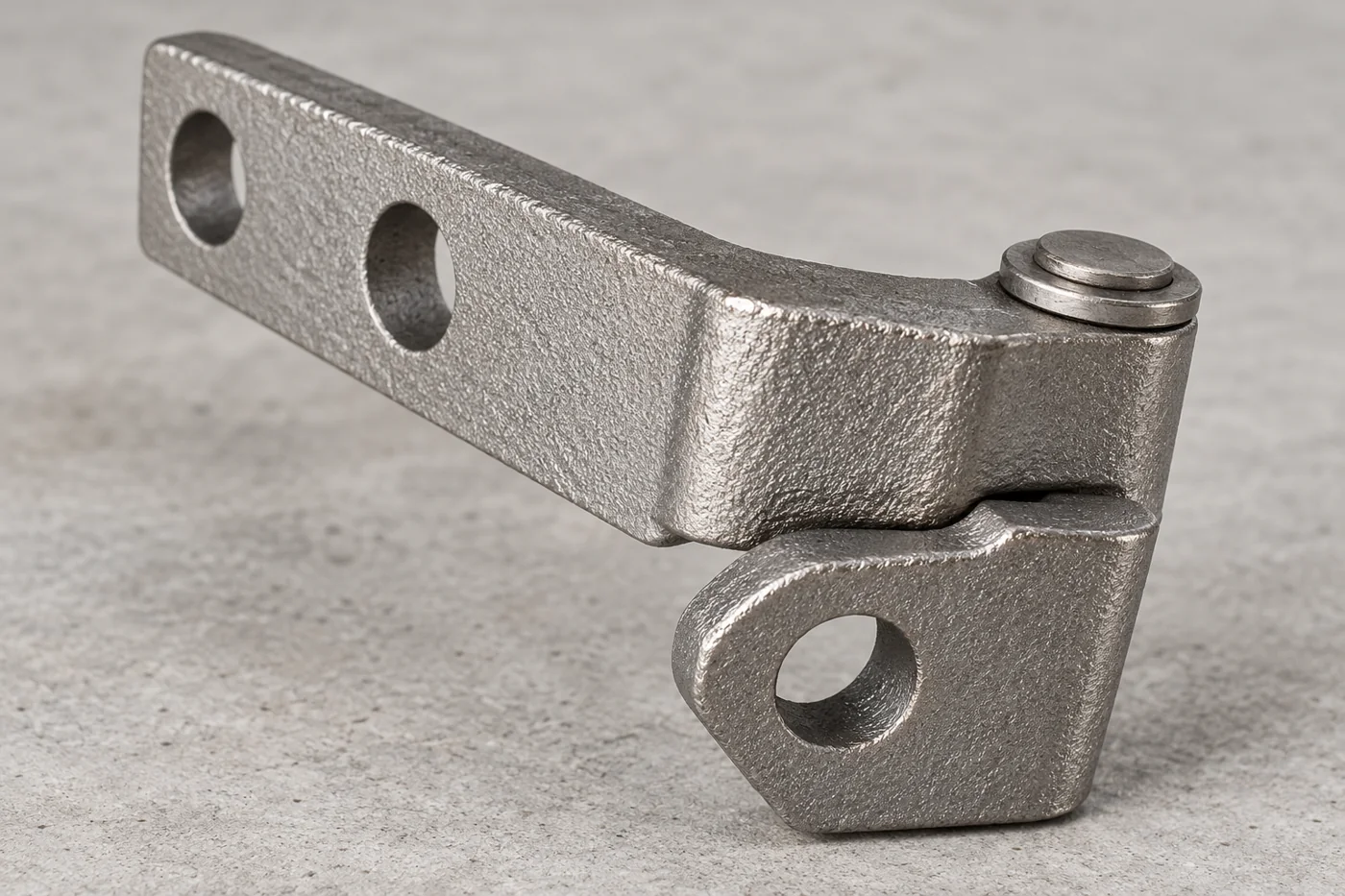
The carbon-steel hinge range accepts drawing- and sample-based customization, including shell-molding requests. Pair a sample with a controlled drawing or critical-dimension list so worn pin holes and damaged edges are not copied into the required new part. Identify whether the sample is only a reference or an accepted master.
Keep the hinge as its own line item, with the actual pin and mounting arrangement. The adjacent locking hardware may have different tolerances, material condition and verification needs. A coordinated commercial package should preserve those distinctions rather than simplify them into one generic steel casting description.
05A CLEARER CASTING PURCHASE
Steel grade and process are selected per line item
The foundation and midlock listings identify cast steel, while the hinge listing identifies carbon steel. Select the complete grade and delivered condition for each ordered part. If a shared grade is proposed, its suitability still needs to address the individual component duties.
State the selected molding and secondary-work route, including CNC features and the final surface requirement. Keep any connection to other fabricated structures defined by the project drawing and supply boundary. The quotation can then identify the delivered casting without silently adding welding, complete assembly or an unlisted system approval.
- 01Schedule linePart, revision, quantity and assembly role.
- 02MaterialComplete steel grade and required condition for that component.
- 03ManufacturingActual casting route and ordered finished interfaces.
- 04AcceptancePart-specific dimensions, operation and required material evidence.
06A CLEARER CASTING PURCHASE
Corrosion protection changes the final fit
The midlock range names hot-dip galvanizing, zinc plating and electrogalvanizing as selectable finishes. They are alternatives with different process and dimensional implications; silver colour alone does not define the selected protection. The foundation range names black, red or customer colour, with blasted and CNC work specified separately.
For moving or engaging features, define clearances and acceptance after the chosen treatment. Galvanizing guidance highlights the need to allow for added zinc at moving interfaces. Use the actual design and finish specification to set those limits rather than transplant a general clearance recommendation to every locking or hinge feature.
07A CLEARER CASTING PURCHASE
Package checks retain each component’s function
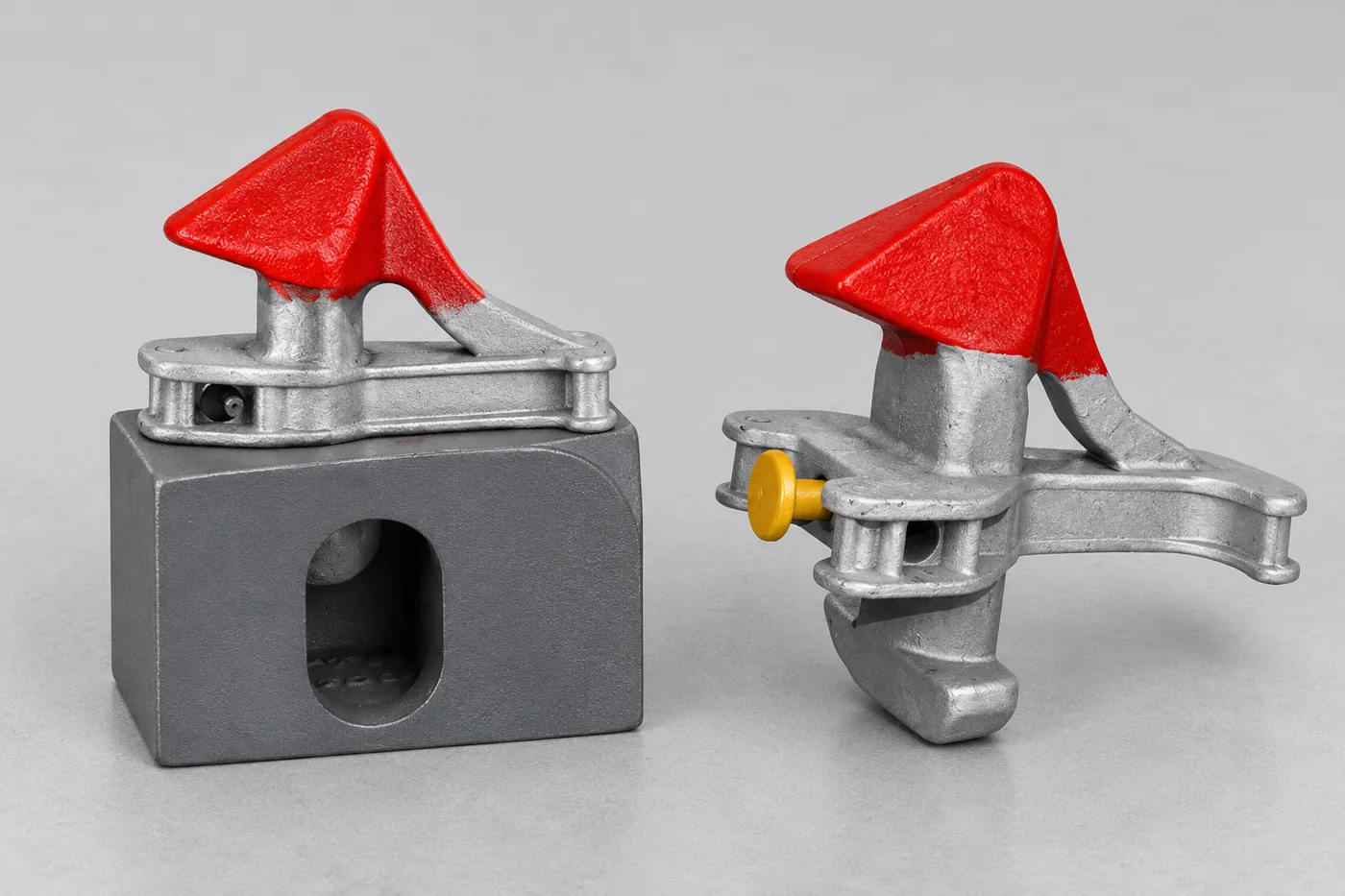
Identify whether the order covers separate parts, a matched set or any specifically assembled item. Define the relevant fit or movement check with its mating reference. The result should identify the hardware configuration and finished condition actually evaluated.
Load acceptance and application approvals need a stated design basis, test arrangement and record requirement. Do not infer them from the midlock or automatic fixing-cone name. We can define the manufactured-part scope around the actual interface and acceptance package while your project retains the required complete-system approval.
08A CLEARER CASTING PURCHASE
First-part approval controls the repeat batch
For each line, compare the initial component to its grade, drawing and finish references. Review actual dimensions and any agreed functional checks before releasing repeat quantities. If one item changes, identify the effect on mating hardware rather than assuming that the rest of the package is unaffected.
The midlock listing names a 100-piece minimum and one fitting per box; retain those conditions with the selected enquiry rather than apply them to every hardware line. Keeping sample decisions and commercial quantities visible per part makes the combined order easier to quote, inspect and receive.
- 0101Review each part against its own material and drawing.
- 0202Check the specified final-fit or movement criteria.
- 0303Record accepted finish and affected mating references.
- 0404Release the individual batch quantities and pack schedule.
09A CLEARER CASTING PURCHASE
Packing follows the line-item and finish schedule
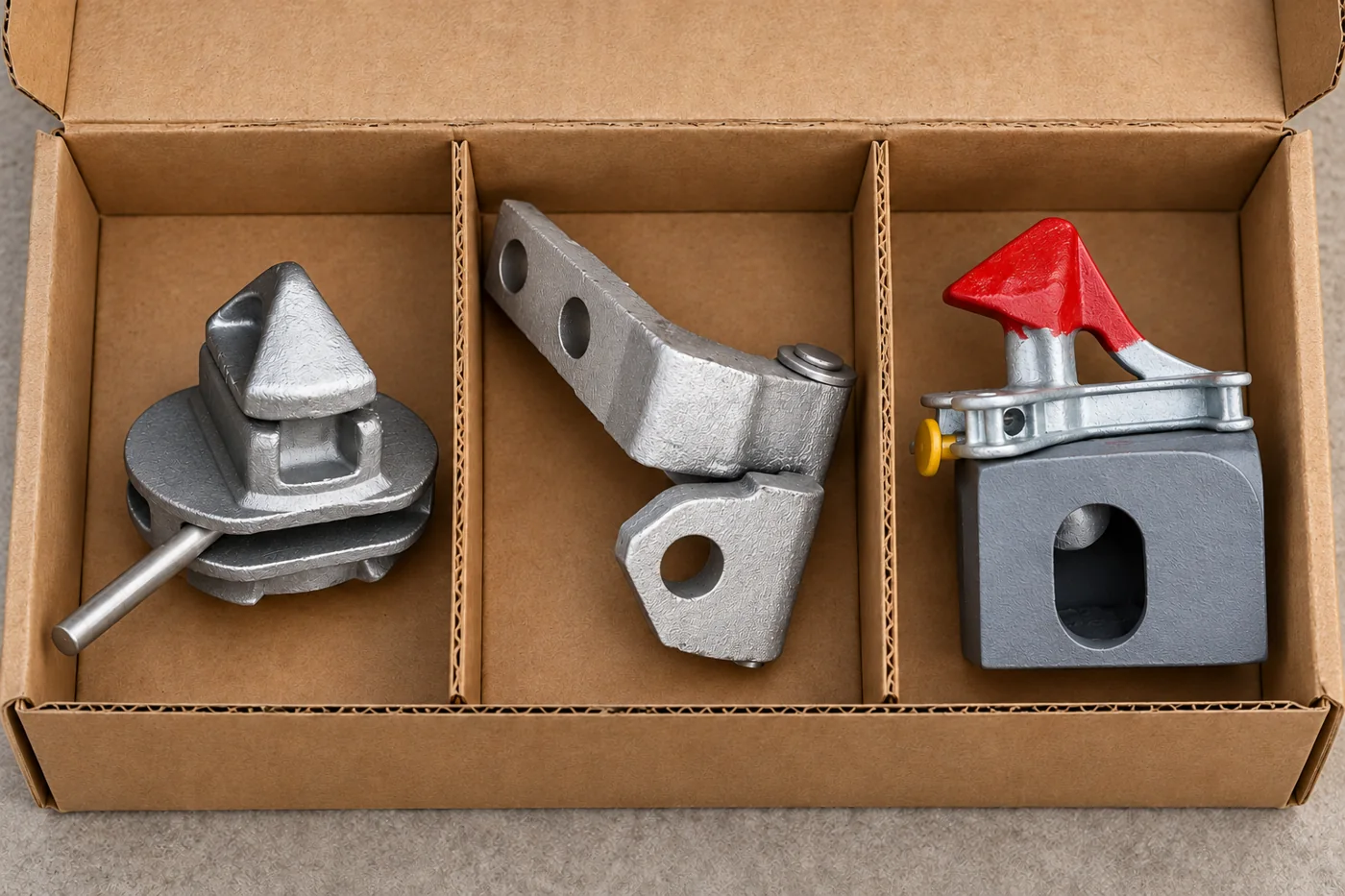
Separate engagement profiles and machined contacts from heavy neighbouring parts. Retain part and revision identity through boxes and cases so receiving does not mix visually similar hardware with different dimensions or finishes. Where a matched set is ordered, identify that relationship explicitly.
Plywood-case packing is listed for hinges, while the midlock range names individual boxes. Select the appropriate separation and restraint for the supplied package. Link each pack count to the part schedule and any required reports, making the delivery easier to reconcile before the components enter assembly.
10A CLEARER CASTING PURCHASE
A hardware RFQ makes the package comparable
Send the part schedule with controlled drawings, selected grades, quantities and actual mating references. Define CNC work, blast preparation and the finish for each item. Add material, dimensional, operational and any project-specific load evidence required before release.
We can quote the relevant casting and secondary-work scope as an organized package while keeping each part’s function visible. The useful comparison identifies exactly which foundation, hinge or fixing-cone configuration is included, its accepted final condition and the records your team receives with the shipment.
11 YOUR NEXT STEP
Bring your component into the conversation
Tell us which component you need, the material, quantity and required supplied condition. Relia will connect your enquiry with the casting, machining and evidence relevant to that part.
Technical reading and scope
Technical references explain the process. Component specifications and agreed order records define the actual supply.
DIN Media: ISO 1161 product scopeAmerican Galvanizers Association: Moving-part clearances- [email protected]
- Phone
- +86 18561762631
- +1 404 203 0971
- Company and address
- Qingdao Relia Industries Co., Ltd.
Shuyuan Road, Qingdao, Shandong, China