
01A CLEARER CASTING PURCHASE
China Casting Quotes and Delivered Cost
For a useful China casting quote, compare the complete part your plant can accept, not a bare casting price. Relia Casting supplies custom steel and iron components through our own sand-casting and machining production. We can quote the selected material, finished features, sample work, inspection and packing together. Keeping tooling separate from recurring parts makes the initial investment and repeat-order cost easier to compare.
- Part basis
- Same grade and finished condition
- Cost basis
- Tooling separate from repeat parts
- Supply basis
- Defined packing and delivery boundary
02A CLEARER CASTING PURCHASE
A factory quotation tied to the work you need
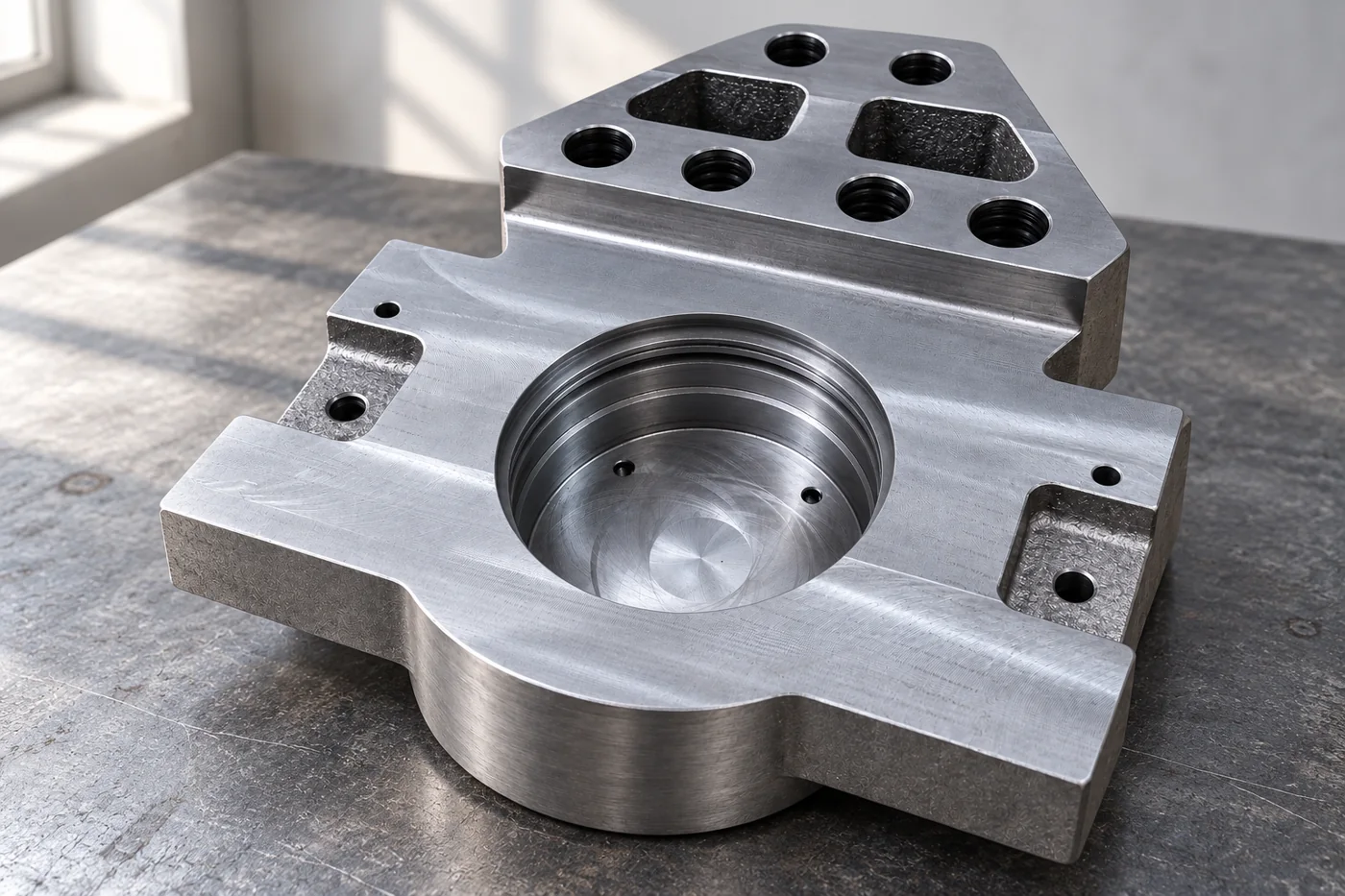
Relia Casting, the manufacturing brand of Qingdao Relia Industries Co., Ltd., works with overseas OEMs and industrial buyers sourcing drawing-based components. Our steel and separate ductile-iron offer includes design-to-delivery support, raw-material control, heat treatment and finished-product inspection. Our industrial iron range adds raw, semi-machined or fully machined supply with turning, milling, drilling and boring. We mainly use resin-coated sand and shell molding, with other routes selected where the drawing calls for them. That gives your quotation a manufacturing basis: you can buy the cast blank for your own finishing, or include the machining and supplied surface in our scope.
03A CLEARER CASTING PURCHASE
Connect each cost to an actual manufacturing operation
A casting quote becomes easier to understand when the line items follow the component. Tooling creates the outer form and any internal core geometry. Mold preparation and casting produce the blank; the selected material and treatment establish its required condition. Cleaning makes the surfaces accessible, while CNC work turns stock into the final bores, planes and ports. Inspection then checks the supplied component before protection and packing. A thick boss, a deep cored pocket and a close bearing seat create different work. We can discuss those differences with you instead of hiding every cost inside one metal-price line.
| Manufacturing work | What the quotation should identify |
|---|---|
| Tooling and cores | One-time geometry creation or adaptation, with ownership and reuse stated. |
| Casting and treatment | Material, wall transitions, order size and required delivered condition. |
| Machining and checking | Stable setups, tool access, finished features and report scope. |
| Protection and dispatch | Packing arrangement, dimensions, mass and agreed shipping boundary. |
04A CLEARER CASTING PURCHASE
Reduce cost where the component has room to change
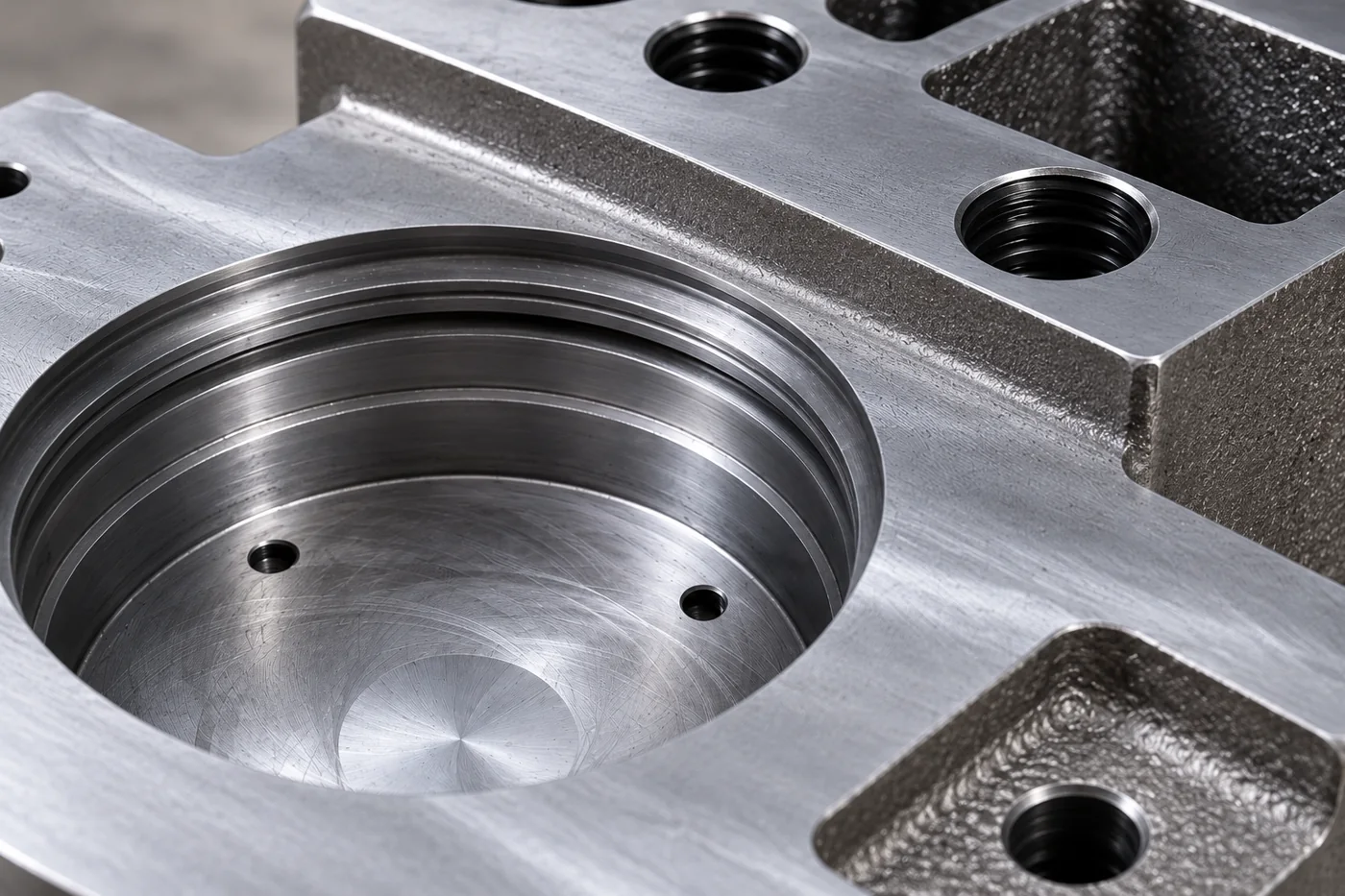
The pictured stepped bore and port show why finished geometry matters to cost. Tool access may require one operation, while the bore’s position relative to a mounting face may require another setup or a more careful locating method. A useful cost-down discussion identifies the operation first, then considers a change on a noncritical area. Keeping the working fit unchanged while simplifying an unnecessary cut can help both teams. Removing a functional relationship from the drawing merely to lower the quote would buy a different component.
- Keep
- Working fits and assembly relationships
- Examine
- Extra setups, difficult access and unnecessary cuts
- Compare
- A named design change with a stated effect
05A CLEARER CASTING PURCHASE
Separate the first investment from repeat production
For a new component, our drawing-review and sample route gives the first order a clear purpose: establish that the selected manufacture produces an acceptable part. Pattern work, core tooling, fixtures and initial sample checks can create costs that do not recur in the same way on every batch. Show them separately and identify what remains available for repeat use. Your team can then compare the initial commitment with the recurring price at a realistic release quantity. Spreading tooling over an unapproved annual forecast can make a proposal look cheaper without reducing the cash you must commit now.
06A CLEARER CASTING PURCHASE
Price the evidence your receiving team will use
Our casting offers include material, dimensional and visual inspection within the stated product scope, and we can provide dimensional and material test reports. For the quote, connect each requested record to its purpose: material results support the selected grade, dimensional values support finished features, and sample approval establishes the production baseline. Real workshop and equipment photographs are available when your supplier review needs them. Keep these requirements consistent across the offers. Omitting necessary acceptance work from one price can simply move that cost to your own plant.
| Acceptance item | Cost boundary |
|---|---|
| Material testing | Grade, requested properties and identity of represented parts. |
| Dimensional reporting | Number and type of characteristics and reporting coverage. |
| Sample qualification | Trial quantity, engineering changes and repeat-sample basis. |
| External attendance | Visit scope, timing and any separately agreed charges. |
07A CLEARER CASTING PURCHASE
Choose a release size around real demand
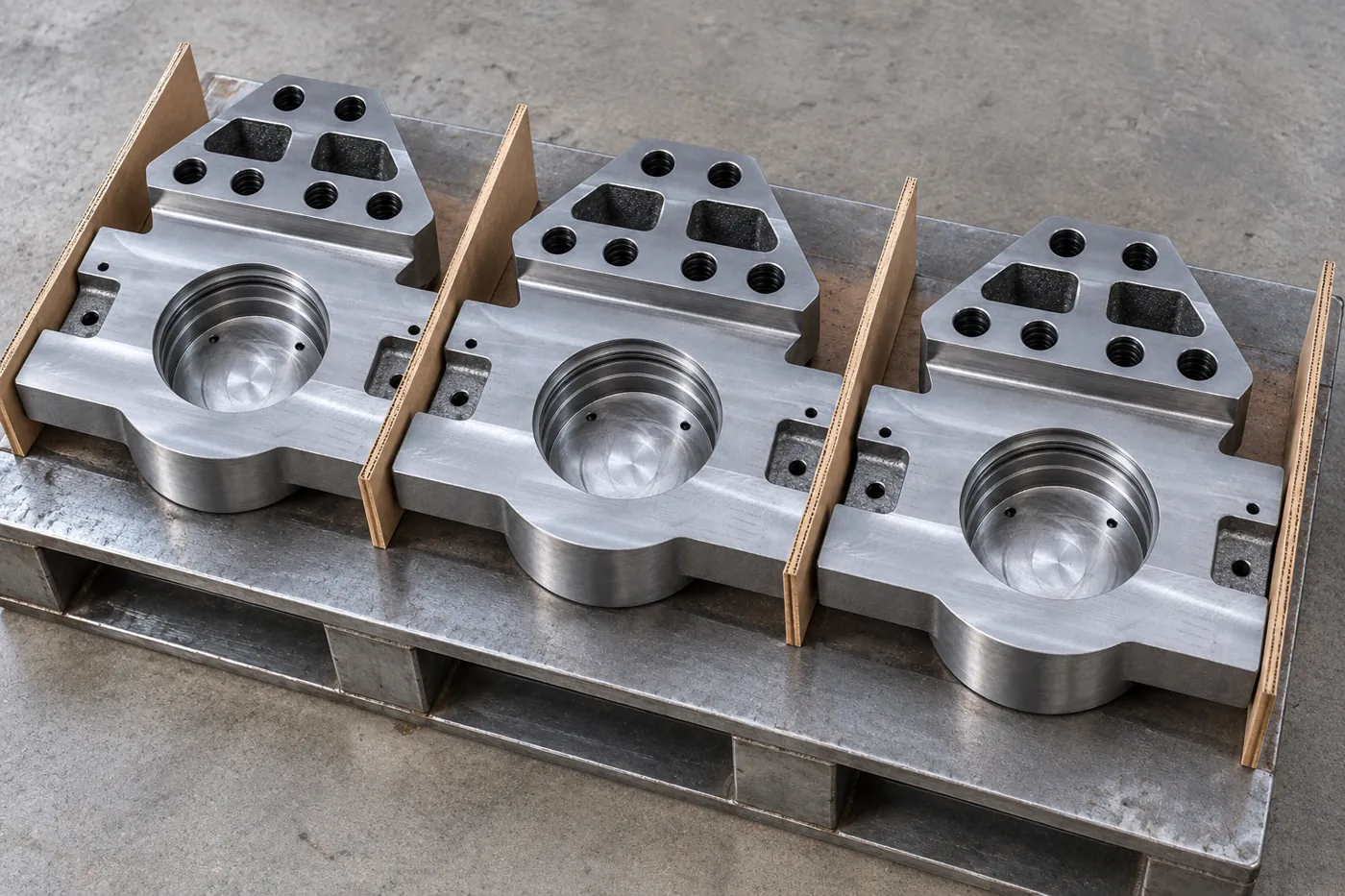
A larger production release can spread setup effort over more components, but it also changes inventory, cash commitment and shipping volume. Compare practical release sizes using the same design and delivered condition. Our flexible scheduling and design-to-delivery offer provide a starting point for that discussion; the actual quantity and dates belong in the quotation for your component. Keep the first approved batch distinct from a forecast, especially while the sample is still settling a port, mounting feature or surface requirement.
- Initial order
- Tooling, sample purpose and first accepted quantity
- Repeat order
- A released design and practical batch size
- Receiving
- Space, cash and usable-part demand
08A CLEARER CASTING PURCHASE
Keep the transport boundary on the same cost sheet
A factory price and a delivered price cover different work. Put the chosen Incoterms rule, named location and edition beside the goods price, then list the transport and destination items still paid by your team. ICC explains these rules as an allocation of obligations, risk and costs; they do not define the component specification itself. Your comparison therefore needs both the manufacturing scope and the delivery scope. Current freight and import-related inputs can then be added for the actual route without disguising them as a casting-price difference.
- 01Factory offerPart, records and agreed export packing.
- 02Transport boundaryChosen rule, exact named place and Incoterms edition.
- 03Buyer additionsRelevant transport, handling and import-related costs outside that offer.
- 04Received componentTotal against the same usable quantity and acceptance scope.
09A CLEARER CASTING PURCHASE
Include the package that preserves the purchased result
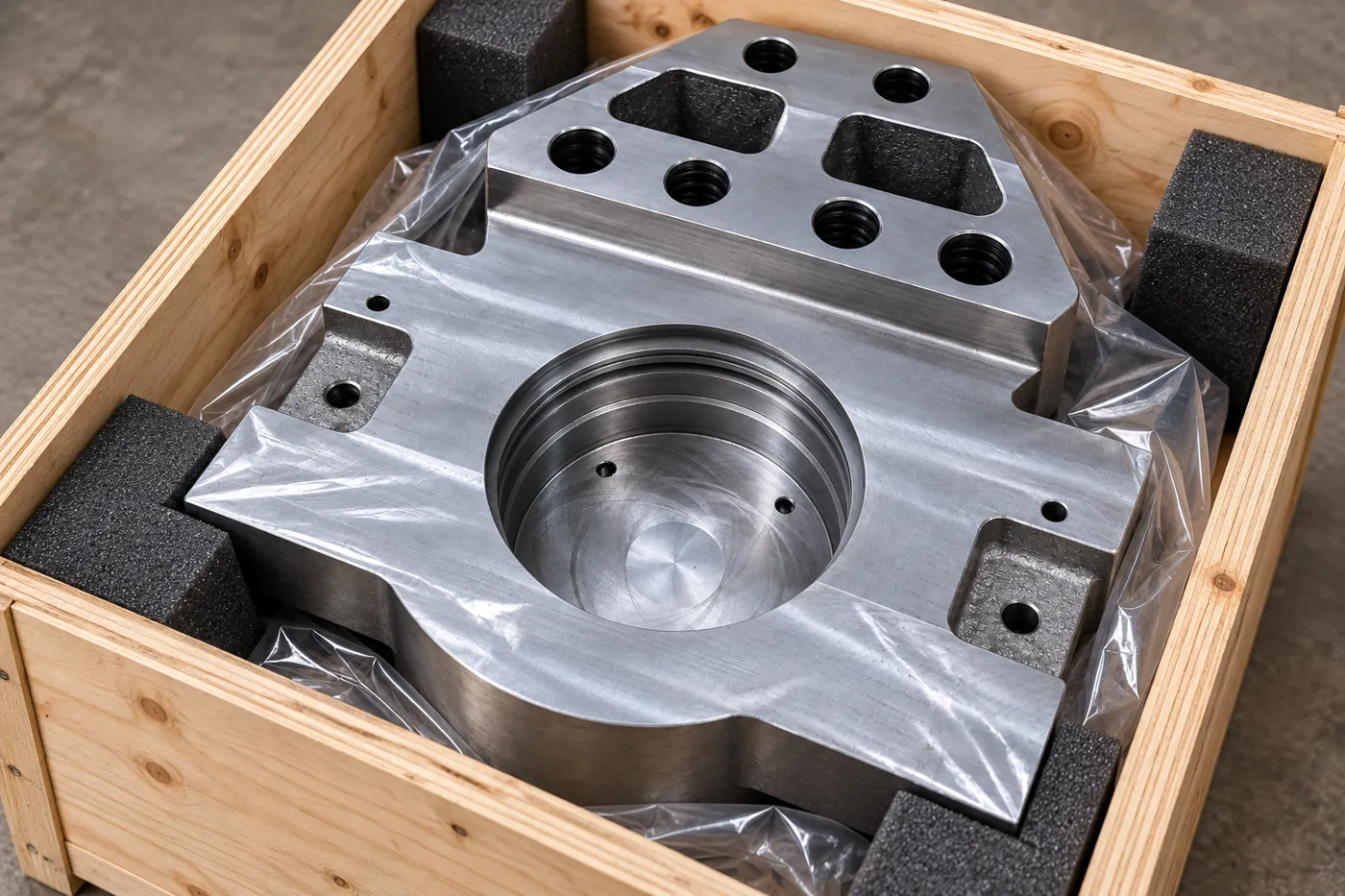
Our industrial iron range offers plywood-case or pallet packing with rust protection. For machined blocks, a useful package keeps finished bores clean, separates contact faces and supports the body without loading a thin edge. The same protection can have different packed dimensions and handling needs, so compare volume and gross mass alongside suitability for your route and receiving equipment. The goal is an accepted component at your receiving point, with packing that protects the work already included in its price.
- Protection
- Preserve bores, faces and supplied surface
- Handling
- Match supports to the part and receiving method
- Freight input
- Packed dimensions and gross mass
10A CLEARER CASTING PURCHASE
Build a quotation that leads to a purchasing decision
Bring us the controlled drawing, selected material, intended supply state and expected release quantity. We can discuss the route from tooling through casting, machining and acceptance, with the new-part sample sequence included where needed. Your final comparison should make the decision clear: keep the present design, change a specific cost driver, or choose a different finishing or delivery boundary. That gives you a meaningful basis for selecting a China factory rather than two unit prices describing different work.
11 YOUR NEXT STEP
Bring your component into the conversation
Tell us which component you need, the material, quantity and required supplied condition. Relia will connect your enquiry with the casting, machining and evidence relevant to that part.
Technical reading and scope
Technical references explain the process. Component specifications and agreed order records define the actual supply.
ICC — Incoterms 2020 and Commercial ContractsAmerican Foundry Society — Gating & Riser Design 201- [email protected]
- Phone
- +86 18561762631
- +1 404 203 0971
- Company and address
- Qingdao Relia Industries Co., Ltd.
Shuyuan Road, Qingdao, Shandong, China