
01CHINA CASTING AND MACHINING
Sand Casting and Machining for Drawing-Based Parts
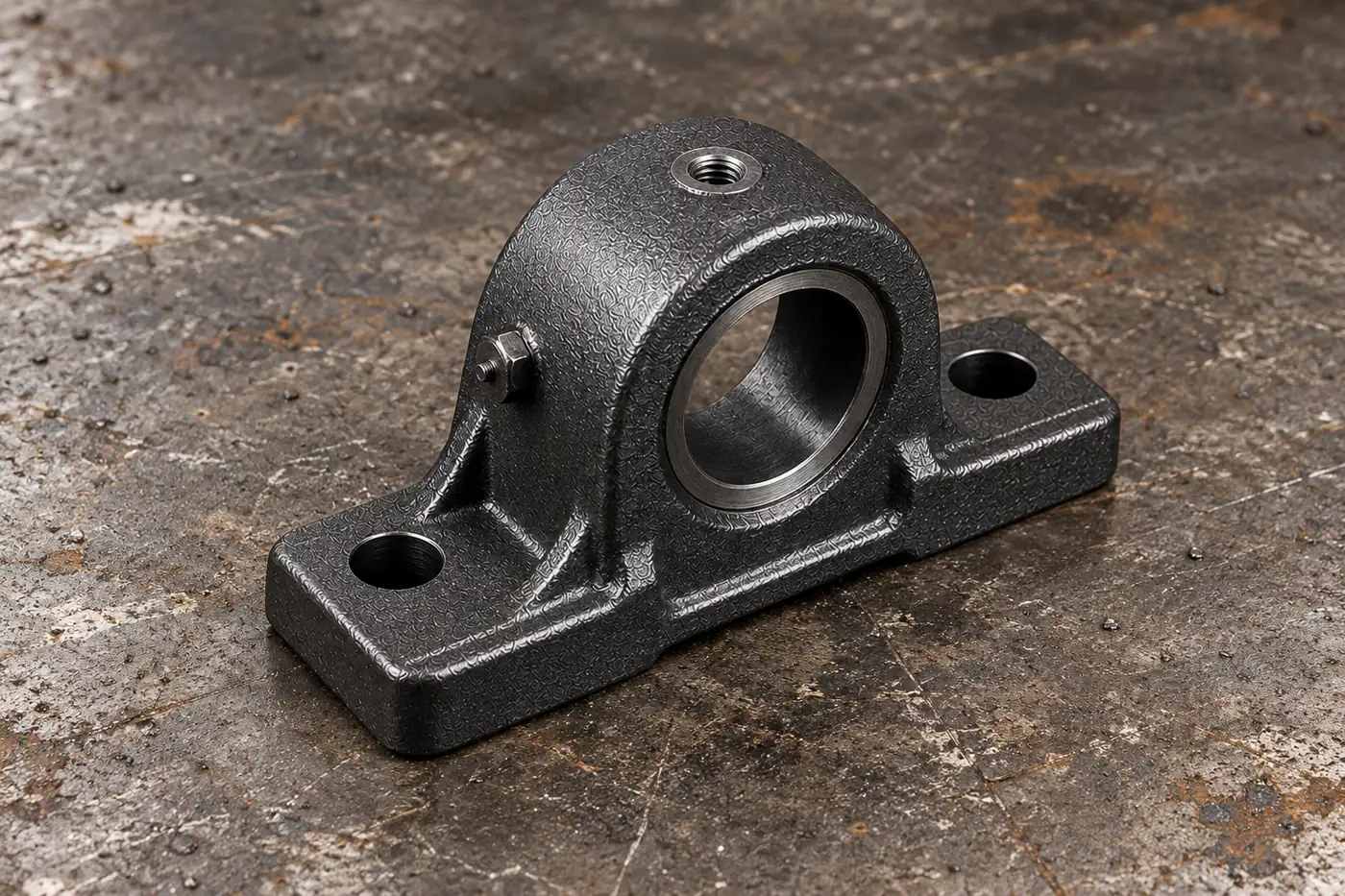
Your part needs a manufacturing route that preserves its function from the cast shape to the finished interfaces. Relia combines our own sand casting and machining in China, mainly using resin-coated sand and shell moulding, with other routes selected for the component. This guide connects tooling, internal passages, solidification, machining and inspection so you can specify a useful delivered part.
- Start with
- Drawing + material
- Plan together
- Cast shape + interfaces
- Approve
- Sample, then batch
02CHINA CASTING AND MACHINING
Match the material with a real process route
Relia’s main sand-casting routes use resin-coated sand and shell moulding. In shell work, coated sand forms a rigid mould or core against heated tooling. Tooling and core geometry therefore deserve attention early, especially where an internal passage must line up with a machined port. The particular route is selected against the component’s geometry, material and order requirements.
Our catalogue also contains separate aluminum gravity/die-casting and steel investment-casting enquiries. These remain distinct options with their own tooling and process scope. A product’s published route takes precedence over a general description of our main sand-casting work.
| Material and component | Route to evaluate |
|---|---|
| Grey or ductile iron | Sand-cast machinery components with drawing-based finishing |
| A356-T6 aluminum | Sand casting, heat-treated condition and CNC interfaces |
| Low-carbon alloy steel | Separate investment-cast and CNC-machined service |
| Selected aluminum parts | Gravity or die-casting options evaluated for that component |
03CHINA CASTING AND MACHINING
Design walls and cores as one geometry
Ribs, bosses and wall transitions influence how a cast shape fills and solidifies. A heavy junction surrounded by thin walls needs attention to feeding and local geometry; an internal passage needs a core that can be supported and removed. These decisions affect the blank before CNC machining begins.
Show the complete internal model and relevant minimum sections, then identify the external references used to locate later machining. This lets the core envelope, wall condition and finished interfaces be discussed together instead of leaving internal geometry out of the manufacturing brief.
04CHINA CASTING AND MACHINING
Housing interfaces completed from stable datums
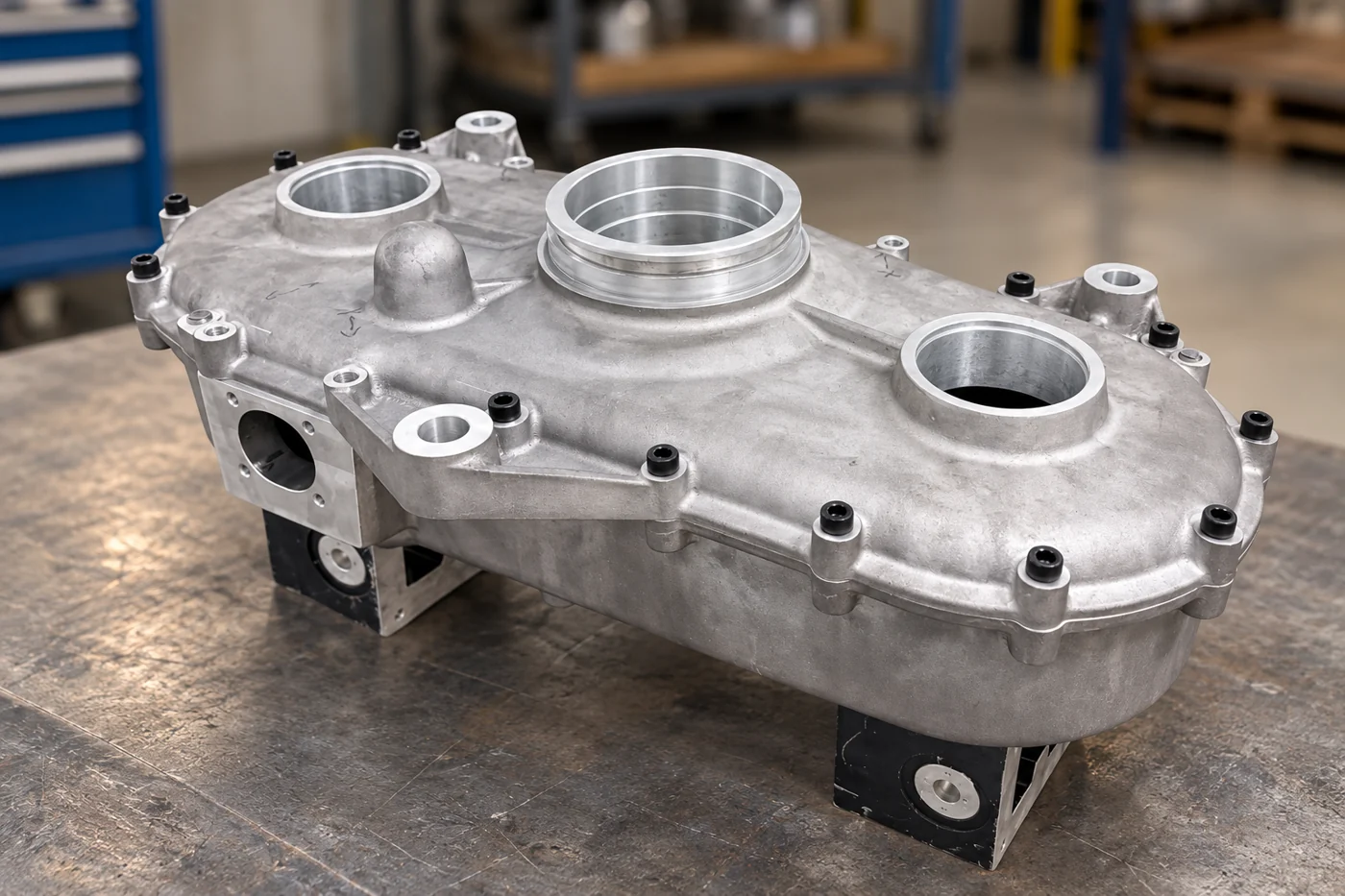
Our aluminum housing range combines cast exterior geometry with finished circular openings, flanges and mounting features. CNC work can establish the assembly reference faces and relate the remaining interfaces to them. This matters when a casting has several bores or a cover that must seat without forcing the housing.
A raw-casting order instead needs a blank drawing or clearly defined allowances and locating features. The same finished-part model does not by itself explain what the local machine shop should receive.
05CHINA CASTING AND MACHINING
A production sequence with explicit release points
The mould defines the outside of the component and a core forms an internal passage. In the selected route, tooling and core support must leave the intended wall and machining stock. Gating and feeding are planned around filling and shrinkage as the metal solidifies; the cleaned blank then carries the geometry needed for machining.
Relia connects our casting and machining work at that handover. A bore with insufficient stock cannot be rescued by a tighter CNC program. The sample and dimensional results provide a practical point to confirm the proposed route before you approve batch production.
- 01Tooling and coresDefine the cavity, core seating and stock for the actual component
- 02Mould and pourMatch the sand route and metal to filling and solidification needs
- 03Clean the blankRemove gates and sand; expose the usable machining envelope
- 04Machine interfacesEstablish datums and cut the related faces, bores and holes
- 05Check the sampleReview the selected material and dimensions before batch approval
06CHINA CASTING AND MACHINING
Rotating parts need hydraulic and mechanical definitions
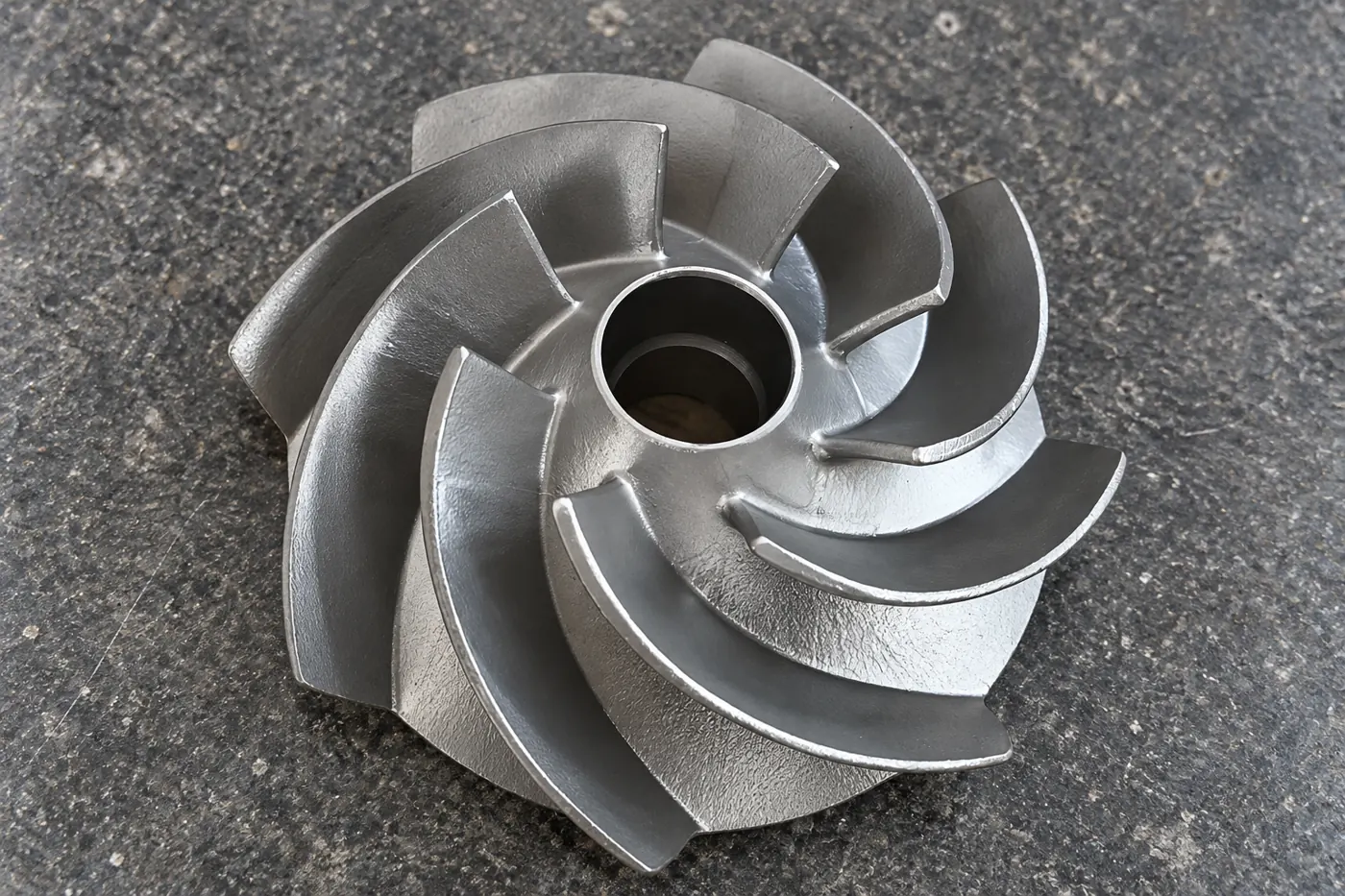
A pump impeller is purchased as a three-dimensional flow component with a mechanical connection. The vane form, inlet and outlet regions, bore, axial location and relevant clearances need to belong to the same controlled drawing. Our impeller range includes bronze sand-casting and separate iron-component enquiries.
The manufacturing proposal can then distinguish the cast vane body from the features requiring final work. Any balance or operating trial belongs to its specified component condition and acceptance plan, alongside the ordinary dimensional checks.
07CHINA CASTING AND MACHINING
Material condition belongs in the route
A356-T6, conventional ductile iron and ADI require different material specifications and processing plans. Our range also includes steel-component heat treatment within its own process scope. The route needs to identify where treatment occurs relative to rough and final machining.
This is particularly useful when close interfaces will be accepted after treatment or coating. The purchasing document should name the final condition so a dimension measured at an earlier stage is not used as the only evidence for the finished part.
08CHINA CASTING AND MACHINING
Inspection follows the feature and its failure mode
Dimensional inspection answers whether the cast and machined geometry meets the drawing. Material records address the selected grade and condition. Surface or internal examinations address different types of discontinuity, and any specified leak or operating test has its own object and procedure.
The manufacturing route should identify which of these checks belongs at each stage. We use the inspection brief to connect a measured feature or examined region to its drawing and acceptance reference, making the release package useful to both the factory and your receiving team.
| Control object | Release information |
|---|---|
| Machined bore or face | Size, orientation, location and specified texture |
| Selected material | Designation, condition and agreed test basis |
| Specified casting region | Examination method, coverage and acceptance criterion |
| Delivered part | Revision, finish, protection and required records |
09CHINA CASTING AND MACHINING
Protection is part of the supplied condition
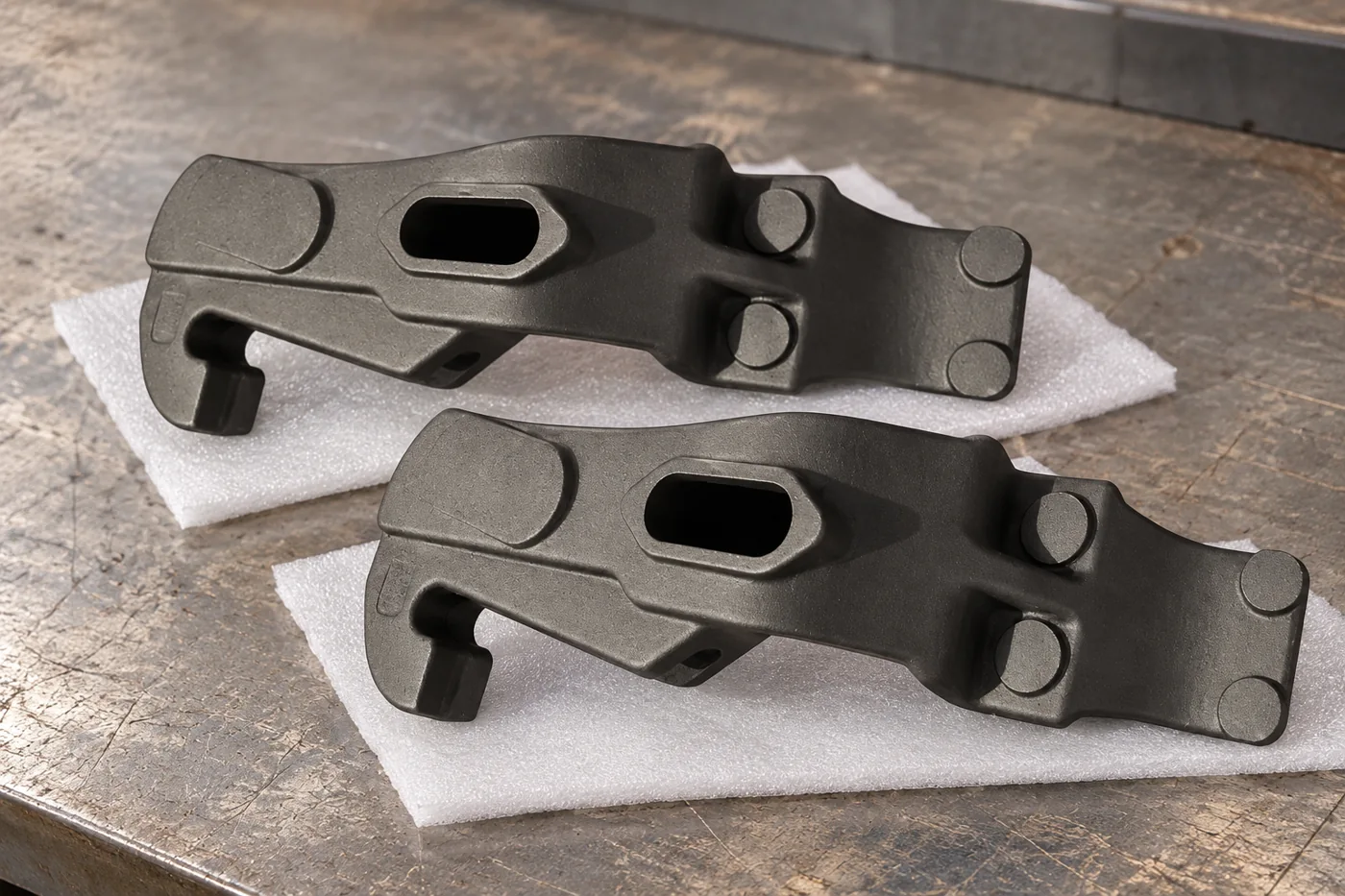
Finished faces and edges need a packing arrangement that survives handling without losing the condition you approved. Our component offers include customer-specified packing, with wooden packaging identified on selected housing entries. A part that is adequate as a cleaned blank may need different separation and surface protection after precision machining.
Mark the regions that must not contact other parts, the corrosion-protection requirement and any receiving labels. These instructions can travel with the same part number and revision as the manufacturing route.
10CHINA CASTING AND MACHINING
Choose the next manufacturing decision
For a new drawing, begin with the complete part and its required supplied state. For a replacement, identify the unworn geometry and mating parts. For a transferred pattern, identify tooling condition and the casting revision. These starting points lead to different technical reviews, even when the same broad process is proposed.
Use the buyer guide that matches the decision in front of you, or send us the current documents with the quantities and assembly requirements. The quotation can then describe a manufacturing route with an understandable output at each stage.
11 YOUR NEXT STEP
Bring your component into the conversation
Tell us which component you need, the material, quantity and required supplied condition. Relia will connect your enquiry with the casting, machining and evidence relevant to that part.
Technical reading and scope
Technical references explain the process. Component specifications and agreed order records define the actual supply.
Casting design, machining stock and purchasing requirementsISO 8062-3 — casting tolerances and machining allowances- [email protected]
- Phone
- +86 18561762631
- +1 404 203 0971
- Company and address
- Qingdao Relia Industries Co., Ltd.
Shuyuan Road, Qingdao, Shandong, China