
01A CLEARER CASTING PURCHASE
Crusher Hammer Castings for Your Wear Duty
Choose a replacement hammer around the material loss and impact your machine actually experiences. Relia’s crusher range includes high-manganese and separately selected wear-resistant steel casting enquiries, with treatment, machining and specified examinations. Bring the worn profile, attachment drawing and operating brief. The proposal can then connect the material condition to the working section and pin connection instead of rely on hardness alone.
- Observe
- Wear, fracture + connection
- Select
- Steel grade + condition
- Define
- Working profile + mounting
02A CLEARER CASTING PURCHASE
The worn part distinguishes abrasion from breakage
Relia’s crusher-hammer offering includes water-glass and resin-sand routes with component-specific machining and inspection scope. These published routes should be retained in the selected proposal rather than replaced by a general statement about our main coated-sand and shell process.
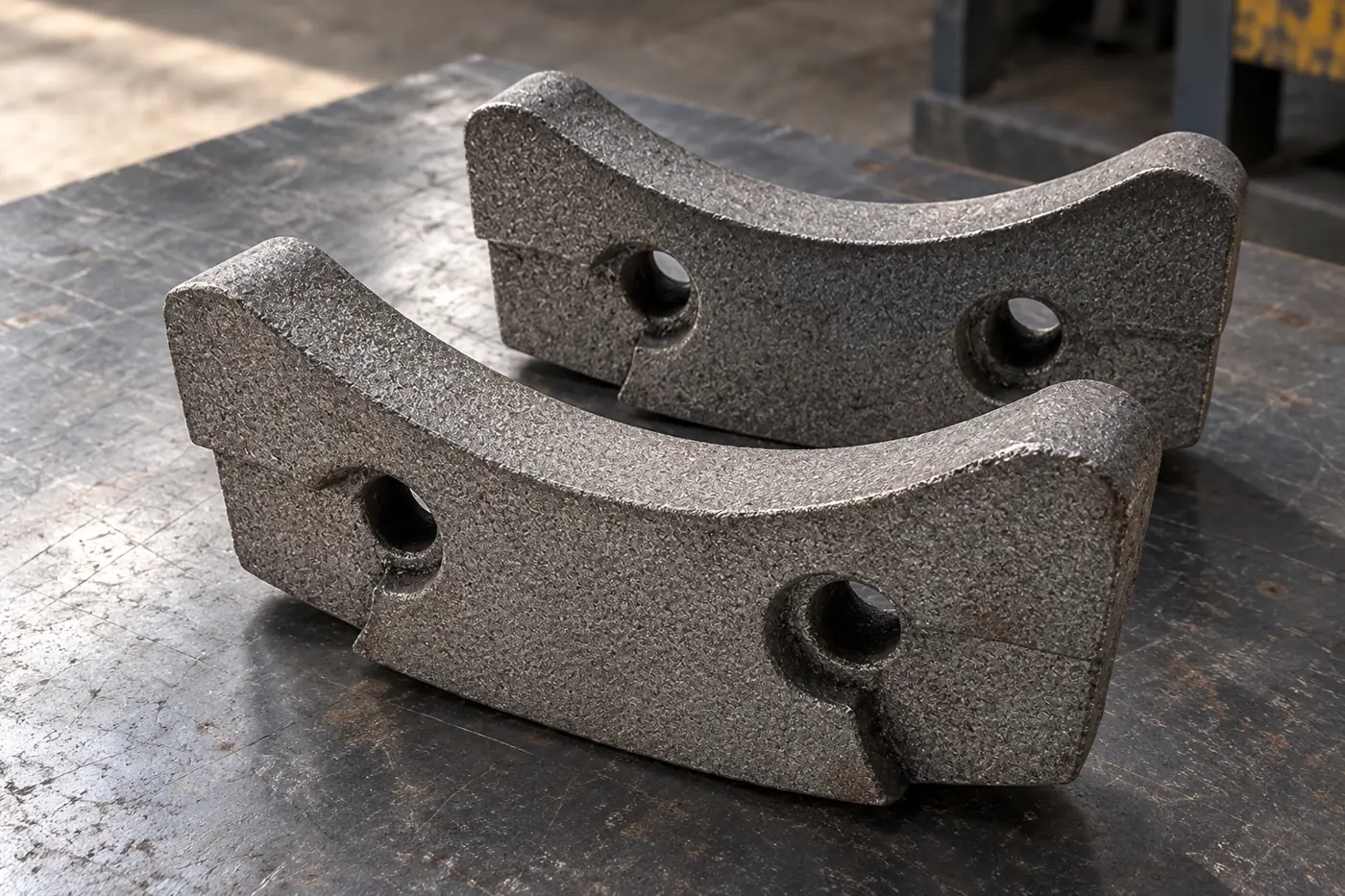
Photograph the working face, attachment region and full remaining section before discarding the old part. Grooves and gradual profile loss point to a different problem from a sudden fracture, local deformation or an oval connection hole. Record where wear starts and whether one side deteriorates faster than its paired parts.
Add feed type, largest feed pieces, contamination or tramp-metal events, operating speed and the available throughput record. A replacement material discussion becomes more useful when it can separate abrasive contact from impact severity and connection movement. These observations guide an investigation; they do not establish a failure diagnosis by themselves.
03A CLEARER CASTING PURCHASE
Work hardening and initial hardness solve different duties
Austenitic manganese steel develops a harder working surface under suitable impact while retaining a tougher underlying structure. That mechanism makes the impact conditions relevant to selection; a high-manganese label alone cannot establish its suitability for predominantly sliding abrasion. A harder wear alloy may resist abrasive removal but require closer evaluation where severe impacts or cracking dominate.
Select a complete grade and delivered condition for the actual hammer. The catalogue also lists ASTM A148, A732, A958 and EN 10293 references for different steel enquiries. They are alternatives with different scope, not interchangeable names for one high-manganese material specification.
| Material review | Information to retain |
|---|---|
| Impact-driven duty | Evaluate toughness and whether the selected alloy’s wear mechanism suits the service. |
| Sliding abrasion | Evaluate abrasive loss and the risk of a harder, less tolerant material in the actual impacts. |
| Selected steel | State the complete grade, standard and supplied condition. |
| Engineering change | Keep alloy, heat-treatment requirement and trial criterion connected. |
04A CLEARER CASTING PURCHASE
The pin region remains a controlled interface
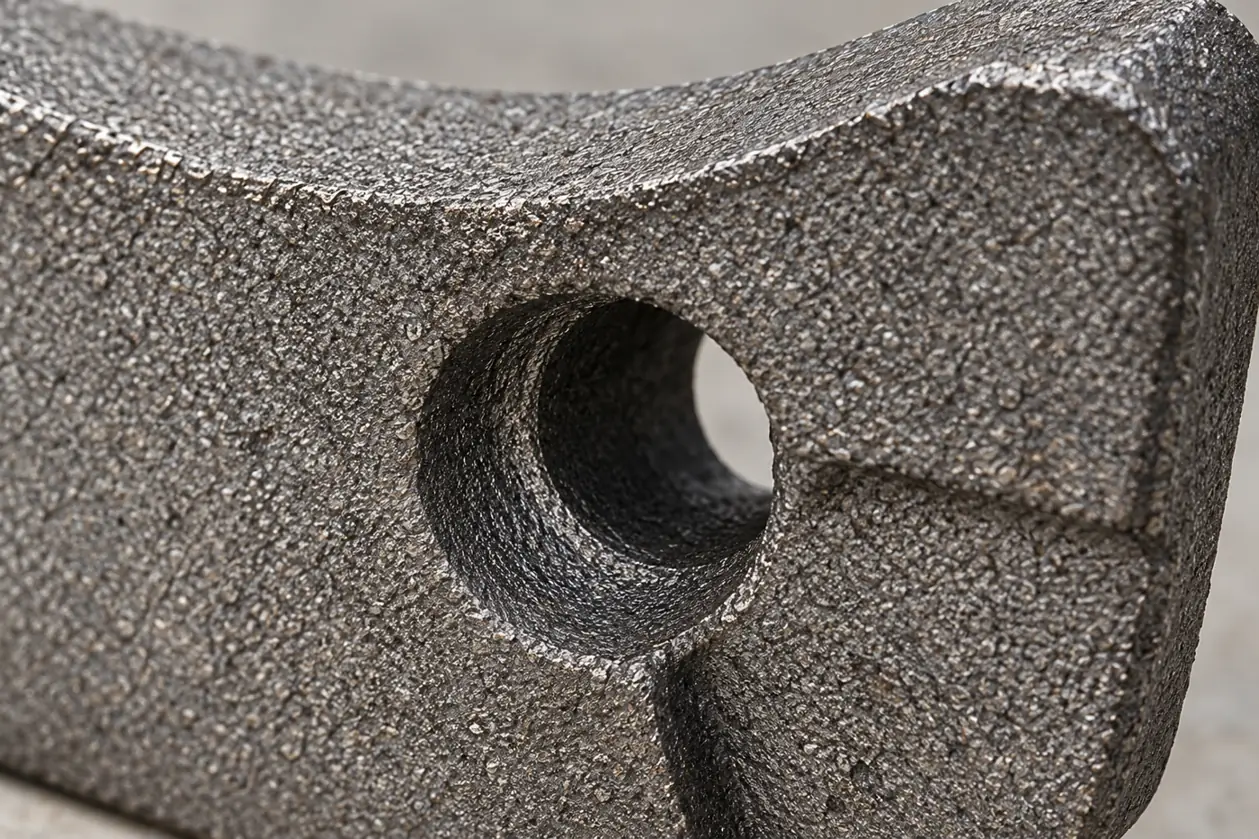
A new working-face alloy does not correct an uncontrolled attachment fit. Keep pin diameter, bore size, retention details, local wall and the working envelope on the replacement drawing. Where the original connection has worn, distinguish the required new-part dimensions from the dimensions measured on the discarded part.
Mark the load-carrying transitions around the hole and any surfaces that need machining or grinding. A permitted profile change should retain clearance to the crusher and the intended movement. The illustrated curved wear blocks are geometry references; the ordered hammer remains the released component drawing.
05A CLEARER CASTING PURCHASE
The material condition belongs in the manufacturing route
For the selected steel, define the treatment condition that establishes the required properties, then identify the operations needed at its mounting and working surfaces. The order should distinguish as-cast geometry from finished holes and contact regions. Water-glass or resin-sand route selection is part of that manufacturing proposal.
The useful acceptance package connects chemistry and mechanical requirements to the chosen grade, and any hardness requirement to specified locations and condition. Surface hardness alone does not establish impact toughness or internal soundness. Our catalogue’s chemical, mechanical, dimensional and NDT scope lets the enquiry assign each check to the characteristic it needs to demonstrate.
- 01Alloy identityChemical requirements and heat or batch reference for the selected grade.
- 02Material conditionRequired treatment and specified mechanical or hardness evidence.
- 03Finished interfacesMachined hole, contact and envelope dimensions with measurement references.
- 04Soundness checksSelected NDT method, regions, acceptance criteria and report identity.
06A CLEARER CASTING PURCHASE
A replacement trial compares like operating conditions
Use processed tonnage, measured wear at identified locations and the defined retirement criterion to compare the baseline with the replacement. Calendar days alone can mislead if utilisation or feed changes. Record settings and relevant feed changes alongside the measurements so the result remains interpretable.
If the replacement changes both geometry and material, acknowledge that the trial evaluates the combined proposal. A more controlled comparison keeps one major variable stable where practical. The purchasing outcome can then consider wear cost per processed quantity, replacement work and the reason for removal instead of accepting an unsupported service-life promise.
07A CLEARER CASTING PURCHASE
The working profile determines useful remaining life
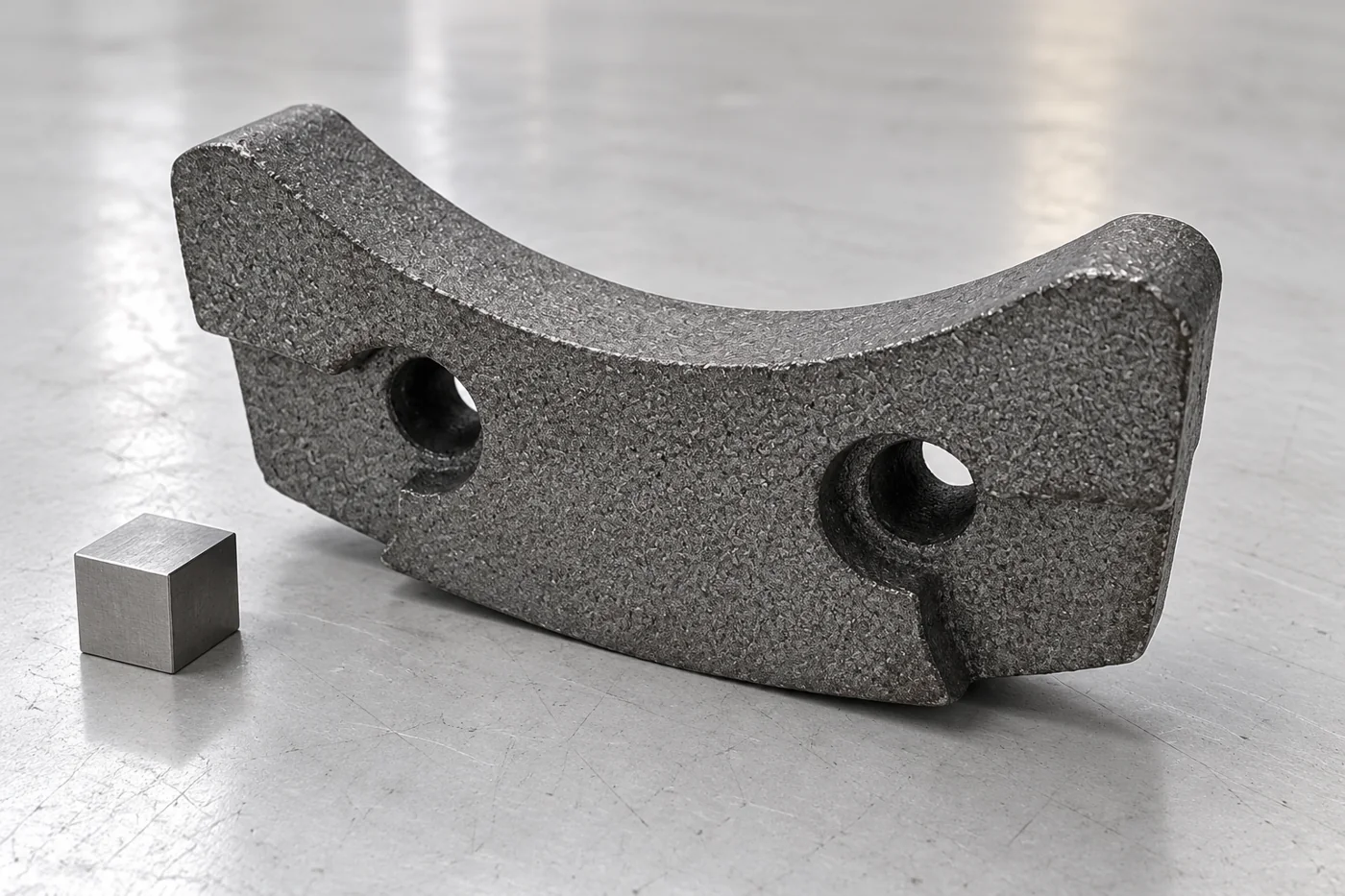
Retaining overall mass does not mean a worn hammer still has the correct working profile. Local loss at the striking edge can change the interaction with the feed before the whole component appears severely worn. Define the original outline, any permissible profile adjustment and the service limit used by your maintenance team.
Include the complete surrounding envelope in the model. We can review casting and finishing against those controlled dimensions, while your equipment team establishes the permitted operation and replacement criteria. That keeps a replacement enquiry focused on a useful component, rather than a heavier replica of the worn part.
08A CLEARER CASTING PURCHASE
Reports identify the trial version and inspected areas
Set the report schedule before casting the trial batch. Chemistry, mechanical properties and dimensions answer different questions, while NDT needs a named method and relevant acceptance criteria. A general NDT entry without an inspected region or standard does not tell your team how the critical attachment area was evaluated.
Connect each record to the part, selected grade and supplied condition. If the trial produces a design change, identify the new revision and the affected tests. The subsequent purchase can then follow the accepted version rather than mix the baseline, first trial and revised replacement under one description.
- 0101Release the grade, condition, drawing and inspection regions.
- 0202Identify the supplied trial parts and supporting records.
- 0303Measure wear and record removal against the trial criterion.
- 0404Select the next version using the documented comparison.
09A CLEARER CASTING PURCHASE
Packing preserves finished contacts and batch identity
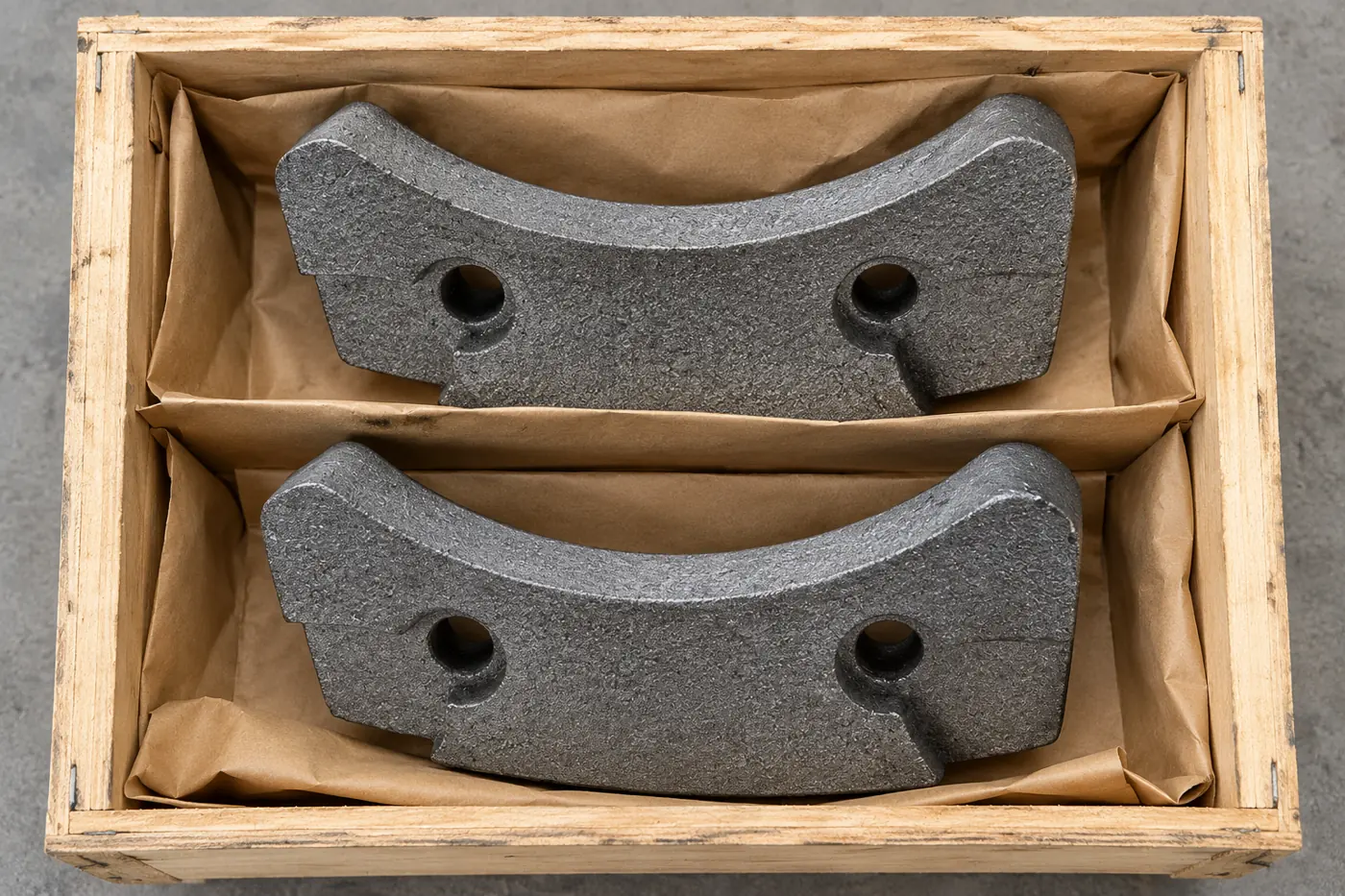
Separate heavy wear castings so their attachment regions cannot strike adjoining parts during transport. Protect finished holes and specified contacts, and identify the material or trial version at package level. Where the finish includes paint, powder coating or oxidation treatment, define coverage away from working surfaces and fits as required by the drawing.
Keep the receiving record connected to the trial plan before installation. A mix-up between visually similar materials can invalidate a comparison even when every part fits. Clear pack identification is therefore part of the replacement evaluation, not just a shipping convenience.
10A CLEARER CASTING PURCHASE
A wear-focused RFQ supports a concrete decision
Send the replacement drawing, worn-part photographs, known baseline material and available operating record. Include feed and impact context, pin-interface requirements and the trial quantity. Identify the properties, inspection methods and measurement points that your team will use to accept the selected replacement.
We can quote the relevant mining casting, finishing and inspection scope with that technical basis. The trial then has a clear purpose: evaluate the selected material and geometry under recorded service, followed by a purchasing decision supported by actual wear and condition evidence.
11 YOUR NEXT STEP
Bring your component into the conversation
Tell us which component you need, the material, quantity and required supplied condition. Relia will connect your enquiry with the casting, machining and evidence relevant to that part.
Technical reading and scope
Technical references explain the process. Component specifications and agreed order records define the actual supply.
Technical reference: Manganese steel work hardeningISO 13521: Austenitic manganese steel castings- [email protected]
- Phone
- +86 18561762631
- +1 404 203 0971
- Company and address
- Qingdao Relia Industries Co., Ltd.
Shuyuan Road, Qingdao, Shandong, China