
01A CLEARER CASTING PURCHASE
Replacement Slurry Pump Housings
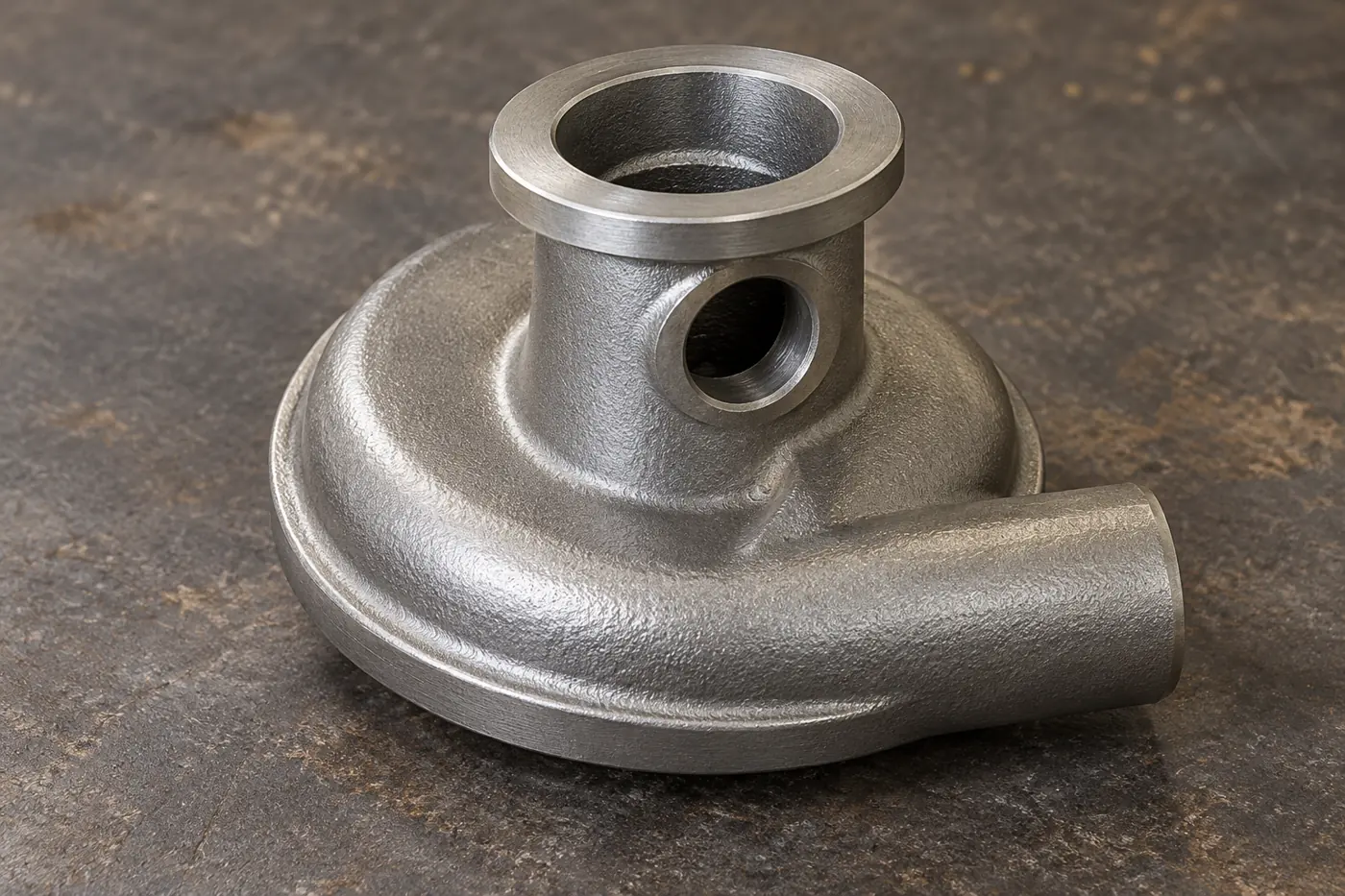
Replace the worn housing while keeping the interfaces your pump needs. Relia offers cast-steel pump housings and curved manifolds with selected casting, machining and finish scope. Bring the wear pattern and operating brief with the drawing. A controlled material or geometry proposal can then be evaluated on a sample instead of relying on a new alloy name alone.
- Component
- Housing or manifold
- Review
- Wear + operating duty
- Retain
- Installation interfaces
02A CLEARER CASTING PURCHASE
Replacement housings with retained fit and a defined trial change
Relia Casting supplies the housing blank, requested machining and selected surface work for this replacement programme. Our own sand-casting and machining production gives us a direct role in the part; the catalogue also offers an investment-casting route for a separately selected housing. SS304/SS316 requests need their actual governing cast-grade specification.
The offering states 100% sample inspection and a normal one-piece minimum. You can therefore begin with a defined replacement trial, supported by material and dimensional reports, before releasing repeat supply. For the technical starting point, map wear around the chamber, bends and connections alongside solids, liquid chemistry, duty and hours in service.
03A CLEARER CASTING PURCHASE
The baseline material has to be identifiable
Our housing listing accepts SS304 and SS316 requests as well as a selected cast-steel specification. Record the exact existing grade and condition before proposing another. A generic stainless label does not state the casting specification, hardness or suitability for a particular abrasive slurry.
Reconcile the original drawing with the worn component. Identify wall regions intentionally changed, surfaces repaired previously and machining that differs from the original design. This establishes which differences are wear, which are old modifications and which belong in the new manufactured part.
| Comparison input | Why it affects the replacement |
|---|---|
| Original geometry | Released drawing, not a scan of lost material alone |
| Existing alloy | Complete material specification and known condition |
| Damage baseline | Mapped wall loss and operating period |
| Proposed alloy | Selected cast grade and acceptance record |
04A CLEARER CASTING PURCHASE
Wear changes separated from installation interfaces
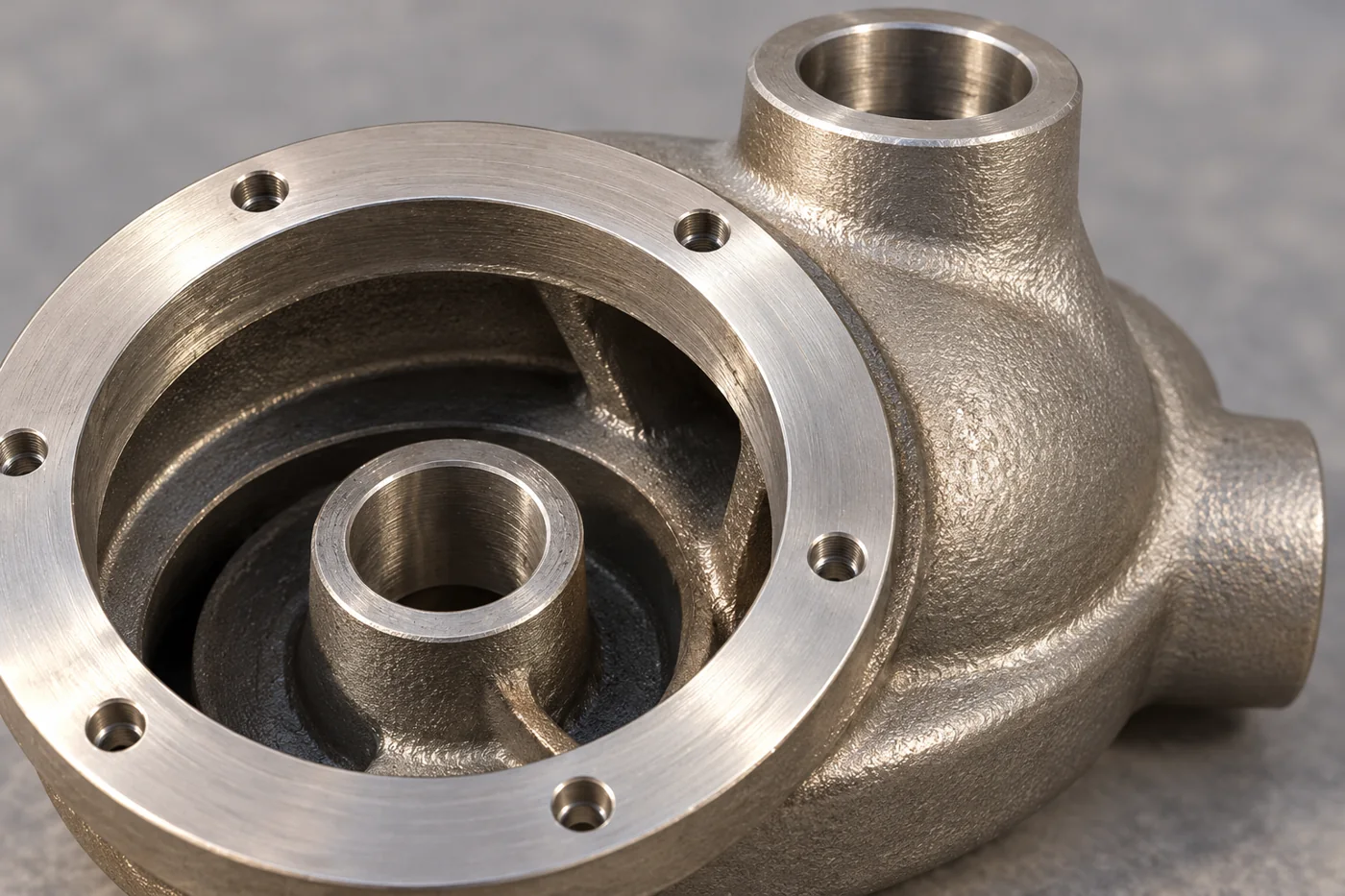
A thicker local section or revised internal transition can change the relation between the chamber and adjacent parts. Mark the sealing face, flange register, bolt pattern and mounting datum that must remain unchanged. Show where extra material is permitted without reducing the impeller space or obstructing flow.
Use separate revisions for the existing and trial designs. That lets us manufacture the intended change while your assembly team can identify the interfaces that should fit the established pump. A successful fit is the starting condition for a meaningful service comparison.
- Keep fixed
- Pump register and mounting arrangement
- Change deliberately
- Approved local wall or flow transition
05A CLEARER CASTING PURCHASE
Material trials and geometry trials answer different questions
Changing alloy and internal shape at the same time makes service results harder to explain. Where practical, keep one controlled baseline and state the purpose of each change: abrasion resistance, resistance to the actual carrier liquid, retained wall thickness or improved local flow geometry.
A corrosion-resistant choice can still be unsuitable for severe particle impact; a hard wear-resistant choice can face chemical attack. Build the comparison around the dominant duty and operating evidence, then select the material and geometry for the replacement order.
06A CLEARER CASTING PURCHASE
Manufacture the wear change without losing the installation
A replacement route starts by separating the worn surface from the intended new geometry. The proposed pattern and internal forming arrangement need to reproduce the retained flange and register while placing metal in the revised section. A thicker region also changes the solidification problem; it needs a feeding and transition decision, not simply extra wall on the model. Select sand or investment casting for the actual housing before the trial.
After gates and internal residue are removed, assess the altered region and stock at the finished joints. Machine retained interfaces from the installation references, then inspect the sample's material identity, changed wall and mating geometry. The CT4–CT9 casting reference does not replace final fit limits. Relia's sample route lets your team take a known manufactured version into service; production coverage and any operating trial remain explicit parts of the chosen release.
- 01Recover the baselineSeparate wear, earlier repairs and intended geometry
- 02Form the revised sectionConnect core location, transition and feeding proposal
- 03Finish retained interfacesMachine the same register, seal and mounting references
- 04Accept the trial pieceRecord grade, changed section and installation geometry
07A CLEARER CASTING PURCHASE
The installation check protects a meaningful service trial
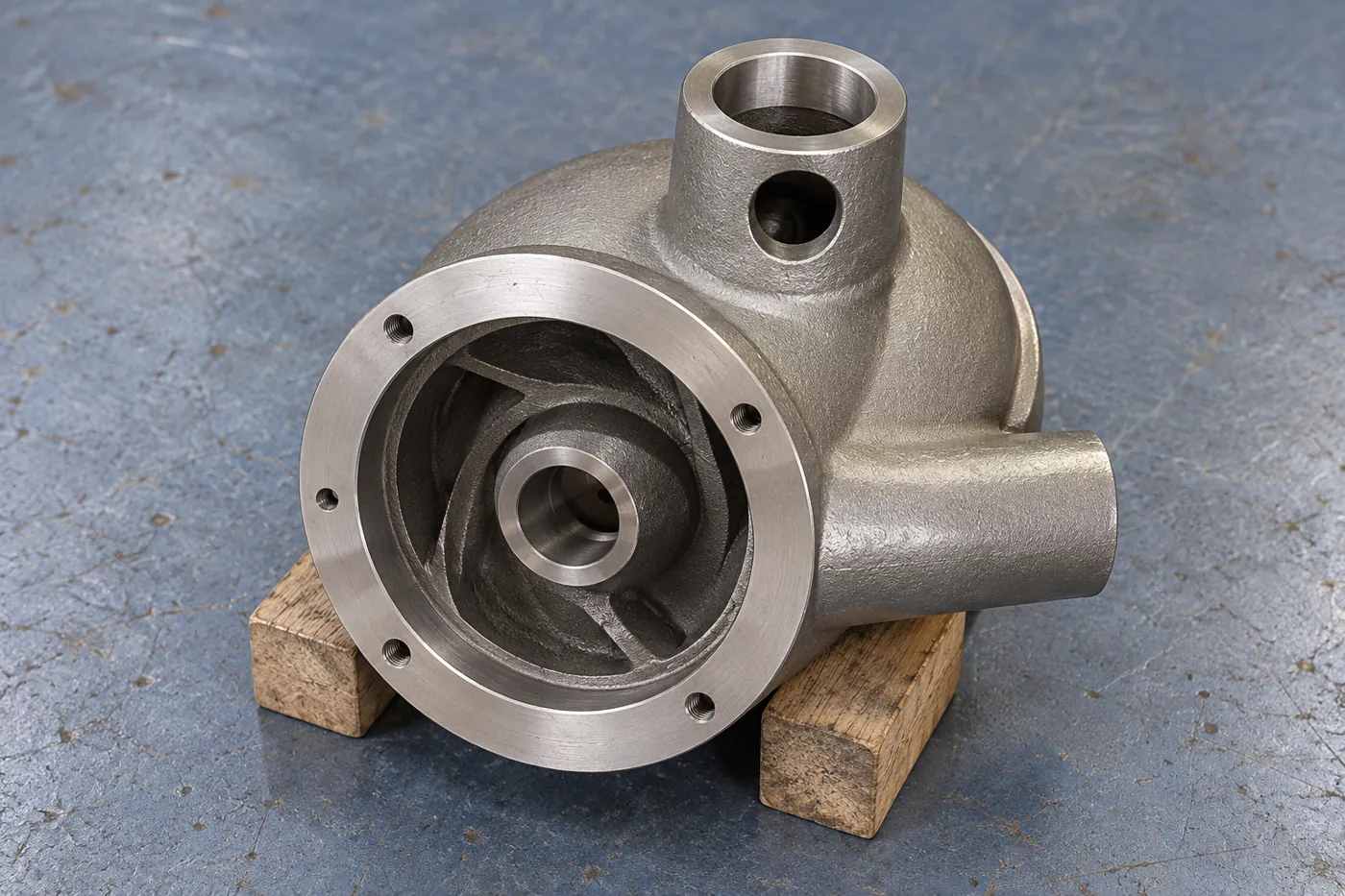
Before installation, check the retained sealing and mounting interfaces against the pump reference. Confirm the supplied internal condition and remove transport protection without leaving packing material in the flow path. A replacement fitted by unrecorded site machining no longer represents the delivered trial definition.
If a local adjustment is necessary, record it and update the engineering decision. The service record can then be interpreted against the component that actually ran, including its alloy, geometry and installation condition.
- Installation
- Retained fit checked before the trial
- Trial identity
- Actual geometry and local changes recorded
08A CLEARER CASTING PURCHASE
Trial performance compared on a consistent basis
Choose the end point before the trial: loss of section, inability to maintain duty, a defined minimum wall or another engineering criterion. Record operating hours and throughput alongside slurry composition and flow range. Two housings exposed to different solids or operating points do not provide a simple material comparison.
Measure the same locations before and after service wherever practical. An identified part, repeatable measurement map and recorded duty turn a replacement purchase into evidence for the next order, rather than a judgement based only on calendar life.
- 0101Record initial wall map, material and manufactured revision
- 0202Install with retained-interface checks and recorded adjustments
- 0303Log solids changes, flow duty, hours and throughput
- 0404Compare mapped wear at the preselected end point
09A CLEARER CASTING PURCHASE
The delivered replacement retains its trial identity
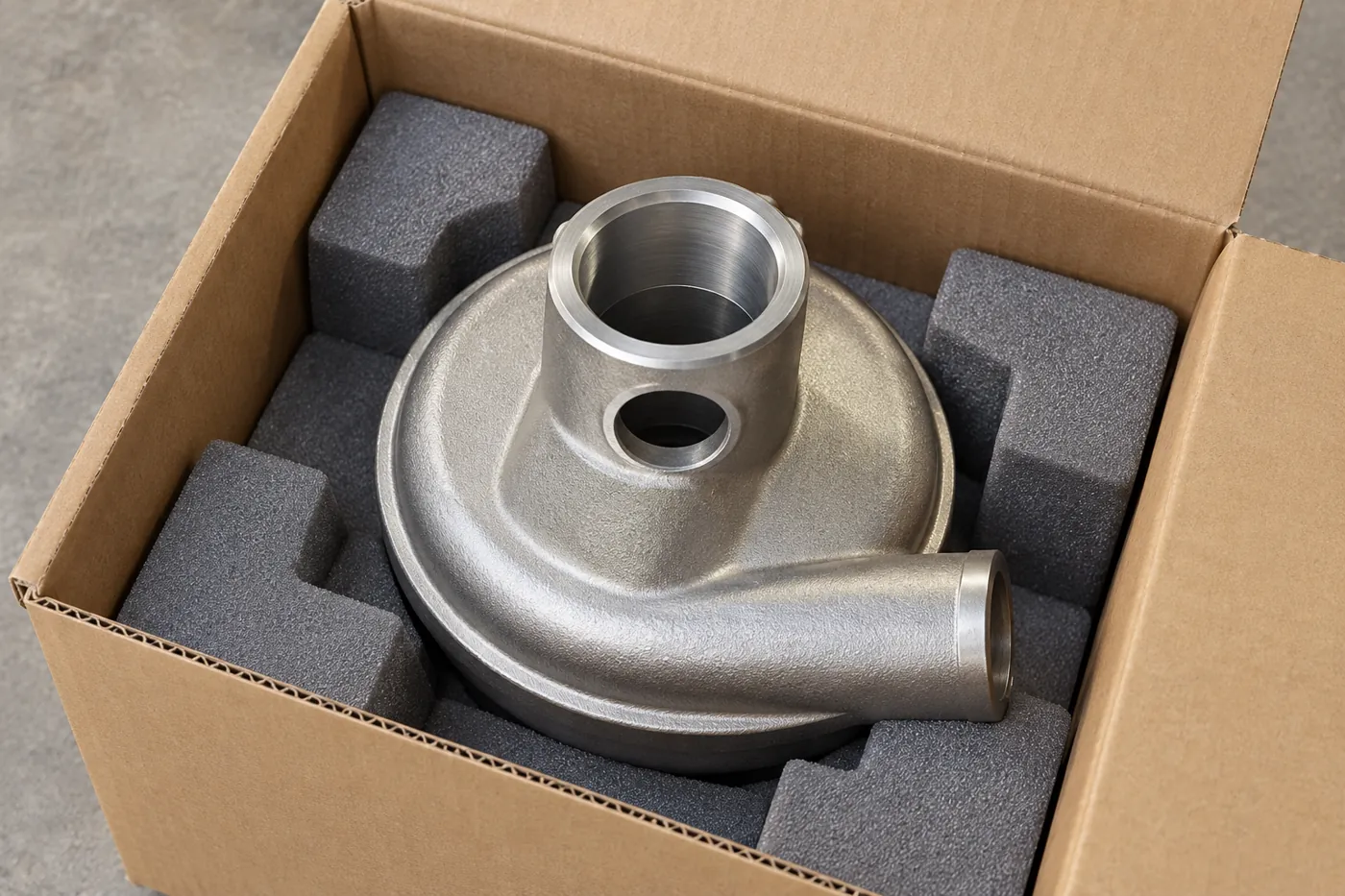
The listed packing uses multilayer wooden boxes or pallets with an internal plastic bag. Protect machined sealing and locating faces, cover clean passages and prevent contact that can damage flange edges. Identify the part as the selected trial revision and keep material and inspection records with that identity.
For an urgent replacement, separate delivery timing from acceptance work needed before operation. Clear records at receipt make it easier to install the intended trial part and later connect service findings to a repeat purchase.
- Packing
- Wooden box or pallet with inner bag
- Protection
- Covered passages and protected joint faces
10A CLEARER CASTING PURCHASE
A replacement decision that can improve the next order
A controlled replacement trial gives purchasing and engineering something useful to compare: a named material, a released geometry, a recorded installation and a service end point. Relia can manufacture that trial definition and carry the accepted version into batch production after your confirmation.
Keep the wear map and the before/after measurement locations with the supplied part identity. If a local installation change is necessary, record it before interpreting service life. The next buying decision can then use the component that actually ran, rather than rely on calendar life or a photograph of damage alone.
11 YOUR NEXT STEP
Bring your component into the conversation
Tell us which component you need, the material, quantity and required supplied condition. Relia will connect your enquiry with the casting, machining and evidence relevant to that part.
Technical reading and scope
Technical references explain the process. Component specifications and agreed order records define the actual supply.
Hydraulic Institute — solids and slurry selectionSlurry-pump wear patterns and operating conditions- [email protected]
- Phone
- +86 18561762631
- +1 404 203 0971
- Company and address
- Qingdao Relia Industries Co., Ltd.
Shuyuan Road, Qingdao, Shandong, China