
01A CLEARER CASTING PURCHASE
Grey-Iron V-Belt Pulleys with Defined Fits
Compare the same belt profile and shaft connection before comparing pulley prices. Relia offers grey-iron sand-cast blanks and selected finished-pulley enquiries with machining, keyways and balancing requirements. Define the groove, bore and keyway together, then specify the supplied state and any running acceptance. This keeps a blank order distinct from a completed pulley package.
- Belt
- Specified groove profile
- Shaft
- Bore + keyway fit
- State
- Blank or finished pulley
02A CLEARER CASTING PURCHASE
Pulley blanks and finished drive interfaces
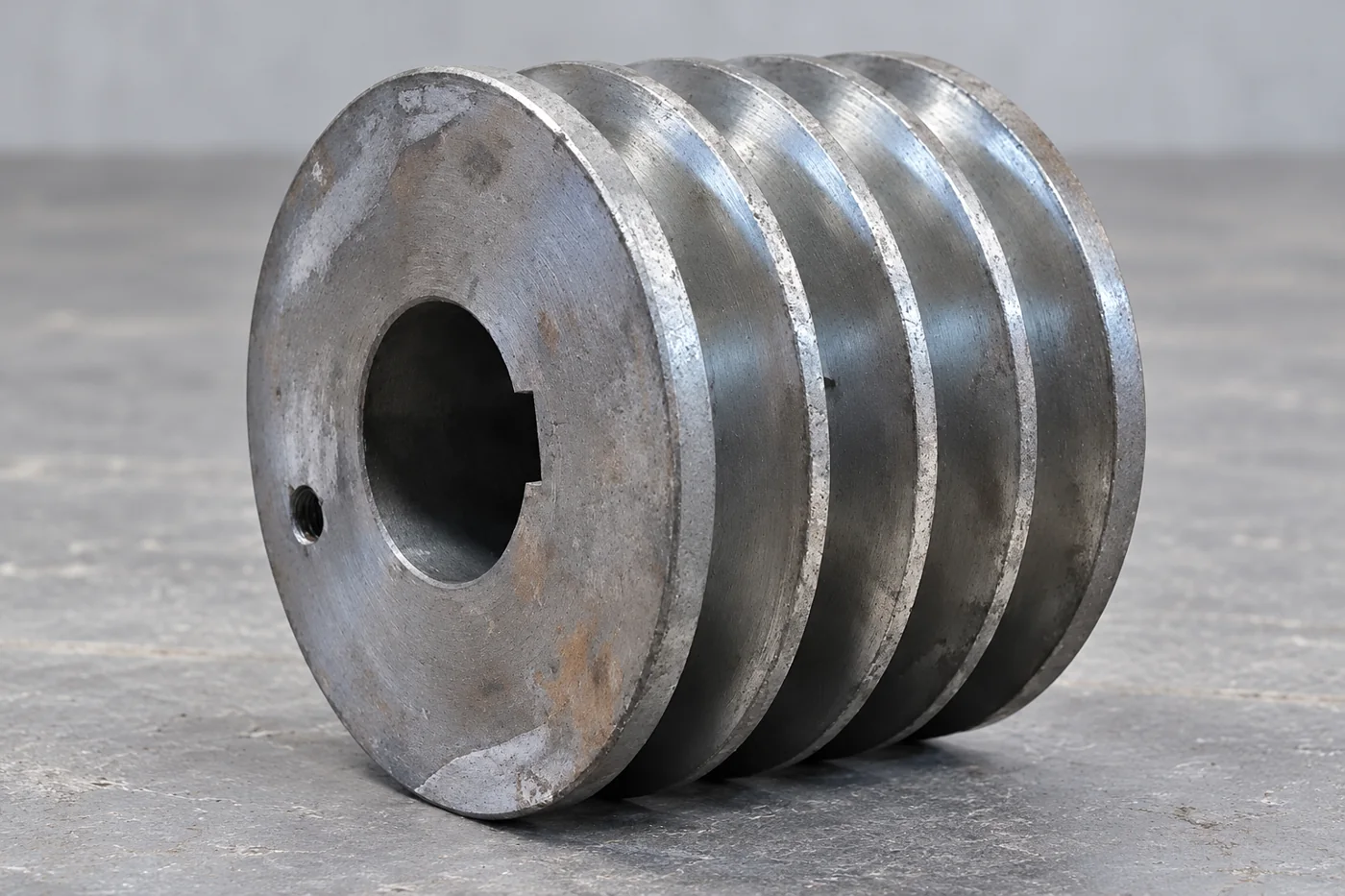
Relia Casting offers a four-groove grey-iron blank and separately specified finished pulleys with machining, keyways and dynamic balancing. The blank range accepts A, B, C, SPA, SPB and SPC belt-section enquiries. These are alternative profiles: the selected section controls how the belt sits and where its working diameter lies.
Our own sand-casting and machining production can join the cast rim and hub to the required final groove and shaft geometry. For replacement supply, the nominal design is a better starting reference than a worn groove. Material and dimensional reports and real workshop/equipment photographs are available, while the inspected sample and your approval establish the repeat-order configuration.
03A CLEARER CASTING PURCHASE
The bore and keyway define one shaft connection
Specify bore fit, keyway width and depth, orientation and any retention features. Include hub length and locating shoulder requirements used by the assembly. The keyway is related to the bore axis; a correct width by itself does not establish an acceptable shaft connection.
Keep the groove envelope related to that axis as well. A pulley can assemble on the shaft and still show unwanted groove runout. MPTA addresses bore/keyway tolerances and separate balancing practices, giving the purchase brief distinct references for these different requirements.
| Interface feature | What determines usable fit |
|---|---|
| Bore | Fit, running axis and contact length |
| Keyway | Width, depth and relationship to the bore |
| Axial location | Hub length, shoulder and retention |
| Groove relationship | Specified radial/axial runout from shaft datum |
04A CLEARER CASTING PURCHASE
The groove surface and geometry affect belt contact
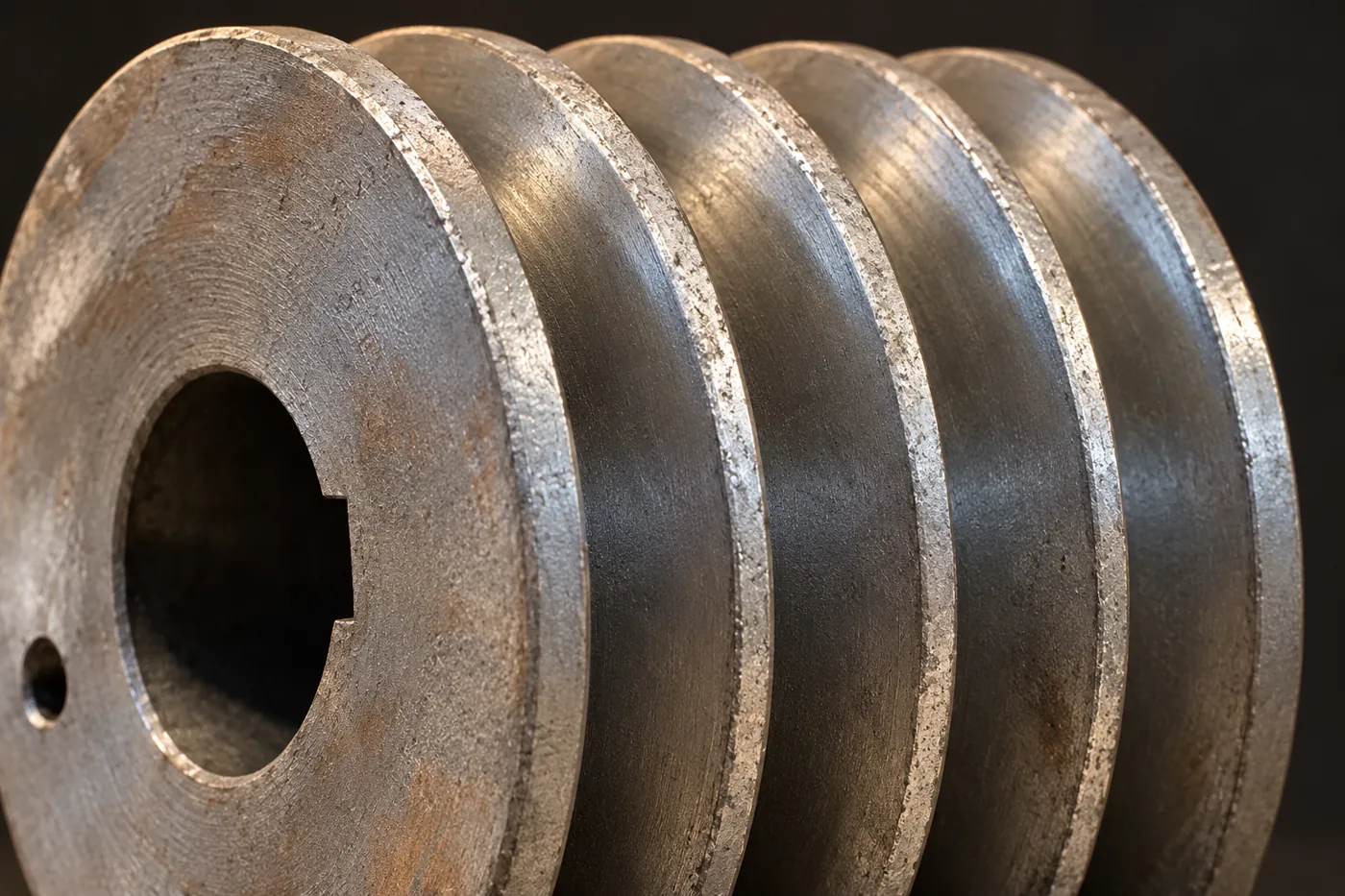
Provide a groove section with the required flank geometry, spacing, edge condition and surface requirement. Avoid sharp burrs at the entry or damage that can mark the belt. A profile gauge or other selected check should address the final groove rather than only the outside rim.
Keep the treatment coverage explicit. Sandblasting and painting are offered, but the finished belt-contact surface needs the condition chosen for the drive. An uncontrolled coating layer can change the interface you intended to purchase.
- Belt contact
- Selected groove profile and surface
- Treatment
- Coverage kept off controlled contacts
05A CLEARER CASTING PURCHASE
Blank and finished pulley orders leave different work downstream
For a blank, define which groove and hub geometry is cast, the allowance for later machining and the dimensions accepted before that work. The four-groove grey-iron listing is a blank enquiry; the actual count and size remain on the drawing.
For a finished pulley, include bore/keyway machining, groove finishing, surface work and the defined balancing deliverable. A clear handover prevents the receiving team from discovering that a nominal pulley still needs critical cutting or that balancing was performed before the final rotating configuration existed.
06A CLEARER CASTING PURCHASE
Create the shaft and belt geometry before final balancing
The mould and pattern plan must leave useful stock at the hub and groove envelope, including the rim-to-hub transitions. After casting, cleaning and gate removal, machining establishes the bore axis and the required hub faces. Groove cutting and keyway work then need a controlled relationship to that axis; accurate local groove dimensions do not by themselves prevent an eccentric belt path.
Complete the agreed machining and surface condition before accepting the balancing configuration. Dynamic balancing is part of our finished-pulley offer. Its mounting method, key convention, residual-unbalance requirement and permitted correction regions belong to that specific rotating state. Dimensional runout and balance remain separate results: one records the geometry around the shaft reference, the other the residual mass distribution. Keep both attached to the delivered pulley revision.
- 01Cast the blankRim/hub sections and usable local stock
- 02Machine related interfacesBore axis, hub faces, grooves and keyway
- 03Set final rotor conditionCompleted work and key/hardware convention
- 04Balance and recordPermitted corrections and identified final result
07A CLEARER CASTING PURCHASE
The hub reaches the shaft in its accepted condition
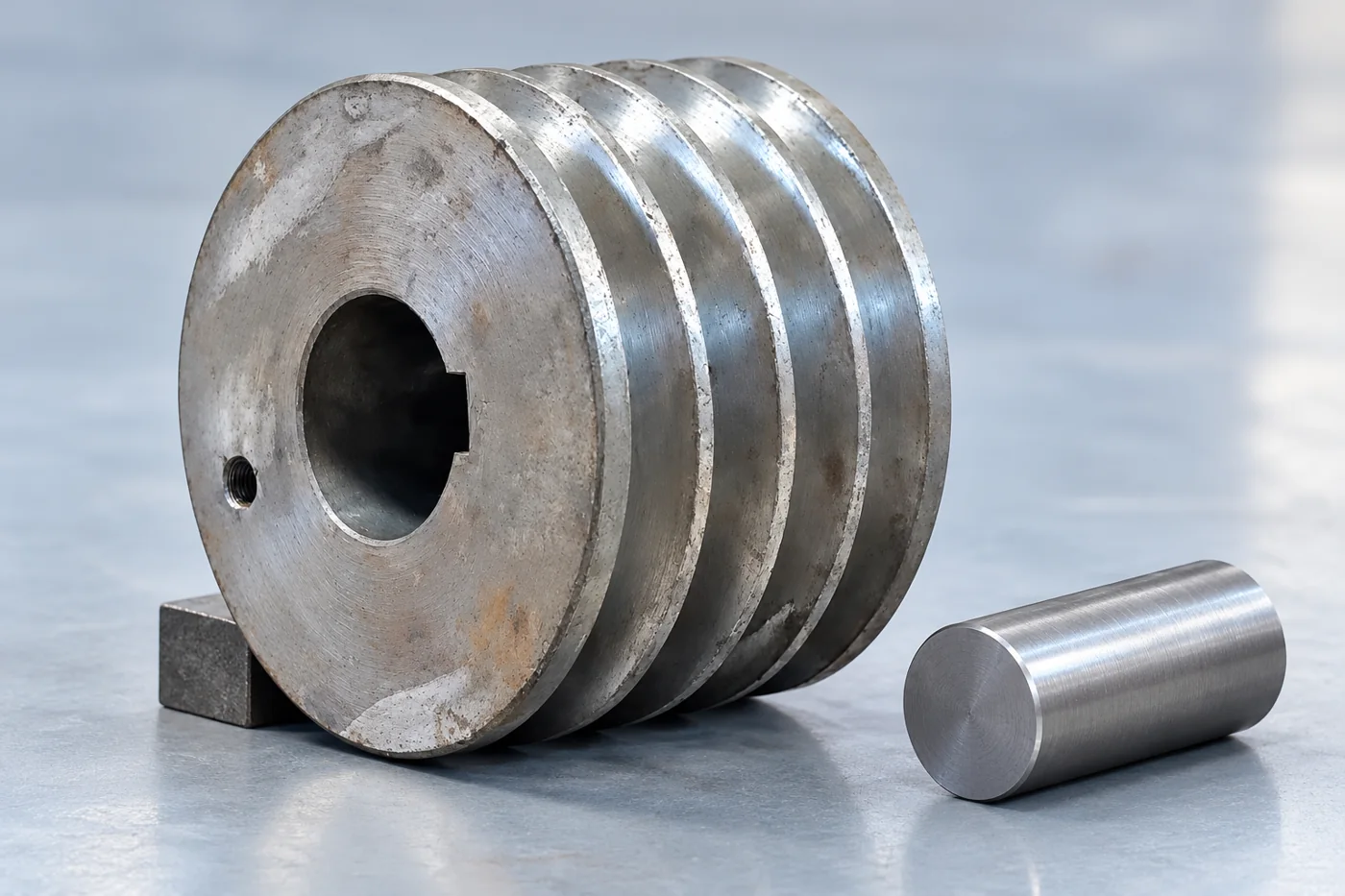
Measure the bore, keyway and locating features before release, using the stated datum and fit requirement. Include the groove-to-axis relationship required by the drawing. A key or test shaft used for a fit check should represent the intended assembly reference.
For a replacement pulley, identify the actual equipment duty and mounting method. Our catalogue includes lathe, compressor, crusher and other machinery enquiries; the controlled pulley drawing establishes compatibility, rather than the application name or similar external shape.
- Shaft interface
- Bore, keyway and locating face
- Relationship
- Grooves referenced to running axis
08A CLEARER CASTING PURCHASE
Inspection separates profile, runout and balance results
Accept the cast blank or finished component at its stated stage. For a finished pulley, the useful record covers groove profile and spacing, bore/keyway, face and radial relationships, and the required balance result. A balance report alone cannot establish whether the belt section or shaft fit is correct.
Keep all results connected to the drawing revision and final configuration. If the pulley is machined again after balancing, evaluate the effect on that result before relying on the earlier record. The approval then describes the component that will actually rotate.
- 0101Check final groove profile, count, spacing and diameter basis
- 0202Verify bore/keyway and groove-to-axis relationships
- 0303Review dynamic balance in the specified final configuration
- 0404Release identified pulley with matching finish and records
09A CLEARER CASTING PURCHASE
Protection preserves the belt and shaft interfaces
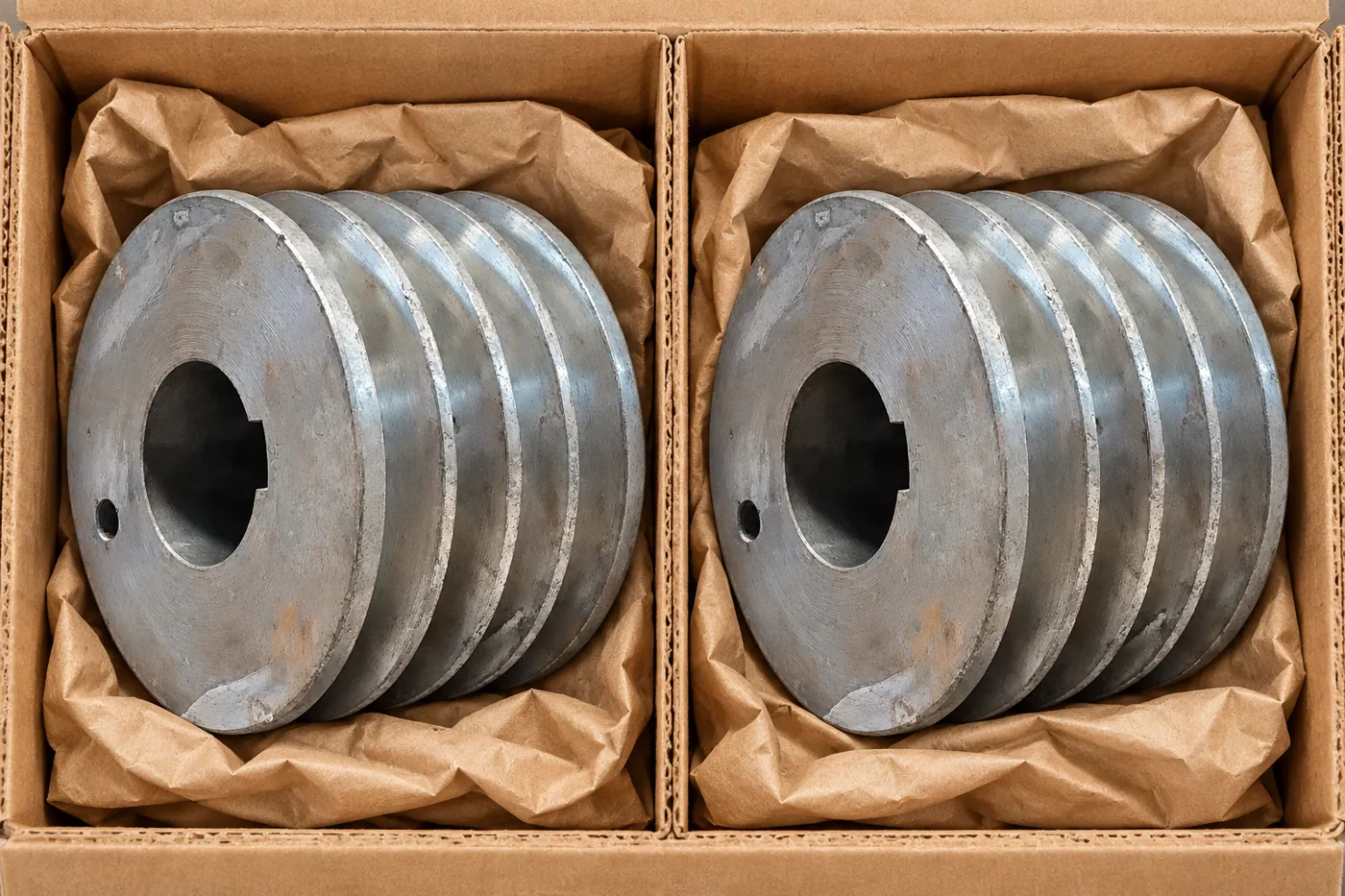
Separate pulleys so groove edges, bore and keyway cannot strike another component in transit. Protect the selected finished surfaces from corrosion and prevent abrasive debris from remaining in a groove. Define any temporary coating that must be removed before fitting the belt or shaft.
Identify the pulley configuration and keep balancing and dimensional records with the same part or batch reference. Receiving can then check contact surfaces and fit features without confusing a similar blank, an unfinished component and the accepted final pulley.
- Protection
- Separate grooves and machined hubs
- Identity
- Final configuration with matching records
10A CLEARER CASTING PURCHASE
A drive component that keeps its accepted configuration
Relia can supply the blank or finished pulley package with the required groove, shaft connection, surface condition and records linked to one revision. That lets you compare the actual work being purchased and the work still retained at your plant.
Drawing review leads to sample manufacture and inspection, your confirmation, then batch production. Keep later changes to the bore, grooves, keyway or attached hardware visible because they can alter the accepted rotating configuration. Receiving then has a usable belt interface, a defined shaft fit and the relevant dimensional and balance evidence together.
11 YOUR NEXT STEP
Bring your component into the conversation
Tell us which component you need, the material, quantity and required supplied condition. Relia will connect your enquiry with the casting, machining and evidence relevant to that part.
Technical reading and scope
Technical references explain the process. Component specifications and agreed order records define the actual supply.
MPTA — pulley keyways, balancing and surface requirementsISO21940-11 — rigid-rotor balancing- [email protected]
- Phone
- +86 18561762631
- +1 404 203 0971
- Company and address
- Qingdao Relia Industries Co., Ltd.
Shuyuan Road, Qingdao, Shandong, China