
01A CLEARER CASTING PURCHASE
Stationary Turbine Housings with Controlled Geometry
Source the stationary hot-side housing around its gas passage and mating connections. Relia offers custom grey-iron, ductile-iron or carbon-steel housing enquiries with sand casting, CNC machining and selected surface work. Define the material, wheel-region contour, clocking and installation interfaces together. The casting can then be accepted on its own material and geometry requirements, separate from rotor balancing or complete turbocharger performance.
- Object
- Stationary turbine housing
- Control
- Passage + mating interfaces
- Accept
- Material + component geometry
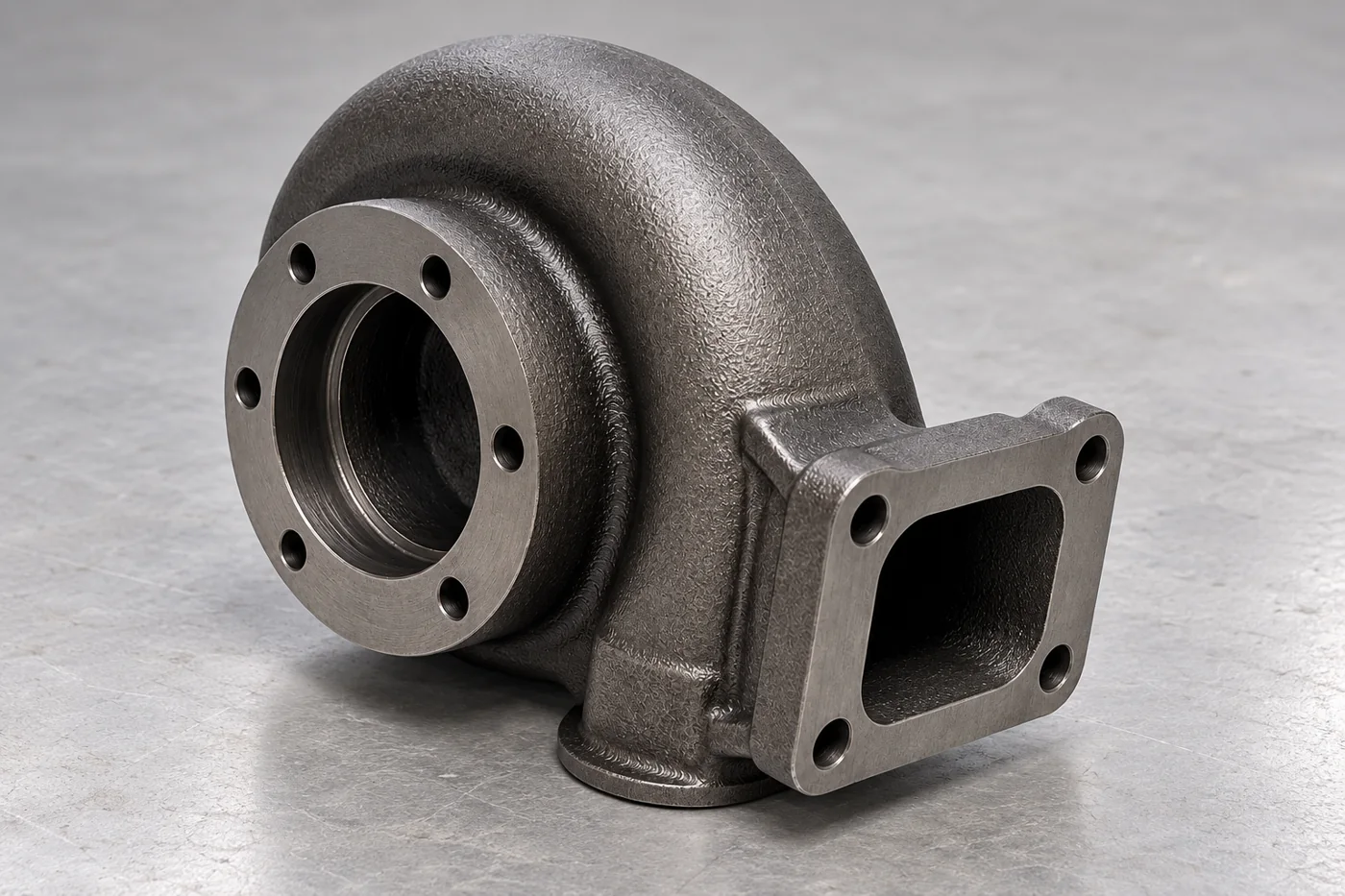
02A CLEARER CASTING PURCHASE
The assembly map identifies every housing connection
Relia’s turbine-housing offering connects sand casting to the nominated CNC interfaces. Our own casting and machining production supports a drawing-based route, while the selected grade, thermal duty and casting-tolerance basis remain specific to your housing.
Provide the complete housing model and the mating references for its inlet, outlet and connection to the central assembly. Show the required orientation and available installation space. Include actual retention or control features present in the design without assuming that every housing has the same arrangement.
A circular connection diameter alone cannot establish interchangeability. Face position, clocking, fastening and internal clearance relationships can all matter. Identify the component revision and the interfaces that must remain fixed so the casting and CNC proposal can be assessed against one complete installation definition.
03A CLEARER CASTING PURCHASE
Flow geometry and thermal duty guide the material brief
Turbine-housing A/R describes a relationship between passage area and its radial position. Technical turbocharger guidance explains why changing housing geometry can change flow behaviour and the system’s operating trade-offs. Retain the approved passage model rather than alter a throat or volute simply to simplify manufacture.
Select the complete grey-iron, ductile-iron or carbon-steel grade and required condition for the thermal duty. The family name alone does not establish a temperature rating. Include the relevant operating cycle and design requirements so a material or geometry alternative can be assessed as a distinct proposal before it changes the accepted housing definition.
| Technical input | Order definition |
|---|---|
| Flow definition | Released passage, throat and wheel-region geometry. |
| Thermal input | Relevant temperature cycle and service requirements used by the design. |
| Material selection | One complete iron or carbon-steel grade and delivered condition. |
| Alternative | Controlled proposal retaining the required assembly and flow references. |
04A CLEARER CASTING PURCHASE
Circular connections use measurable finished references
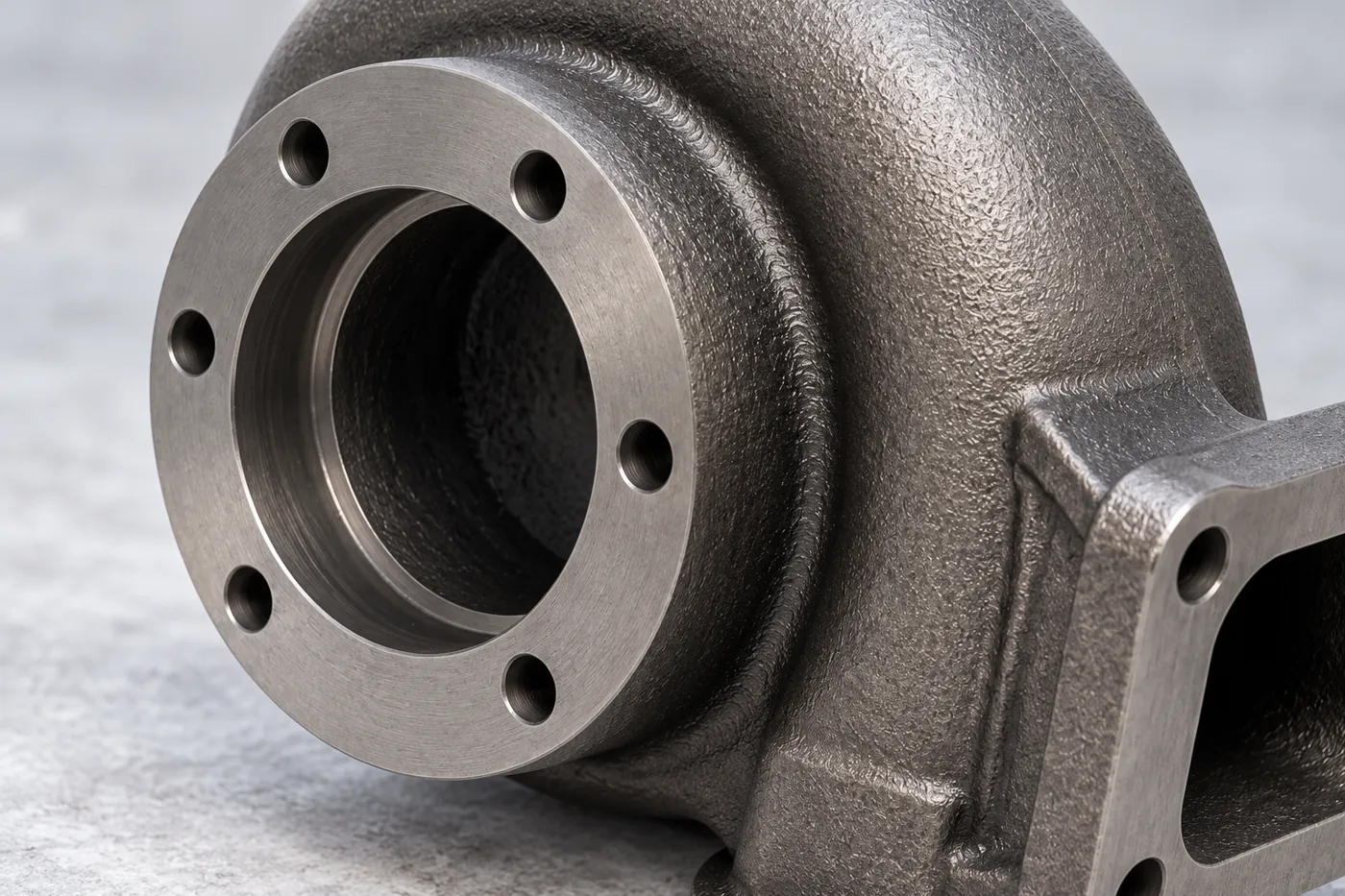
Mark the circular register, mating face, retention features and any other CNC-controlled interfaces. Define their sizes and geometric relationships to the housing datums. A connection can meet its diameter limit yet sit in the wrong axial position or orientation, so size and location need their own checks.
Retain machining allowance where those references will be established, with restricted regions identified in the model. The quotation should state which features arrive finished and which remain as cast. That prevents a nominally similar housing from being compared to a component with a substantially different machining scope.
05A CLEARER CASTING PURCHASE
As-cast acceptance differs from CNC feature limits
The catalogue states a ±0.05 mm machining reference and identifies as-cast acceptance with ISO 8062. Assign the selected CNC requirement to the actual finished dimensions. Define the applicable casting-tolerance basis, controlled dimensions and machining allowances for the unmachined form rather than apply the CNC reference to every surface.
ISO 8062-3 addresses general dimensional/geometric casting tolerances and machining allowances within its stated drawing scope. Use the required document and edition explicitly on the release. The practical result is a feature-based acceptance plan: the cast passage, outside body and machined connection are evaluated using the criteria intended for each.
06A CLEARER CASTING PURCHASE
The outlet keeps its own contact and orientation controls
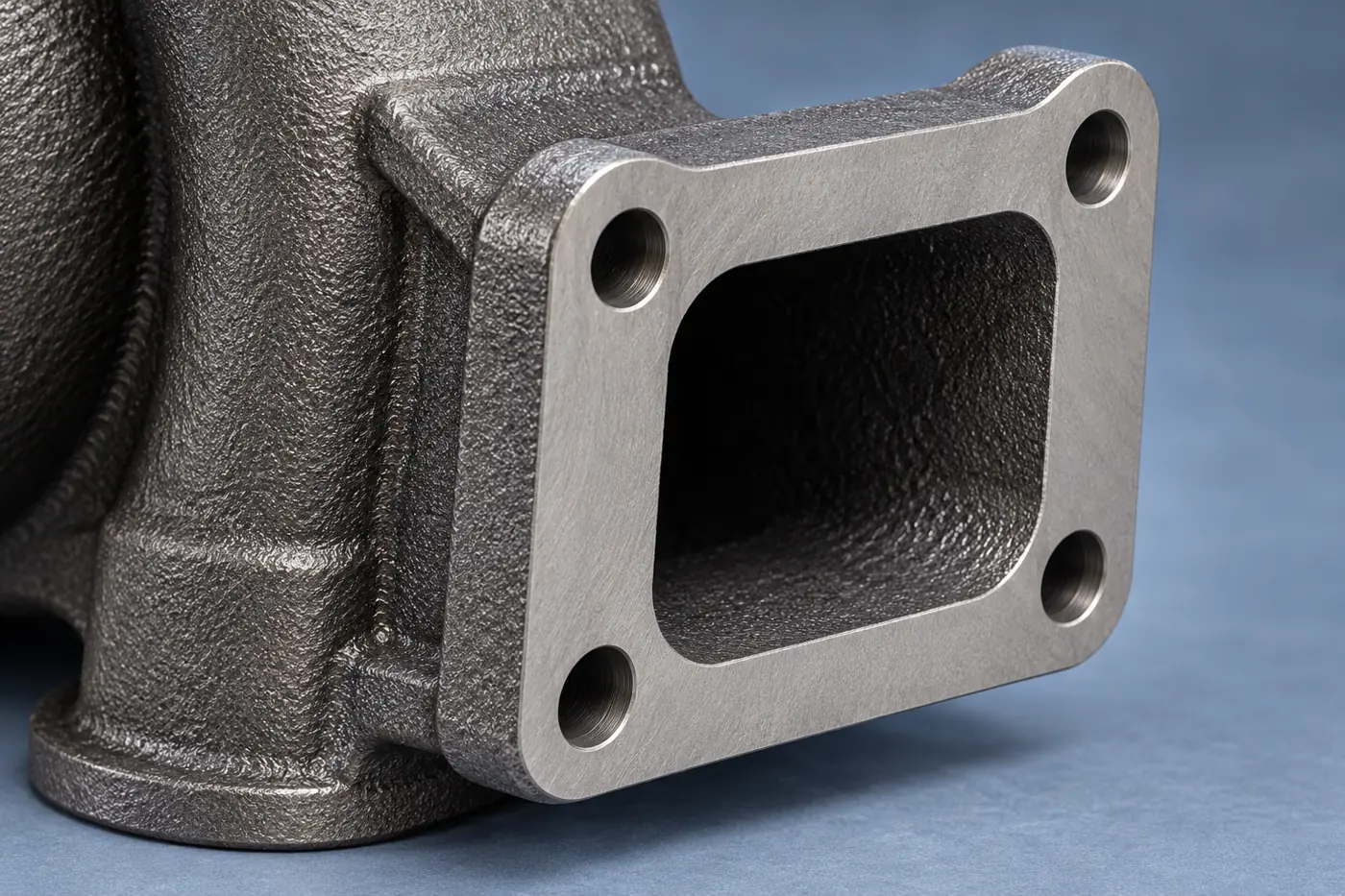
Show the complete outlet face and fastener arrangement with relevant section views. The drawing should establish its relationship to the central connection and inlet orientation, as well as any installation clearance around the finished housing. A local outlet dimension is not a substitute for that complete relationship.
Where the design has a seal, gasket or other contact, identify the actual final surface requirement. Include edge condition and any access restrictions for machining or fastening. We can then review the outlet as part of the same housing delivery state rather than as a secondary feature left for later interpretation.
07A CLEARER CASTING PURCHASE
Surface work respects the hot-side and mating regions
Surface treatment follows customer requirements in the housing listing. Select it for the actual material and operating environment, with coverage, preparation and required final result defined. Separate external appearance regions from flow passages, locating surfaces and contact faces where different conditions apply.
Keep any treatment-sensitive dimension tied to its acceptance stage. Specify cleanliness and removal of loose residue where required by the component design. A general surface-treatment line in a quotation should become a clear regional scope, so finishing does not introduce an unintended buildup or contamination at a working interface.
- 01Surface mapIdentify external, flow and connection regions separately.
- 02Selected processDefine preparation and treatment suitable for the ordered substrate and duty.
- 03ExclusionsRetain required bare or controlled mating surfaces.
- 04Final inspectionCheck the ordered surface result and affected dimensions.
08A CLEARER CASTING PURCHASE
Housing inspection precedes the complete turbocharger evaluation
Strict 100% inspection is named for the product. Agree the material, dimensional and surface characteristics that this covers, with actual results and part identity where required. The sample record should connect the selected grade and drawing to the cast and CNC features your assembly uses.
The later assembly or hot-side trial needs its own defined configuration and acceptance. It can evaluate installation, clearances and required service behaviour, but should not be described as an established result before testing. Retain the housing revision through that evaluation so findings can support a controlled production release.
- 0101Identify the selected housing grade and drawing version.
- 0202Review cast-form, CNC-interface and surface evidence.
- 0303Complete the specified assembly and service evaluation.
- 0404Release the accepted version with any revised feature controls.
09A CLEARER CASTING PURCHASE
Packing protects the machined connections
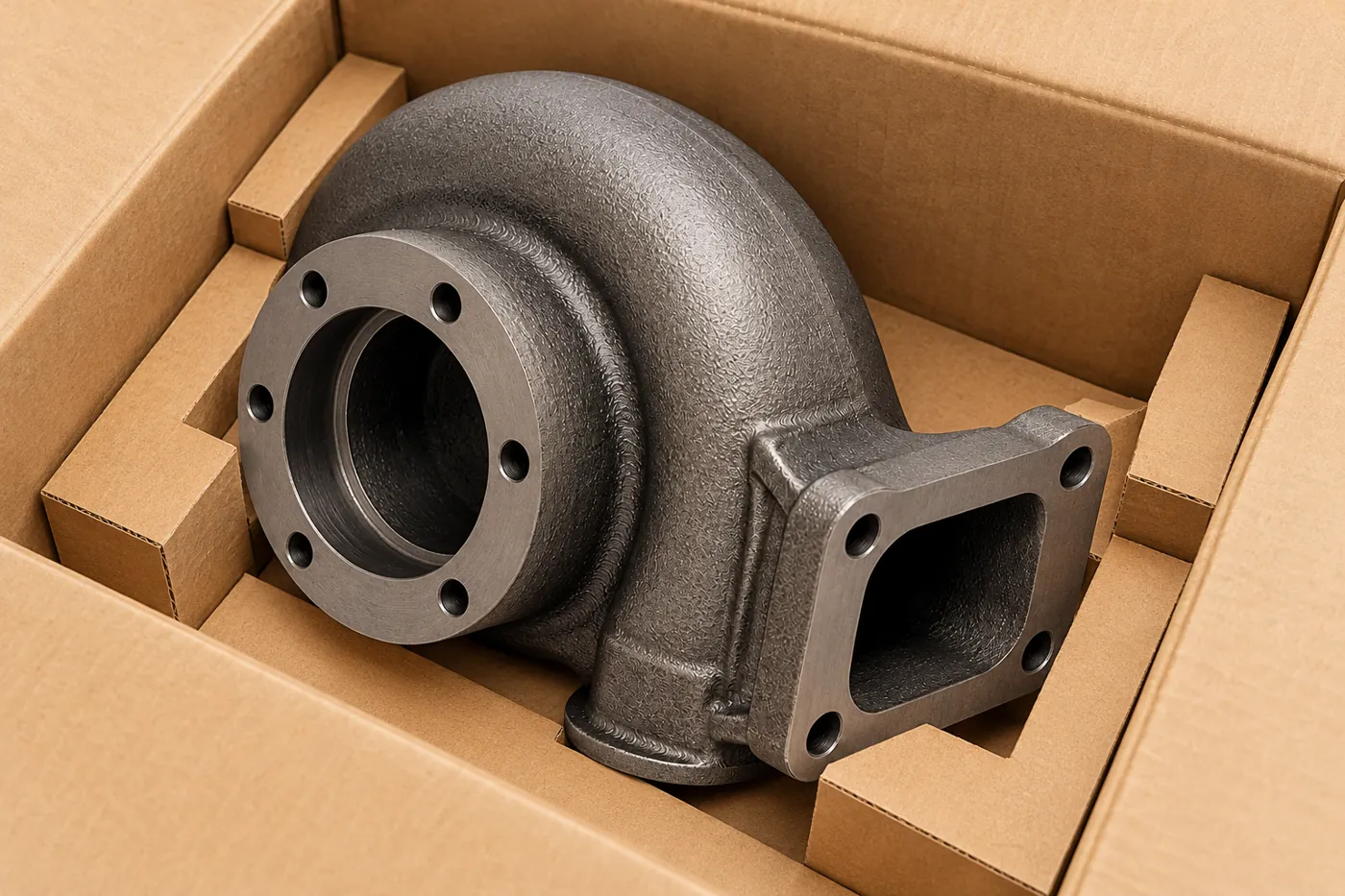
The catalogue names bubble protection, carton and wooden-case packing. Support the body so finished flanges, locating edges and protruding features do not carry unintended transport contact. Separate housing connections from neighbouring rough castings and keep loose packing out of openings.
Attach the component and revision identity to the packing record, with any required link to the material and inspection documents. Receiving can then check the correct housing variant and surface condition before assembly preparation, particularly where several hot-side geometries have similar outside shapes.
10A CLEARER CASTING PURCHASE
A housing RFQ retains the complete hot-side definition
Send the full model and controlled drawing with the selected material grade, required condition and quantities. Identify the thermal-duty inputs, fixed assembly interfaces and applicable as-cast acceptance. Mark each CNC feature and required surface region, plus the component records needed for approval.
We can quote the relevant sand-casting, machining and finishing package around that definition. The listing names a ten-piece minimum for this housing enquiry; the requested configuration and sample programme should be identified with the order. A clear specification lets you compare the actual delivered housing while retaining system matching and validation with the turbocharger design.
11 YOUR NEXT STEP
Bring your component into the conversation
Tell us which component you need, the material, quantity and required supplied condition. Relia will connect your enquiry with the casting, machining and evidence relevant to that part.
Technical reading and scope
Technical references explain the process. Component specifications and agreed order records define the actual supply.
Technical reference: Turbine housing A/R and geometryISO 8062-3: Casting tolerances and machining allowances- [email protected]
- Phone
- +86 18561762631
- +1 404 203 0971
- Company and address
- Qingdao Relia Industries Co., Ltd.
Shuyuan Road, Qingdao, Shandong, China