
01A CLEARER CASTING PURCHASE
Marine Pump Impellers with Defined Alloy and Fits
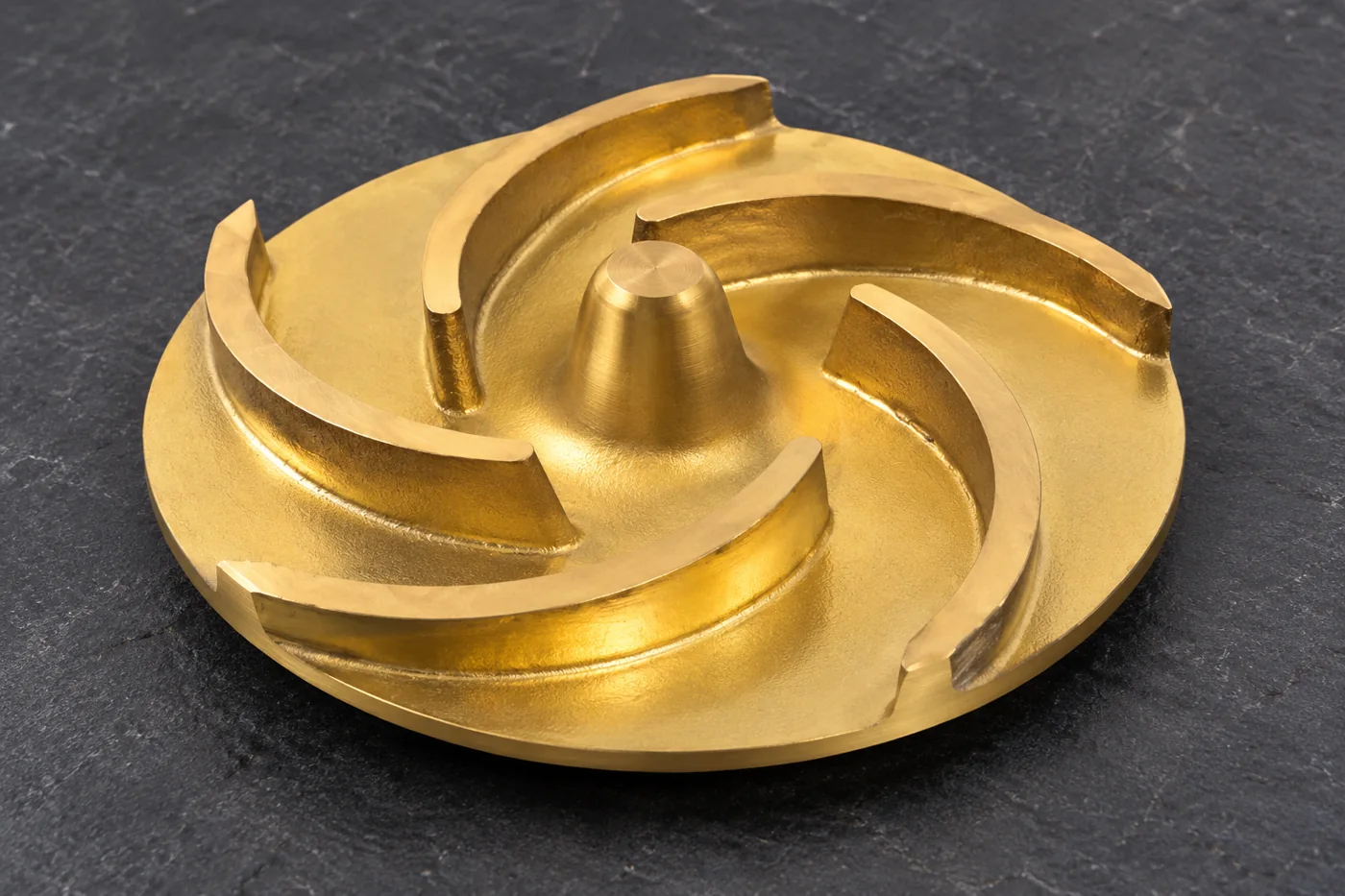
Specify the actual liquid before choosing the impeller alloy. Relia supports brass and separately defined copper-alloy marine pump-component enquiries with selected casting and CNC work. Connect the complete grade, vane geometry and shaft interface to the operating duty. This gives your quotation a useful material and fit basis while keeping fluid compatibility and operating validation tied to the actual component.
- Fluid
- Actual medium + conditions
- Material
- Complete alloy designation
- Fit
- Vanes + shaft connection
02A CLEARER CASTING PURCHASE
The medium establishes the material-selection context
Relia’s selected marine-impeller scope brings the casting and machined connection into one component discussion. The published sand or investment route and actual alloy remain explicit, and our main sand-process description does not establish every alternative route for this item.
State the actual liquid, temperature, relevant chemistry and whether service includes suspended particles or long stagnant periods. Add the available pump duty and operating range. An impeller experiences flow and local pressure changes, so its service cannot be described by external atmospheric marine exposure alone.
Brass can be susceptible to dezincification in some chloride-containing conditions; the mechanism removes zinc and can leave a weakened copper-rich structure. This is a reason to select and verify the actual grade for the medium, not a declaration that every brass impeller is unsuitable or that a generic copper alloy guarantees seawater resistance.
03A CLEARER CASTING PURCHASE
Brass and bronze are not interchangeable purchase names
Our primary impeller listing names brass, with other copper-alloy components separately specified. Retain the exact alloy designation and governing document in the order. Do not replace brass with bronze solely because both have a copper-coloured appearance or because a marine application is mentioned.
Identify the required material condition and evidence of composition for the selected grade. Where your project requires corrosion-related verification or another specific property, name its method and acceptance basis. This turns a broad alloy family into a defined component requirement while leaving any proposed alternative visible for engineering assessment.
| Material decision | Required reference |
|---|---|
| Material name | Brass or another explicitly selected copper-alloy grade. |
| Governing reference | Complete standard/designation and applicable edition. |
| Material evidence | Composition and other specified property records tied to the supplied part. |
| Alternative | A separate alloy proposal assessed for the actual fluid and duty. |
04A CLEARER CASTING PURCHASE
Vanes and passages preserve the hydraulic design
Provide the complete vane geometry, inlet and outlet regions, hub and back-side shape. Include sections that reveal the passages and any wall thickness or edge limits relevant to your design. A photograph of the top face does not define the flow path or the clearances in the assembled pump.
Relate the working geometry to the shaft datum and mating casing references. If a manufacturing proposal changes a vane edge or passage, identify the change before release. The casting and CNC scope should preserve the approved hydraulic shape rather than interpret a visually similar impeller as an equivalent replacement.

05A CLEARER CASTING PURCHASE
The shaft connection sets the CNC acceptance
Our listed services include CNC centres, milling and turning. Specify the bore size, fit, axial locating face and any actual keyway, thread or other shaft connection in the design. Retain the required geometric relationships between those features and the impeller body.
The catalogue includes several casting and machining tolerance references, including ±0.005 mm and CT5–CT7. A selected requirement needs an identified characteristic, convention and supplied stage; it is not a universal limit on every vane or cast passage. A feature-specific drawing makes the finished connection measurable and the quotation comparable.
- 01LocateDefine shaft axis and axial seating references.
- 02ConnectSpecify the actual bore, key, thread or retention arrangement.
- 03MachineAllocate CNC work to the identified finished interfaces.
- 04MeasureReport the required sizes and geometric relationships at delivery.
06A CLEARER CASTING PURCHASE
Cavitation is a pump-system condition as well as a wear issue
Hydraulic Institute guidance explains that local pressure reduction near the impeller inlet can form vapour bubbles whose collapse can erode the surface. NPSH margin and operating region therefore matter when assessing damage or a proposed replacement. A material change alone does not correct an unsuitable suction condition.
For acceptance, separate the supplied impeller’s material and geometry from pump performance in the selected system. If a trial is required, define flow, head, speed, medium and the relevant suction conditions with the pump team. Record any balance or running requirements explicitly rather than infer them from the marine impeller name.
07A CLEARER CASTING PURCHASE
Both sides establish the installed clearances
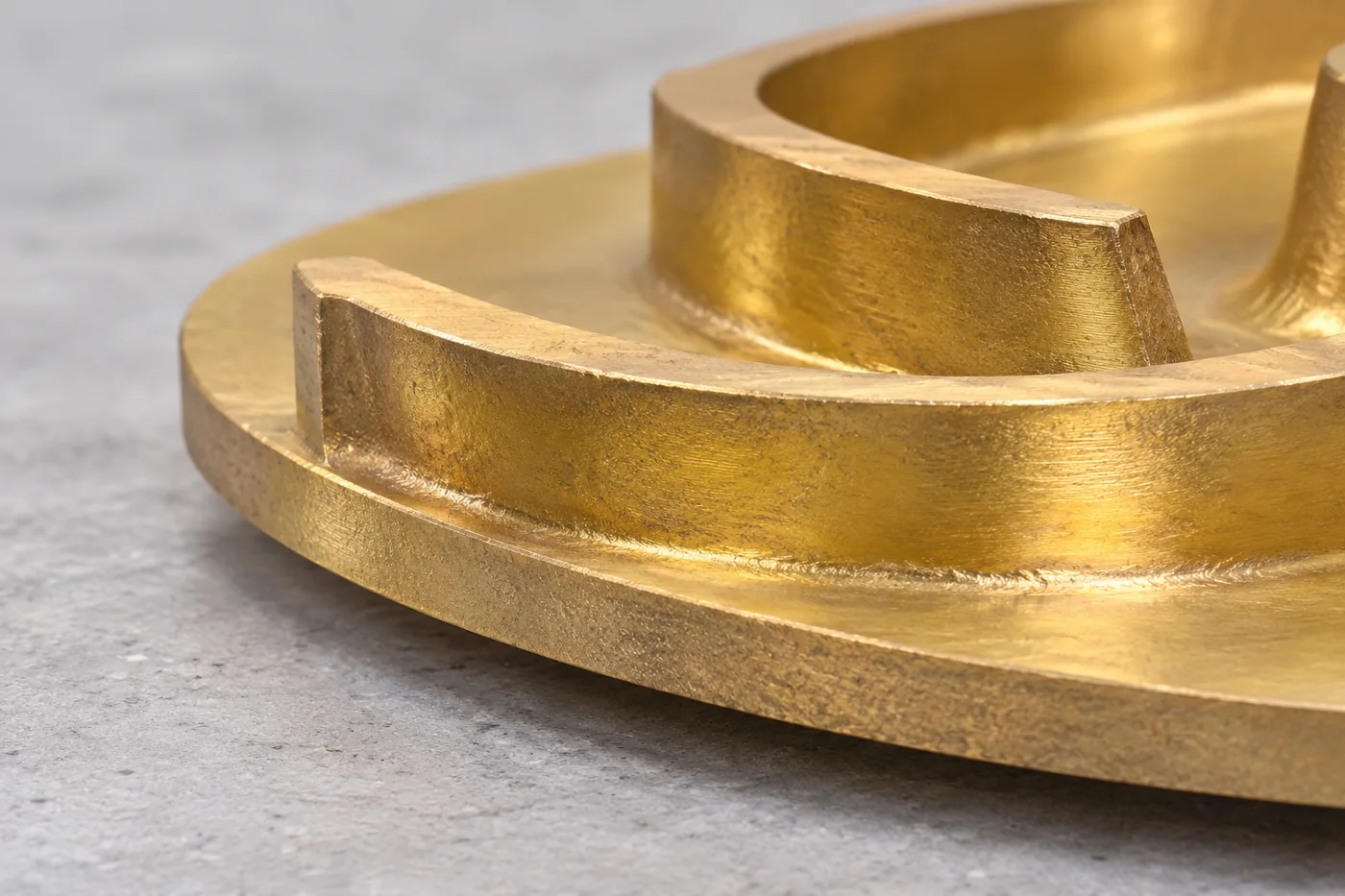
Include the back face, side profile and hub projection alongside the vane view. Those regions can determine the axial position and clearances to the casing or adjoining components. A change that leaves the visible vane shape intact may still affect installation or running clearance.
Identify which surfaces are cast and which require finishing. Polishing, shot blasting and glass-bead blasting are catalogue options for compatible substrates, with coverage selected for the ordered component. Keep the working and locating requirements connected to the final surface so preparation does not alter an important edge or fit without approval.
08A CLEARER CASTING PURCHASE
The first impeller links manufacturing and pump evidence
Use the sample to establish that the selected grade and approved geometry have been delivered, then retain its identity through any pump evaluation. The dimensional record should use the same datum and feature references as the drawing. Material evidence should identify the actual grade and supplied condition.
Record the agreed pump trial separately, including operating points and acceptance criteria. If findings lead to a geometry or material change, identify the affected version before repeat supply. This gives your team a clear component history instead of treating all visually similar impellers as the same trial.
- 0101Identify grade, condition and released impeller geometry.
- 0202Review specified shaft, vane and surface measurements.
- 0303Complete the defined pump or project evaluation.
- 0404Release the accepted version and any changed requirements.
09A CLEARER CASTING PURCHASE
Vane edges and fits need deliberate protection
Support the impeller where contact is permitted and keep the vane tips, bore and locating faces from striking adjacent pieces. Loose packing that loads a thin edge can damage the component before it reaches assembly. Protect finished contacts against the specified transport and storage exposure.
Keep each part or agreed batch reference connected to its material and dimensional documents. Where several alloy proposals are being evaluated, label them clearly without relying on colour. Your receiving team can then identify the correct sample before the protected surfaces are prepared for installation.

10A CLEARER CASTING PURCHASE
The impeller RFQ contains fluid and interface requirements
Send the complete drawing and model, selected alloy designation and pump shaft references. Include the actual medium, duty, required supplied condition and quantities. Mark CNC interfaces and finish coverage, together with material, dimensional and any project-specific trial evidence.
We can review the relevant sand or investment-casting and CNC package for that component. A useful quotation keeps grade selection, hydraulic geometry and connection fit visible, allowing your pump team to compare manufacturing scope while retaining control of the complete operating and suction requirements.
11 YOUR NEXT STEP
Bring your component into the conversation
Tell us which component you need, the material, quantity and required supplied condition. Relia will connect your enquiry with the casting, machining and evidence relevant to that part.
Technical reading and scope
Technical references explain the process. Component specifications and agreed order records define the actual supply.
Canadian Conservation Institute: Brass dezincificationHydraulic Institute: NPSH and operating regions- [email protected]
- Phone
- +86 18561762631
- +1 404 203 0971
- Company and address
- Qingdao Relia Industries Co., Ltd.
Shuyuan Road, Qingdao, Shandong, China