
01A CLEARER CASTING PURCHASE
Custom Aluminum Lampshades with Controlled Finish
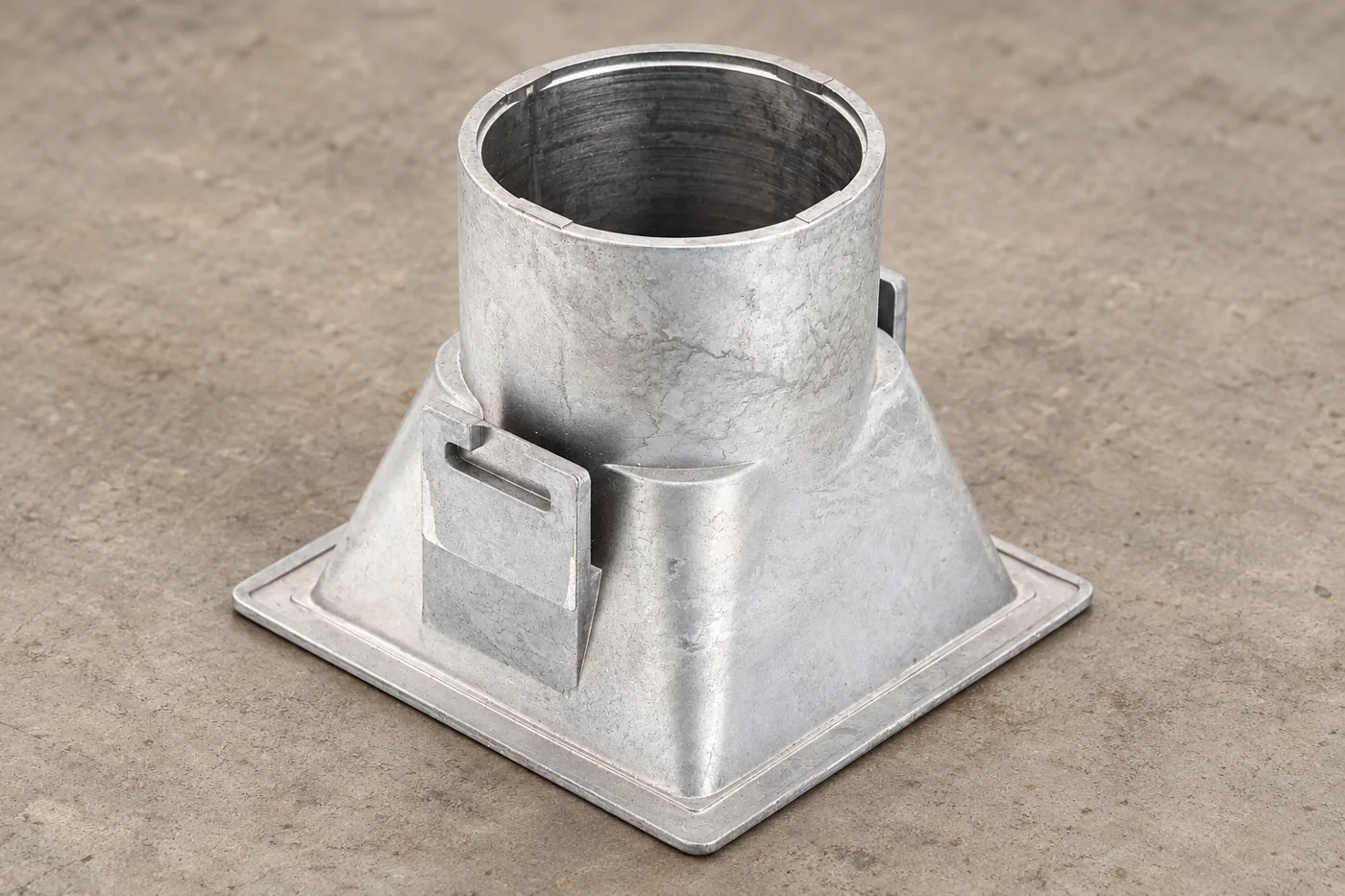
Source the lampshade around its visible contour, mounting connection and final surface. Relia’s catalogue supports custom aluminum shade enquiries and a separate natural-colour anodized shade scope, alongside defined CNC and tooling work. Identify the actual deliverable and material before comparing routes. A sample made from the selected substrate and process gives you a useful appearance reference and a measurable installation fit.
- Deliverable
- Finished shade or tooling
- Appearance
- Contour + selected finish
- Fit
- Rim + attachment geometry
02A CLEARER CASTING PURCHASE
The delivered shade is separate from a casting mold
Relia’s lampshade and tooling enquiries remain distinct deliverables. We connect the selected shade’s material, preparation and finish to the required geometry; a casting mould or a separate stainless component does not establish the aluminum shade’s production route.
A finished lighting component and the tool used to make it require different drawings, materials and acceptance criteria. State the actual deliverable, including whether the enquiry covers a shade, another cast component or a casting mold. Do not infer its route from a catalogue keyword.
For the selected shade, provide the model, wall and edge geometry, visible regions and connection features. Our related listing names CNC operations including turning, milling, drilling and wire EDM for defined requests. The quotation can identify the actual sequence needed for your part rather than combine every operation and material into one assumed capability package.
03A CLEARER CASTING PURCHASE
Visible contours and mounting features have different limits
A rim can affect both the appearance and its fit to a diffuser or adjoining ring. A mounting face can be concealed but determine alignment in the fixture. Mark which characteristics control the visible outline and which establish position, attachment or clearance.
Use the drawing to define profile and connection dimensions, then identify significant surfaces for appearance review. Where the design uses threads, clips or fastening holes, retain their final condition after finishing. An approved colour sample cannot establish the hole pattern, while a dimensional report alone does not demonstrate that the visible surface meets the agreed appearance.
| Feature group | Approval reference |
|---|---|
| Outer form | Controlled silhouette and relevant profile dimensions. |
| Rim or edge | Required geometry, burr-free condition and visible transition. |
| Attachment | Mounting footprint, fastener features and mating references. |
| Visible zones | Surface regions evaluated against the appearance reference. |
04A CLEARER CASTING PURCHASE
Edge preparation is visible after finishing
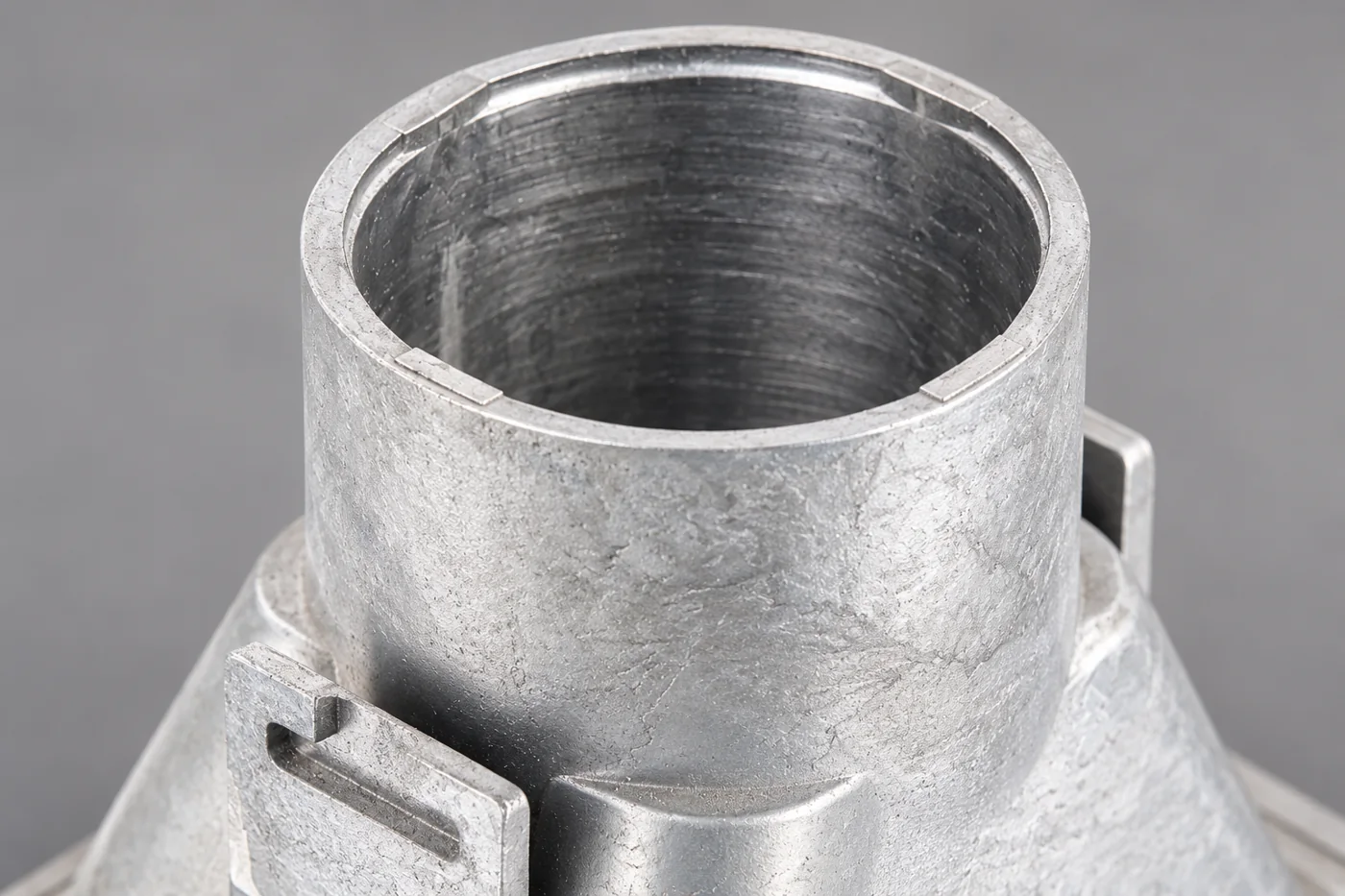
Anodizing and other finishes do not make an uncontrolled edge disappear. Machining marks, burrs and local preparation changes can remain visible or change how the surface catches light. Include the inside rim and transitions in the sample review, not just the broad exterior face.
Specify the required edge condition where the shade meets a diffuser, cover or other part. Keep permitted rounding or finishing changes attached to the geometry. This gives the manufacturing proposal a concrete target and avoids an appearance correction that changes the fit or leaves different edge treatment between batches.
05A CLEARER CASTING PURCHASE
Alloy and preparation influence anodized appearance
Anodizing develops an oxide layer on the aluminum surface. The alloy and its prior preparation influence the result, so natural anodized does not mean every aluminum material produces an identical colour or texture. A casting alloy and a wrought or machined reference may respond differently even under a nominally similar finish request.
The lampshade listing identifies natural-colour anodizing for the aluminum component. Retain the selected alloy, manufacturing route, surface preparation and finish specification in the release. Where visible uniformity is important, evaluate a sample made from the proposed material and route rather than adopt a reference from an unrelated substrate.
- 01Select alloyComplete aluminum designation for the intended shade route.
- 02Prepare surfaceAgreed machining and preparation of significant visible regions.
- 03Specify finishNatural anodized appearance, coverage and applicable technical requirements.
- 04Approve sampleCompare the actual material and finished route with the controlled reference.
06A CLEARER CASTING PURCHASE
A controlled appearance sample makes acceptance repeatable
Agree a physical master or permitted sample range for colour, texture and visible surface condition. Specify viewing conditions where needed so acceptance does not depend on a phone camera, screen setting or changing workshop light. An image is useful for communication, but a controlled physical reference is better for subtle appearance decisions.
Record the sample identity, material and finish version, alongside the significant surfaces and permitted marks. The purpose is a practical acceptance boundary, not an unsupported promise of zero variation. Your team and ours can use that same reference when reviewing a sample, repeat batch or proposed change.
07A CLEARER CASTING PURCHASE
Mounting contacts remain defined after anodizing
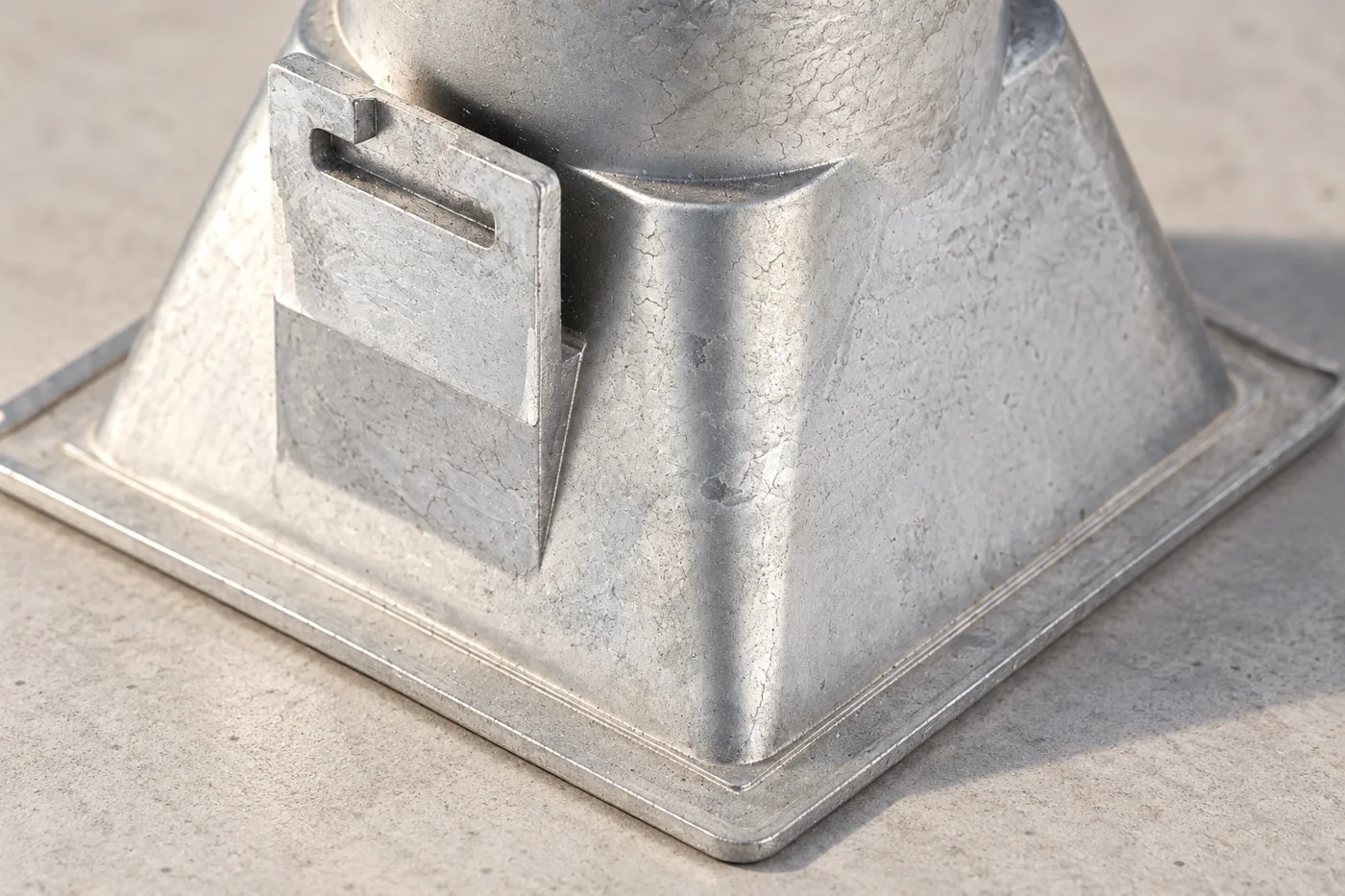
Identify attachment contacts and close-fitting features that need masking or another stated final condition. A finish specification must account for the dimensions the assembled fixture uses. Keep any coating-sensitive thread, register or mating surface visible in the drawing and inspection package.
Plan the relevant machining before the final anodized surface where the selected route requires it, so later work does not leave an unintended bare patch in a significant area. The sample should represent the finished mounting footprint and the approved visible result together. That gives assembly and appearance teams one consistent component to evaluate.
08A CLEARER CASTING PURCHASE
Repeat appearance starts with stable technical references
Carry the accepted material, route, preparation and appearance reference into repeat orders. If any of those changes, assess the affected visible result instead of assuming that the same colour name guarantees a match. Keep changes to geometry and connection details equally visible.
Use batch inspection to compare the defined significant surfaces and functional dimensions, retaining the version used for acceptance. The catalogue supports samples and low-minimum enquiries, including a one-piece request in the related lampshade range. This allows discussion of the first-part approval separately from a repeat programme, without turning the sample into an undefined permanent standard.
- 0101Identify the accepted shade, alloy and route.
- 0202Retain the preparation and finish-reference version.
- 0303Evaluate any change that can affect visible or mating surfaces.
- 0404Inspect repeat supply against the same released criteria.
09A CLEARER CASTING PURCHASE
Separation protects the approved visible finish
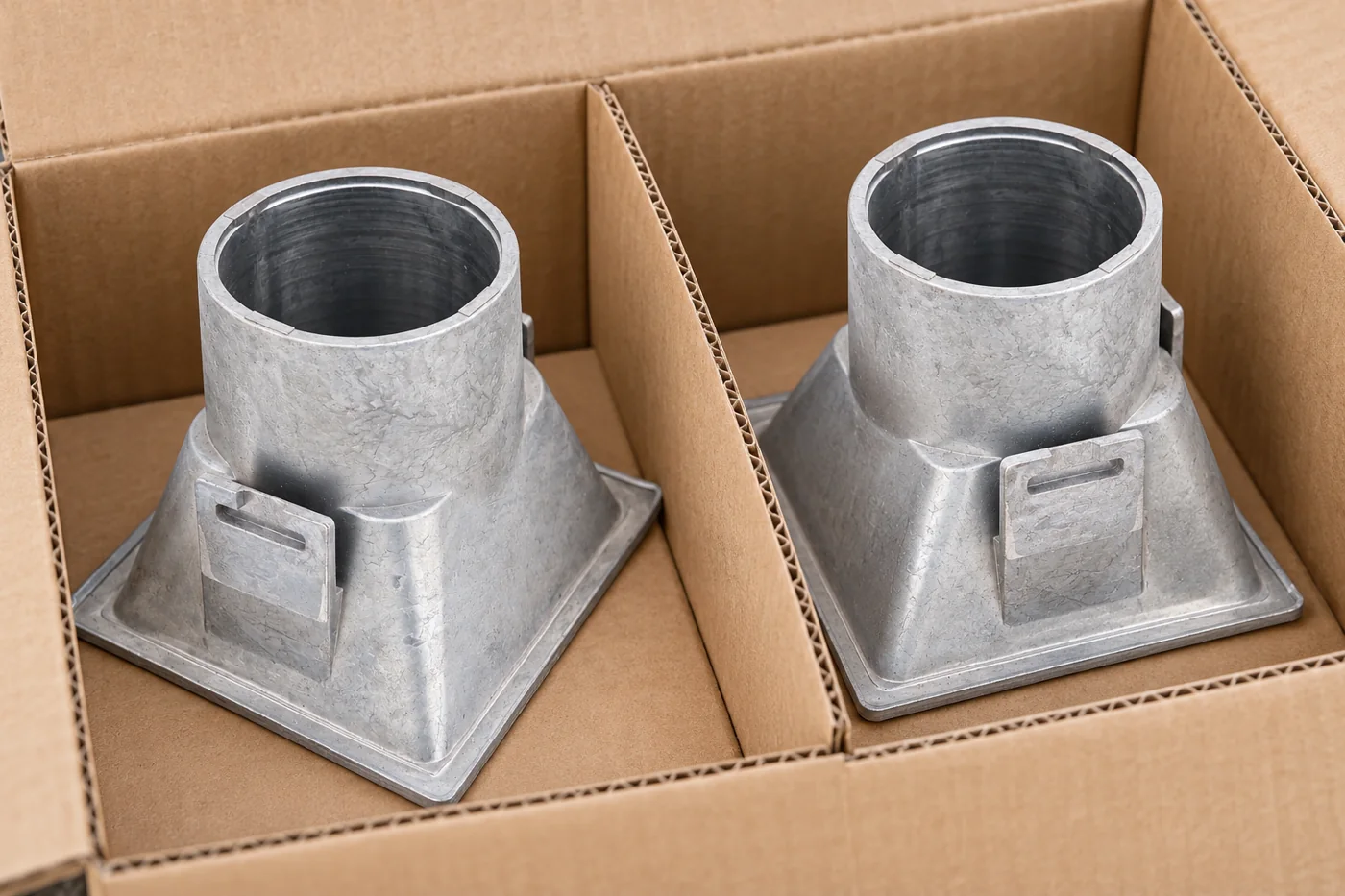
A good appearance sample is of little use if the delivered shades rub against each other. Specify the contact-free visible zones, permitted supports and separation needed for the actual form. Protect rims and mounting features without leaving adhesive or abrasive packing marks on significant surfaces.
Customer-requirement packing is named in the catalogue. Connect the pack identification to the part, finish version and batch reference so receiving can compare the correct components to the approved sample. Where several colour or geometry variants share a programme, keep them identifiable before unpacking and assembly.
10A CLEARER CASTING PURCHASE
The lighting-component RFQ covers fit and appearance
Send the selected shade drawing and model with the material, intended route and mounting references. Include the natural anodized requirement or another separately requested surface system, significant zones and sample-approval basis. State sample and repeat quantities, inspection requirements and packing priorities.
We can review the actual lampshade and CNC scope against that definition. The useful purchasing comparison keeps the finished part separate from tooling or unrelated stainless-steel work, while the approved appearance and mounting requirements remain connected through the sample and subsequent batch release.
11 YOUR NEXT STEP
Bring your component into the conversation
Tell us which component you need, the material, quantity and required supplied condition. Relia will connect your enquiry with the casting, machining and evidence relevant to that part.
Technical reading and scope
Technical references explain the process. Component specifications and agreed order records define the actual supply.
TWI: Anodizing mechanism and surface preparationAluminum Anodizers Council: Coating and preparation designations- [email protected]
- Phone
- +86 18561762631
- +1 404 203 0971
- Company and address
- Qingdao Relia Industries Co., Ltd.
Shuyuan Road, Qingdao, Shandong, China