
01A CLEARER CASTING PURCHASE
Coordinate a Multi-Part Casting Package
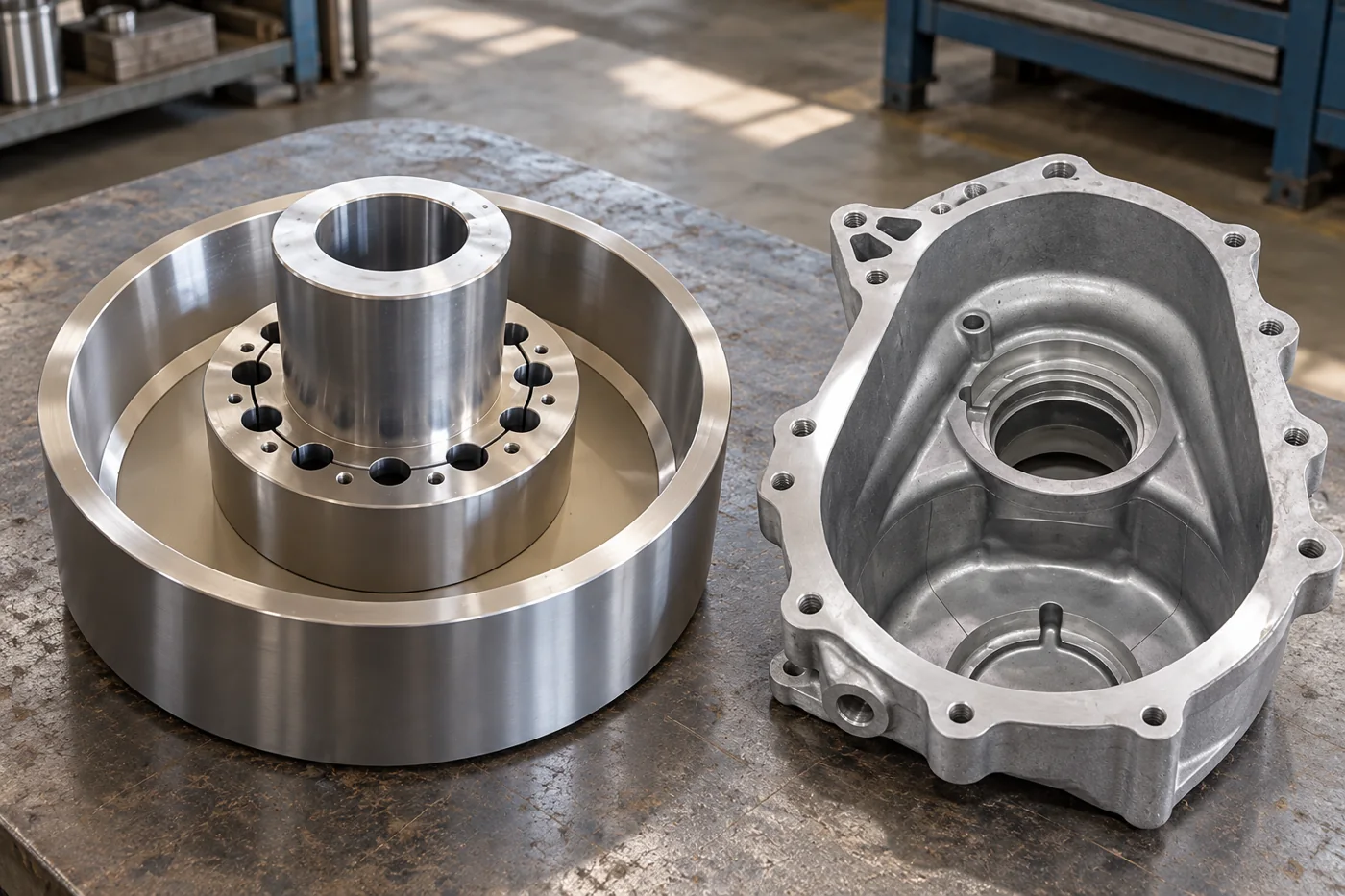
Source a machine set without losing the requirements of its individual components. Relia supports steel and ductile-iron casting enquiries with part-specific materials, machining and delivery scope. Build one bill of materials, then keep each housing, support and connection tied to its own drawing and acceptance. The result is a coordinated package that you can compare by complete machine set and by individual part.
- Package
- One controlled BOM
- Each part
- Grade + revision
- Coordinate
- Interfaces + releases
02A CLEARER CASTING PURCHASE
Give every BOM line a manufacturable definition
Relia connects our casting and machining production to a part-level supply schedule. The package can share coordination while each item retains its own tooling, material and sample acceptance.
A bill of materials should tell us what must be produced, not just count the files in an email. Link each part number to its model, drawing revision, selected grade and delivery state. Add quantities per machine and per release; these are not always equal when spares or development samples are included. Where a drawing uses another part as a mating reference, name that relationship. Configuration management connects product information through its life cycle; for your casting package, that starts with a coherent released document set.
| BOM field | Useful content |
|---|---|
| Part identity | Part number, drawing revision and controlling model. |
| Material and state | Selected grade, treatment and cast/semi/finished delivery. |
| Quantity | Per-machine usage, release quantity and separately identified spares. |
| Interface dependency | Mating part and the dimensions that need coordinated assessment. |
03A CLEARER CASTING PURCHASE
Choose the metal for each component’s function
Our steel and ductile-iron service makes the grade choice part-specific, while the custom precision range covers machinery and automotive sand-cast components. Keep a support’s load-bearing requirement distinct from a housing’s locating function. A proposed material change can alter more than the purchasing line: it can affect section design, treatment and the acceptance evidence required. Present alternatives as separate technical options with the changed assumptions visible, so a package comparison does not accidentally accept a different design.
04A CLEARER CASTING PURCHASE
Control mating dimensions across the part set
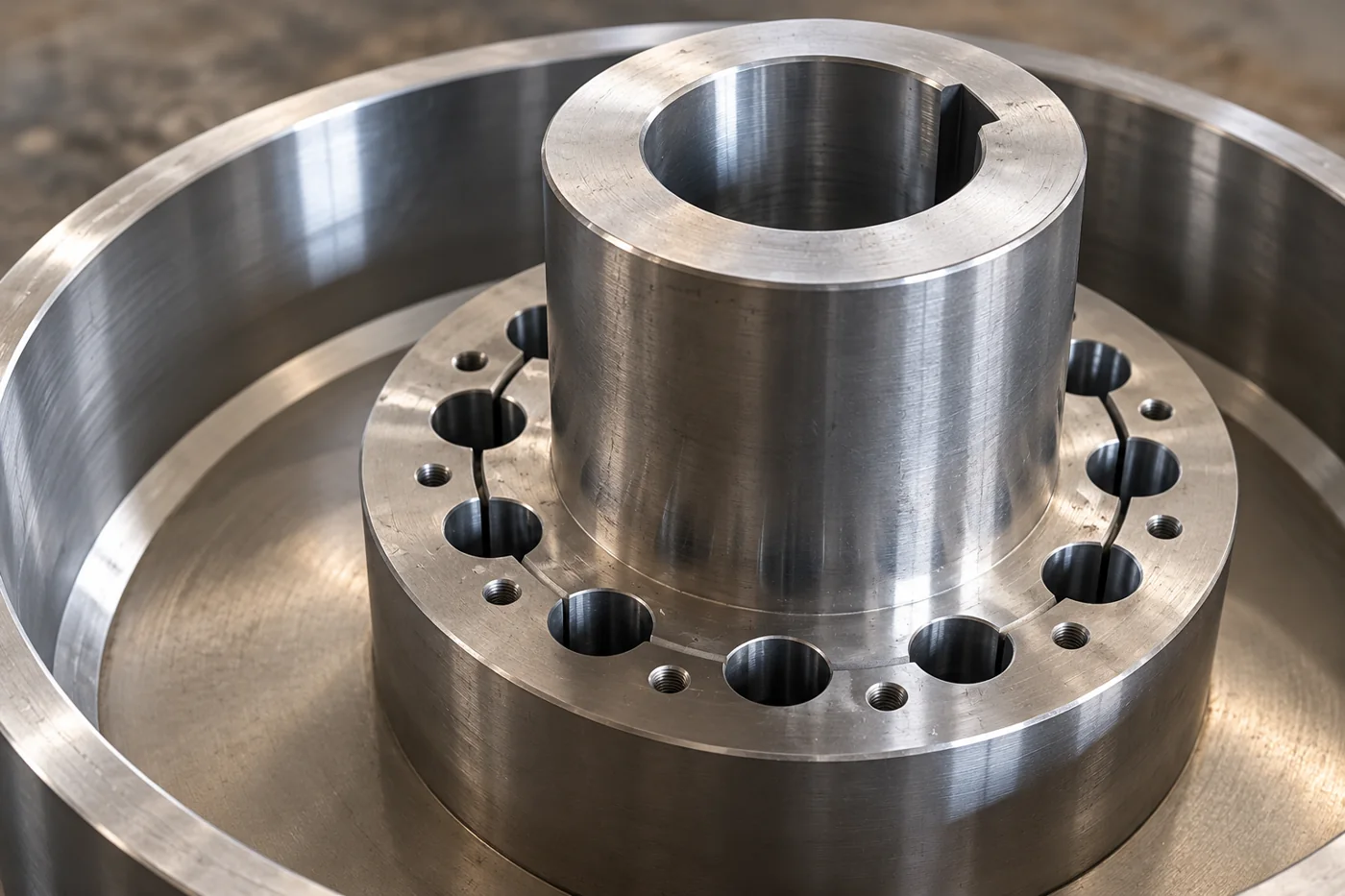
A circular component’s bolt pattern can be individually correct yet still disagree with the housing if the two drawings use different locating assumptions. Identify the common assembly reference and the relevant clearances before machining is planned. We then translate each component’s share of that relationship into its own feature requirements. An assembly view helps explain the purpose, while the component drawings remain the acceptance references. This is particularly useful when one item is supplied finished and its mating item still requires work at your plant.
05A CLEARER CASTING PURCHASE
Schedule around the part that unlocks assembly
Some parts can progress independently; others establish the sample or interface needed to release the rest of the set. A housing that determines the location of two mating components may deserve early sample attention even if it is not the most expensive item. Show these dependencies in the RFQ so tooling, sample decisions and machining preparation can be discussed in the correct order. This gives the package a practical critical path without assuming that every BOM line must share one casting route or one unverified production date.
- 01Release geometryAlign the assembly references and component revisions.
- 02Resolve key interfacesPrioritize the sample or feature that determines mating fit.
- 03Develop each routeSet part-specific tooling, casting and machining scope.
- 04Qualify the setCombine component results with the required assembly check.
- 05Plan dispatchGroup complete machine sets or agreed independent releases.
06A CLEARER CASTING PURCHASE
Assign responsibility at each manufacturing boundary
The documented full-process scope includes raw-material control, heat treatment and finished-product inspection. Turn that broad offer into a responsibility map for each line. If you supply a mating insert, identify its incoming specification and the feature it controls. If a special test is required, state the test object and report rather than attach an undefined approval phrase to the whole BOM. A clear boundary makes the package easier to quote and prevents an unassigned operation from appearing only when the machine set reaches assembly.
07A CLEARER CASTING PURCHASE
Keep similar parts distinguishable through receiving
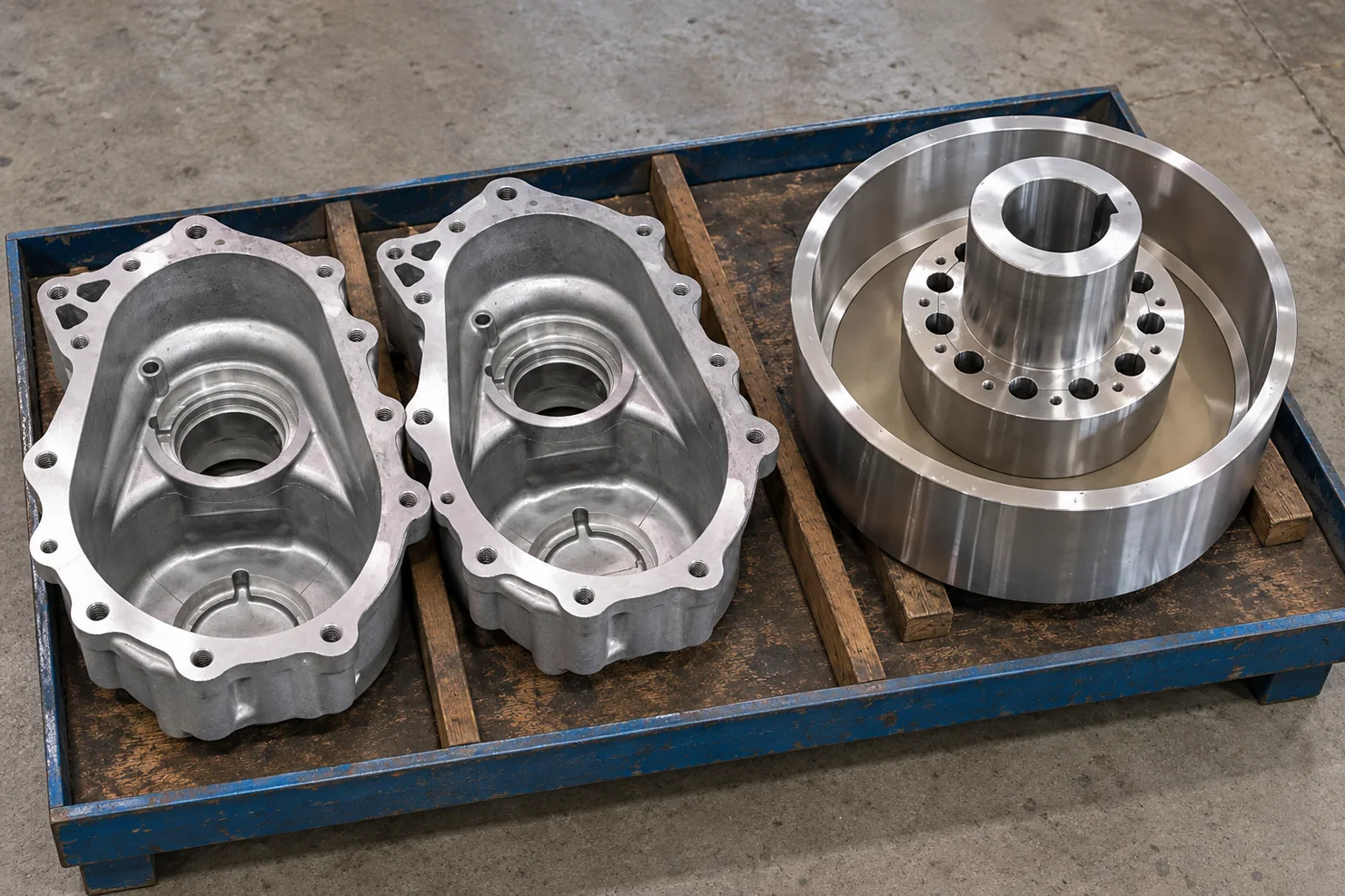
A mixed package needs physical grouping as well as a list of quantities. Specify the identification level needed for each item and keep that link with its records. GS1 distinguishes product, batch and individual-instance identity; your order can select the level that suits the risk without assuming a particular barcode system. For similar housings, a durable part/revision reference may prevent a selection error, while a separate batch or serial reference connects the component to the requested manufacturing evidence.
08A CLEARER CASTING PURCHASE
Separate component acceptance from assembly acceptance
An accepted component report can establish the specified dimensions and material for one item. It does not automatically establish that the complete machine performs as intended. Identify any coordinated interface check and who performs it. For example, a paired fit trial may be useful where two supplied parts locate directly together; a machine-level test can remain at your plant. Keep the evidence from these levels linked so an assembly finding can be traced to the relevant feature rather than reopening every line of the package.
| Acceptance level | Decision supported |
|---|---|
| Material per line | The specified metal and condition for that component. |
| Dimensions per line | Feature limits against its released component drawing. |
| Mating interface | Joint relationship where the supplied parts connect. |
| Machine set | Correct quantities, records and any buyer-defined assembly test. |
09A CLEARER CASTING PURCHASE
Protect the interface chain through the final handover
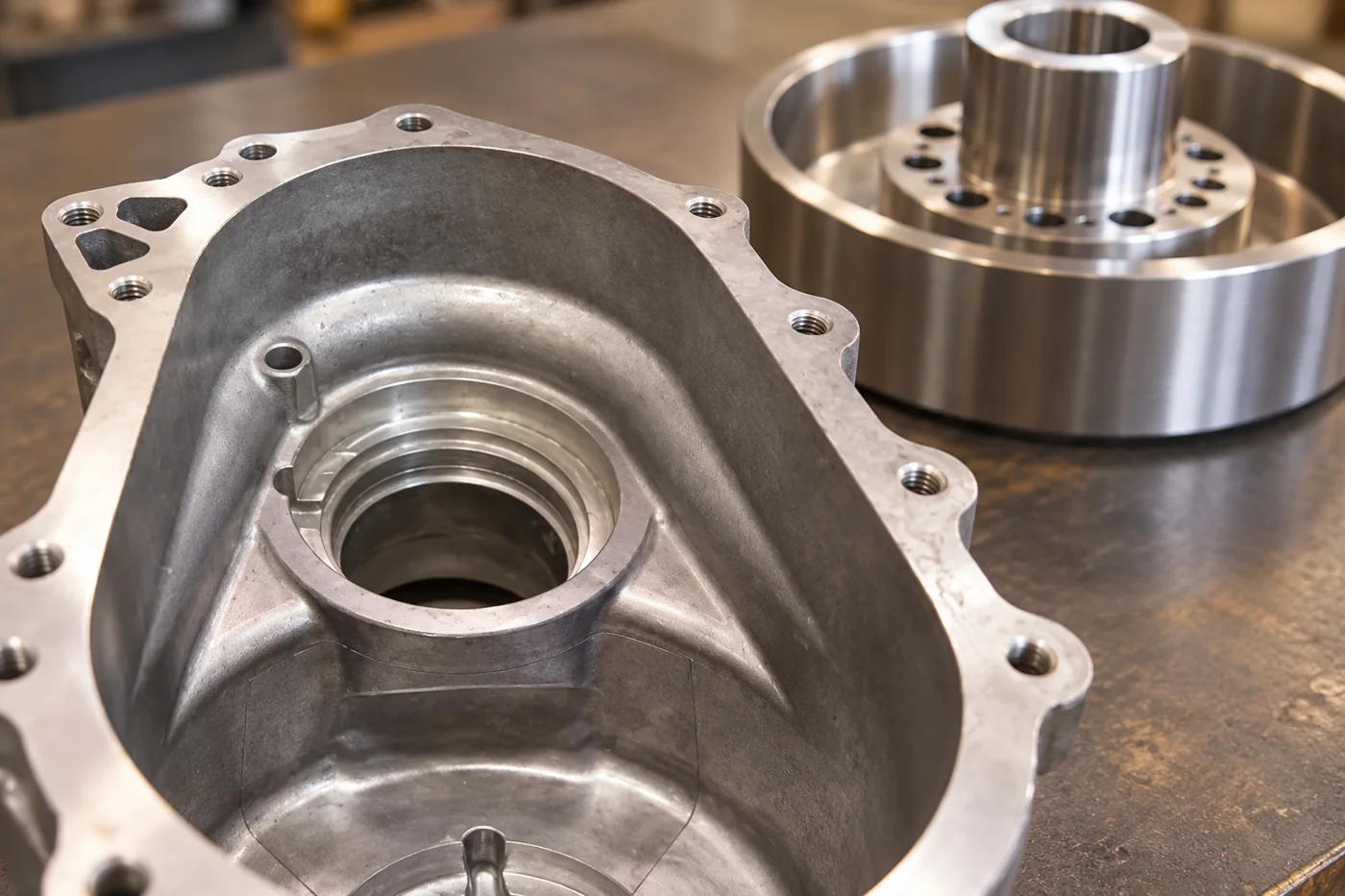
The internal seat and flange of a housing may determine the location of another component in the same set. Protect those features according to their supplied condition and keep their identities visible after unpacking. Where complete kits are useful, group them so your receiving team can account for one machine set without sorting a mixed bulk load. Where heavy and delicate parts should travel separately, link their package references to the same BOM release. The best packing arrangement preserves both geometry and the logic of the set.
10A CLEARER CASTING PURCHASE
Prepare one package with part-level decisions
Send the BOM, released component drawings and an assembly view, with selected materials and quantities by line. Mark the interfaces that connect the parts and the items your assembly cannot proceed without. We can then develop a coordinated quotation with a separate technical scope for each component. Your team receives a clearer basis for choosing the material routes, approving development work and accepting a usable machine set rather than a collection of unrelated castings.
11 YOUR NEXT STEP
Bring your component into the conversation
Tell us which component you need, the material, quantity and required supplied condition. Relia will connect your enquiry with the casting, machining and evidence relevant to that part.
Technical reading and scope
Technical references explain the process. Component specifications and agreed order records define the actual supply.
ISO 10007:2017 — Configuration ManagementGS1 Global Traceability Standard- [email protected]
- Phone
- +86 18561762631
- +1 404 203 0971
- Company and address
- Qingdao Relia Industries Co., Ltd.
Shuyuan Road, Qingdao, Shandong, China