
01A CLEARER CASTING PURCHASE
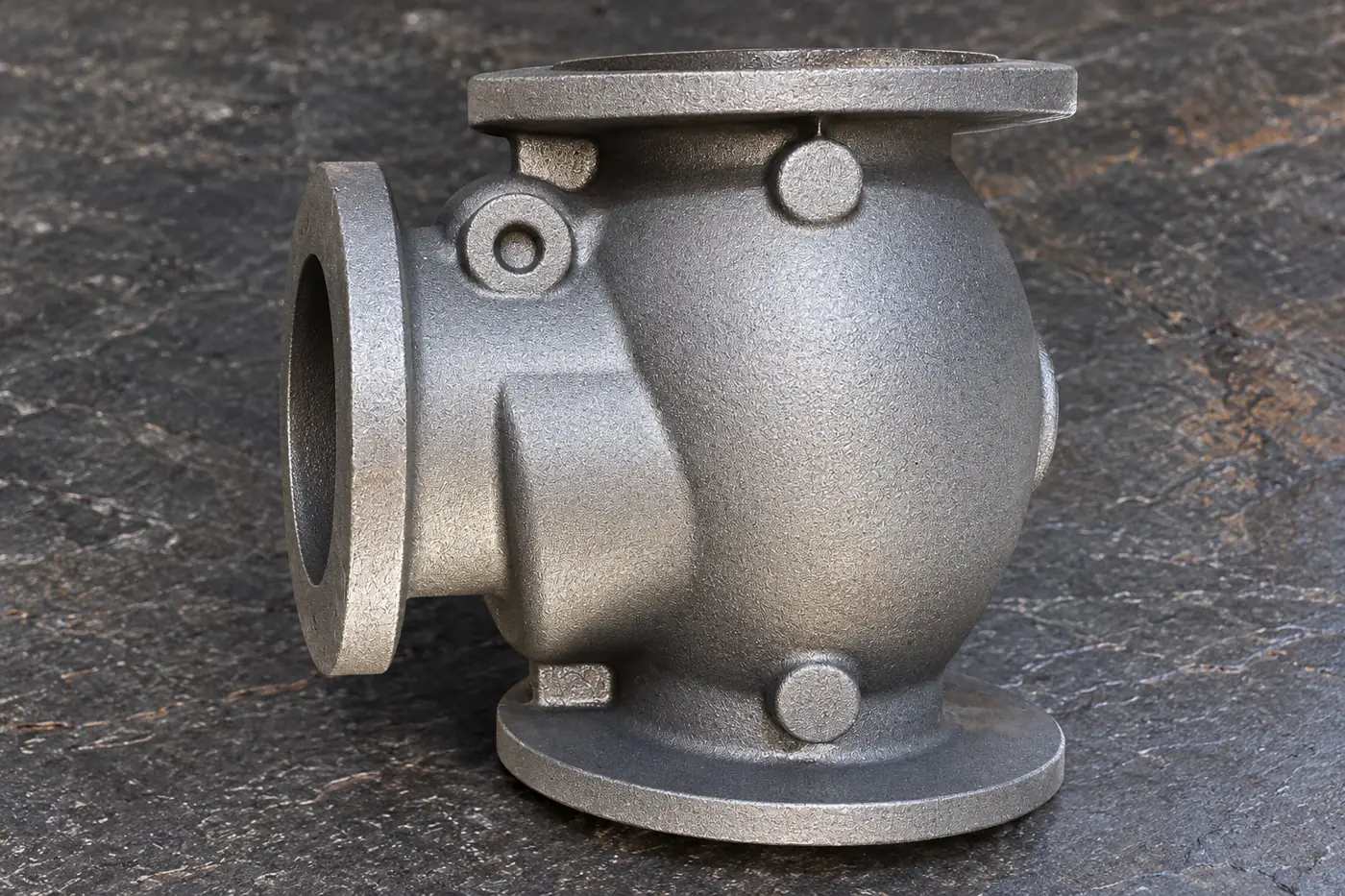
Matched Valve Body and Bonnet Castings
Buy the body and bonnet around one joint definition. Relia supplies drawing-based iron casting enquiries with selected machining, so the register, gasket land and fastener pattern can be considered together. Choose an identified matched pair or specify interchangeable stock. The sample and evidence should support that choice before you release repeat quantities.
- Package
- Body + bonnet
- Material
- Selected grey / ductile iron
- Fit basis
- Pair or interchangeability
02A CLEARER CASTING PURCHASE
Both cast components with one shared assembly reference
Relia Casting's body-and-bonnet offer includes drawing-defined size, wall thickness and surface requirements, with raw-material, heat-treatment-condition and finished-product checks in its full-process scope. Our own sand-casting and machining production lets the blank and joint features be considered together. Real workshop/equipment photographs and dimensional/material reports are available for your assessment.
A matched pair stays associated as two identified parts. Interchangeable supply needs accepted bodies and bonnets to cross-fit within the agreed population, which changes tolerance allocation and sample evaluation. For service spares stored separately, make that distinction part of the order so a successful selected pair does not become an unsupported interchangeability promise.
03A CLEARER CASTING PURCHASE
The joint spans both component drawings
Use the assembly drawing to connect body and bonnet datums. The locating register, gasket land, bolt holes and fastener clearances must support the same intended joint. Tolerance chains can consume available assembly clearance even when individual features meet their own limits.
If the design uses a register, specify its fit and depth. If it relies on bolt clearance for location, make the resulting position requirement explicit. Include the relation of a bonnet bore or stem guide to the body seat where the valve design needs that relationship.
| Shared feature | Coordinated acceptance requirement |
|---|---|
| Joint land | Compatible width, geometry and final surface condition |
| Register | Diameter, depth and permitted fit where used |
| Fastener pattern | Clocking, hole positions and assembly clearances |
| Internal alignment | Bonnet guide or bore related to body seat as designed |
04A CLEARER CASTING PURCHASE
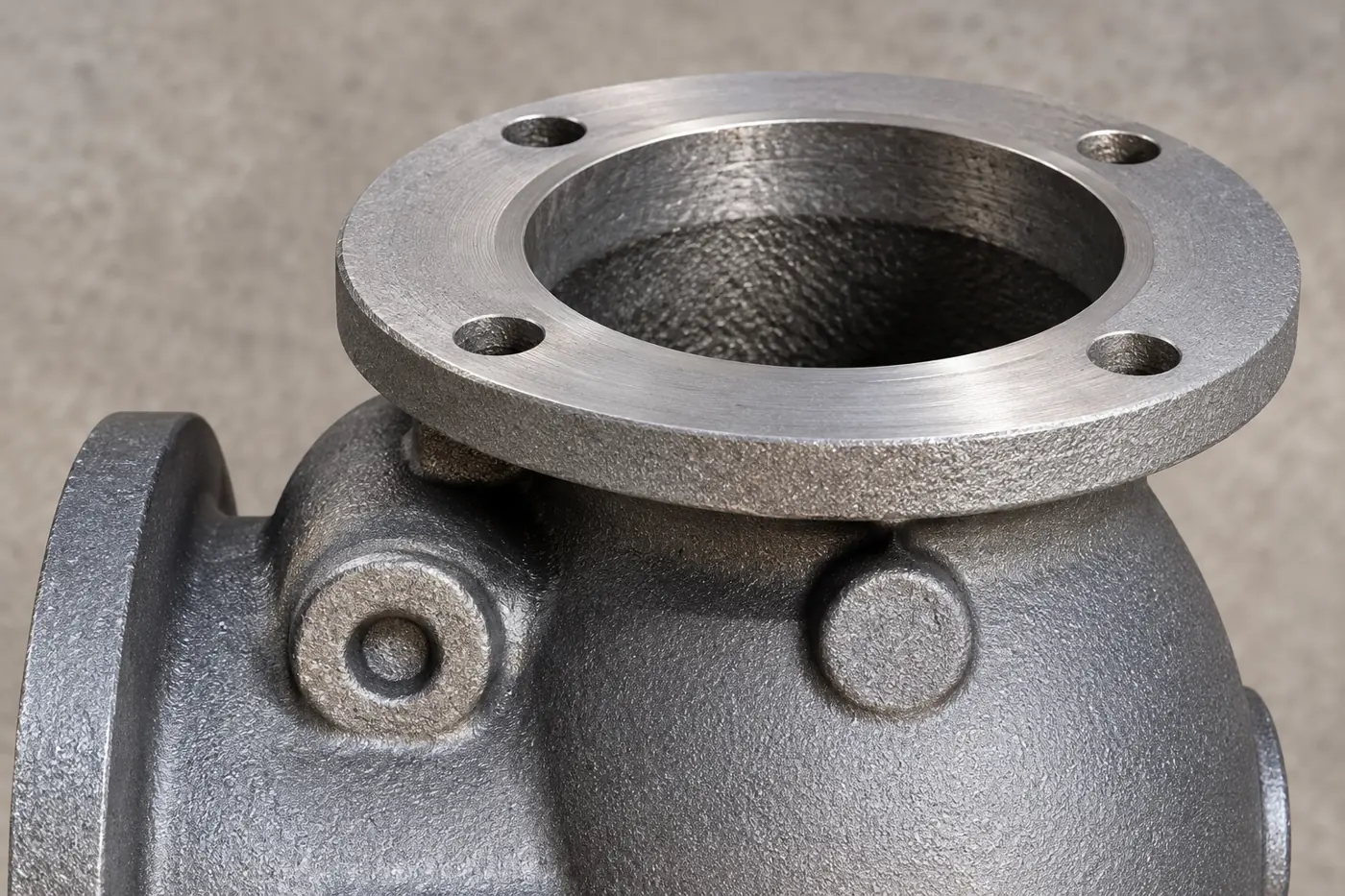
A finished face needs sound metal beneath it
Drawing-defined walls and machining stock belong together at the joint. A rough casting that cleans up on one face may still have insufficient section at a recess, bolt boss or passage. Show the joint section and core relationship as well as the finished surface.
Agree the casting-to-machining datum transfer so cutting produces the designed geometry. Face texture should suit the selected gasket and clamping arrangement; an attractive finish alone does not establish the joint. Keep its usable land, flatness and locating fit in the final requirements.
- Joint section
- Gasket land and machining stock together
- Final geometry
- Flatness, register and contact condition
05A CLEARER CASTING PURCHASE
Body and bonnet material conditions remain individual
The components can share one material specification or use separately selected grey and ductile irons according to the design. State complete grade and supplied condition for each. Pressure-boundary and assembly requirements decide which material combination is acceptable.
Our checks include raw-material control, heat-treatment condition and finished-product inspection. Turn these stages into identifiable records for each component. Where treatment is required, keep final material condition and subsequent machining or coating consistent with the approved joint geometry.
06A CLEARER CASTING PURCHASE
Two casting routes converge at the finished joint
The body and bonnet need their own forming geometry even when they use the same iron. Pattern/core choices locate the body cavity, bonnet recesses and bolt bosses, with stock reserved where the joint will be cut. The proposed sequence should account for thick-to-thin transitions and any specified treatment before accepting final mating geometry.
Machining establishes the register, gasket faces and fastener pattern from the assembly references. Inspect each part against its drawing, then assess the paired fit or agreed cross-fit arrangement. That produces two feature records plus a meaningful joint result. A specified enclosure test is another output: ISO 5208 distinguishes boundary integrity from closure tightness, so the test object and conditions remain separate from the ordinary dimensional reports.
- 01Form each blankRetain cavity, joint sections and machining stock
- 02Complete specified conditionPlace treatment and finishing in the component route
- 03Machine the jointPreserve shared register, face and hole references
- 04Accept parts and relationshipIndividual reports plus paired/cross-fit result and selected test
07A CLEARER CASTING PURCHASE
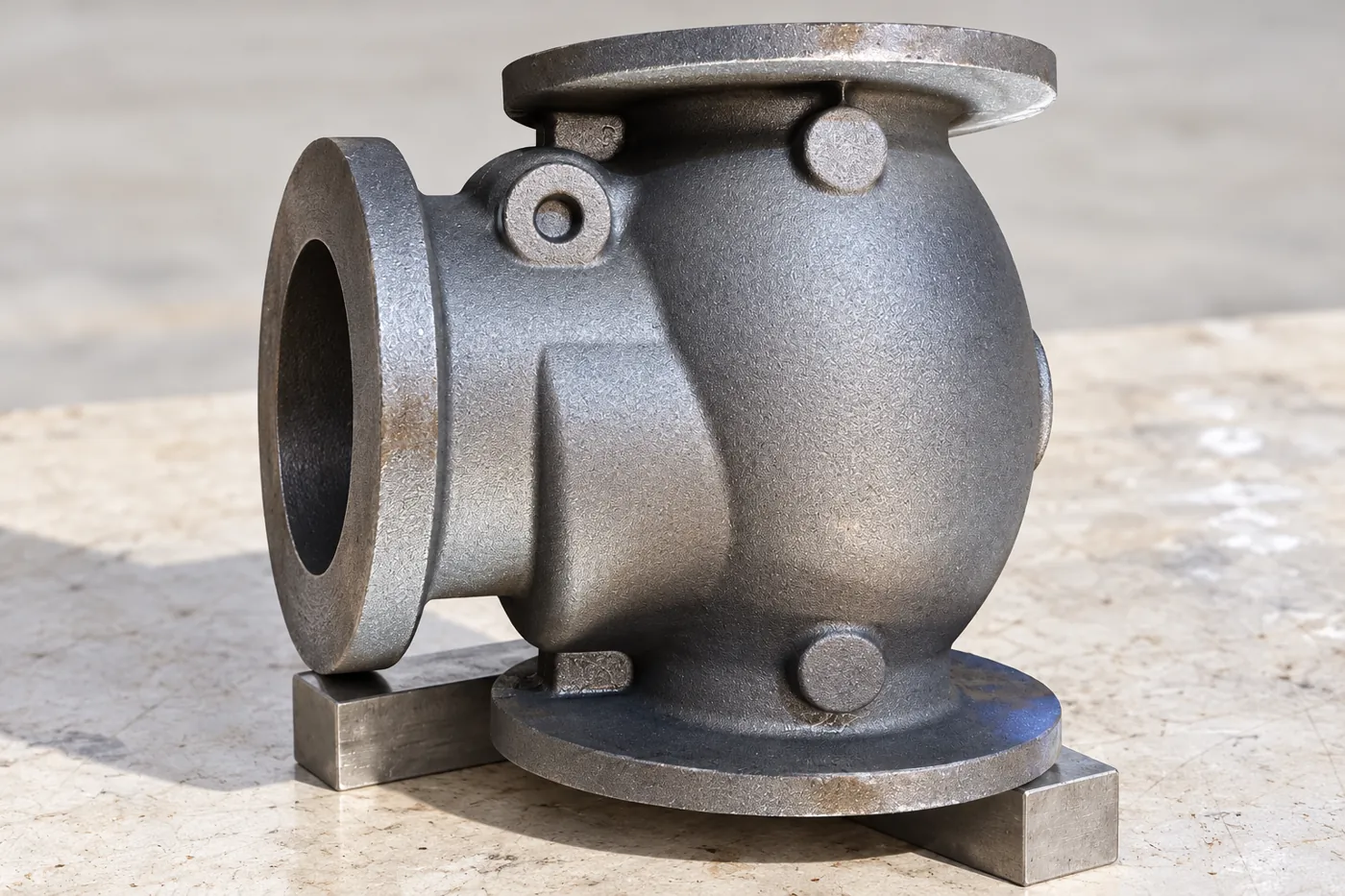
Machining access checked before the joint is frozen
Include complete models, not only a plan view of the joint. Internal shoulders, bosses and neighboring walls can restrict tool access or make a feature difficult to measure after another operation. The sequence should reach the seat, guide, register and hole pattern while preserving their datum relationships.
If machining the components together is proposed, identify what that establishes and how the pair stays associated afterward. If interchangeability is required, acceptance should assess the agreed population relationship rather than only one selected fit.
- Access
- Seat, guide and register tool reach
- Matching
- Paired work distinguished from cross-fit supply
08A CLEARER CASTING PURCHASE
Sample approval records the matching method
Connect the first package's dimensional reports and material records to both drawings and the assembly reference. Include the agreed fit trial and required pressure-enclosure test. For interchangeable parts, choose a sample arrangement that actually assesses the intended cross-fit requirement.
Document the matching method alongside the result. A concession allowing one body and bonnet to be used together is different from a permanent design revision. Keeping that distinction visible prevents a successful sample pair from creating unsupported expectations for later service spares.
- 0101Approve joint tolerances and intended matching method
- 0202Measure both components against their own datum schemes
- 0303Assess the paired or interchangeable assembly sample
- 0404Release both revisions and the repeat matching method
09A CLEARER CASTING PURCHASE
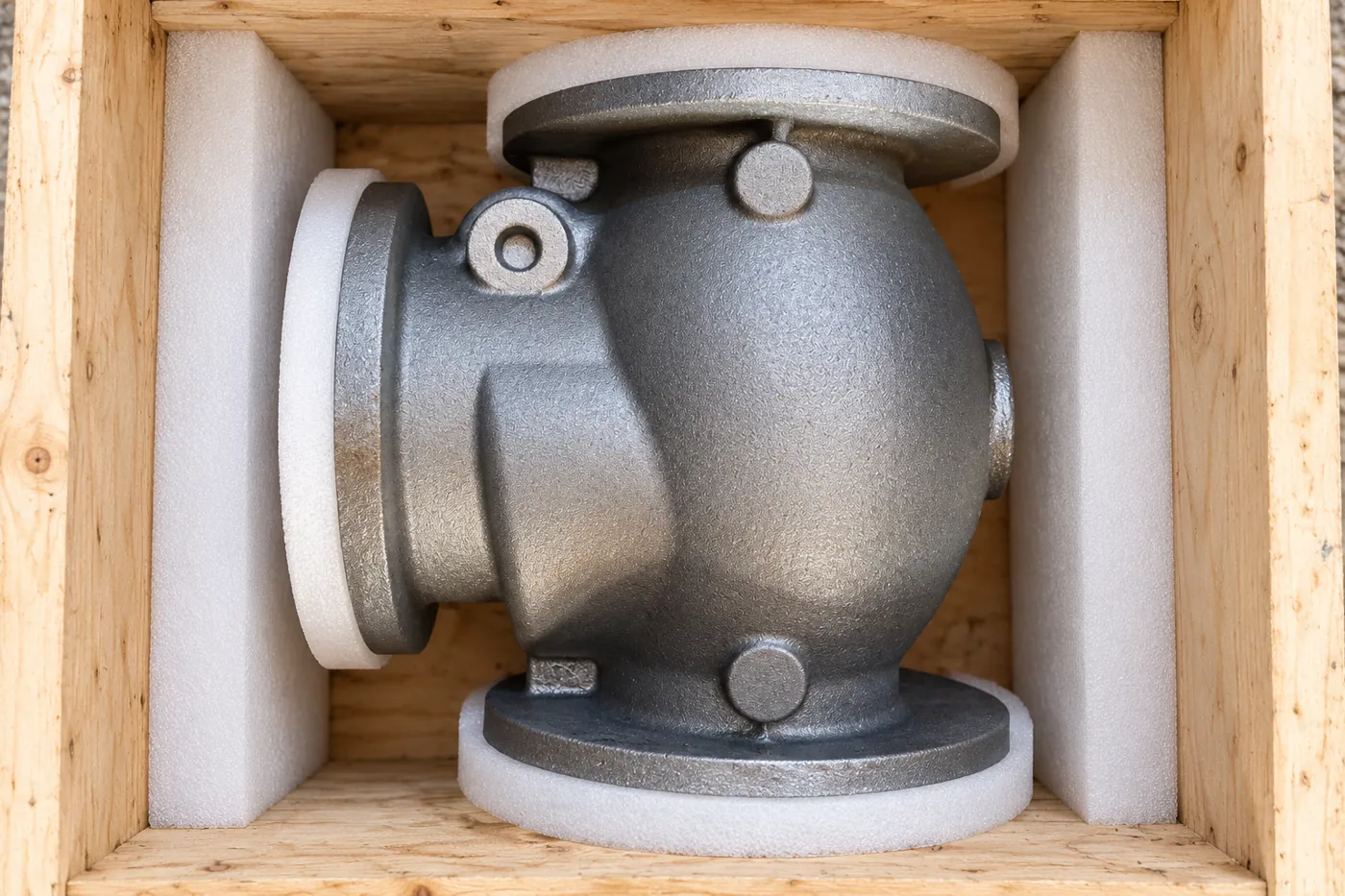
Packing preserves the matching and sealing condition
Our full-process scope includes delivery requirements. For a matched-pair order, define how body and bonnet remain associated without letting finished faces rub together. For interchangeable stock, identify part number and revision clearly rather than implying a permanent mate.
Protect gasket lands, registers and machined bores from corrosion and impact. Keep temporary protection distinguishable from the assembly gasket or approved process coating. The receiving team should be able to reconcile both components and their records before installation.
- Identity
- Keep matched pieces associated
- Protection
- Separate gasket lands and finished bores
10A CLEARER CASTING PURCHASE
A complete joint definition that survives repeat supply
For a coordinated purchase, retain both component numbers, the assembly revision and the chosen matching method. Relia can manufacture the body and bonnet to that released package, then use sample manufacture and inspection followed by your confirmation before batch production. The result is easier to repeat when the approval identifies both parts and their actual relationship.
Keep material changes and joint concessions visible. A temporary allowance for one pair does not revise the population intended for service stock. With this boundary clear, purchasing can compare the casting, machining and acceptance work as a usable joint package.
11 YOUR NEXT STEP
Bring your component into the conversation
Tell us which component you need, the material, quantity and required supplied condition. Relia will connect your enquiry with the casting, machining and evidence relevant to that part.
Technical reading and scope
Technical references explain the process. Component specifications and agreed order records define the actual supply.
ISO 5208 — metallic-valve pressure testingESA/FSA — flange and gasket joint principles- [email protected]
- Phone
- +86 18561762631
- +1 404 203 0971
- Company and address
- Qingdao Relia Industries Co., Ltd.
Shuyuan Road, Qingdao, Shandong, China