
01A CLEARER CASTING PURCHASE
Compare Pump Impeller Prototype Variants
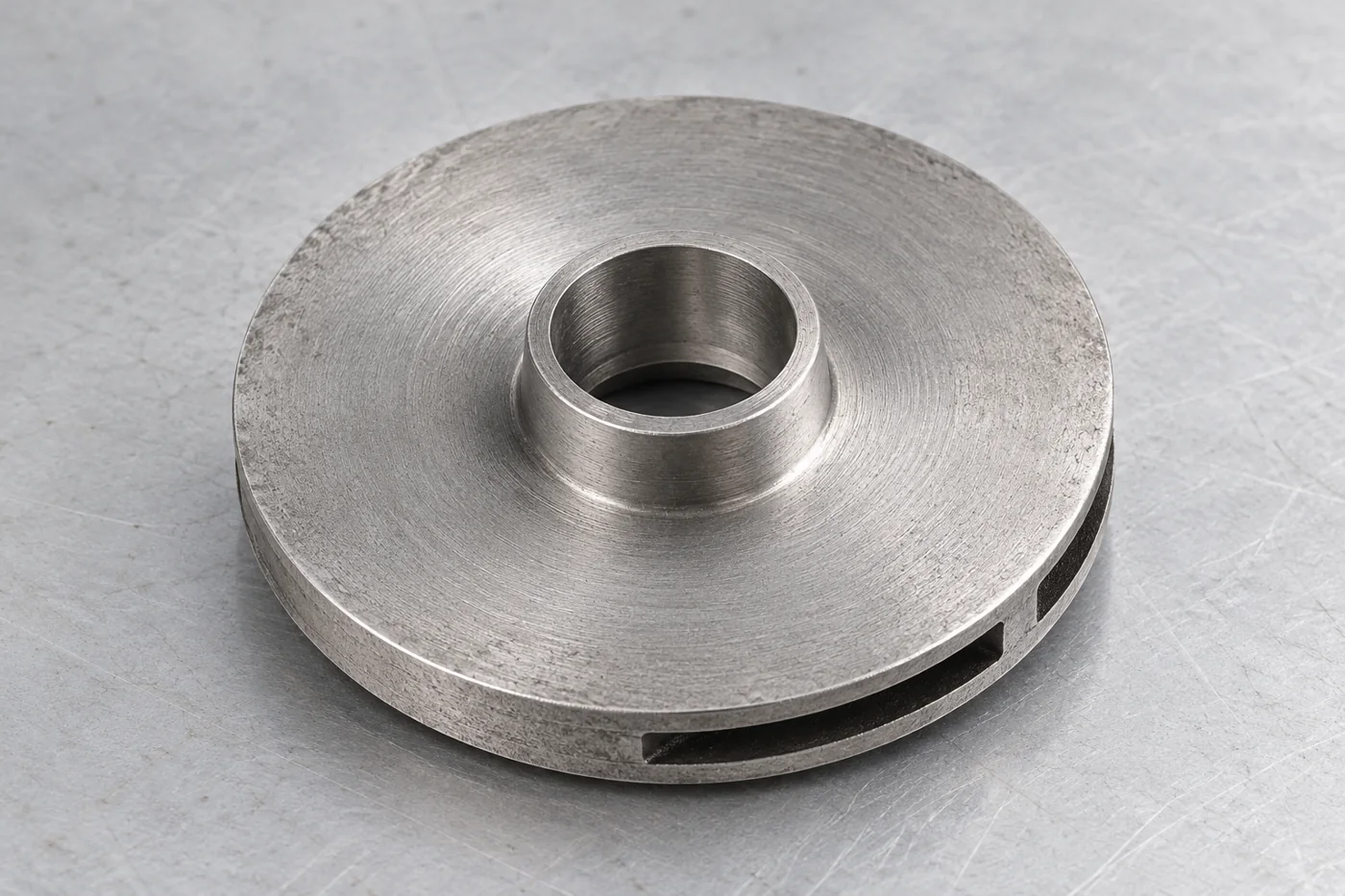
Order a trial set whose intended design differences remain clear through manufacture and testing. Relia offers ductile-iron impeller enquiries with printed-sand routes and GGG50 shell-mould components with CNC finishing. Keep each vane or passage variant distinct while retaining the common shaft fit, material and test setup. Your team can then interpret the trial as an engineering comparison and select the next version with useful evidence.
- Change
- Named vane or passage feature
- Keep common
- Shaft fit + test basis
- Receive
- Identified trial variants
02A CLEARER CASTING PURCHASE
Choose the hydraulic variable before ordering the set
Relia’s own casting and machining production supports the selected impeller route. Our main coated-sand and shell processes are particularly relevant to the listed shell-mould impeller scope, while printed-sand work remains a separately defined option.
Start with the flow and head range, operating speed and fluid conditions your trial will evaluate. Specific speed relates flow, head and speed to impeller design, so these inputs help explain why a particular geometry variant is being tested. Then identify the intended difference, such as vane form, passage width or inlet geometry. Where several variables must change together, define the group as a separate design concept rather than imply that the test isolates one feature.
03A CLEARER CASTING PURCHASE
Keep manufacturing differences visible in the experiment
Our GGG50 semi-open offering uses shell-mold casting and CNC finishing, with a CT7–CT10 casting reference and listed component weight up to 50 kg. The printed-sand impeller range provides a different development direction. Choose the route appropriate to the actual geometry and record any route differences between variants. A change of forming method or surface treatment can become an additional test variable, especially where a passage surface remains as cast. The experiment should retain those differences in its interpretation.
| Comparison condition | What to hold or record |
|---|---|
| Material and condition | Keep the selected grade constant unless material is itself under test. |
| Casting route | Record shell-mold versus printed-sand differences. |
| Surface state | Retain the agreed cast, blasted or treated condition. |
| Finished interfaces | Use the same shaft/face definition for a common test assembly. |
04A CLEARER CASTING PURCHASE
Select the forming approach around vane access
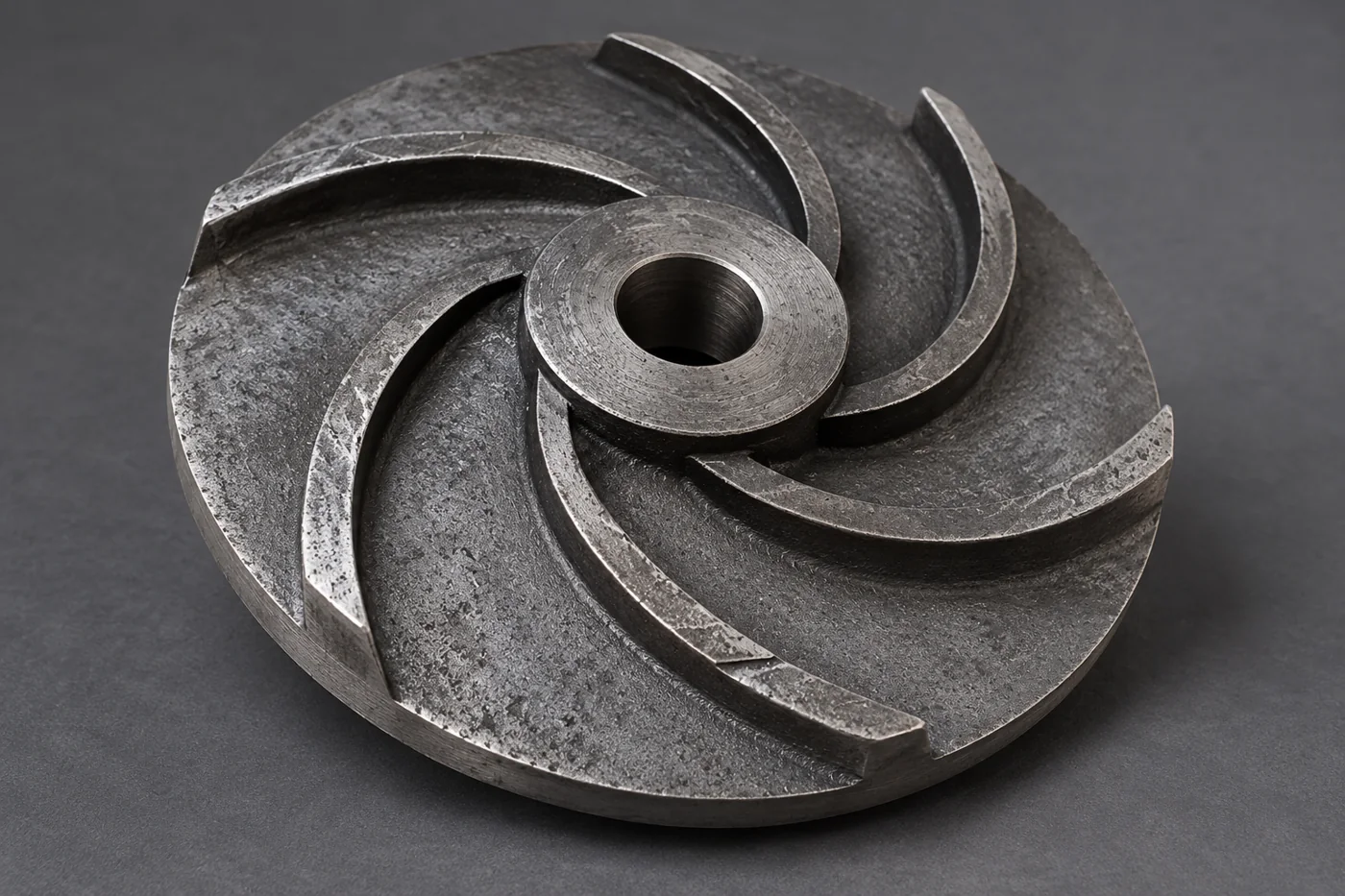
A semi-open impeller exposes its vanes differently from a closed shrouded design. Send the complete model so the forming review can address hidden passages, access and later cleaning. A printed sand mold or core is also distinct from a separately ordered additive metal part in our catalogue. For the trial set, choose the actual impeller route and retain it with the variant reference. The image explains geometry; the model defines the part that must be manufactured.
05A CLEARER CASTING PURCHASE
Hold the test-rig connection constant
Use a common shaft axis, bore requirement and locating-face definition where the same rig must test every variant. Include the keyway, thread or other coupling feature actually used, and identify which relationships must be assessed together. An inconsistent mounting fit can introduce an avoidable difference before the pump test begins. Our CNC finishing scope should therefore be assigned to those shared interfaces while the intended vane or passage changes remain uniquely identified in each model.
- 01Define the axisUse the functional shaft reference for the common interface.
- 02Define attachmentSpecify bore, coupling and locating-face requirements.
- 03Finish consistentlyRetain the same accepted connection state across variants.
- 04Verify the setAttach the relevant interface results to each supplied piece.
06A CLEARER CASTING PURCHASE
Separate manufactured-part checks from pump performance
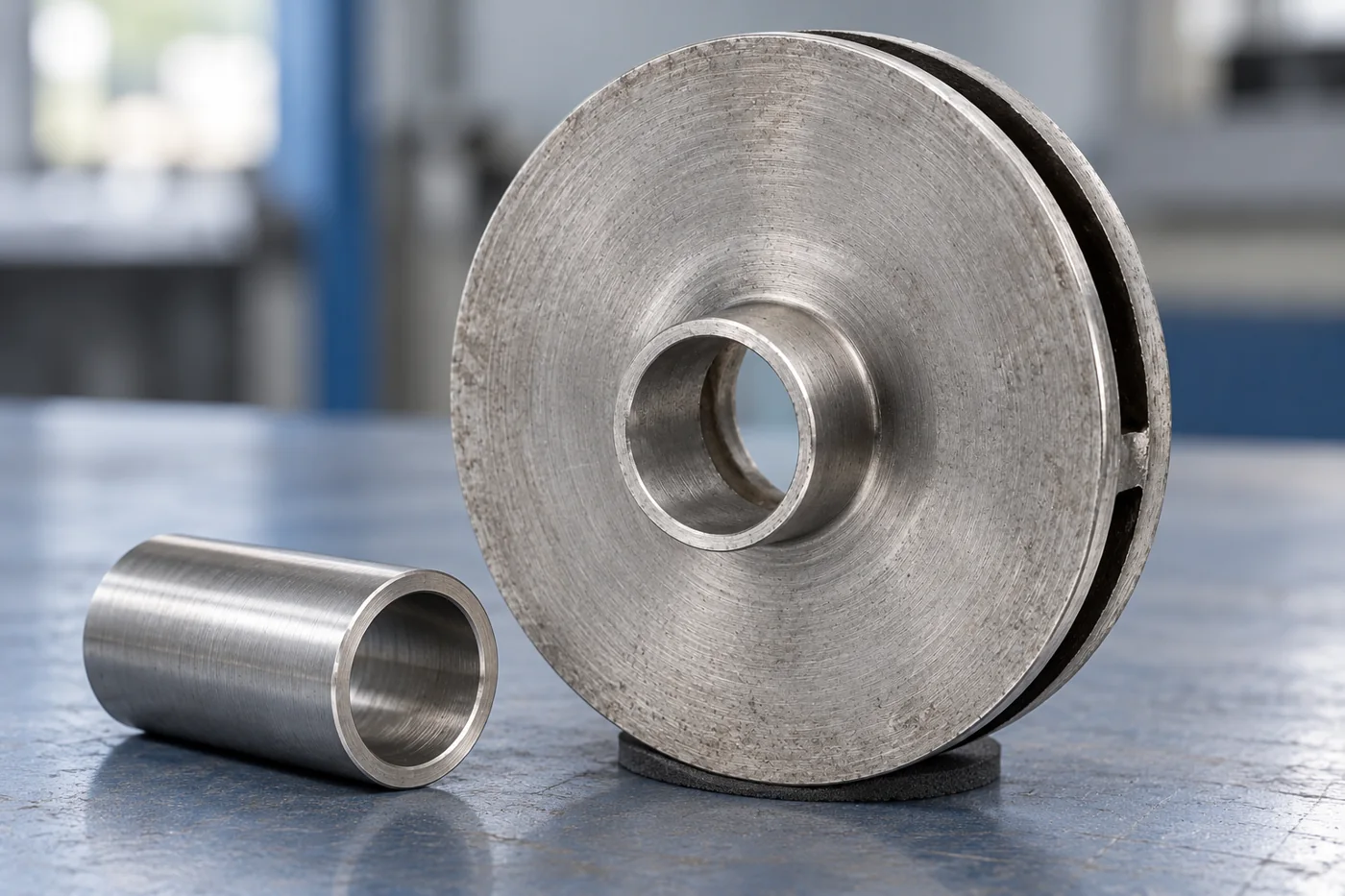
A dimensional report establishes the impeller geometry that reached the test bench; it cannot establish a head-capacity curve by itself. ASHRAE describes pump performance testing in a defined casing at constant speed over varying flows. For your comparison, keep the casing, clearances and test conditions controlled where intended, and record the actual variant tested. If balancing or another preparation is required, include its method and acceptance as a separate deliverable rather than assume that casting inspection includes it.
07A CLEARER CASTING PURCHASE
Attach every result to the geometry actually tested
A model change made for manufacturability can be sensible, but it must remain visible to the development engineer. Record any altered vane edge, passage region or finishing operation before the piece enters the trial. The test record should identify the sample, material condition, model revision and relevant measured geometry. This lets you distinguish a promising design result from a result influenced by a different supplied feature, and it makes the selected variant easier to convert into a repeat-order definition.
- 0101Release each variant and its common shaft-interface drawing.
- 0202Record approved manufacturing adjustments before sample production.
- 0303Match measured geometry and material identity to the supplied piece.
- 0404Attach the pump-test result to that sample and tested configuration.
08A CLEARER CASTING PURCHASE
Compare development investment with the value of learning
A trial price can include model preparation, printed sand or pattern work, casting, CNC finishing and records. Separate the items that change with each variant from those shared across the set. A common fixture may remain useful while vane-form tooling changes; a printed-core route can have a different initial-investment pattern from dedicated shell tooling. Choose using the number of revisions you expect and the test result you need, then assess repeat production only after the selected geometry has stabilised.
09A CLEARER CASTING PURCHASE
Protect identity and vane condition until the trial
Keep variants separated and marked so their references remain clear after unpacking. Protect the shaft bore, locating faces and exposed vane edges from rubbing or concentrated packing loads. If your test programme needs an untreated hydraulic surface, keep that condition explicit rather than apply a general finish for appearance. The GGG50 range lists sandblasting, spray painting, powder coating and custom treatment options; select the treatment and coverage that belong to the actual development sample.
10A CLEARER CASTING PURCHASE
Order an impeller set around a testable comparison
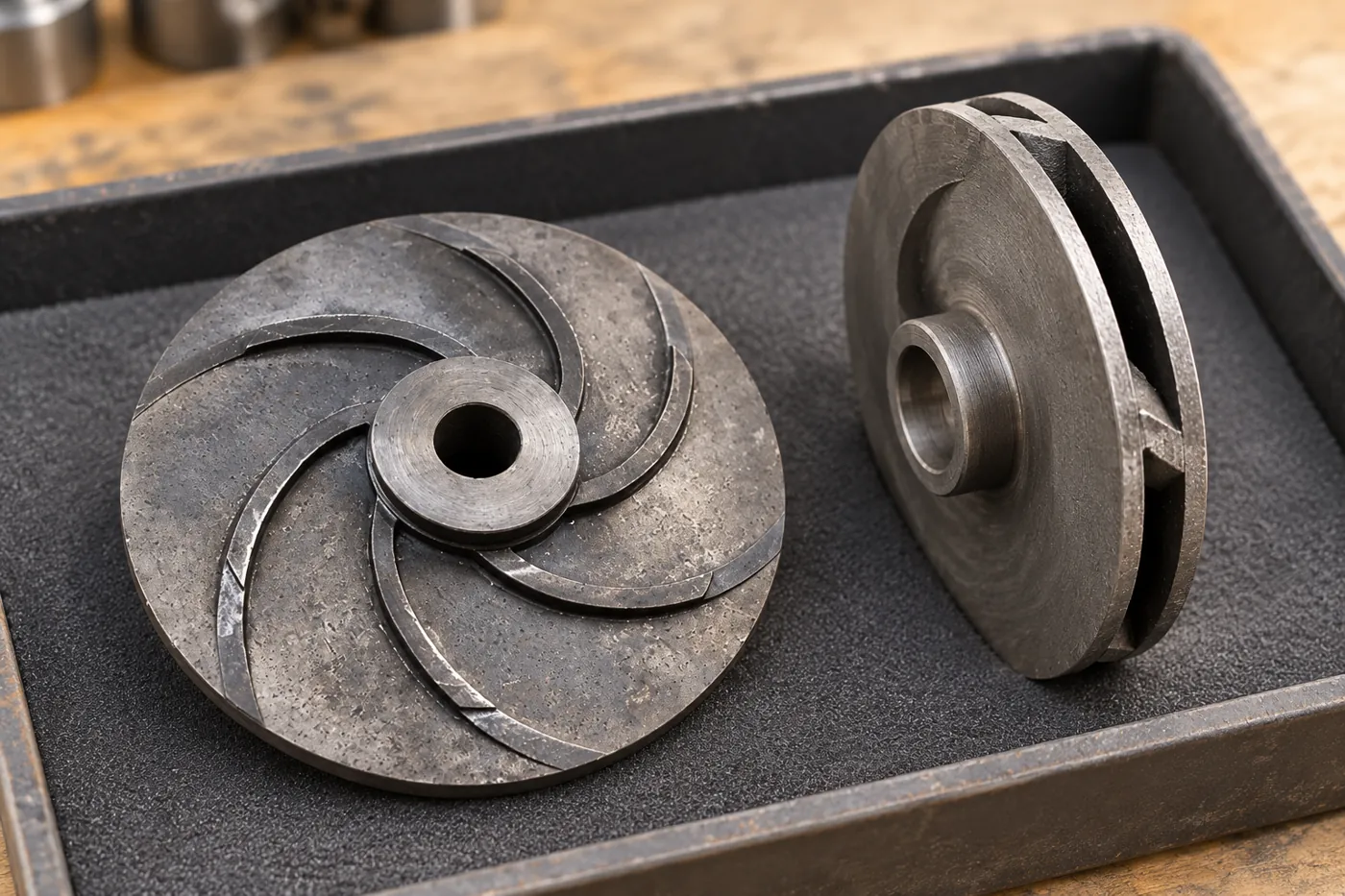
Send the complete models and drawings for all variants, with the selected grade and quantity per version. Add the common mounting definition, the duty range and the manufactured-part evidence needed before testing. We can then quote the route and finishing work for a controlled sample set. Your next decision can focus on which geometry merits further development, supported by a clear record of the parts and conditions behind the comparison.
11 YOUR NEXT STEP
Bring your component into the conversation
Tell us which component you need, the material, quantity and required supplied condition. Relia will connect your enquiry with the casting, machining and evidence relevant to that part.
Technical reading and scope
Technical references explain the process. Component specifications and agreed order records define the actual supply.
Specific Speed and Impeller Geometry — Pump Engineering ReferenceCentrifugal Pumps — ASHRAE Handbook Chapter 44- [email protected]
- Phone
- +86 18561762631
- +1 404 203 0971
- Company and address
- Qingdao Relia Industries Co., Ltd.
Shuyuan Road, Qingdao, Shandong, China