
01A CLEARER CASTING PURCHASE
Hydraulic Pump and Valve Body Castings
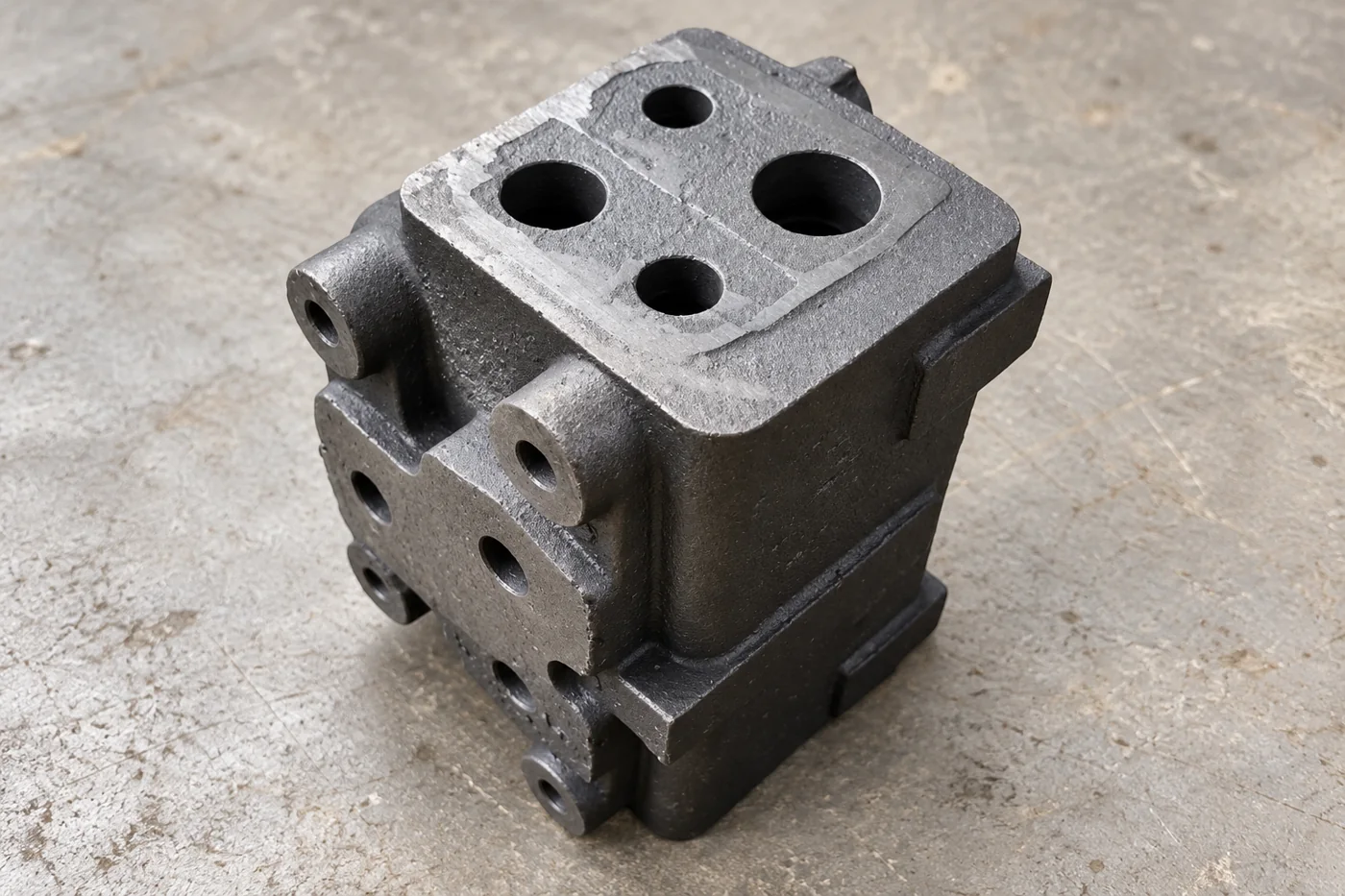
Connect the internal circuit with the ports and mounting features your tractor system needs. Relia offers hydraulic body castings in selected steel or iron through sand or shell moulding, with nominated machining. Define the actual passage communication, circuit separation and finished interfaces together, so a mechanically suitable body also preserves the intended hydraulic arrangement.
- Component
- Pump or valve body
- Route
- Sand / shell + machining
- Define
- Passages + external fits
02A CLEARER CASTING PURCHASE
Cast hydraulic bodies developed around the circuit
Relia Casting offers customized hydraulic pump/valve bodies and tractor-related parts with OEM/ODM support, sandblasting and 100% inspection tied to the selected component. Sand or shell moulding follows the actual geometry; coated-sand/shell production is our main factory route. We also have our own machining production for the nominated ports, bores and mating faces.
For your hydraulic team, the circuit map is the practical link between those operations. Label pressure, return, drain and control passages and the bores containing moving parts. Our available material/dimensional reports can then identify the manufactured body, while real workshop photographs help you assess the source.
03A CLEARER CASTING PURCHASE
Form passages and finish ports in an inspectable sequence
Cores can create internal passages that would be awkward to drill, while cross-drilling can reach other circuit branches. The casting plan needs to locate cores so the required metal remains between circuits and around future finished bores. For drilled intersections, the problem changes to burrs, trapped chips and access before a plug or cover closes the opening.
A useful body route therefore moves from mould/core location to cleaned blank, datum machining, port and bore work, then internal preparation and agreed circuit checks. Relate ports to the mounting references used by the tractor assembly. The output is a body with measured mechanical interfaces and a defined internal condition, not an apparently clean exterior that leaves passage communication or isolation unknown.
- 01Core locationRetain separating walls and bore stock
- 02Datum machiningEstablish mount and locating references
- 03Port/intersection workCreate specified threads, seats and drilled branches
- 04Internal preparationRemove burrs and residue before closures
- 05Circuit evidenceRecord required communication/isolation checks
04A CLEARER CASTING PURCHASE
Each port includes its sealing arrangement
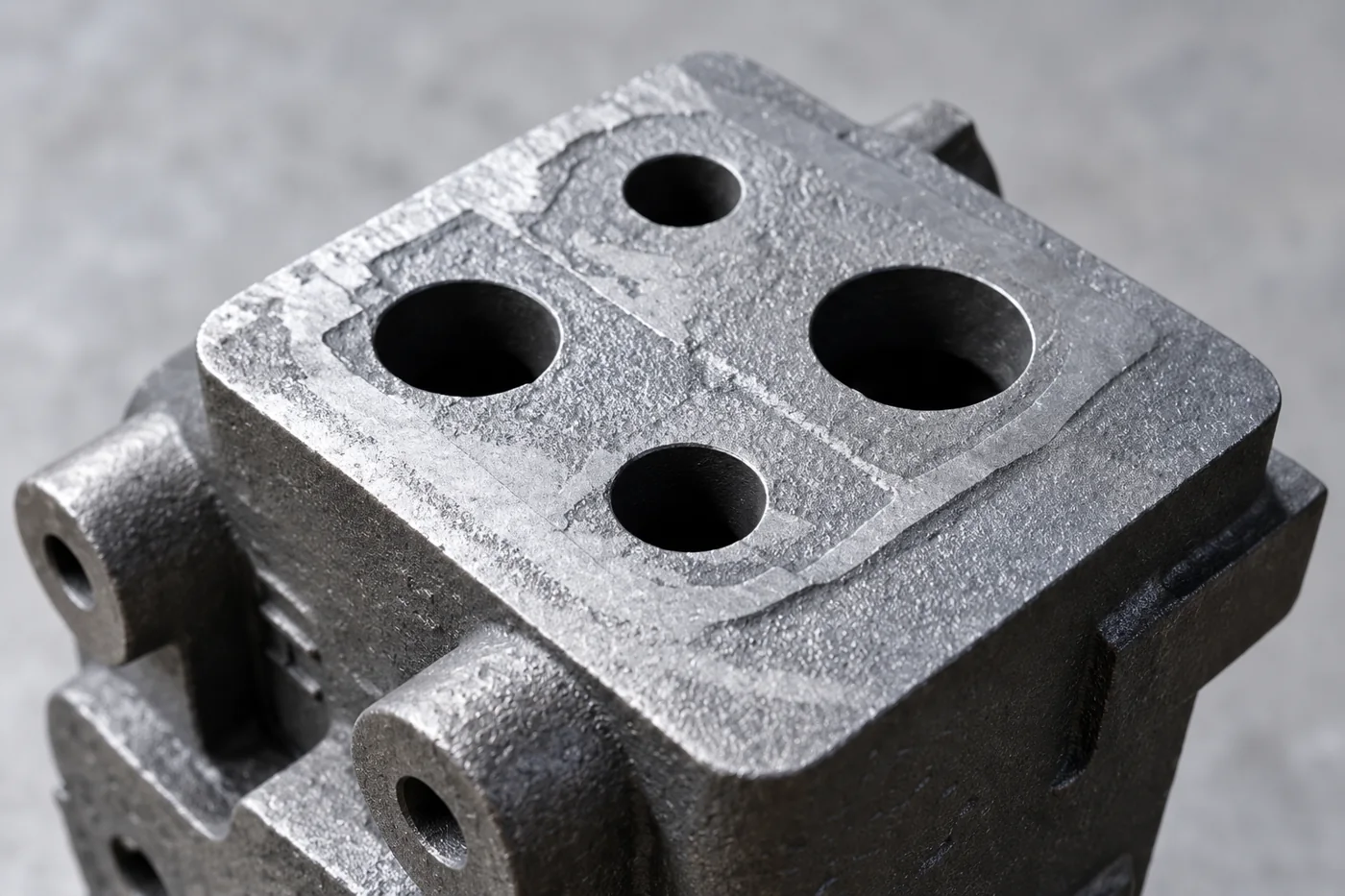
A thread designation alone does not define every hydraulic connection. State the port standard, thread form and class, engagement length, entry geometry and sealing face or counterbore used by the fitting. A missing spotface requirement can prevent a fitting from sealing even when its thread gauges correctly.
Relate port positions to accessible drawing datums. Identify intersections near spool or bearing bores and retain the allowed wall sections. Additional machining is quoted around these finished features, rather than inferred from the rough opening shown in a casting photograph.
- Port
- Thread plus actual fitting seal geometry
- Wall
- Bore and cross-passage relationships
05A CLEARER CASTING PURCHASE
The selected alloy and casting route stay with the duty
Carbon steel, alloy steel and cast iron are separate material options in this body listing. Select the complete grade and condition for your component's pressure cycles, section design and machining requirements. The general label hydraulic body does not define the needed alloy.
Choose sand or shell molding for the actual geometry and quantity, with machining stock retained on the required bores and joint faces. Sandblasting is offered as surface treatment; specify its extent so abrasive media and loose residue do not become an unplanned condition of the fluid passages.
| Manufacturing layer | Decision for the ordered body |
|---|---|
| Material | Complete carbon/alloy-steel or cast-iron requirement |
| Route | Selected sand or shell-mold process |
| Finished features | Machined bores, ports, seats and mounting faces |
| Surface preparation | Blasted regions and subsequent passage cleaning |
06A CLEARER CASTING PURCHASE
Mounting datums keep the circuit aligned to the assembly
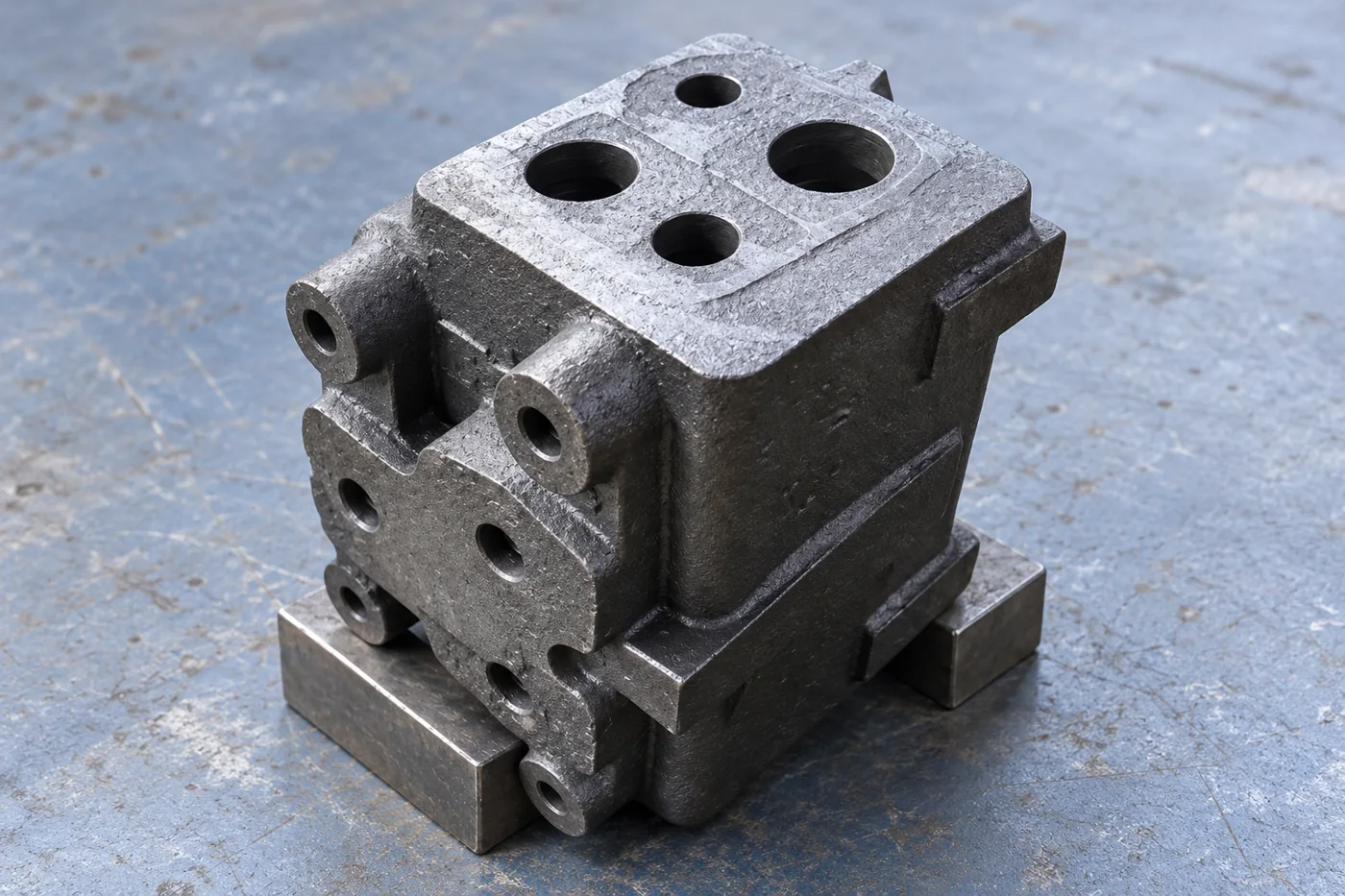
The mounting plane and locating features establish how the body meets neighboring components. If a gasket plate, cover or adjoining hydraulic component carries matching passages, relate their port pattern to the same datum system. Correct individual hole diameters will not compensate for an offset connection pattern.
Identify locating dowels where used, bolt seating faces and any gasket land. The inspection map should connect bore axes and port locations to these references, keeping the finished body's hydraulic and mechanical interfaces in one definition.
- Mount
- Plane, locators and seating faces
- Alignment
- Port pattern related to equipment datums
07A CLEARER CASTING PURCHASE
Component residue and oil cleanliness require separate evidence
Loose sand, chips or burr fragments in a new body can enter the hydraulic system after assembly. Define the included internal surfaces, the particulate acceptance and a suitable inspection method for those passages. A visible clean exterior does not answer that requirement.
ISO 16232 concerns particulate inspection of road-vehicle components; ISO 4406-style reporting concerns contamination in fluid. Where relevant to your specification, choose the correct method for the ordered object. An oil cleanliness code should not be treated as a direct certificate for an unassembled dry casting.
08A CLEARER CASTING PURCHASE
Sample approval separates passage integrity from hydraulic function
Our listing offers 100% inspection tied to the ordered component. Name the checks that make that statement useful: final port geometry, bore relationships, passage communication and the material evidence needed for release. Include required cleaning and an identifiable result record.
A pressure or leakage test needs its own test object and conditions, especially where circuits must remain isolated. Valve response or complete pump performance belongs to the relevant assembled-unit evaluation. Assign these stages so the sample package addresses the exact hydraulic body being purchased.
- 0101Inspect bores, ports and mounting datums against the drawing
- 0202Check specified passage communication and circuit isolation
- 0303Record internal condition and defined containment-test result
- 0404Evaluate the assembled unit under its separate function plan
09A CLEARER CASTING PURCHASE
Cleaned ports remain protected until assembly
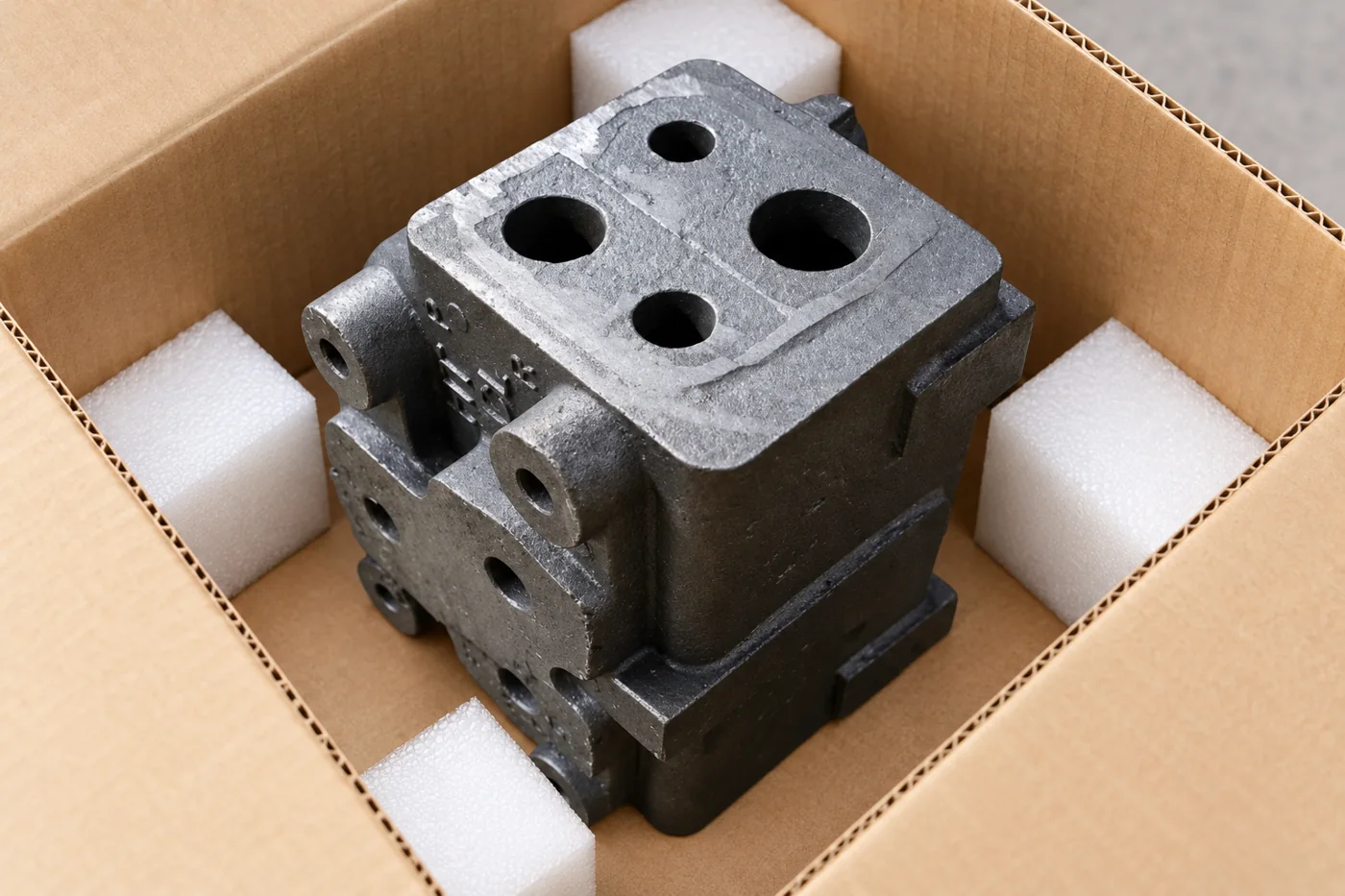
Finish passage cleaning after the operations that generate chips or abrasive residue. Protect cleaned openings with the agreed covers or caps and prevent packing fragments from entering them. Any temporary preservative should suit the hydraulic fluid and the next assembly operation.
Identify the body revision and batch on its package and connect them to the inspection records. If your receiving process removes a plug or machines an additional port, include the resulting cleaning responsibility in the handover plan so the accepted condition is not lost.
- Final preparation
- Cleaning after residue-generating work
- Protection
- Covered openings until assembly
10A CLEARER CASTING PURCHASE
A hydraulic component ready for its next controlled operation
A useful body purchase gives your team the required material, circuit geometry, finished interfaces and internal-condition evidence together. Relia can manufacture the casting and nominated machining around that outcome. The drawing review and inspected sample let you check the actual connection arrangement before confirming batch production.
Keep any circuit, plug or port change connected to the same released body. If your plant adds another drilled feature after receipt, its cleaning and recheck become part of the handover. This protects the meaning of the accepted component rather than let a later operation silently change the hydraulic condition.
11 YOUR NEXT STEP
Bring your component into the conversation
Tell us which component you need, the material, quantity and required supplied condition. Relia will connect your enquiry with the casting, machining and evidence relevant to that part.
Technical reading and scope
Technical references explain the process. Component specifications and agreed order records define the actual supply.
ISO 16232 — component particulate cleanlinessHydraulic fluid contamination reporting- [email protected]
- Phone
- +86 18561762631
- +1 404 203 0971
- Company and address
- Qingdao Relia Industries Co., Ltd.
Shuyuan Road, Qingdao, Shandong, China