
01A CLEARER CASTING PURCHASE
Iron Casting Blanks for Your Local Machining
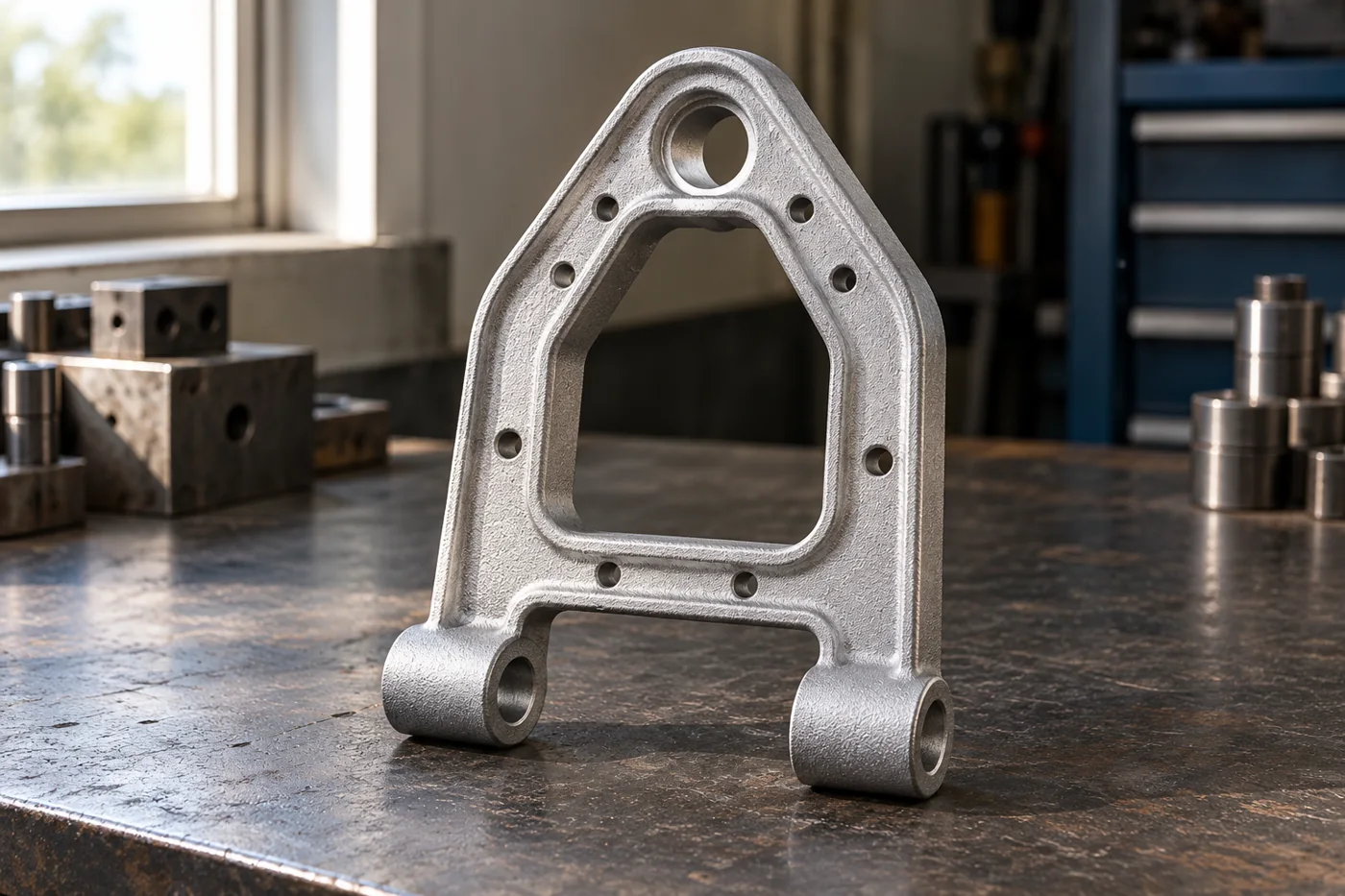
Keep final machining near your assembly while sourcing the cast blank from China. Relia supplies grey- and ductile-iron sand-casting enquiries, including GGG40, GGG50 and GGG60 options in the machining-ready range. Specify the cast geometry, local machining stock and first-setup references. That gives your machine shop a useful starting part and keeps the blank price separate from the finishing you will perform.
- Delivered state
- Cleaned casting blank
- Plan locally
- Stock + first setup
- Select
- Complete iron grade
02A CLEARER CASTING PURCHASE
Buy the blank that your first operation needs
Relia supplies blanks as a defined handover from our casting work to your machining operation. Our main sand routes are coated sand and shell moulding, with the actual process selected for the component.
Separate the delivered cast state from the final part. Your team may need a fully cleaned blank, a few pre-machined locating pads, or only a controlled cast envelope. Each choice changes the handover and the inspection performed before overseas machining. Link the blank drawing to the finished-part revision, then identify the surfaces used to start the first setup. That prevents a technically acceptable external form from arriving without a usable way to locate the part for its critical bore or mounting face.
03A CLEARER CASTING PURCHASE
Keep grade and condition with the delivered blank
Choose GGG40, GGG50 or GGG60 using the complete material requirement for the actual component; these are separate listed options. A grey-iron request needs its own selected grade. Retain material identity through the shipment so local machining does not disconnect the finished part from its casting source. State whether any required treatment is complete at dispatch and identify the results needed for acceptance. The local machine shop can then plan around a known material state instead of discovering an unresolved grade after receipt.
| Blank requirement | Handover detail |
|---|---|
| Material designation | Complete governing grade and required delivered condition. |
| Material evidence | Requested test results tied to the represented casting identity. |
| Processing state | Treatment and any initial machining already completed. |
| Identification | Part/revision and the agreed material or batch link. |
04A CLEARER CASTING PURCHASE
Put stock where the finished feature will be
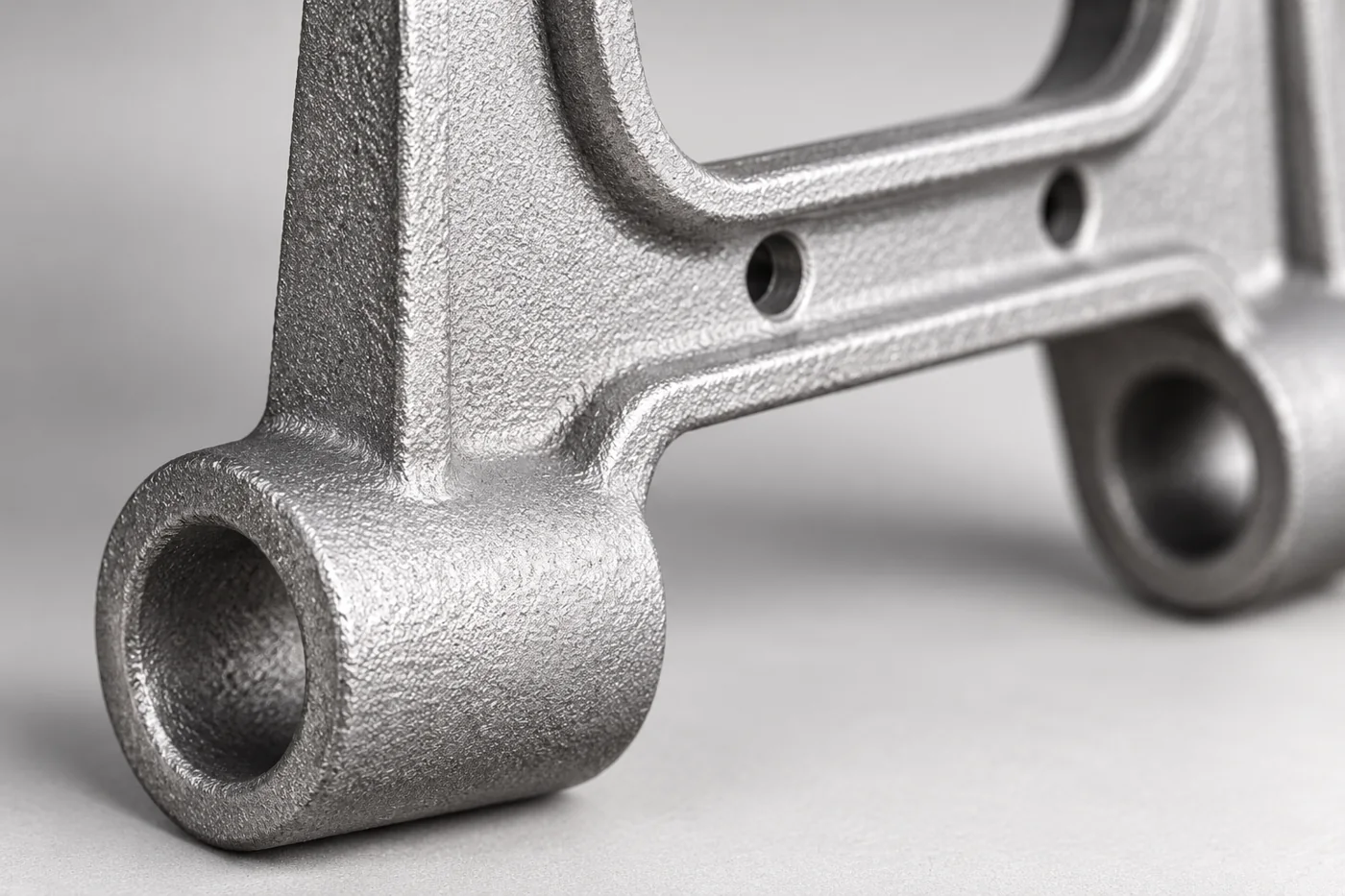
A mounting lug needs enough material around the future hole, while a rib may remain entirely as cast. Show allowances locally rather than enlarge the whole part uniformly. The blank envelope also needs to leave room for expected cast variation relative to the first locating setup. A rib junction, core location or parting feature can affect that envelope. We use the linked blank and finished drawings to discuss those regions so your overseas machining operation has a defined clean-up target.
05A CLEARER CASTING PURCHASE
Separate casting tolerance from finishing allowance
The CT9–11 reference on our machining-ready iron offering describes casting control, while its IT7 and Ra 0.8–3.2 references belong to separately specified machining. For a raw-blank order, you are buying the agreed cast geometry and stock, not those later finished results. ISO 8062-3 addresses casting tolerances and machining-allowance grades on indicated dimensions. Select the applicable drawing basis and show the allowances needed by your actual operations; a broad tolerance class does not by itself locate stock at the correct interface.
06A CLEARER CASTING PURCHASE
Inspect the arrival state before adding value
Your receiving check should establish identity, condition and whether the blank supports its intended first operation. Use the blank definition to check representative stock-sensitive regions rather than reject a raw surface against a dimension that only exists after machining. Record an issue before cutting, with the feature and locating basis clearly identified. That gives both teams useful evidence if a later machining finding needs investigation and avoids losing the difference between an incoming casting condition and a subsequent setup error.
- 01IdentifyMatch drawing revision, material identity and delivered quantities.
- 02InspectCheck cleaned condition and the agreed blank envelope.
- 03LocateVerify the intended starting references and critical stock regions.
- 04ReleaseRecord acceptance before the buyer’s first machining operation.
07A CLEARER CASTING PURCHASE
Design the first setup into the handover
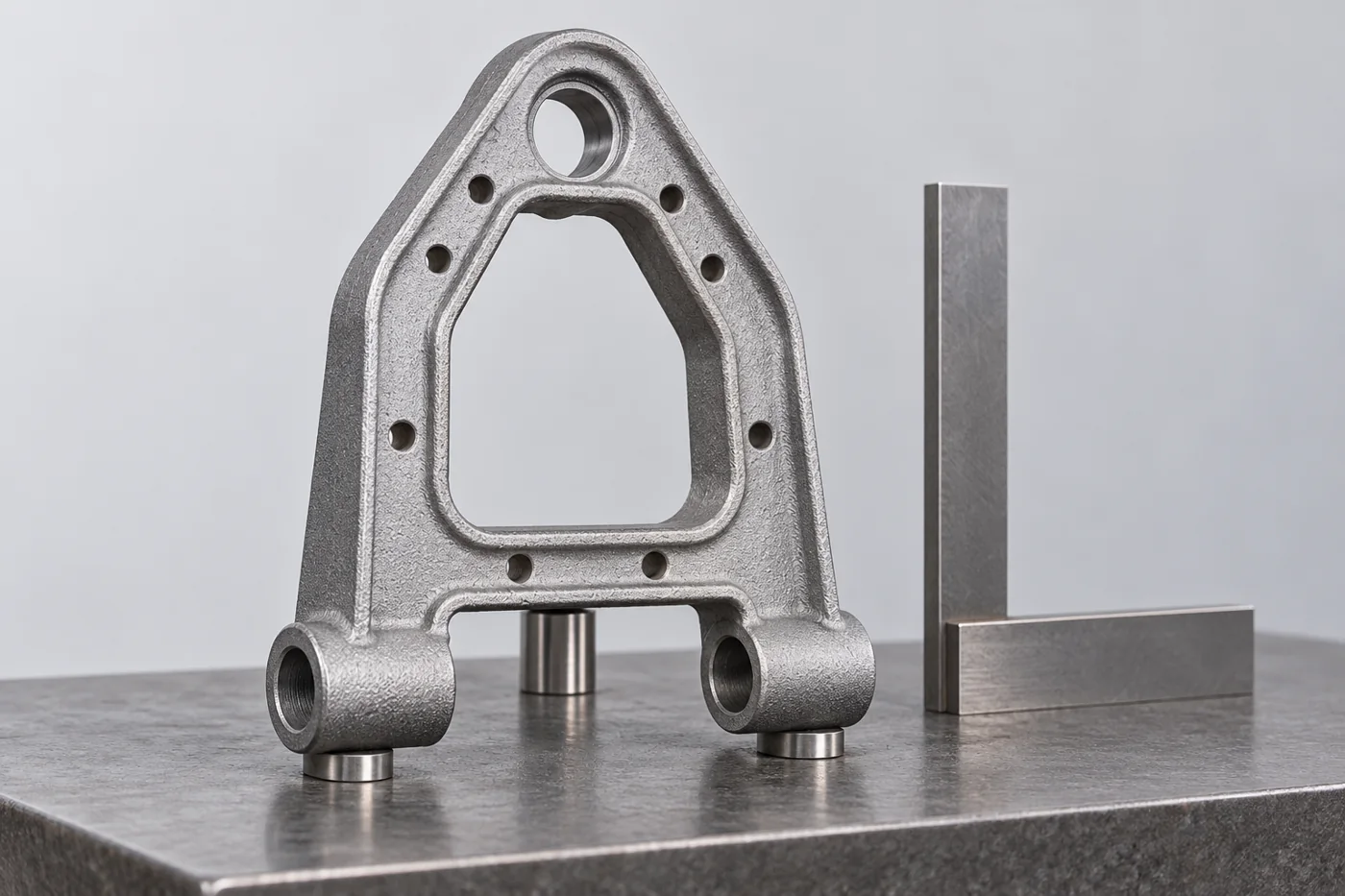
The simplest handover may be a raw blank with well-chosen cast locating regions. Another project may benefit from a small amount of pre-machining that creates repeatable datum pads before export. Compare those options against fixture access, part stability and the features your shop must finish. A pre-machined face has value only when it supports the planned datum chain. Define its relationship to the remaining stock so your first operation starts from a meaningful reference rather than an isolated smooth patch.
08A CLEARER CASTING PURCHASE
Write a blank-only scope that avoids double work
Our range can include CNC machining, drilling, milling, boring and tapping, but an overseas-finishing order should include only the operations you actually need before handover. List gate removal, cleaning, optional locator preparation and protection separately. Keep coatings away from stock your shop will cut unless that treatment is intentional. The nonstandard hardware listing’s 1 mm dimensional reference also needs a specified feature and stage; it is not a substitute for your blank drawing or an assumed finished-machining accuracy.
| Scope item | Blank-order decision |
|---|---|
| Cleaning | Required removal of gates, flash and loose residue. |
| Initial work | Only the specified locator or pilot operations. |
| Surface treatment | Chosen areas and compatibility with later machining. |
| Acceptance | Blank dimensions, stock-sensitive checks and material evidence. |
09A CLEARER CASTING PURCHASE
Pack the blank for handling and later machining
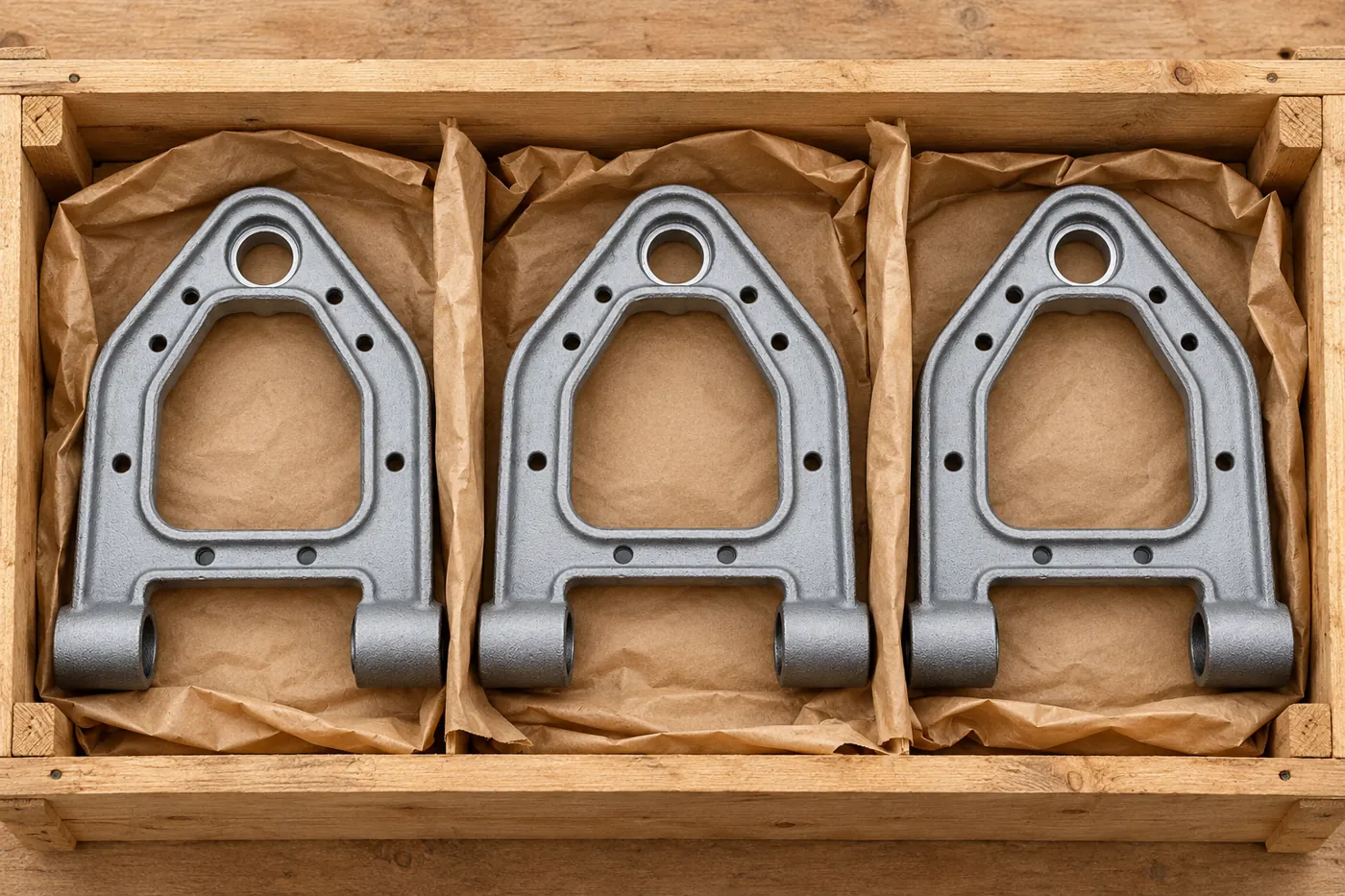
Protect the cast references and any prepared pads from hard contact during the journey. Our machining-ready listing describes multilayer wooden-box packing with an inner plastic bag for its valve-cover scope; agree the arrangement for the actual blank and destination. Support through robust regions and separate pieces so thin lugs are not used as packing stops. When a crate includes solid-wood skids or dunnage, check the applicable wood-packaging requirements rather than assume that a plywood wall determines every packaging component.
10A CLEARER CASTING PURCHASE
Send a blank enquiry connected to your machining plan
Bring us the finished drawing, proposed blank geometry and first-setup approach, together with the selected iron grade and quantity. Mark the stock-sensitive regions and the evidence your receiving team needs. We can then quote the cast deliverable and any limited preparation that makes the handover practical. Your local shop retains the final fit and finish work while the casting supply is defined around the actual operations it must support.
11 YOUR NEXT STEP
Bring your component into the conversation
Tell us which component you need, the material, quantity and required supplied condition. Relia will connect your enquiry with the casting, machining and evidence relevant to that part.
Technical reading and scope
Technical references explain the process. Component specifications and agreed order records define the actual supply.
ISO 8062-3:2023 — Casting Tolerances and Machining AllowancesISPM 15 — Regulation of Wood Packaging Material in International Trade- [email protected]
- Phone
- +86 18561762631
- +1 404 203 0971
- Company and address
- Qingdao Relia Industries Co., Ltd.
Shuyuan Road, Qingdao, Shandong, China