
01A CLEARER CASTING PURCHASE
Aluminum Lamp-Post and Bollard Components
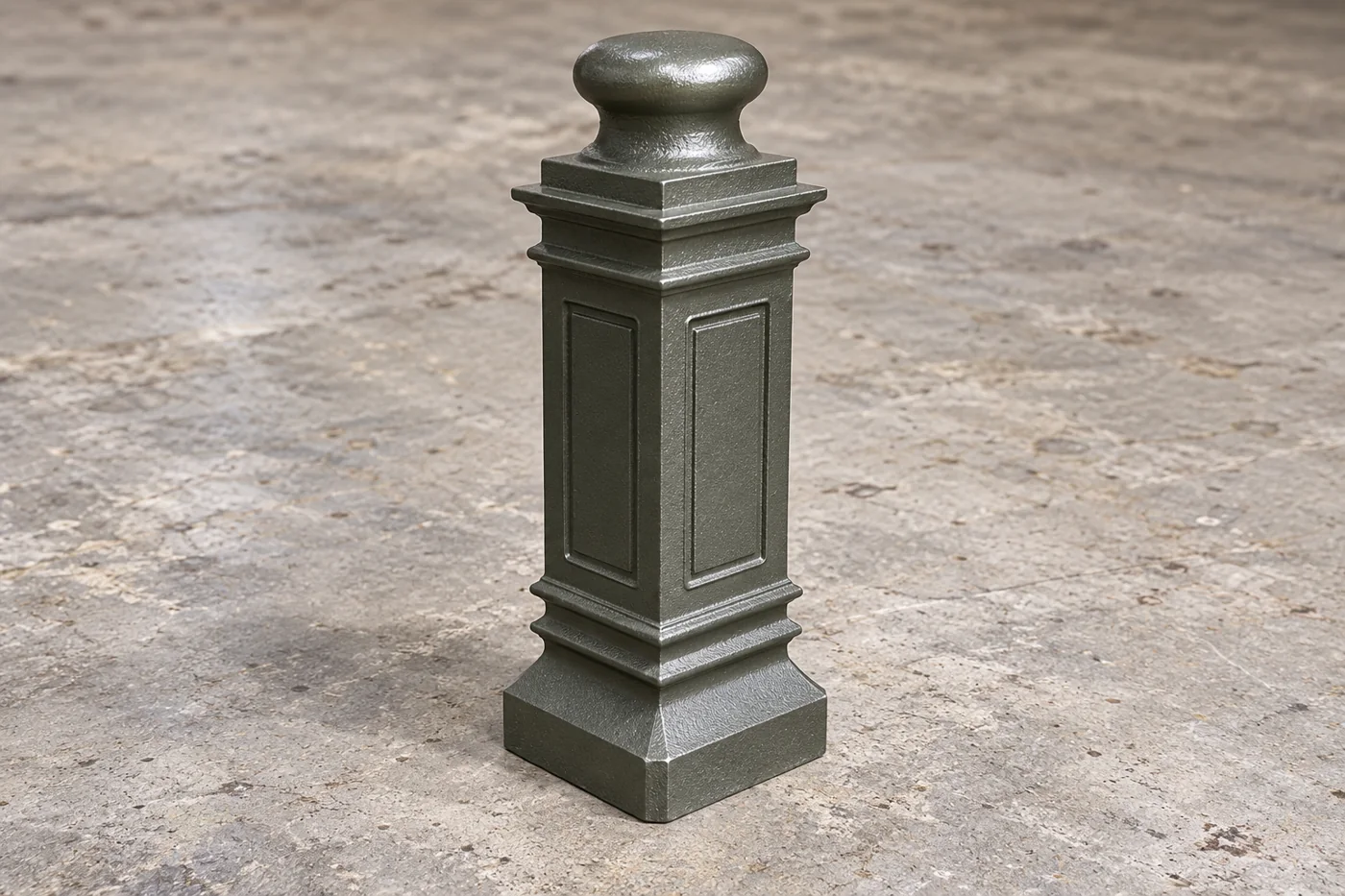
Buy the visible casting and its installation connections as one defined component. Relia offers outdoor lamp-post and bollard parts through selected sand or gravity-die casting, with customized dimensions and shot blasting. Show the base, segment or cover being ordered and the structure around it. Appearance references and controlled fixing or joint geometry can then support a clear sample and supplier comparison.
- Identify
- Individual outdoor component
- Control
- Fixings + section joints
- Approve
- Appearance + installation fit
02A CLEARER CASTING PURCHASE
The outdoor assembly defines the ordered component
Relia’s outdoor aluminum casting enquiry covers the selected component, not an assumed complete lighting or street-furniture system. We connect its casting route and finishing scope to your installation drawing and sample approval.
Show the complete assembly for context, then identify the individual casting and adjacent interfaces. A decorative base cover, a structural post segment and a luminaire connection have different duties even if they share the same finish. State whether the supplied item carries load or surrounds another load-carrying structure.
Include the installation environment and access required for assembly or maintenance. Where the design contains cable routes, removable covers or drainage openings, show them on the component drawing. These details help separate the cast item’s scope from the complete lighting or street-furniture system that your project team will approve.
03A CLEARER CASTING PURCHASE
Mounting datums control installation fit
For a bolted base, define the seating contact, fixing pattern and reference axis. For an adjoining segment, define the mating diameter or profile, engagement length and the required orientation. A dimensioned outside shape does not establish how a part sits or how the next section aligns.
Show the project’s dimensional limits and measurement references. Where additional machining is required, mark it as part of the quotation scope rather than infer it from the casting route. Keep anchor systems, foundations and structural acceptance attached to the actual project design; a cast-aluminum component listing does not by itself establish the complete installed system.
| Connection detail | Required input |
|---|---|
| Base seating | Contact geometry and relationship to the component axis. |
| Fixing pattern | Hole or connection positions from identified datums. |
| Segment joint | Mating profile, engagement and orientation requirements. |
| Envelope | Clearance for covers, fasteners and neighbouring equipment. |
04A CLEARER CASTING PURCHASE
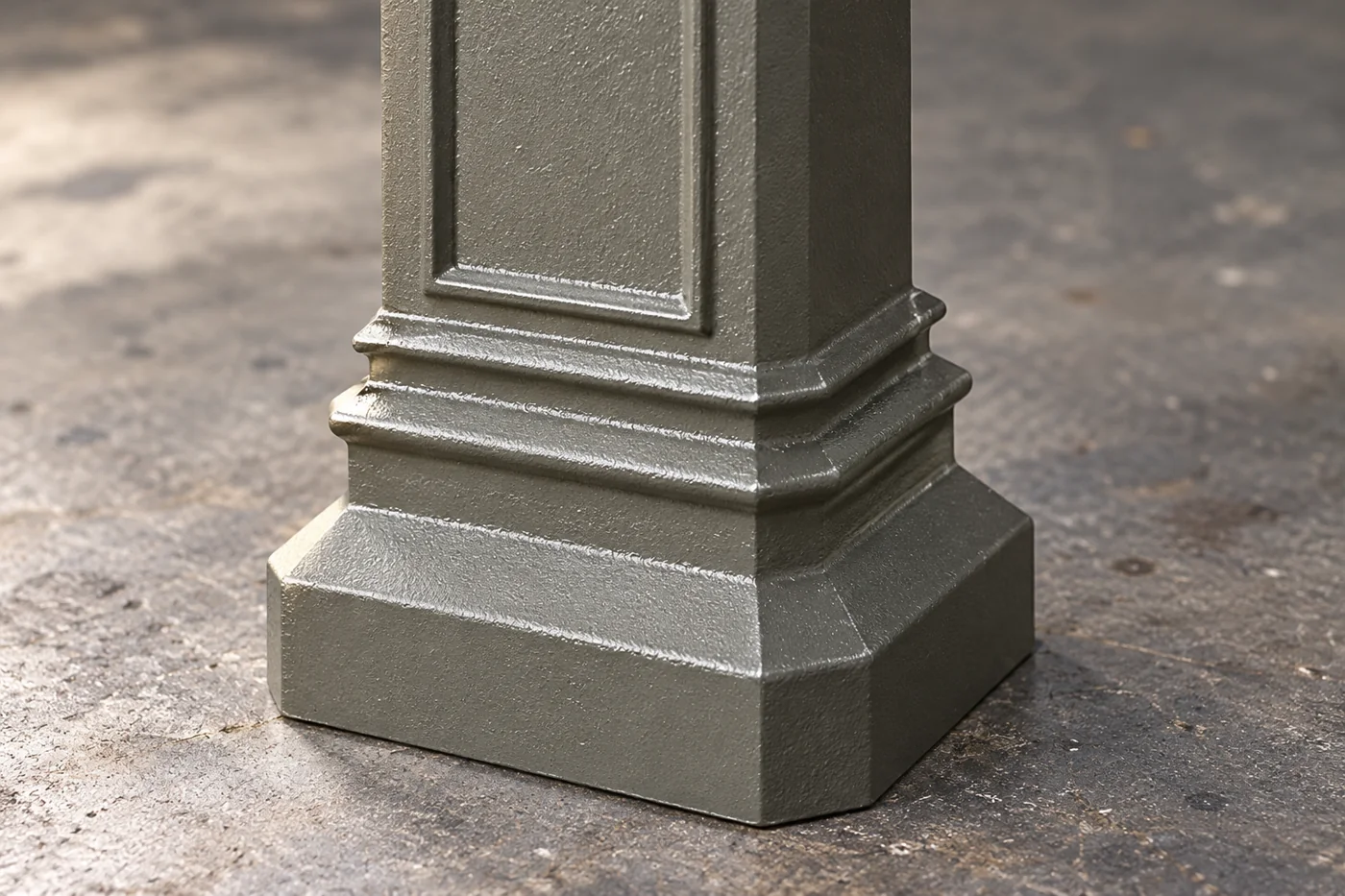
Visible detail needs a physical surface reference
Mark the regions seen after installation, including ribs, corners and transitions where texture changes are noticeable. Define permitted parting-line or finishing evidence in those areas. A small casting mark on a concealed region may be irrelevant, while the same mark on a prominent decorative face may need different acceptance.
Use a sample or an agreed surface reference to establish the expected result. Keep the inspection distance, lighting and acceptable local variation clear where appearance is important. Photographs can document a condition, but they are less reliable than a controlled physical comparison for approving texture and subtle surface differences.
05A CLEARER CASTING PURCHASE
Alloy and route are chosen with the geometry
Select a complete cast-aluminum alloy and required condition for the component. Sand and gravity die casting use different tooling and process arrangements; compare the actual proposed route with the design, quantities and visible-surface requirements. Do not treat the method name as a substitute for an accepted sample.
Show transitions, openings and the regions whose geometry cannot change. A manufacturing proposal may affect draft, local surfaces or access for finishing, so relate it to those identified features. The approval can then preserve the installation and appearance priorities while establishing the route for later orders.
- 01DesignComponent model, controlled joints and visible-surface zones.
- 02MaterialComplete aluminum-alloy requirement and supplied condition.
- 03RouteSand or gravity die proposal for the actual geometry and programme.
- 04First partInstallation dimensions and surface reference evaluated together.
06A CLEARER CASTING PURCHASE
Shot blasting is preparation with a defined result
Shot blasting is the offered surface treatment. It changes the surface condition and can establish a texture for subsequent finishing; it is not itself a complete outdoor coating specification. Identify its coverage and the required result on the aluminum substrate, particularly at visible decorative regions.
If your project requires a coating or another protective finish, include that additional scope and its substrate-compatible preparation in the enquiry. Exposure, coverage, contact exclusions and final appearance should be stated together. Technical surface-preparation guidance explains why cleanliness and profile affect adhesion, but the actual finish system and acceptance still belong to the selected component order.
07A CLEARER CASTING PURCHASE
Separate sections retain their own connection geometry
A project may use square decorative bodies, round connectors and different base sizes under a shared visual theme. Give each component its own drawing and quantity. A common finish reference can coordinate their appearance without merging the dimensions that control their joints.
Show orientation features and assembly order where the shape is asymmetric. If a base or segment is revised, identify which adjoining components are affected. This prevents a supplier change to one casting from leaving a mismatch at the next joint even when the assembled outside silhouette appears unchanged.

08A CLEARER CASTING PURCHASE
Sample approval distinguishes the casting from the system
The sample should establish the ordered alloy, connection geometry and visible result. Where the component is part of a lighting assembly, the complete luminaire has its own electrical and mechanical safety assessment. IEC 60598 addresses luminaire safety requirements; approval of the casting surface alone does not establish that system outcome.
Likewise, any structural or vehicle-impact requirement must be specified for the relevant design and evidence. Keep these evaluations connected to the project without inventing a rating for a decorative bollard component. The first-part record can then state exactly which component characteristics have been accepted.
- 0101Check alloy identity and the selected supplied condition.
- 0202Measure base, fixing and segment-joint features.
- 0303Approve the visible texture and any ordered finish sample.
- 0404Complete the separately specified installation or system evaluation.
09A CLEARER CASTING PURCHASE
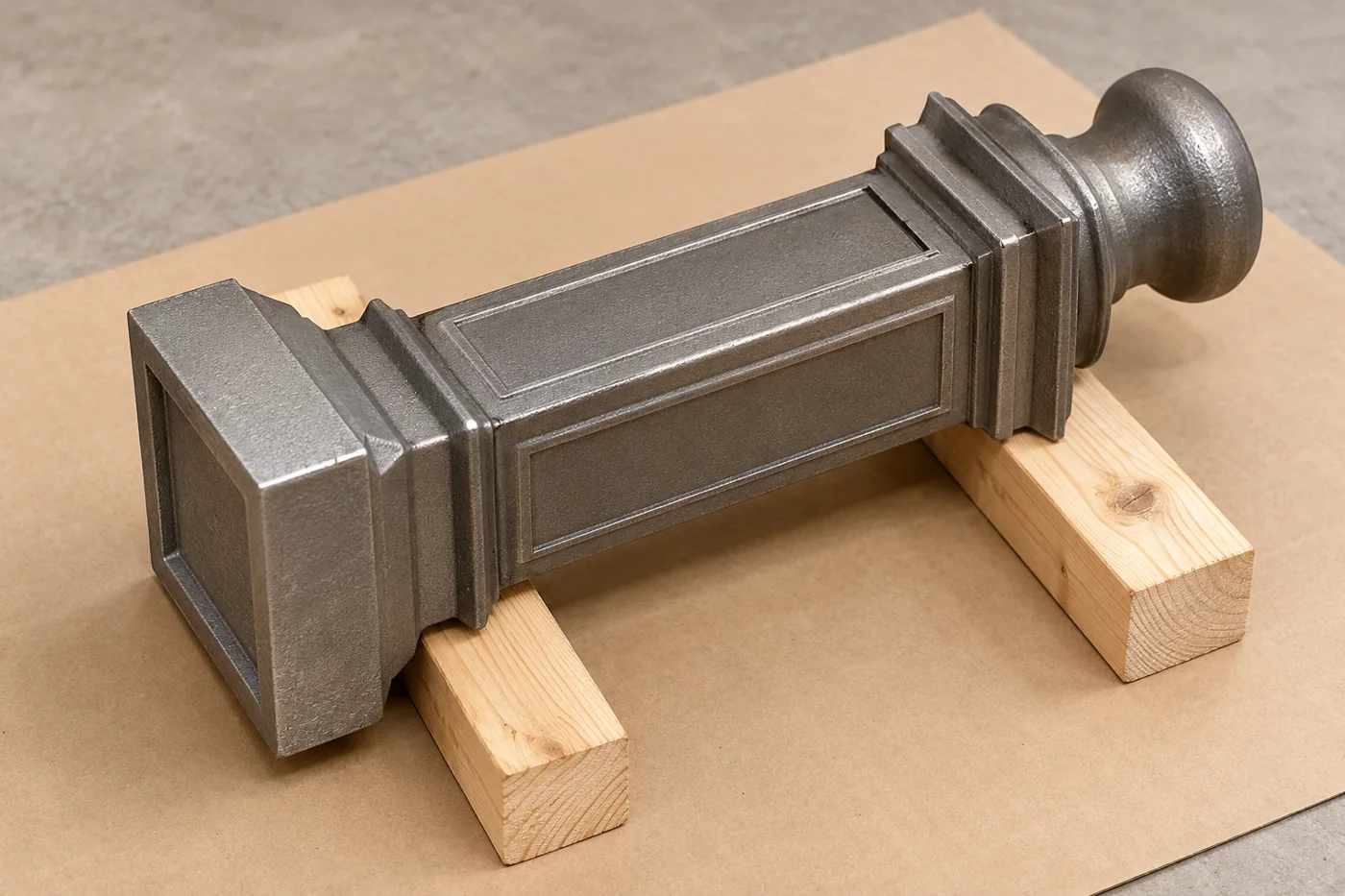
Packing protects decorative faces and joints
Separate prominent ribs, corners and finished contacts from adjacent castings. Select support areas that do not leave pressure marks on the approved visible surface, and avoid packing that abrades the texture or coating during movement. Long or hollow segments may need a different restraint arrangement from compact bases.
Label components by drawing and revision, retaining project position or set references where useful. Your receiving team can then prepare the correct items for installation and compare the visible result to the approved reference without mixing similar parts from different size or finish schedules.
10A CLEARER CASTING PURCHASE
The RFQ connects appearance with installation
Send individual component drawings and the assembly reference, selected alloy and quantities. Identify the mounting and joint dimensions, visible-surface zones and shot-blasted result. Add any separately requested machining or coating system and the project-specific evidence required before release.
We can review the compatible casting route and component scope against that package. A quotation that identifies the ordered part, finished condition and sample acceptance allows your team to compare manufacturing proposals while retaining control of the complete outdoor structure, lighting system and site installation.
11 YOUR NEXT STEP
Bring your component into the conversation
Tell us which component you need, the material, quantity and required supplied condition. Relia will connect your enquiry with the casting, machining and evidence relevant to that part.
Technical reading and scope
Technical references explain the process. Component specifications and agreed order records define the actual supply.
TWI: Surface preparation and coating adhesionIEC 60598-1: Luminaire safety scope- [email protected]
- Phone
- +86 18561762631
- +1 404 203 0971
- Company and address
- Qingdao Relia Industries Co., Ltd.
Shuyuan Road, Qingdao, Shandong, China