
01A CLEARER CASTING PURCHASE
Evaluate a Cast Alternative to a Welded Frame
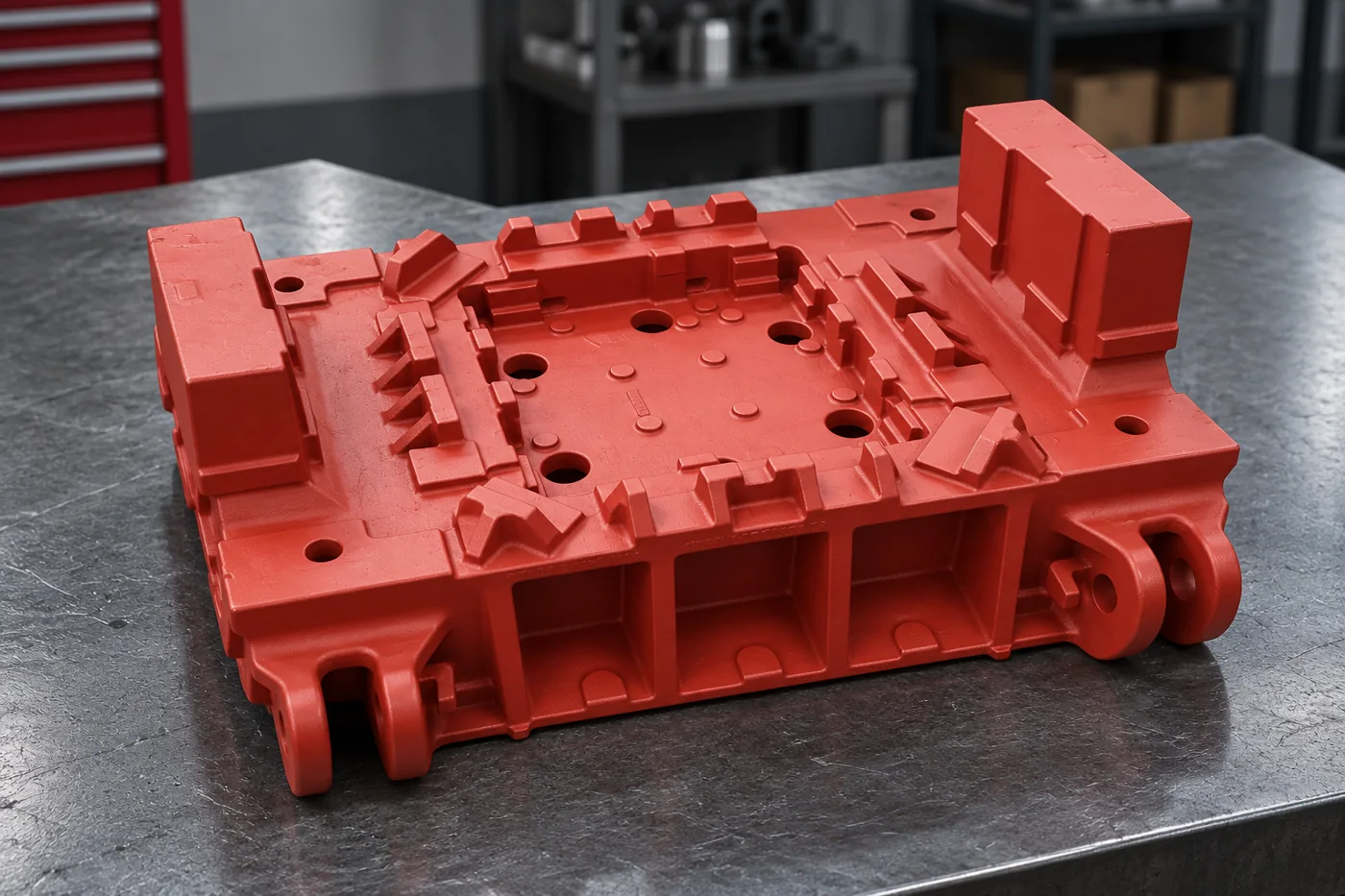
Compare a cast proposal against the function your welded frame must retain. Relia develops custom frame and industrial casting enquiries with tooling, prototypes and CNC work. Show the current assembly, its installation interfaces and the actual reason for changing it, such as distortion or repeated machining. The prototype and cost comparison can then address that problem without assuming that removing welds automatically improves the structure.
- Preserve
- Load + installation function
- Evaluate
- Cast geometry + material
- Compare
- Prototype + full supply cost
02A CLEARER CASTING PURCHASE
Identify the constraint that makes conversion worthwhile
Relia connects tooling, casting and machining for the selected frame proposal. Our drawing-review and sample-approval sequence gives your engineering team a point to assess the redesigned structure before it becomes a batch order.
A frame can be difficult because of welding time, post-weld machining, distortion or an awkward combination of plates and bosses. State the actual issue and preserve the requirements that cannot change. Include the installation envelope, mating geometry and relevant load cases so a proposed cast structure is judged by function. The strongest conversion brief distinguishes a production problem from an intended design improvement, allowing the prototype and cost comparison to address both without assuming that removing welds automatically produces a better component.
03A CLEARER CASTING PURCHASE
Redesign the structure for the casting route
A plate-and-weld arrangement is not automatically a suitable casting model. Review section transitions, rib locations, openings and the forming arrangement while retaining the required connection geometry. SFSA’s design guidance explains that geometry and alloy interact in castability. For your proposed frame, identify where the structural design permits a change and where it does not. The output should be an approved cast component definition, with clear local thicknesses and machining regions, rather than a welded assembly file simply relabelled as a casting.
- 01Retain functionFix the connection geometry and installation envelope.
- 02Rework formDevelop cast sections, ribs, openings and access.
- 03Select routeMatch the chosen metal and forming arrangement.
- 04Release proposalApprove the cast design and prototype acceptance requirements.
04A CLEARER CASTING PURCHASE
Use ribs without creating an uncontrolled junction
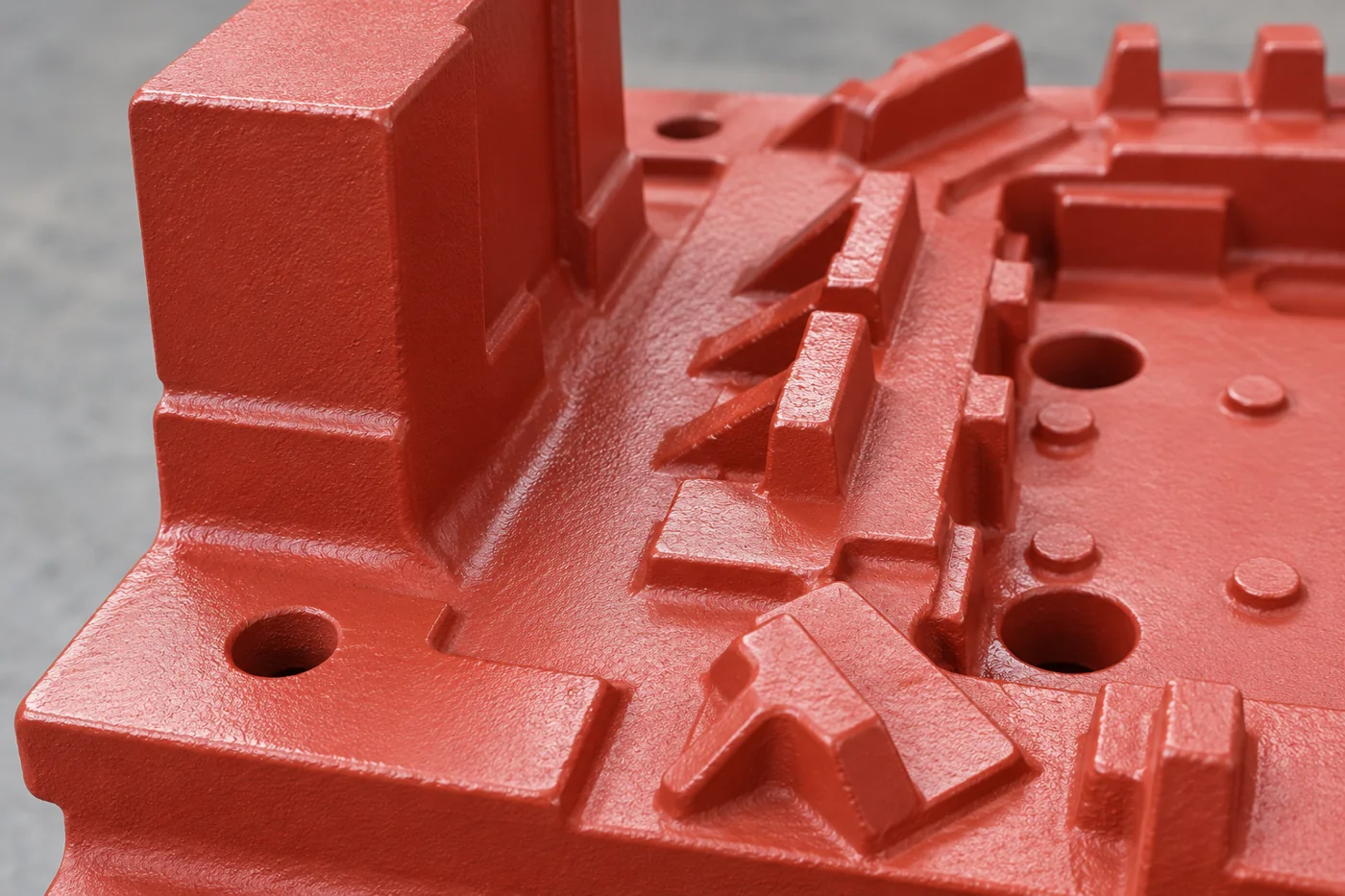
A rib can support the required load path while also creating a thicker junction where it meets a wall or boss. That local concentration deserves a castability and structural decision together. Avoid adding material everywhere as a substitute for analysing the actual connection and stiffness requirement. Show permitted changes around the junction, including openings or transitions where useful, so the proposal can address the manufacturing region without moving a fixed mounting interface. The chosen detail then has a clear purpose in both the structure and the casting route.
05A CLEARER CASTING PURCHASE
Select the metal with the redesigned section
Our frame range names gray iron, zinc, aluminum, copper and steel as separately selected material options; the industrial component range adds mold making and finished machining. These choices do not make a welded steel design interchangeable across metals. Choose the complete grade and condition against the redesigned section and working duty. If the conversion changes the material family, include that change in the engineering evaluation rather than retain the original plate thicknesses and assume equivalent behaviour.
| Design decision | Conversion consequence |
|---|---|
| Selected grade | Material properties and required supplied condition. |
| Section design | Thickness, ribs and junctions appropriate to that material. |
| Manufacturing route | Tooling, casting and any treatment required by the proposal. |
| Acceptance | Dimensions and structural/functional evaluation of the changed design. |
06A CLEARER CASTING PURCHASE
Put assembly datums into the machining plan
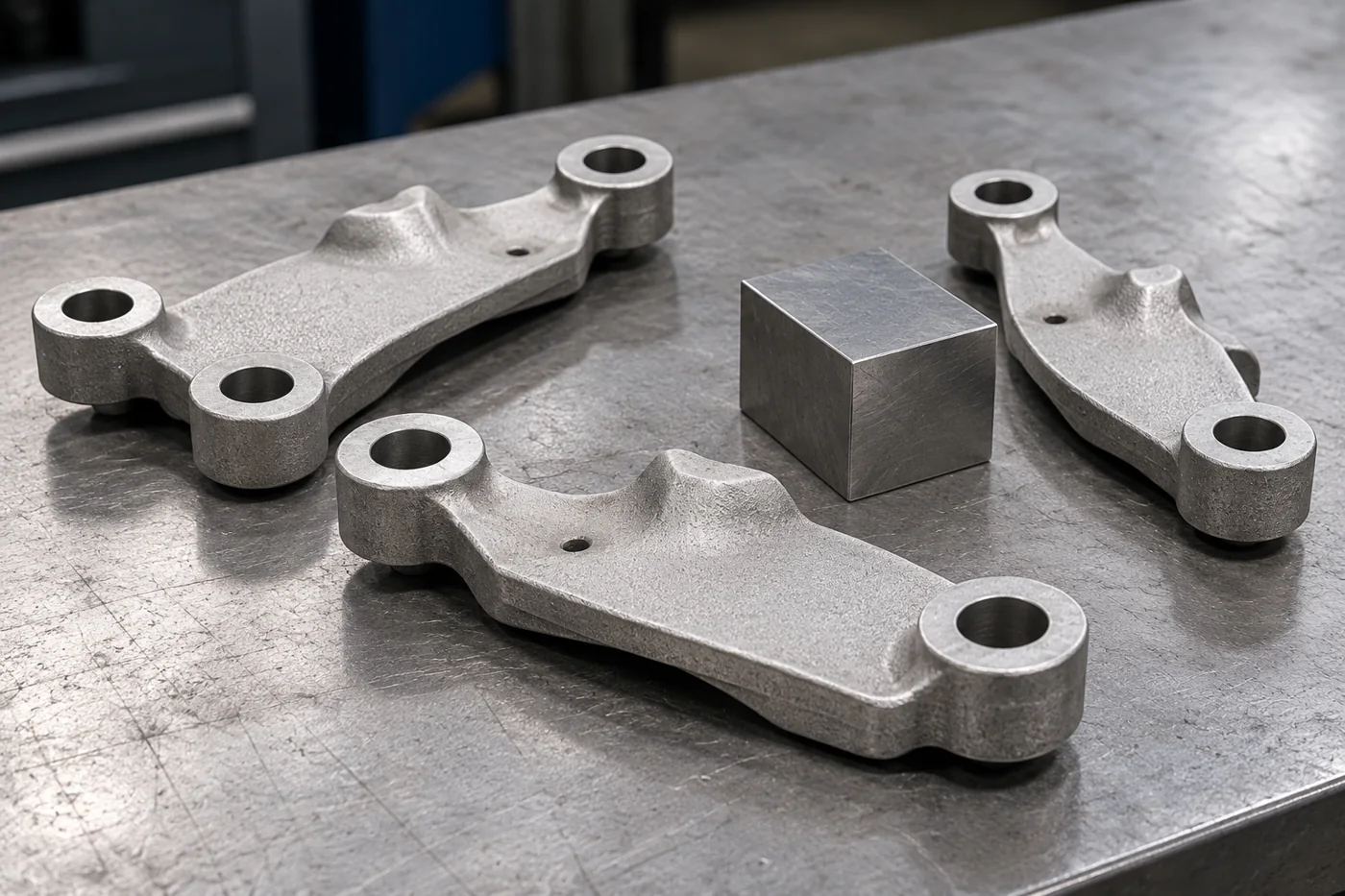
A consolidated casting may reduce separate joining operations while still requiring several finished interfaces. Define the faces and holes that locate the frame in the machine, then plan how those relationships will be established and measured. Our industrial service lists three-, four- and five-axis milling, turning and EDM where relevant to selected geometry. Use those methods to serve the actual connection requirements. A casting conversion is only useful at assembly if the delivered interfaces retain the required fit and access.
07A CLEARER CASTING PURCHASE
Compare the programme rather than operation count
List the initial design, tooling and prototype investment separately from recurring parts. Then compare the same accepted delivered state over realistic release quantities. Casting may replace joining work while adding pattern development, cleaning or a different machining sequence. Surface finish, inspection and packing remain part of the comparison. Keep those differences visible so a route decision can reflect both engineering risk and purchasing cost instead of treating a lower component count as an automatic saving.
08A CLEARER CASTING PURCHASE
Use a prototype to decide the conversion
Set the prototype’s pass criteria before manufacture. Dimensional results establish the supplied geometry; an assembly trial establishes fit in the equipment; structural or service evaluation addresses the redesigned function. Identify who performs each check and the model revision tested. If the prototype reveals a junction or interface issue, revise the affected feature and repeat the necessary evaluation. The decision can then be to release the cast design, develop it further or retain the current route, with an understandable basis for each outcome.
- 0101Release the cast proposal, chosen material and fixed interfaces.
- 0202Inspect cast and machined dimensions against that proposal.
- 0303Complete the required assembly and structural/service evaluation.
- 0404Compare the validated route and programme cost before production release.
09A CLEARER CASTING PURCHASE
Retain the installation references through finishing
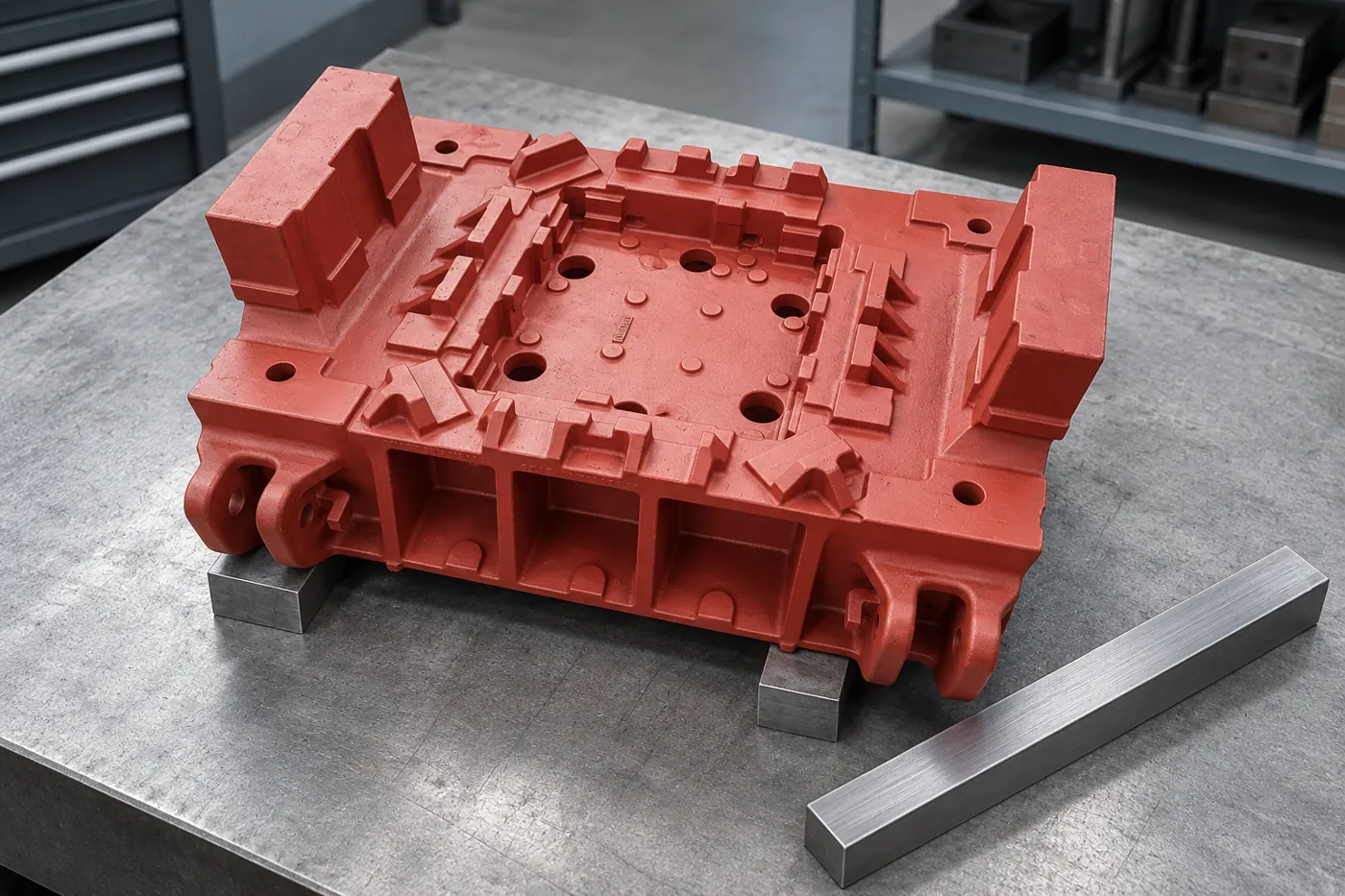
Mark the mounting regions and their relationships so the cast proposal stays tied to the actual equipment. Our frame service offers powder coating, electroplating, sandblasting and lacquer for suitable selected materials. Define the finish, color and masking around fitted interfaces; a coating that is acceptable on an exposed wall may be inappropriate at a locating face. Include the final surface state in the prototype evaluation so the approved geometry is the geometry your assembly team will actually receive.
10A CLEARER CASTING PURCHASE
Prepare a conversion brief with a measurable purpose
Send the existing assembly drawing, the production issue and the fixed functional requirements. Add a proposed cast model where available, the material options your design team will consider and the expected quantities. We can develop the tooling, prototype and machining scope around that decision. Your team can then evaluate a cast replacement as a specific engineered component, with a defined validation plan and cost basis, rather than as a general claim that casting is always preferable to fabrication.
11 YOUR NEXT STEP
Bring your component into the conversation
Tell us which component you need, the material, quantity and required supplied condition. Relia will connect your enquiry with the casting, machining and evidence relevant to that part.
Technical reading and scope
Technical references explain the process. Component specifications and agreed order records define the actual supply.
Steel Casting Design and Manufacturing Engineering — SFSAOrdering Steel Castings — SFSA- [email protected]
- Phone
- +86 18561762631
- +1 404 203 0971
- Company and address
- Qingdao Relia Industries Co., Ltd.
Shuyuan Road, Qingdao, Shandong, China