
01A CLEARER CASTING PURCHASE
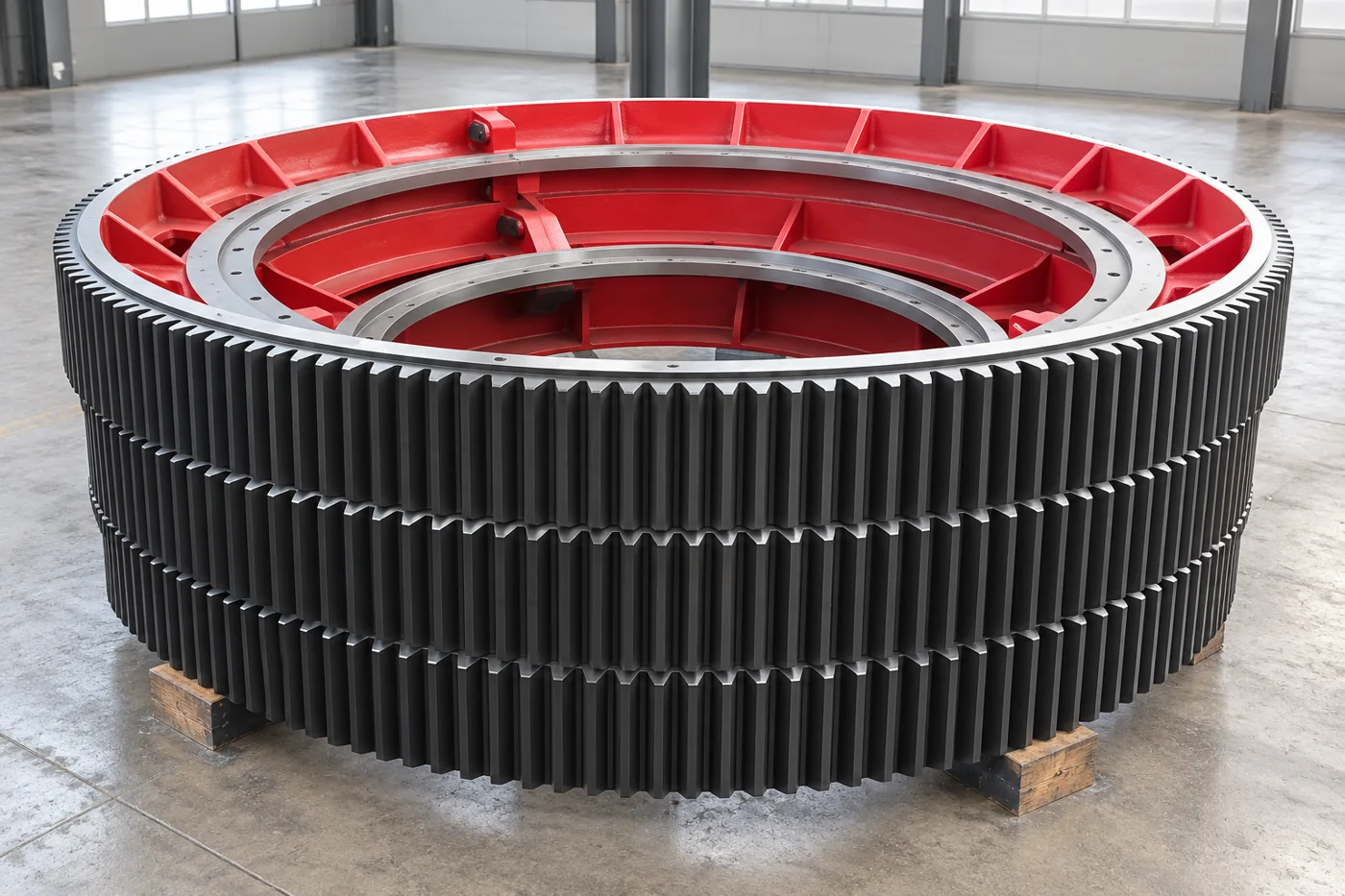
Kiln Girth Gear Castings with Defined Mesh
Connect the cast ring with its tooth and mounting requirements. Relia offers large iron girth-gear and kiln-ring enquiries with drawing-defined sections and component support. Include the mating pinion, tooth geometry, datums and any segment joints. The project quotation can then identify the actual ring and finished work that your equipment will use.
- Mesh
- Tooth + pinion definition
- Mounting
- Datums + segment joints
- Supply
- Ring + selected finished work
02A CLEARER CASTING PURCHASE
Sand-cast gear rings with a connected project scope
Relia Casting's large girth-gear and rotary-kiln ring offer includes custom sections and support from design through delivery. Listed controls include raw-material checks, heat-treatment checks and finished-product inspection. Our own sand-casting and machining production provides the manufacturing context, with the actual ring drawing determining which secondary work is included.
For a kiln drive, the complete ring or segment assembly needs one controlled geometry: teeth, mounting flange, inner ribs and any joints. We make the cast-versus-finished handover explicit in the proposed package. That avoids treating an outside diameter as proof of tooth mesh, or a general machining service as confirmation of every large-gear finishing operation.
03A CLEARER CASTING PURCHASE
The tooth schedule defines the gear being ordered
Include the tooth count, module or diametral-pitch basis, pressure angle, face width and spur/helical information used by the design. Identify the mating pinion reference and any specified tooth modification, tooth-thickness/backlash requirement or other mesh input. These fields should come from the released gear design.
For cylindrical involute gears, ISO 1328-1 provides a tooth-flank tolerance classification framework. Specify the relevant class/characteristics and inspection basis where it applies; it does not make one unspecified accuracy label sufficient for every ring and mounting feature.
| Gear input | Why it belongs in the RFQ |
|---|---|
| Basic tooth form | Count, module/pitch, pressure angle and spur/helical design |
| Mesh definition | Mating pinion and specified thickness/backlash inputs |
| Flank requirement | Applicable profile/lead/pitch acceptance references |
| Drawing revision | Complete tooth schedule and any modification |
04A CLEARER CASTING PURCHASE
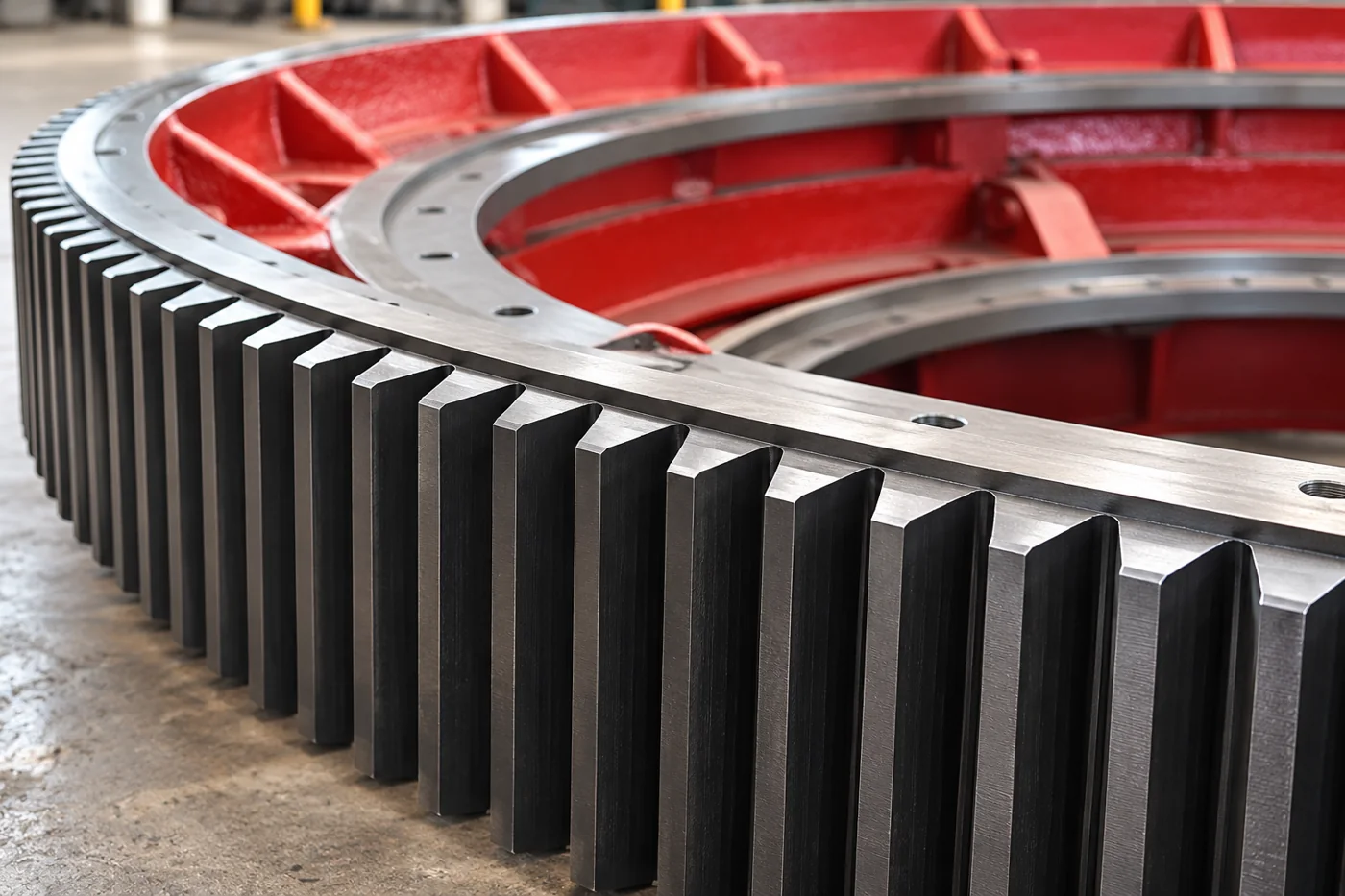
The tooth band needs defined stock and final condition
Mark the cast tooth-band envelope and the finished geometry required after agreed tooth work. Preserve stock where cutting is needed and define transitions to the ring structure. The iron grade and required treatment condition should support the actual gear design and selected manufacturing sequence.
If a local section or relief is changed for forming or access, assess its effect on the released tooth and ring definition before approval. Keep the quotation's finished-work boundary explicit so the supplied stage is understood by both purchasing and the installation team.
- Tooth band
- Defined cast stock and final stage
- Material
- Selected iron and treatment condition
05A CLEARER CASTING PURCHASE
Transfer the cast ring into mounting and tooth datums
The moulding proposal follows the ring's actual tooth-band envelope, inner ribs and flange sections. It needs local stock where mounting surfaces or tooth work will be completed, with the feeding and transition arrangement matched to those sections. If the released design uses segments, their joint and assembled references must remain in the tooling and identification plan.
After preparation and any specified treatment, establish the mounting reference used by the gear design. The agreed finishing plan then relates the tooth band to that axis and face. Individual local tooth readings cannot establish an assembled ring's radial or axial relationship. Keep the required assembly condition in the measurement plan, and distinguish cast tolerances from finished mounting and tooth-flank requirements. This turns the raw ring into a measurable stage in the drive project without leaving the datum transfer implicit.
- 01Form the ring blankSections, local stock and segment identity
- 02Prepare the selected conditionCleaning and required treatment stage
- 03Create nominated referencesMounting axis/face and finished tooth relationship
- 04Inspect the supplied stageTooth characteristics plus ring/mounting geometry
06A CLEARER CASTING PURCHASE
Tooth evidence and mounting evidence form one package
Name the tooth characteristics to be checked, the inspection method, coverage and required record. Keep profile, pitch or lead-related requirements tied to the chosen gear specification rather than replace them with only an outside-diameter reading.
Add mounting-feature and ring-geometry results to the same component identity. Our listed process checks include raw-material control, heat-treatment condition and finished-product examination; direct these checks at the selected grade and actual supplied stage. The package should show both the working tooth geometry and how the gear will be located.
07A CLEARER CASTING PURCHASE
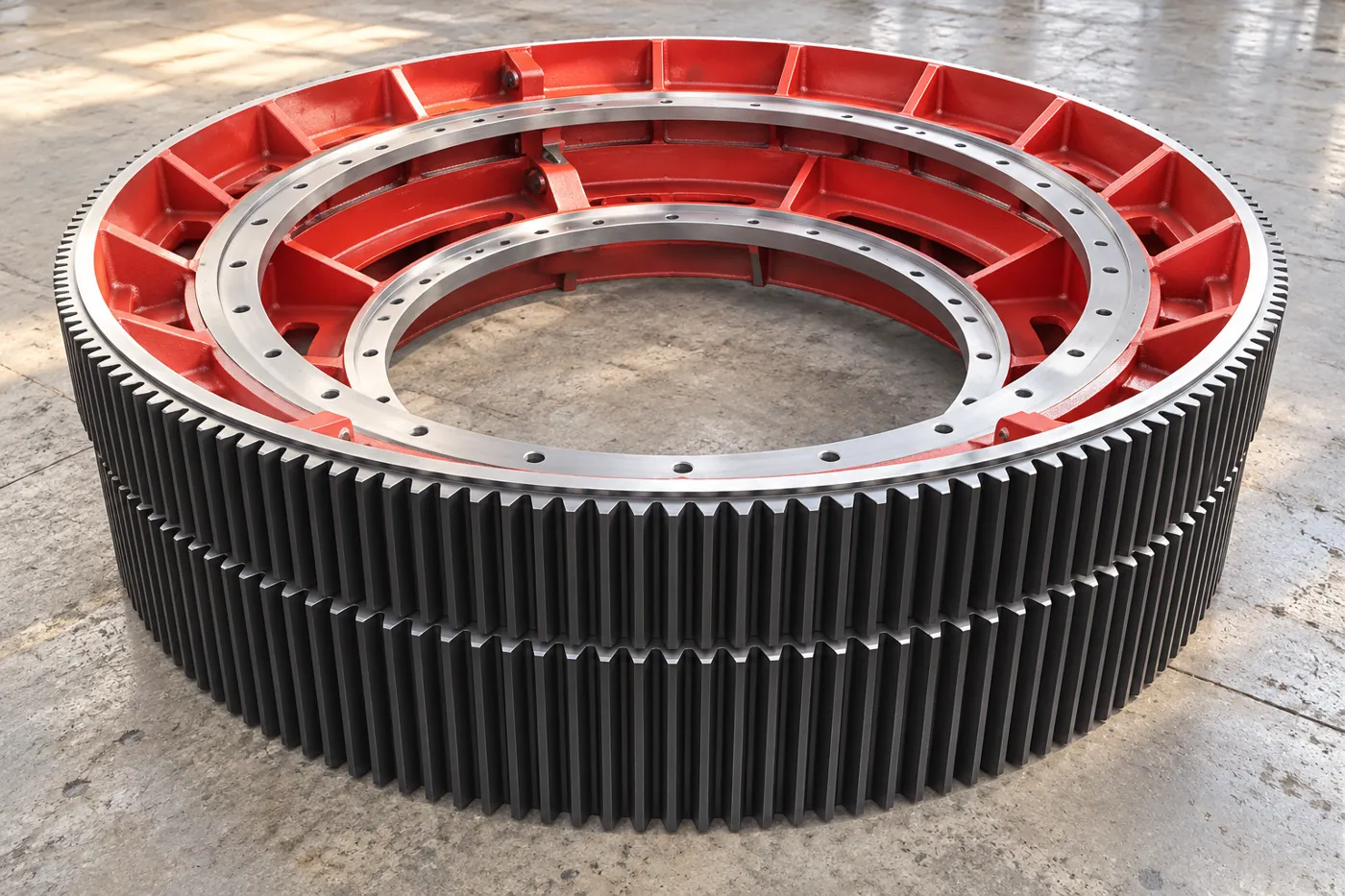
The inner structure affects access and assembly
Keep inner ribs, mounting flanges, bolt bosses and segment connections visible in the complete model. They determine which regions can be reached for forming, cutting, cleaning and measurement. A top view through the ring does not capture every attachment or clearance requirement.
Define which surfaces remain cast and which need finishing. Coating and other treatment must preserve the specified working contacts. This allows the agreed process package to connect the inner ring structure to the tooth and mounting surfaces that govern installation.
- Inner structure
- Ribs, flange and access regions
- Datums
- Mounting features related to tooth band
08A CLEARER CASTING PURCHASE
The first ring connects component and installed-drive evidence
Connect the material, treatment and geometric results to the ring or segment identity and drawing revision. If the order includes an assembled measurement or fit check, state that condition and report separately from individual segment measurements.
The installed drive then needs its project-specific alignment and mesh evaluation with the mating pinion. Record the approved installation references and any engineering change before repeat or replacement supply. A component inspection record and an installed-drive check support different decisions; both should describe the actual configuration used.
- 0101Accept material condition and ring/segment identities
- 0202Review tooth and mounting characteristic results
- 0303Record specified assembled-ring and installation observations
- 0404Release compatible tooth, segment and mounting revisions
09A CLEARER CASTING PURCHASE
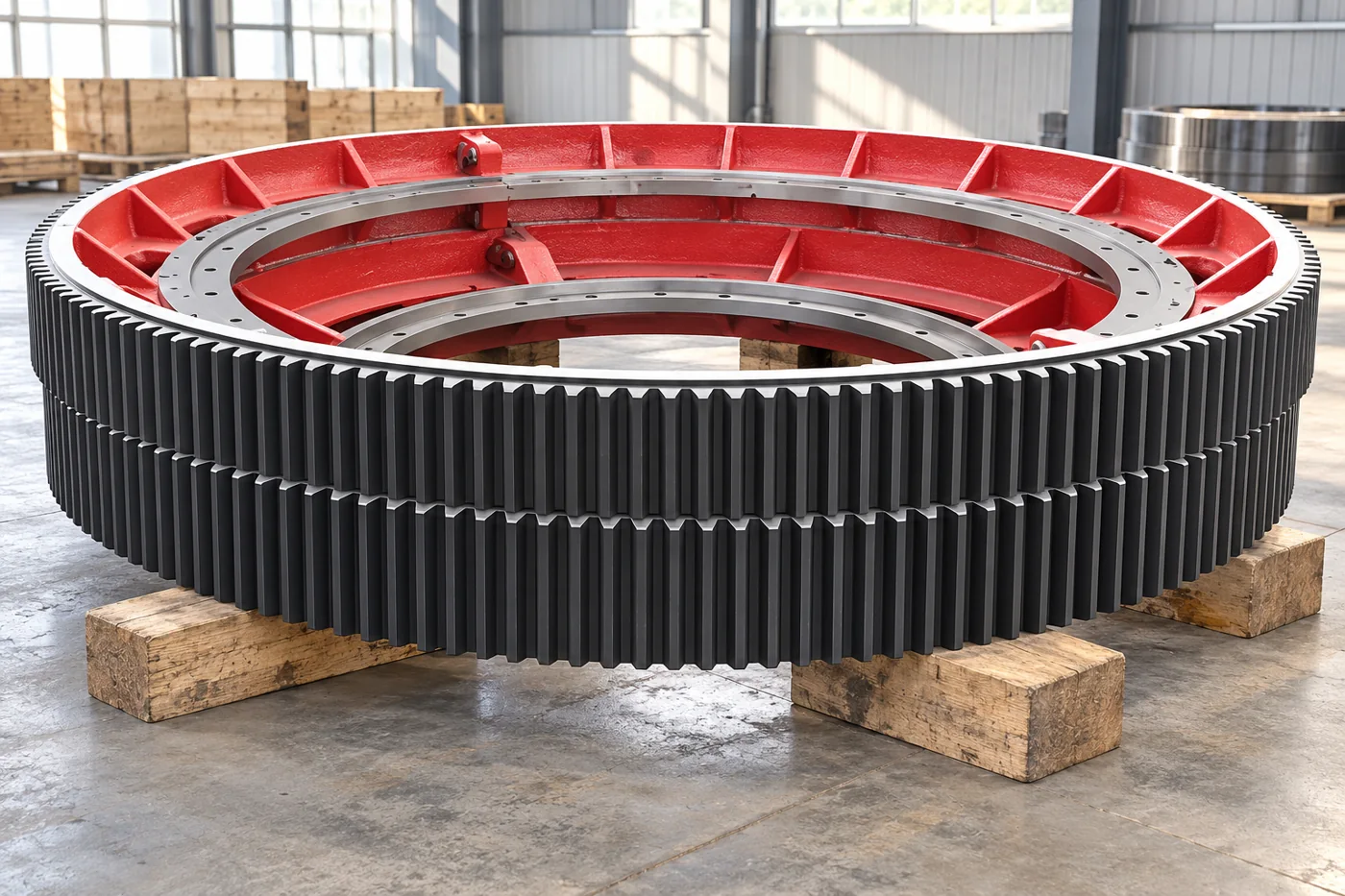
Tooth protection and transport support specified together
Protect the finished tooth band and mounting regions from impact and corrosion. Define supports using the actual ring geometry so shipping loads are not concentrated on a tooth edge, a finished datum or an unsupported section. Include orientation and receiving arrangements.
For segmented supply, retain segment identity and mating relationships through packing. Keep any required assembly references and inspection records with the delivery. Your receiving team should be able to identify and support the ordered ring without relying on a generic large-gear packing assumption.
- Protection
- Tooth band and mounting surfaces
- Support
- Ring or identified segment geometry
10A CLEARER CASTING PURCHASE
A gear package that supports the installation decision
Relia can propose the sand-cast ring and agreed secondary work with material, mounting and tooth requirements linked to the same drawing. Your team can compare the actual delivered stage, inspection outputs and transport support rather than a nominal ring size.
Drawing review and first-component manufacture and inspection lead to your confirmation before batch work. Retain any accepted tooth, segment or mounting changes with the revision. The installed kiln drive then uses its own pinion alignment and mesh evaluation, building on an identified component and relevant manufacturing records.
11 YOUR NEXT STEP
Bring your component into the conversation
Tell us which component you need, the material, quantity and required supplied condition. Relia will connect your enquiry with the casting, machining and evidence relevant to that part.
Technical reading and scope
Technical references explain the process. Component specifications and agreed order records define the actual supply.
ISO1328-1 — cylindrical involute gear flank tolerancesISO8062-3 — cast tolerance and allowance scope- [email protected]
- Phone
- +86 18561762631
- +1 404 203 0971
- Company and address
- Qingdao Relia Industries Co., Ltd.
Shuyuan Road, Qingdao, Shandong, China