
01A CLEARER CASTING PURCHASE
Iron Transformer Accessories with Defined Contacts
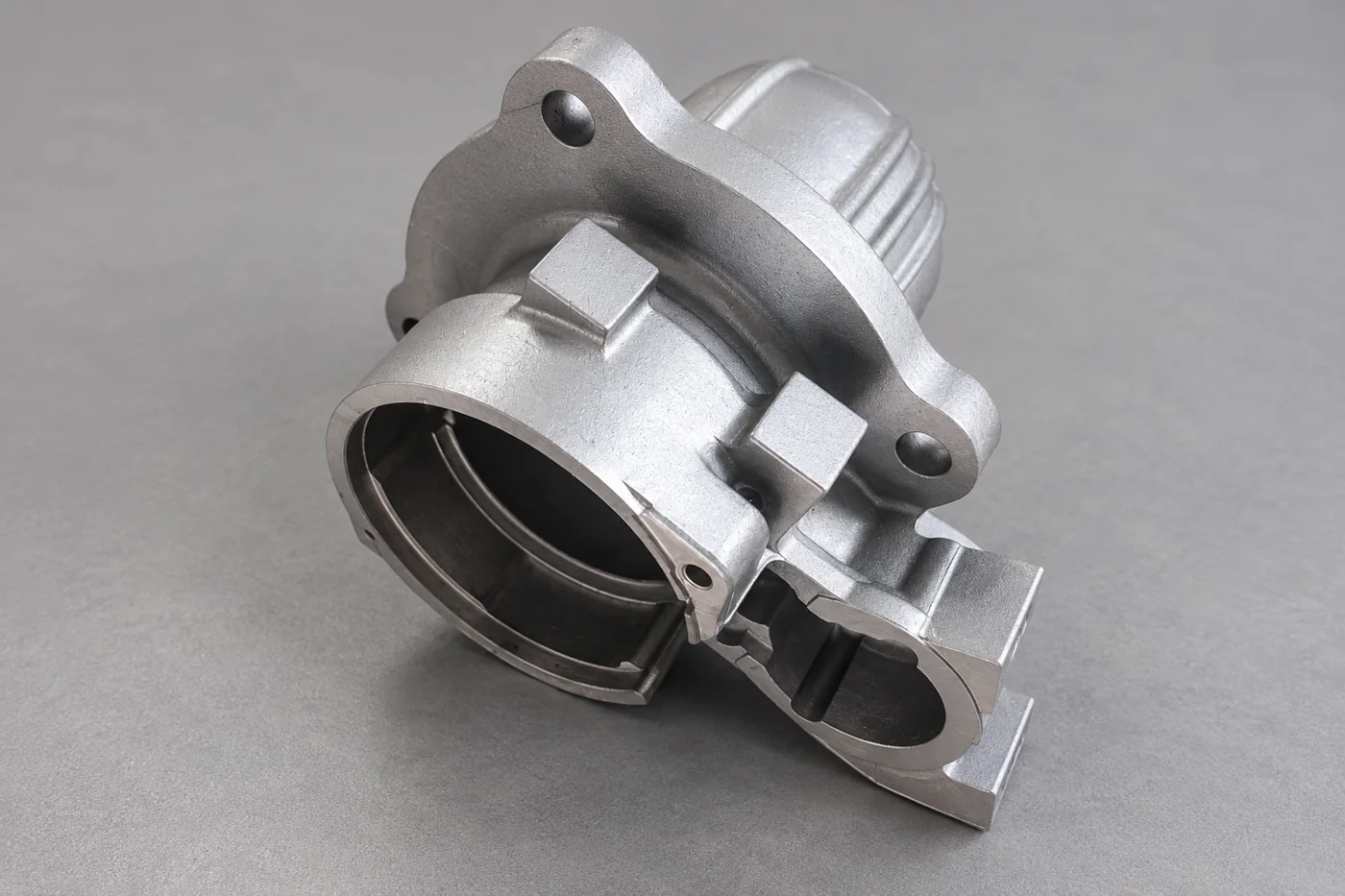
Define the accessory’s mechanical role before selecting its casting and surface scope. Relia offers SEG168 grey- or ductile-iron sand-casting enquiries for transformer accessories. Identify the support, cover or connection being ordered, then mark the mounting and any sealing or electrical-contact regions actually present. The quotation and sample can then address the same component your engineering and receiving teams will accept.
- Role
- Support, cover or connection
- Material
- Selected iron grade
- Finish
- Defined contact boundaries
02A CLEARER CASTING PURCHASE
The accessory role determines the relevant interfaces
Relia’s transformer-accessory offering uses the selected grey- or ductile-iron component definition. Our own sand casting and machining production can be discussed around its actual contacts, drawing and supplied surface condition.
Show where the part sits and what it connects to. A support, cover or mounting element may need different dimensional and surface controls, even within one transformer assembly. Identify the forces, contact arrangement and assembly access relevant to the actual item rather than transferring requirements from another accessory.
If the component interfaces with seals, insulating parts or an electrical bonding contact, mark those actual regions and their required condition. Keep the boundary clear between the iron casting and separately supplied hardware. That lets the quotation describe the manufactured component without omitting a contact that matters to the final equipment.
03A CLEARER CASTING PURCHASE
Grey iron and ductile iron are selected by complete grade
Retain one iron family and complete grade on the drawing. Grey iron and ductile iron have different graphite structures and material behaviour; they should not be treated as interchangeable descriptions because both are iron castings. Use the component design to establish the required properties and delivered condition.
For grey-iron specifications, the specimen basis matters when interpreting tensile or hardness evidence. ISO 185 distinguishes property assessment on specified samples or the casting under agreed conditions. Record that basis in the material requirement, so the report establishes the selected acceptance characteristic rather than a generic statement that the casting is iron.
| Order input | Required definition |
|---|---|
| Iron family | Grey or ductile iron selected for the actual component. |
| Grade and document | Complete material designation, governing standard and edition. |
| Property basis | Specified tensile, hardness or other requirements with relevant specimen identity. |
| Special requirement | Any design-specific property stated separately from the general grade. |
04A CLEARER CASTING PURCHASE
Installation features use a shared datum system
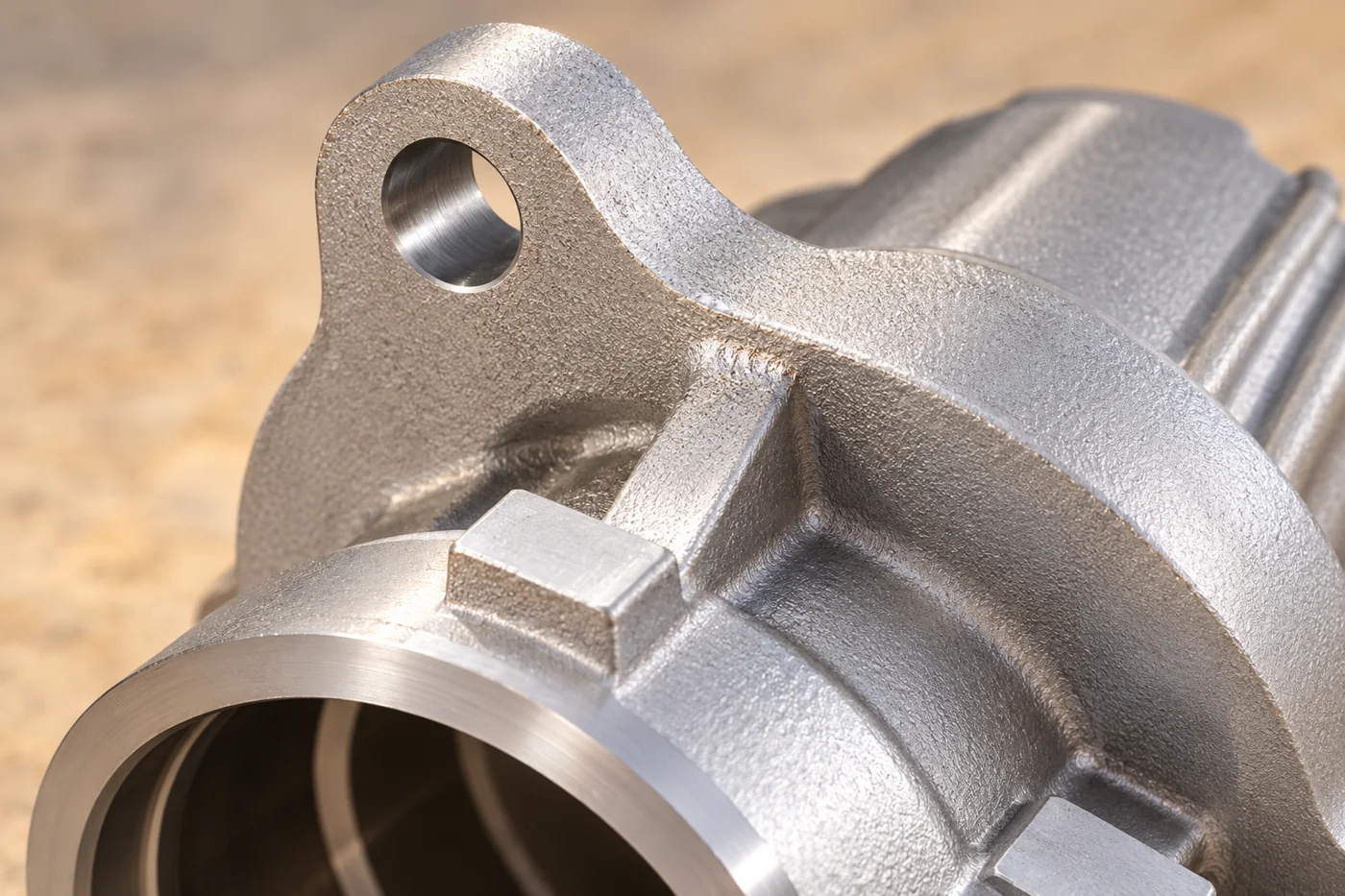
Mark the seating face, hole pattern and locating features used by the accessory. A nominal hole size does not establish the position of the hole relative to a mating structure. Similarly, an overall height does not establish that the contact pads sit in the required relationship.
Separate cast surfaces from those needing additional finishing in the quotation. Give the dimensional limits and measurement references at the required final stage. This makes the inspection plan useful for your assembly and avoids applying one tight tolerance to nonfunctional cast texture while overlooking a mounting relationship.
05A CLEARER CASTING PURCHASE
The finished condition is allocated by feature
Our listing names shot blasting, deburring, phosphating and spray lacquer. Select the required operations for the actual substrate and service, with coverage shown on the component definition. Deburring should address loose edges at openings and contacts while retaining the geometry your design uses.
Where additional machining is requested, identify the faces, holes and threads that need final work. State whether those dimensions are accepted before or after the selected surface operation. A feature map makes the process and inspection scope concrete, particularly when a coating boundary meets a locating pad or another controlled interface.
- 01Casting formMaterial, body geometry and permitted as-cast surfaces.
- 02Connection workRequested finished faces, holes or threads from identified datums.
- 03Surface coverageBlasting, phosphating or lacquer assigned to the relevant regions.
- 04Final acceptanceDimensional and surface checks at the stated delivery condition.
06A CLEARER CASTING PURCHASE
Surface protection and equipment function stay coordinated
A visible external face may need a protective or appearance finish, while an actual bonding, sealing or close-fitting contact can require a different condition. Mark those interfaces and the required exclusions instead of giving an undifferentiated instruction to lacquer the entire part.
The equipment team should establish any relevant thermal, dielectric or other system requirement. Transformer standards address the complete equipment within their defined scope; a mechanical casting’s finish approval does not demonstrate those outcomes. We can define the component surface and evidence around the actual project requirements while the system assessment retains its own technical basis.
07A CLEARER CASTING PURCHASE
Inspection evidence identifies each accepted characteristic
A useful report links the supplied accessory to the drawing revision, selected grade and required condition. List the mounting and locating characteristics with actual results where required, and identify the material evidence separately. A qualification document describes its own supplier or process scope; it does not replace component-specific measurements.
The catalogue names several standard families, including ANSI/ASTM, BS, DIN, NFA, JIS and ISO. Select the actual documents needed for material, dimensions and application acceptance rather than repeat a list without identifying which one governs the ordered casting.

08A CLEARER CASTING PURCHASE
Sample release establishes the component reference
Use the sample to connect the material and dimensional records to an actual installation check. Evaluate the intended mating arrangement, fastening access and any relevant surface boundaries. Record findings by feature so an adjustment can be released as a specific change rather than an informal instruction to match the sample.
If a special component test is needed, define its purpose, configuration and acceptance before ordering. The approved sample record should state what it establishes and retain the drawing, material and finish version for repeat supply. That gives later receiving decisions a clear reference even when the original sample is not available.
- 0101Verify the material and supplied surface requirement.
- 0202Measure the defined mounting and locating characteristics.
- 0303Check the actual mating arrangement and specified component tests.
- 0404Release the accepted revision and repeat-order inspection scope.
09A CLEARER CASTING PURCHASE
Protection follows the accessory’s next operation
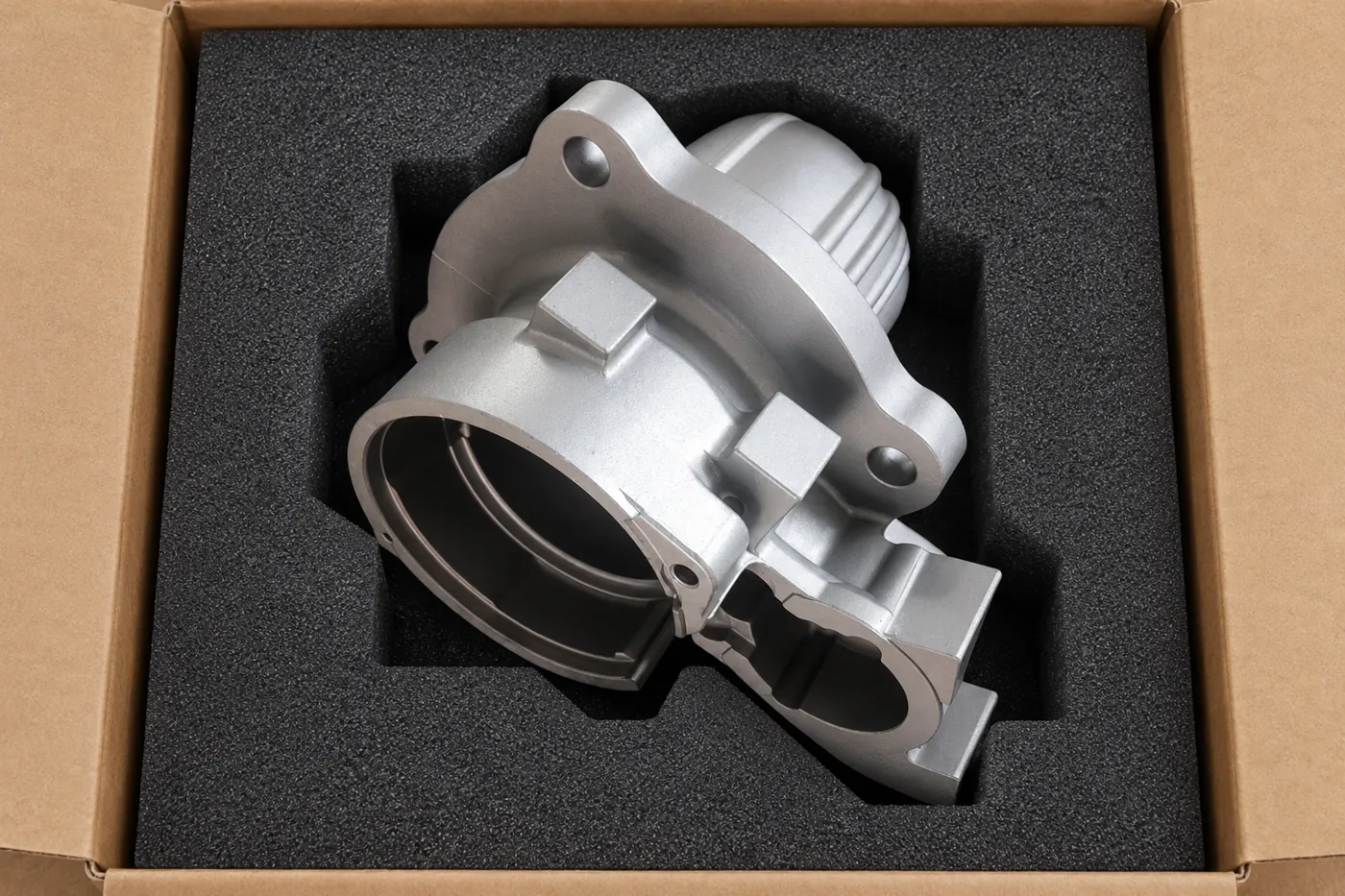
Specify which finished faces and contact regions must avoid abrasion or corrosion during transport and storage. Separate iron castings so rough external regions cannot damage another part’s locating edge. Protect openings from debris where the component will go directly to assembly.
Keep part, revision and order identification accessible in the packing records. If the next operation is additional machining or finishing at your facility, state that handover condition clearly. The receiving team can then distinguish the accepted supplied state from work intentionally left for the next stage.
10A CLEARER CASTING PURCHASE
The accessory RFQ includes the actual equipment context
Provide the controlled drawing and relevant assembly view with the selected iron grade and quantity. Include mounting datums, requested secondary work and region-specific surface requirements. Name the component checks and any additional application evidence needed for approval.
We can review the sand-cast accessory scope against that package. A quotation that identifies the exact part, material condition and finished interfaces supports a practical supplier comparison while keeping transformer-level qualification attached to the complete equipment design and its applicable requirements.
11 YOUR NEXT STEP
Bring your component into the conversation
Tell us which component you need, the material, quantity and required supplied condition. Relia will connect your enquiry with the casting, machining and evidence relevant to that part.
Technical reading and scope
Technical references explain the process. Component specifications and agreed order records define the actual supply.
ISO 185: Grey-iron classification scopeIEC 60076-11: Dry-type transformer scope- [email protected]
- Phone
- +86 18561762631
- +1 404 203 0971
- Company and address
- Qingdao Relia Industries Co., Ltd.
Shuyuan Road, Qingdao, Shandong, China