
01A CLEARER CASTING PURCHASE
Outdoor Castings with Finish and Transit Protection
Buy a delivered condition that survives both its intended exposure and the journey to your plant. Relia supports selected metal casting enquiries with compatible machining, painting or powder-coating scope. Define the substrate, exposed regions and fitted surfaces, then connect the finish with packing and moisture protection. The resulting acceptance covers the actual component rather than only a colour choice or an outer wooden box.
- Exposure
- Actual environment + substrate
- Finish
- Selected compatible system
- Handover
- Protected interfaces + packing
02A CLEARER CASTING PURCHASE
Exposure becomes a component-specific protection brief
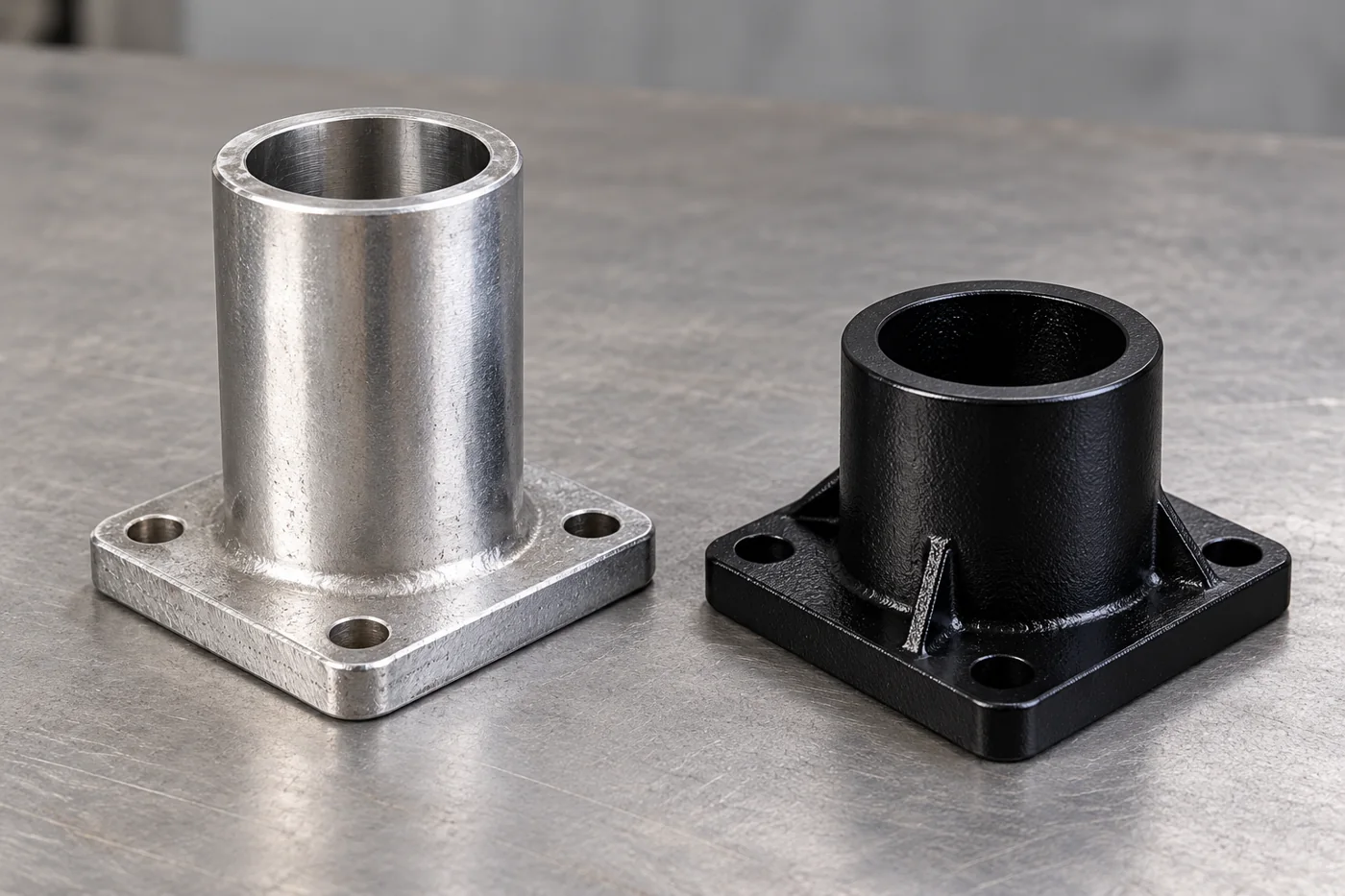
Relia’s outdoor component offering connects the selected casting and surface work with the defined delivery boundary. Different metals need their own finish proposal, and our material and dimensional reports support the particular component rather than prove an unspecified coating lifetime.
Describe whether the part faces outdoor atmosphere, splash, immersion, soil contact or another actual exposure. Include relevant storage and maintenance assumptions. For steel paint systems, ISO 12944-2 distinguishes atmospheric and other environmental categories; select the applicable project requirement rather than use outdoor as a single universal environment.
Keep the substrate explicit. A finish suitable for a particular steel casting is not automatically the right treatment for aluminum or brass. The order should name the selected system and required result for that metal, with any performance evidence defined for the actual component and service.
03A CLEARER CASTING PURCHASE
Preparation establishes the surface beneath the finish
Specify cleaning and preparation before the coating is applied. Residual contamination, loose material and an unsuitable surface profile can affect adhesion even if the newly painted part looks acceptable. Keep preparation requirements compatible with the selected substrate and finishing system.
Complete the relevant machining and identify the surfaces that must remain in a particular final condition. If blasting or another operation is included, define its coverage and result rather than treat it as an interchangeable cleaning label. The quotation can then distinguish cast-part supply, preparation, coating and final checks as concrete operations.
- 01Component workEstablish the ordered cast form and finished interfaces.
- 02PreparationRemove relevant contamination and achieve the specified surface condition.
- 03FinishApply the selected substrate-compatible system to defined regions.
- 04AcceptanceCheck required coverage, appearance and technical characteristics.
04A CLEARER CASTING PURCHASE
Masking protects fits and sealing contacts
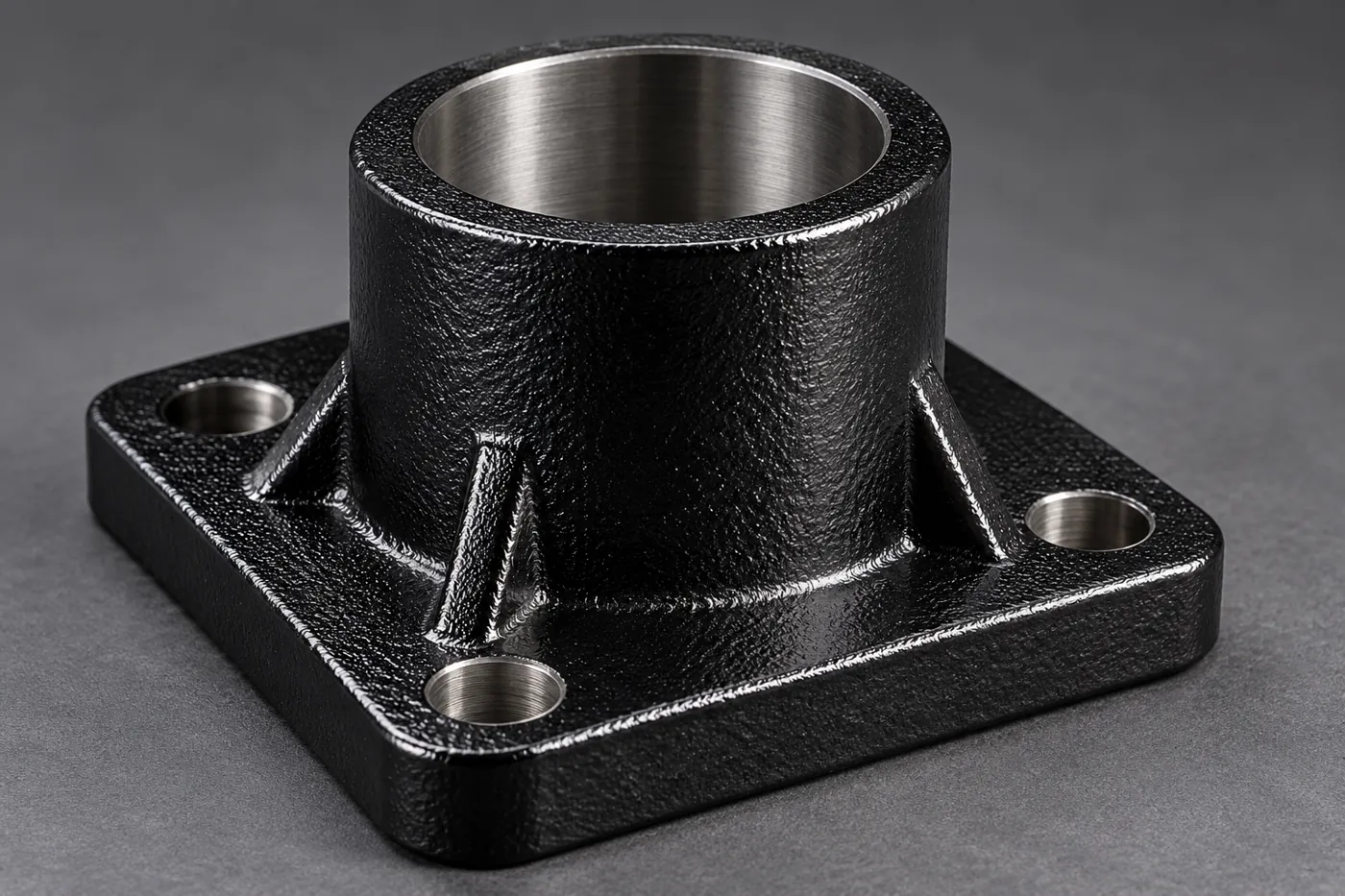
Mark bores, threads, sealing faces and locating pads where finish buildup or residue is restricted. A coating can change a close fit or the way a contact seats, so the drawing should state the accepted condition at those regions. Distinguish permanent service protection from temporary transit protection.
Where a final dimension applies after finishing, identify it clearly. Keep permitted touch-up and treatment exclusions with the same release. This prevents a general instruction to protect the whole casting from creating an unintended assembly problem at the exact interfaces your workshop needs to use.
05A CLEARER CASTING PURCHASE
Finish acceptance separates appearance from performance
Agree a visible reference for colour and texture where appearance matters. Technical coating acceptance may also require thickness, adhesion or another specified property, each with a defined method, location and criterion. A colour match does not establish those characteristics, and a thickness result alone does not establish every aspect of the coating system.
Keep the record tied to the part, finish version and applicable batch. The catalogue offers several finishing choices, including painting, powder coating and selected anodizing enquiries. Choose the actual compatible treatment for the order rather than combine every option into one assumed surface package.
| Approval area | Reference to agree |
|---|---|
| Appearance | Approved colour/texture reference and significant visible zones. |
| Coverage | Included regions, masking boundaries and required edge condition. |
| Technical checks | Specified property, method, location and acceptance limit. |
| Record identity | Part, finish version, inspected condition and relevant batch reference. |
06A CLEARER CASTING PURCHASE
Supports protect surfaces and control movement
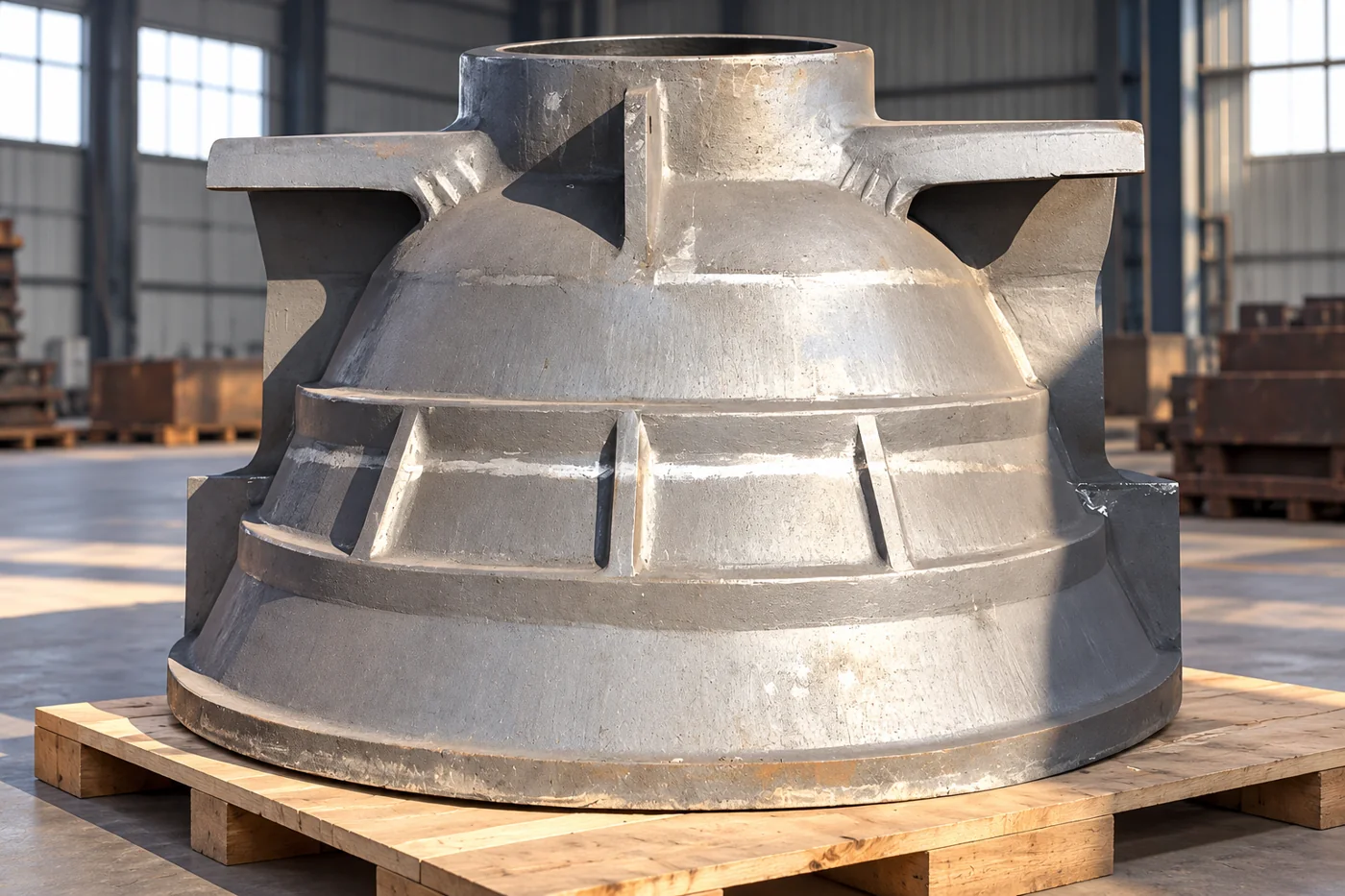
A heavy housing or irregular casting needs support areas that can carry transport contact without damaging the controlled finish or mating faces. Select restraints and separators around the actual shape. A sound outer case cannot prevent abrasion if the casting is free to move inside it.
Our related pump-housing range names multilayer wooden boxes or pallets with a large inner plastic bag. Use that as a component-specific packing starting point, then define support, restraint and interface protection for the actual order. Do not infer that one packing arrangement suits every casting size, finish or freight route.
07A CLEARER CASTING PURCHASE
Moisture protection accounts for the container climate
Container condensation occurs when air or surfaces cross the relevant dew-point condition. Moisture can originate from the cargo, packing timber and other materials inside the container, as well as water entering a damaged unit. A plastic covering is therefore useful only as part of a defined dry packing and protection arrangement.
Share the route, season, expected transit and storage conditions. Specify any required barrier, temporary corrosion protection or moisture-control measures for the component, including compatibility with its finish and next operation. Your receiving plan should address how protection is opened and the part stored, rather than assume that the transport package provides indefinite protection.
08A CLEARER CASTING PURCHASE
Packing release checks the actual finished state
Before dispatch, connect the accepted finish and functional-interface condition to the packing arrangement. Identify the support/contact zones, separators, restraint and package references needed for receiving. Record any required packing inspection while the protected component and relevant details remain accessible.
Where solid-wood packaging is used for international trade, include the applicable treatment and marking requirements in the packing specification. ISPM 15 concerns phytosanitary control of wood packaging; it does not establish structural restraint or corrosion protection. Keep those separate requirements visible so one compliance mark is not mistaken for the entire export-packing acceptance.
- 0101Accept the ordered finish and protected interface condition.
- 0202Check support, separation and restraint around the actual geometry.
- 0303Verify required wood-packaging and package-identification details.
- 0404Release the pack record and receiving instructions with the shipment.
09A CLEARER CASTING PURCHASE
Mixed-component packing preserves each item’s protection
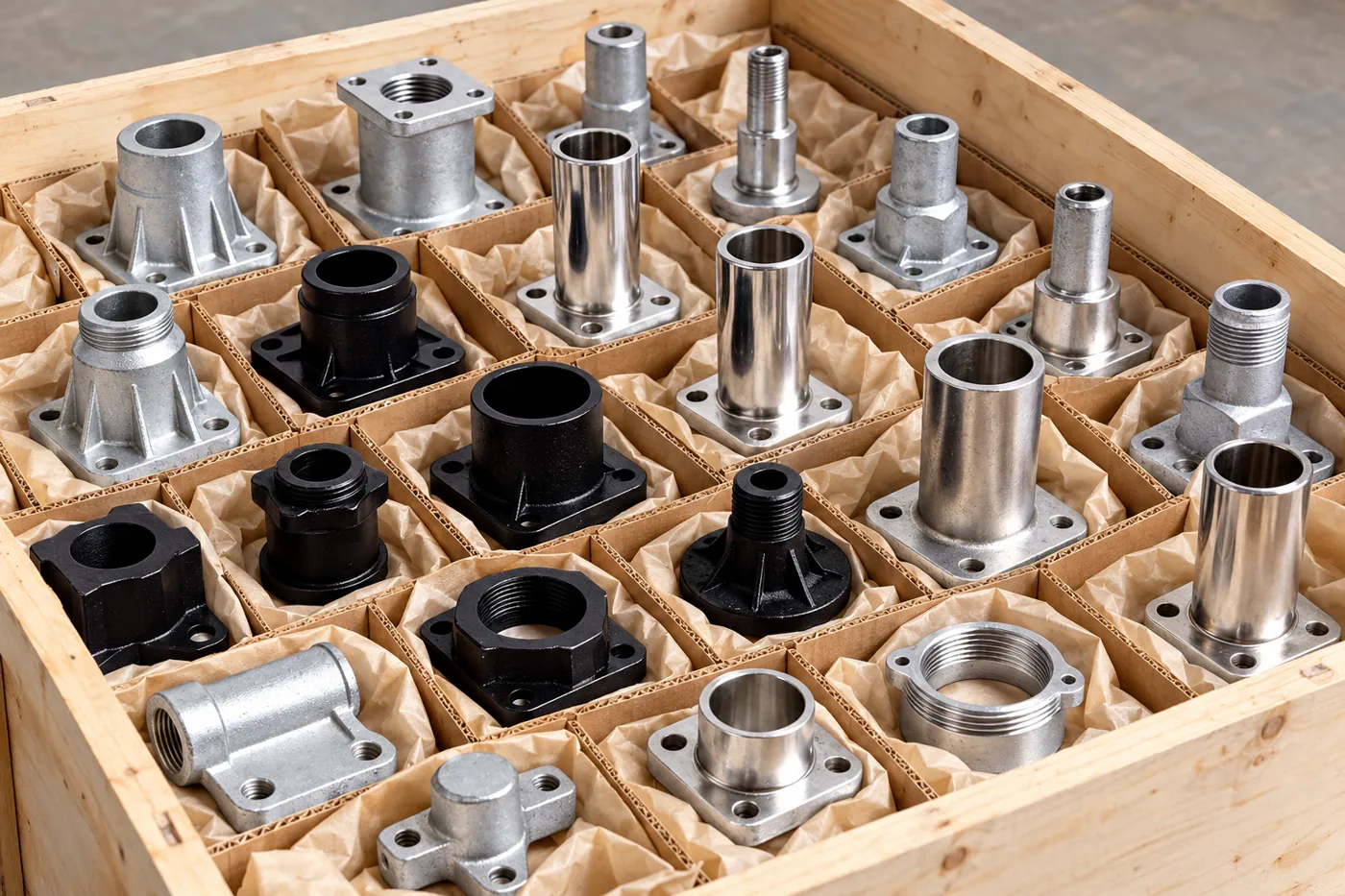
Different castings in the same shipment may need different supports, surface exclusions or temporary protection. Retain those requirements per item instead of using a shared wrap as the only protection. Separate finished contacts and prominent coated edges from rough neighbouring surfaces.
Link package counts to part numbers, revisions and any required reports. If spare parts are intended for storage rather than immediate assembly, identify that receiving condition in the order. Your team can then prepare appropriate storage without first discovering that the shipping arrangement was designed only for a different component or next operation.
10A CLEARER CASTING PURCHASE
The RFQ prices finishing and delivery as defined work
Send the drawings, selected grades and quantities with the actual exposure and finish specification. Mark masked interfaces and any required final-state dimensions. Add destination, freight route, storage assumptions and the component-specific packing and moisture-protection requirements.
We can review the casting, optional machining, finishing, inspection and packing scope as identifiable quotation items. This lets your purchasing team compare the same delivered condition and required evidence, while receiving has a clear basis for checking the part and maintaining its protection before installation.
11 YOUR NEXT STEP
Bring your component into the conversation
Tell us which component you need, the material, quantity and required supplied condition. Relia will connect your enquiry with the casting, machining and evidence relevant to that part.
Technical reading and scope
Technical references explain the process. Component specifications and agreed order records define the actual supply.
ISO 12944-2: Environmental classification for steel paint systemsGDV Transport Information Service: Container climateIPPC: Wood packaging in international trade- [email protected]
- Phone
- +86 18561762631
- +1 404 203 0971
- Company and address
- Qingdao Relia Industries Co., Ltd.
Shuyuan Road, Qingdao, Shandong, China