
01A CLEARER CASTING PURCHASE
Ductile-Iron Drain Gratings for Defined Project Fit
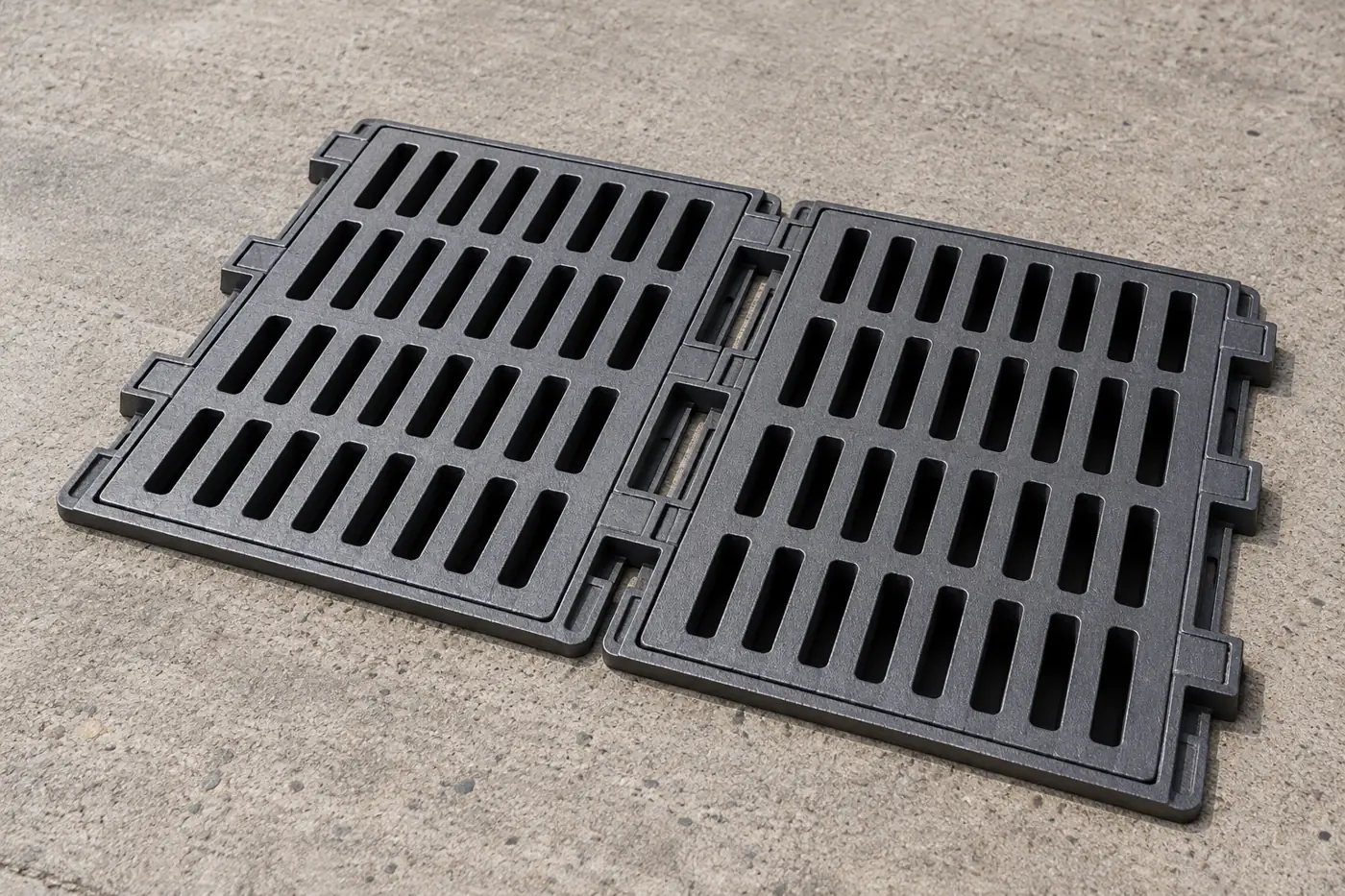
Specify the grating as part of its actual installation. Relia offers KJ2001 slotted ductile-iron sand-casting enquiries for road and walkway applications, with customized dimensions and colour. Connect the grate, any requested frame and the project’s acceptance requirements. The seat, opening and retention arrangement give your purchasing team a more useful comparison than a general heavy-duty description.
- Deliverable
- Grating and any frame
- Fit
- Seat + clear opening
- Acceptance
- Project-defined requirements
02A CLEARER CASTING PURCHASE
Location determines the required product assessment
Relia’s ductile-iron grating scope is selected against your installation drawing. Our own sand casting production supports the component discussion, while the project designer identifies the actual installation category, governing requirements and required classification evidence.
A walkway, kerbside inlet and carriageway expose the product to different users, wheel positions and maintenance conditions. Give the installation category and the project’s governing requirements before choosing a product classification. Heavy-duty wording is not a test class.
Where a project uses the EN 124 family for gully or manhole tops, distinguish that scope from EN 1433 drainage-channel requirements. The designer selects the applicable system and acceptance criteria for the installation. We can then discuss the requested casting and documentation against that basis, rather than attach a classification to a visually similar grate.
03A CLEARER CASTING PURCHASE
Loading evidence identifies the tested configuration
The project specification should name the required class or loading criterion and the relevant test basis. A useful report identifies the product drawing and configuration, supporting arrangement, applied test conditions, result and acceptance decision. Where the frame affects support, the tested assembly must represent the set being approved.
Do not substitute a paint colour, material family or casting weight for that evidence. The KJ2001 listing is a custom grating enquiry; a required load classification becomes an explicit design and verification scope. This allows your project team to evaluate the actual proposed component instead of inferring suitability from a catalogue application label.
| Project input | Required definition |
|---|---|
| Requirement | Applicable standard or project criterion selected for the location. |
| Configuration | Grating, frame or support details represented by the evidence. |
| Test record | Identified specimen, method, result and acceptance basis. |
| Release | Approved drawing and configuration used for the delivery schedule. |
04A CLEARER CASTING PURCHASE
Slots balance drainage and user contact
Opening area alone does not define drainage performance or suitability for people and bicycles. Slot size, orientation, cross supports and inlet location all affect the user interface. FHWA guidance highlights the risk of bicycle tyres being caught in unsuitable grates and the importance of bicycle-safe arrangements where cycle traffic is expected.
Retain the project-defined opening geometry and top-surface requirements on the drawing. Include debris conditions and cleaning access in the drainage design brief. A grate with large openings may pass water readily but still be the wrong choice for the intended route or maintenance conditions.

05A CLEARER CASTING PURCHASE
Frame seating controls support and removal
For grating-only replacement, measure the existing seat, clear opening, recess depth and retention arrangement. The outside frame dimension is not the clear opening; both may be needed to identify the installation. Include the required clearance for insertion and removal in the specified final condition.
For a new grating-and-frame enquiry, assign separate references to each component and define their paired fit. Seating contact should support the grate as intended without unintended rocking. Frame anchorage, bedding and connection to the surrounding construction remain part of the project installation design, so show those interfaces rather than treating the metal set in isolation.
06A CLEARER CASTING PURCHASE
Casting and finish follow the functional surfaces
The catalogue identifies sand-cast ductile iron and customized colour, with the complete iron grade selected for the drawing. Keep the support edges, retention features and slot geometry connected to that material and final surface condition. A decorative finish does not establish the loading performance.
Specify coating coverage and the dimensions that apply after finishing. Buildup on a seating or locating interface can affect fit; rough flash at an opening can interfere with the intended user contact or maintenance handling. The inspection brief should identify those areas directly rather than rely on a general visual check of the top face.
- 01Iron specificationComplete grade and condition selected for the grating design.
- 02Cast geometrySlots, support edges and retention features under drawing control.
- 03Final finishColour, coverage and required condition at mating surfaces.
- 04Fit checksSeat contact, removal clearance and the ordered paired configuration.
07A CLEARER CASTING PURCHASE
The complete contour connects to the civil installation
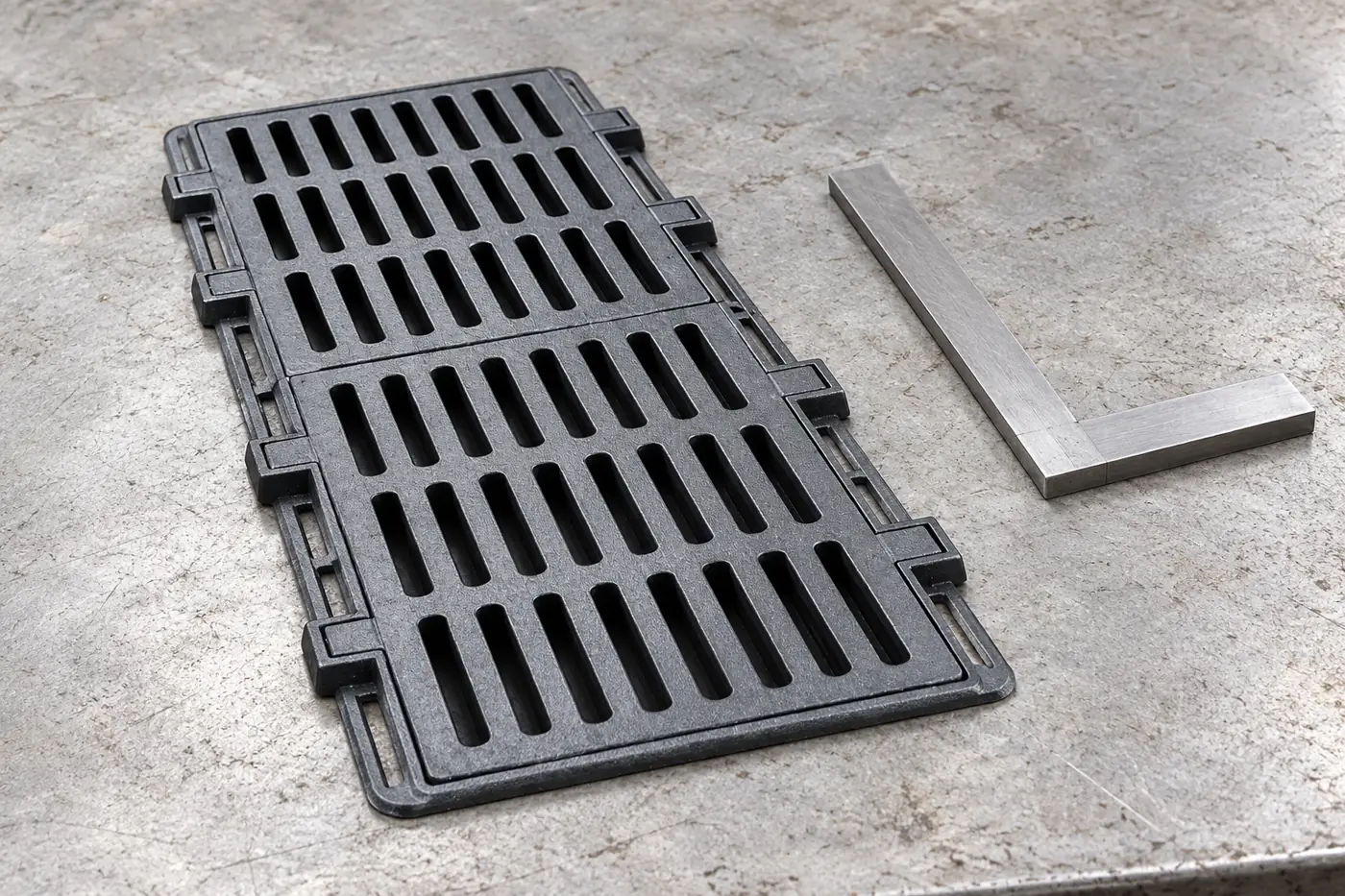
A plan view needs supporting sections. Show the underside bearing region, edge depth, locating tabs and relationship to the surrounding finished level. These details explain how the casting transfers load to the installation and how it can be removed for cleaning.
Where the project contains several similar gratings, use a location schedule that links each drawing and quantity to the correct opening. Keep orientation visible for asymmetric slot or retention arrangements. This avoids supplying an apparently identical top pattern that has the wrong seat depth or tab position for a particular channel.
08A CLEARER CASTING PURCHASE
Project approval follows identifiable evidence
Prepare the submission schedule before manufacture so the drawing, material information, required tests and fit evidence reach the project team at the right stage. A test summary is most useful when the product identity and supporting configuration can be traced to the submitted drawing.
Record any approved change to slot geometry, support width or frame interface. Those changes can affect the basis on which the product was accepted, even if the colour and outside appearance stay similar. Keep the final delivery configuration connected to the accepted evidence and the site installation schedule.
- 0101Release the location schedule and grating or frame drawings.
- 0202Agree material, fit and project-specific test submissions.
- 0303Resolve changes affecting slots, support or retention.
- 0404Deliver the approved configuration with its project identity.
09A CLEARER CASTING PURCHASE
Packing preserves seating edges and set identity
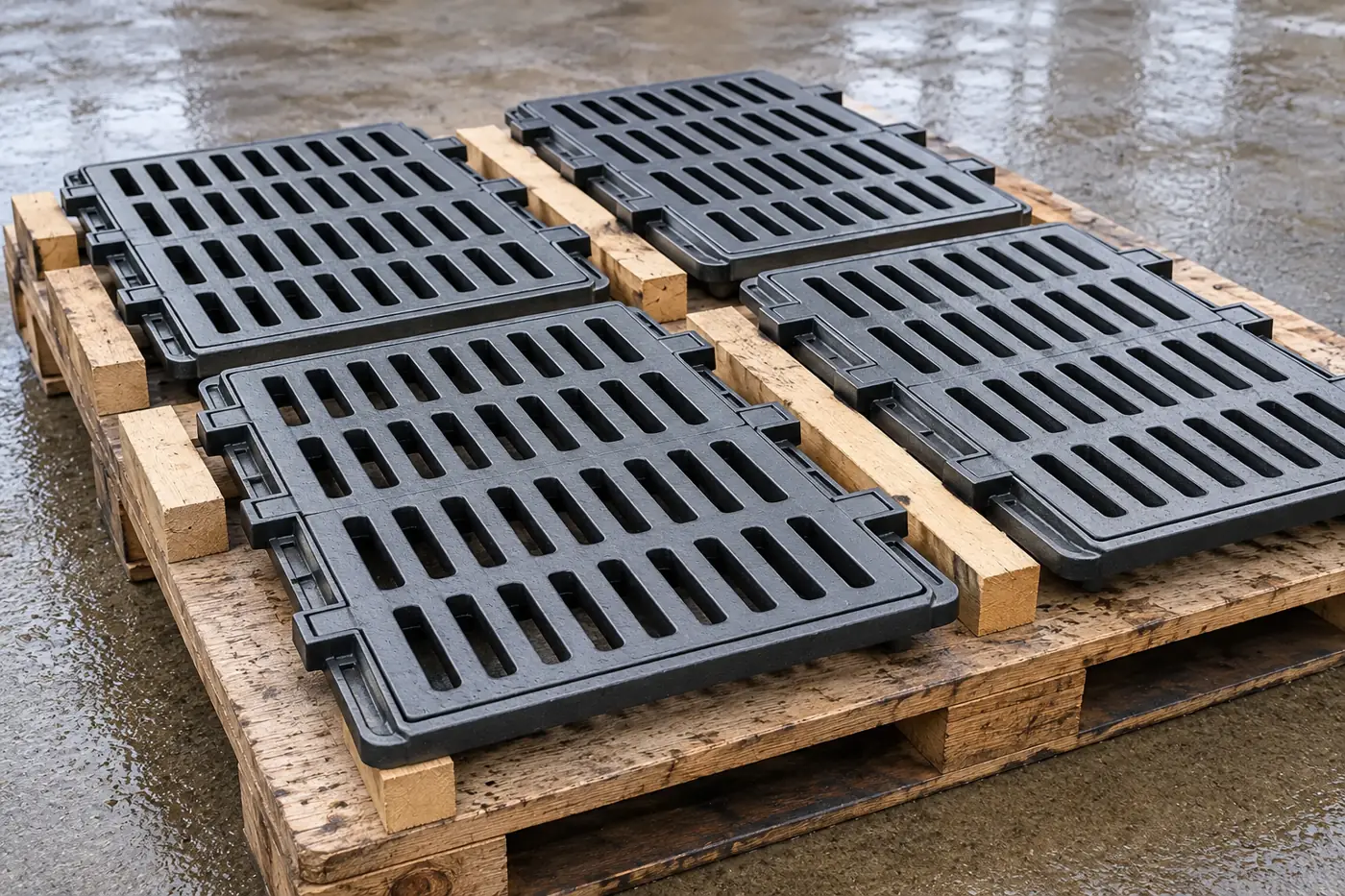
Gratings are frequently packed close together, making separation at the seating and finished edges important. Specify spacers and permitted contact regions so pieces do not abrade the surfaces that locate in the installation. Avoid loose restraint that allows a heavy grate to strike an adjoining frame during transport.
Where a matched frame is ordered, retain a clear set or component reference through dispatch and receipt. Your installation team should be able to identify the correct drawing and project location from the pack list. That is more useful than a generic label describing every item as a drain grate.
10A CLEARER CASTING PURCHASE
The project RFQ makes technical offers comparable
Send the location and quantity schedule, drawings and applicable project specification. Include the required loading assessment, slot and top-surface criteria, supporting geometry and whether the supply includes a frame. State the final finish and approval documents needed before dispatch.
We can review the custom sand-cast grating scope against that package. Keep product verification and installation responsibilities explicit so your project team can compare the supplied casting, any frame and the related evidence on the same basis, without assuming an unlisted load class or drainage capacity.
11 YOUR NEXT STEP
Bring your component into the conversation
Tell us which component you need, the material, quantity and required supplied condition. Relia will connect your enquiry with the casting, machining and evidence relevant to that part.
Technical reading and scope
Technical references explain the process. Component specifications and agreed order records define the actual supply.
Enterprise Singapore: EN 124-2 adoption scopeBSI: EN 1433 drainage-channel scopeFHWA: Safety of drainage inlets- [email protected]
- Phone
- +86 18561762631
- +1 404 203 0971
- Company and address
- Qingdao Relia Industries Co., Ltd.
Shuyuan Road, Qingdao, Shandong, China