
01A CLEARER CASTING PURCHASE
Ductile-Iron Tractor Brackets with Machined Fits
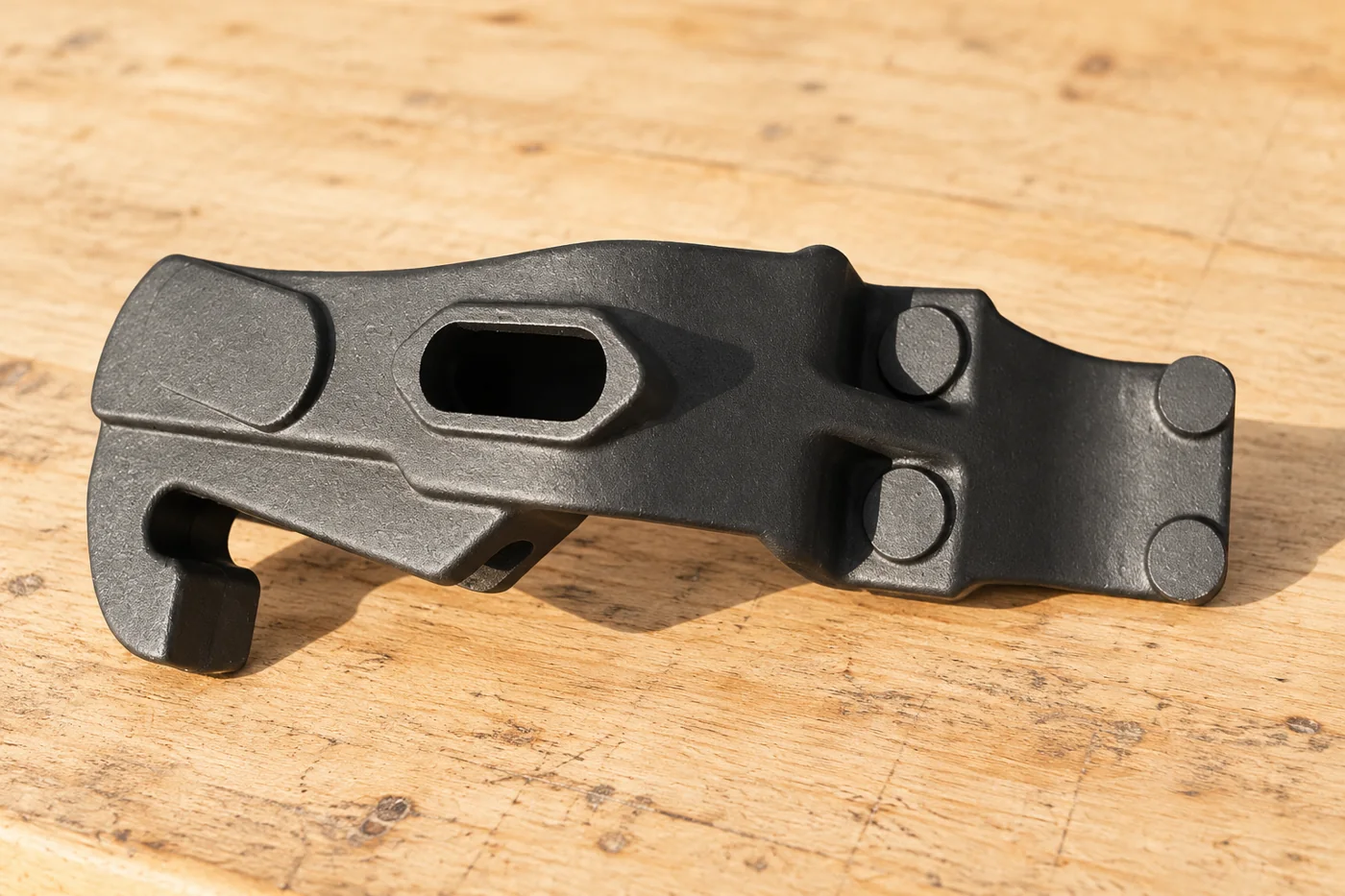
Buy the tractor support or bracket with its required connections finished. Relia’s agricultural range includes GGG40, GGG50 and GGG60, with ADI offered as a separate material route. Our own sand casting and machining production connects ribs and pads to pin bores and bolt patterns, followed by sample inspection and your approval before batch production.
- Parts
- Supports, plates + brackets
- Material
- Selected ductile iron or ADI
- Supply
- Cast body + CNC connections
02A CLEARER CASTING PURCHASE
A casting and machining package for tractor connections
Relia operates its own sand-casting and machining production in China. For tractor components, we offer CNC milling, boring, drilling and tapping around the selected ductile-iron casting. Coated-sand and shell moulding are our main production routes; the actual mould and core arrangement follows the bracket drawing. ADI is available for separately specified rods, support plates and brackets rather than being substituted for a conventional GGG grade.
A pin-loaded support, bolted plate and housing bracket place different demands on the casting. Relia can manufacture their cast sections and finished interfaces while your equipment design establishes the loads, clearances and connection arrangement. New components progress through drawing review, sample manufacture and inspection, customer confirmation and batch production. Real workshop photographs and dimensional or material inspection reports are available for procurement review.
03A CLEARER CASTING PURCHASE
Conventional ductile iron and ADI remain distinct
GGG40, GGG50 and GGG60 are catalogue grade references for conventional ductile-iron enquiries. The purchase drawing should retain the governing standard, edition and material condition rather than assume that a grade name alone defines every acceptance requirement. Strength, elongation and any specified hardness address different aspects of the design.
ADI adds an austempering treatment and a different microstructure; it is a separate engineering selection, not a higher-number substitute for GGG material. If ADI is selected, include the full grade and delivered condition, then plan machining around the treatment sequence and any dimensional movement of previously machined features.
| Material decision | Definition to retain |
|---|---|
| Conventional ductile iron | Selected GGG reference plus complete standard, condition and property requirements. |
| ADI bracket | Selected ADI grade with austempering condition and agreed final machining stage. |
| Material evidence | Relevant heat or batch identity, specimen basis and specified mechanical results. |
| Alternative proposal | Engineering assessment of properties, geometry and process together. |
04A CLEARER CASTING PURCHASE
Pin bores and seating pads need separate controls
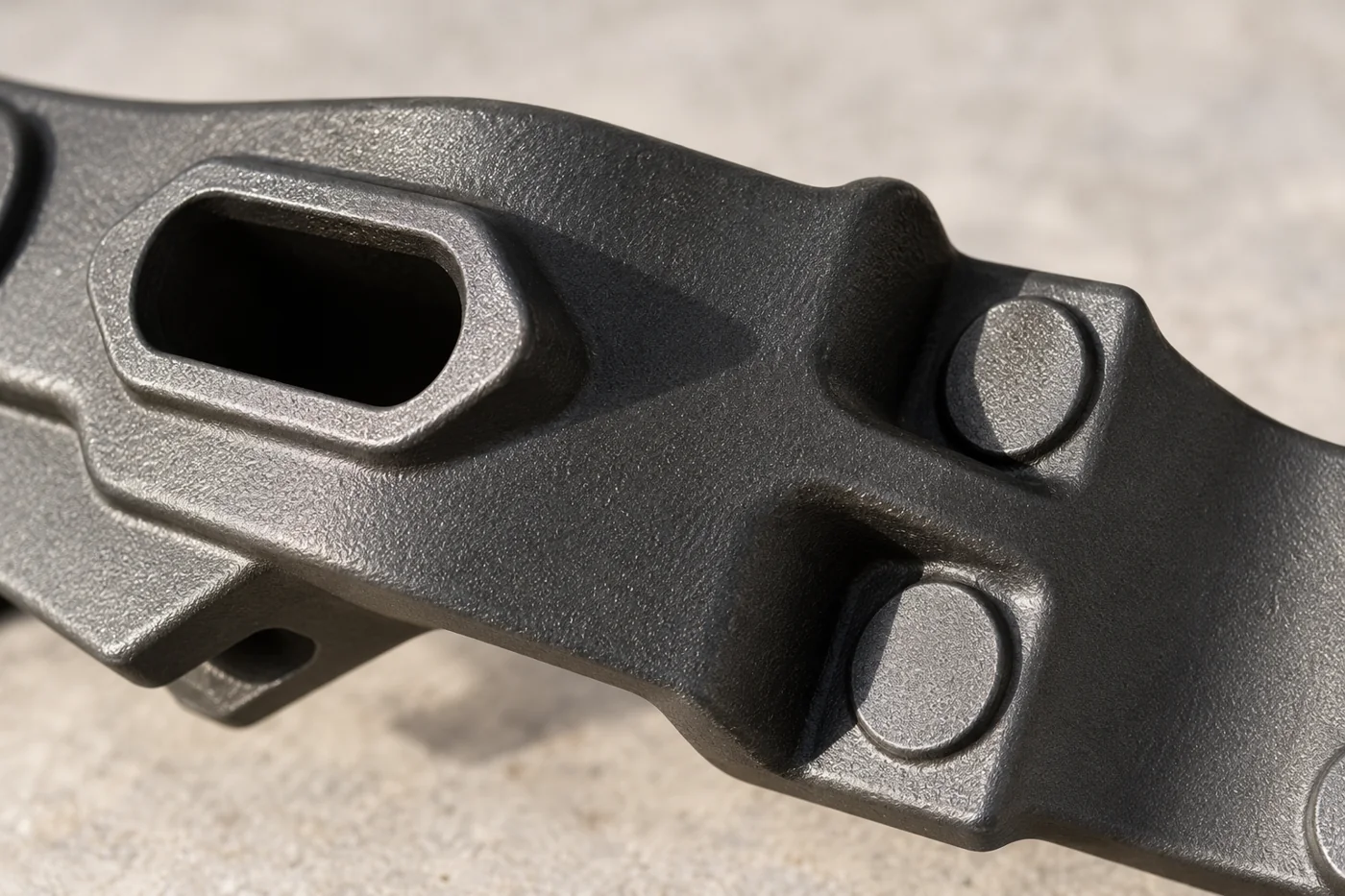
A bore diameter governs the size relationship to a pin or bush. It does not locate that bore relative to the mounting face. Similarly, correct bolt-hole sizes will not compensate for an incorrectly positioned pattern. Define the primary seating face and the secondary locating features, then dimension the functional relationships from those datums.
Specify whether the connection uses a plain pin, a pressed bush or a separate locating sleeve. Each arrangement changes the required finished bore and measurement state. A coated hole, a bare machined hole and a bush installed in that hole are three different acceptance conditions.
- Connection control
- Bore size and location are separate
- Mating arrangement
- Plain pin, bush or locating sleeve
05A CLEARER CASTING PURCHASE
Tooling and machining preserve the bracket load path
A bracket begins with the parting direction, rib transitions and machining stock at the mounting pads. A pin opening may be cast near shape with a core or produced by machining, depending on its geometry and quantity. That choice affects core support, cleanup access and how much stock remains around the finished bore. The casting proposal should preserve the section connecting the boss to the rib, rather than remove useful material merely to simplify a tool.
During mould filling and solidification, thick bosses and thin adjoining ribs behave differently. Tooling and feeding decisions therefore belong with the actual section layout. After shakeout and cleaning, gate-removal areas should remain outside controlled seating and load-carrying features. For ADI, the austempering and machining sequence also matters because the selected material condition and any dimensional movement affect final finishing.
Machining then establishes a usable seating datum before relating bores, pads and fastener patterns to it. The agricultural listing names up to IT7 and Ra0.8–3.2 for customer-selected machining requirements; these belong on identified features with a stated measurement convention. A sample inspection should connect those finished relationships to the same drawing and material condition that will govern batch supply.
- 01Plan the mould and stockKeep ribs continuous and leave finish stock at mounting features.
- 02Cast and clean the bodyForm the bracket and remove mould material without altering functional sections.
- 03Set the material conditionDeliver conventional ductile iron or the separately selected ADI condition.
- 04Machine connected featuresMake the bracket locate and fasten without forcing adjacent parts.
- 05Inspect the supplied stateMake sample approval usable for the later batch.
06A CLEARER CASTING PURCHASE
Part acceptance and assembly validation answer different needs
A material report demonstrates the specified tested properties on its stated specimen basis. A dimensional report demonstrates the measured drawing characteristics. Neither alone predicts the performance of a bracket under the complete tractor duty cycle.
For initial approval, connect a ballooned drawing to actual bore, pad and hole-pattern measurements. Where your design programme requires a proof load, fatigue test or equipment trial, define the fixture, applied load, acceptance criterion and inspected condition after the test. That gives the trial a meaningful purpose instead of treating a successful bolt-up as proof of long-term structural performance.
07A CLEARER CASTING PURCHASE
Ribs and openings stay connected to the model
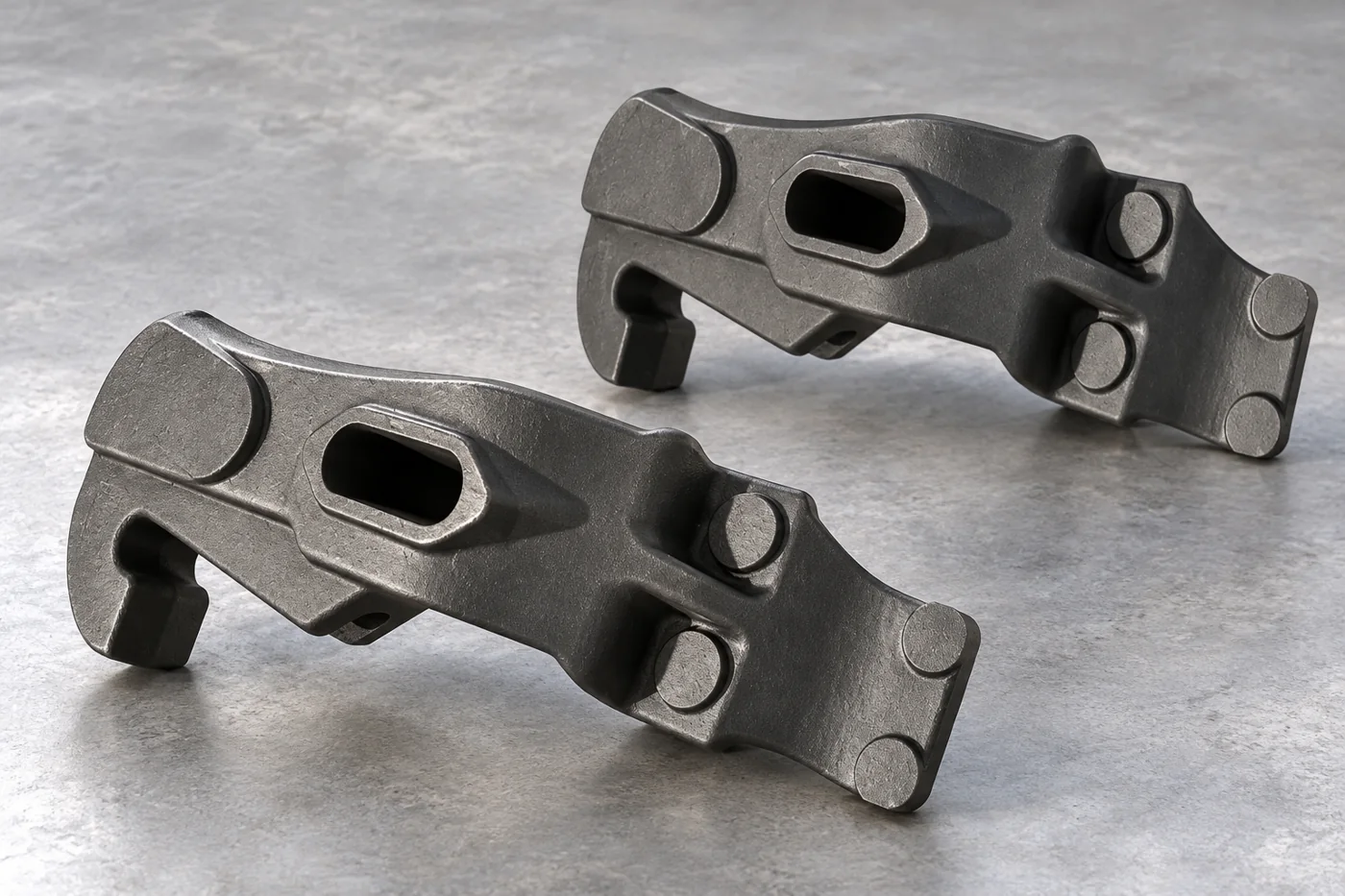
A full model exposes relationships that an isolated bracket photograph can hide: the rib beneath a pad, the remaining wall around a bore and the opening needed to reach a fastener. Include sections through crowded bosses and transitions so casting and machining proposals can be evaluated against the load-carrying shape.
Where a tooling change is proposed, identify the affected rib, wall or datum by drawing reference. Your team can then assess the effect on stiffness, assembly clearance and inspection before release. This is particularly useful when several similar brackets share a tractor platform but have different connections.
08A CLEARER CASTING PURCHASE
The finish respects the mounting surfaces
Our agricultural casting listing includes Dacromat coating and finish painting. Select the surface system for the actual iron substrate and exposure, then distinguish visible external areas from bearing contacts, threaded holes and locating faces. Coating build can change a close fit, and paint beneath a clamped connection changes the condition in which it seats.
Specify masking boundaries and whether critical dimensions are accepted before or after treatment. Record any permitted touch-up method on the same release. The sample then establishes an appearance and interface condition that repeat orders can reproduce without redefining the whole bracket.
- 0101Mark coating coverage, bare contacts and protected threads.
- 0202Set dimensional acceptance at the required finished stage.
- 0303Approve appearance and interface condition on the sample.
- 0404Carry the same finish and masking references into repeat orders.
09A CLEARER CASTING PURCHASE
Packing protects the installation references
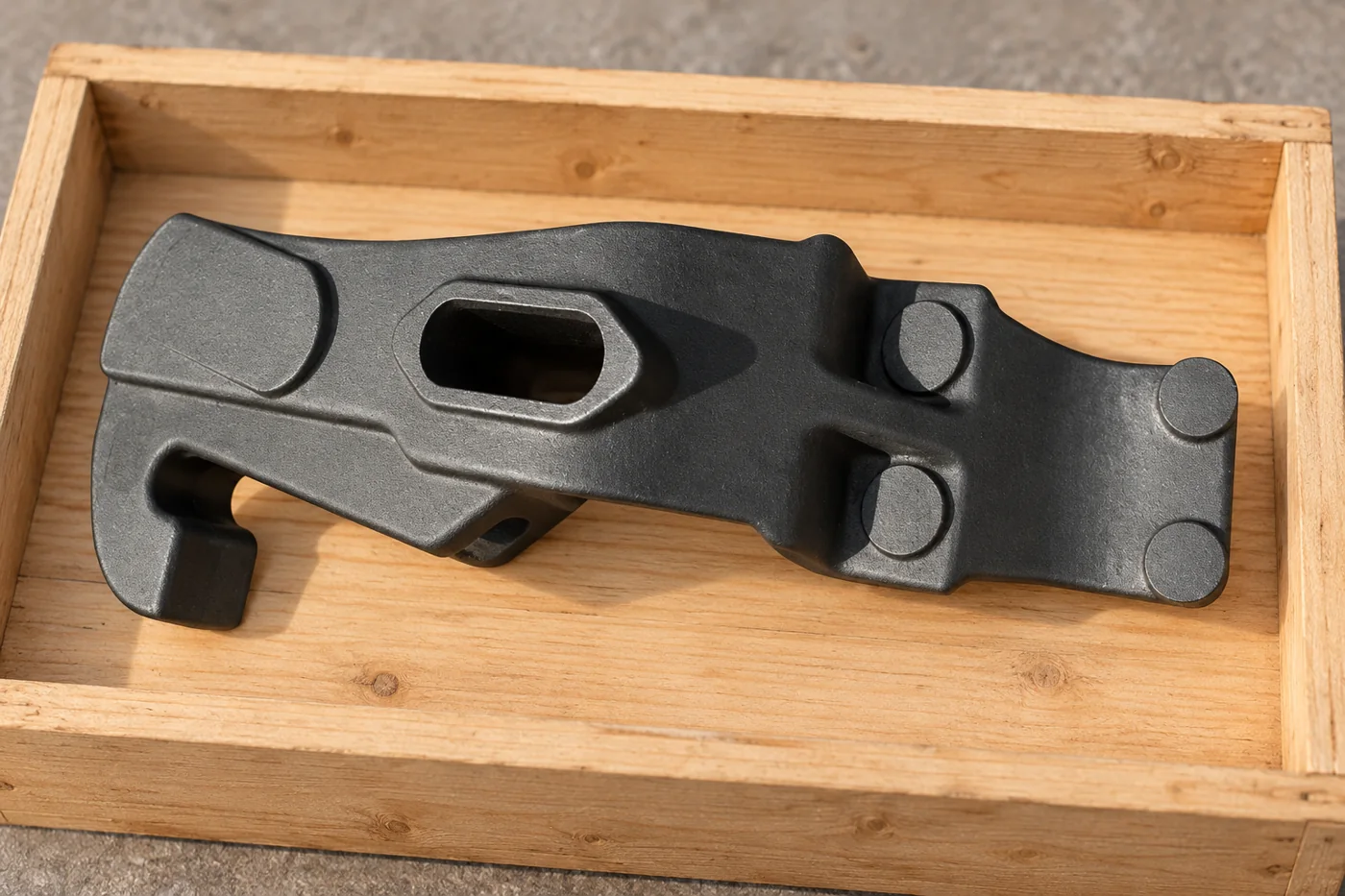
The listed packing arrangement uses a multilayer wooden box with a large inner plastic bag. For a machined bracket, the practical priorities are separating the pads and bores from adjacent castings and keeping the component from moving inside the box. Loose pieces can bruise a locating edge even when the outer crate remains intact.
Identify the surfaces that need corrosion protection and supports that may contact the cast body. Attach the part number, drawing revision and order identity to the pack list. Your receiving team can then match the protected part to its inspection record before it enters the assembly area.
- Protect
- Machined pads, bores and locating edges
- Identify
- Part number, drawing revision and order
10A CLEARER CASTING PURCHASE
A bracket quotation compares the complete deliverable
A useful quotation separates tooling, cast material, specified machining, finish and first-part evidence. Start with the actual bracket drawing and assembly connection, then retain one selected material route and delivered condition. Include sample and repeat quantities so the proposal can address the same approved component at each stage.
If you are evaluating a conventional ductile-iron bracket against ADI, keep the alternatives as distinct technical proposals with their own material and process basis. We can quote the relevant casting and machining scope while you compare the effect on fit, inspection and the intended tractor duty.
11 YOUR NEXT STEP
Bring your component into the conversation
Tell us which component you need, the material, quantity and required supplied condition. Relia will connect your enquiry with the casting, machining and evidence relevant to that part.
Technical reading and scope
Technical references explain the process. Component specifications and agreed order records define the actual supply.
AFS/SFSA: ADI casting, machining and heat-treatment planningISO1101: Geometrical specificationAFS: Shell process, tooling and coremaking- [email protected]
- Phone
- +86 18561762631
- +1 404 203 0971
- Company and address
- Qingdao Relia Industries Co., Ltd.
Shuyuan Road, Qingdao, Shandong, China