
01A CLEARER CASTING PURCHASE
Replacement Exhaust Manifolds for Thermal Duty
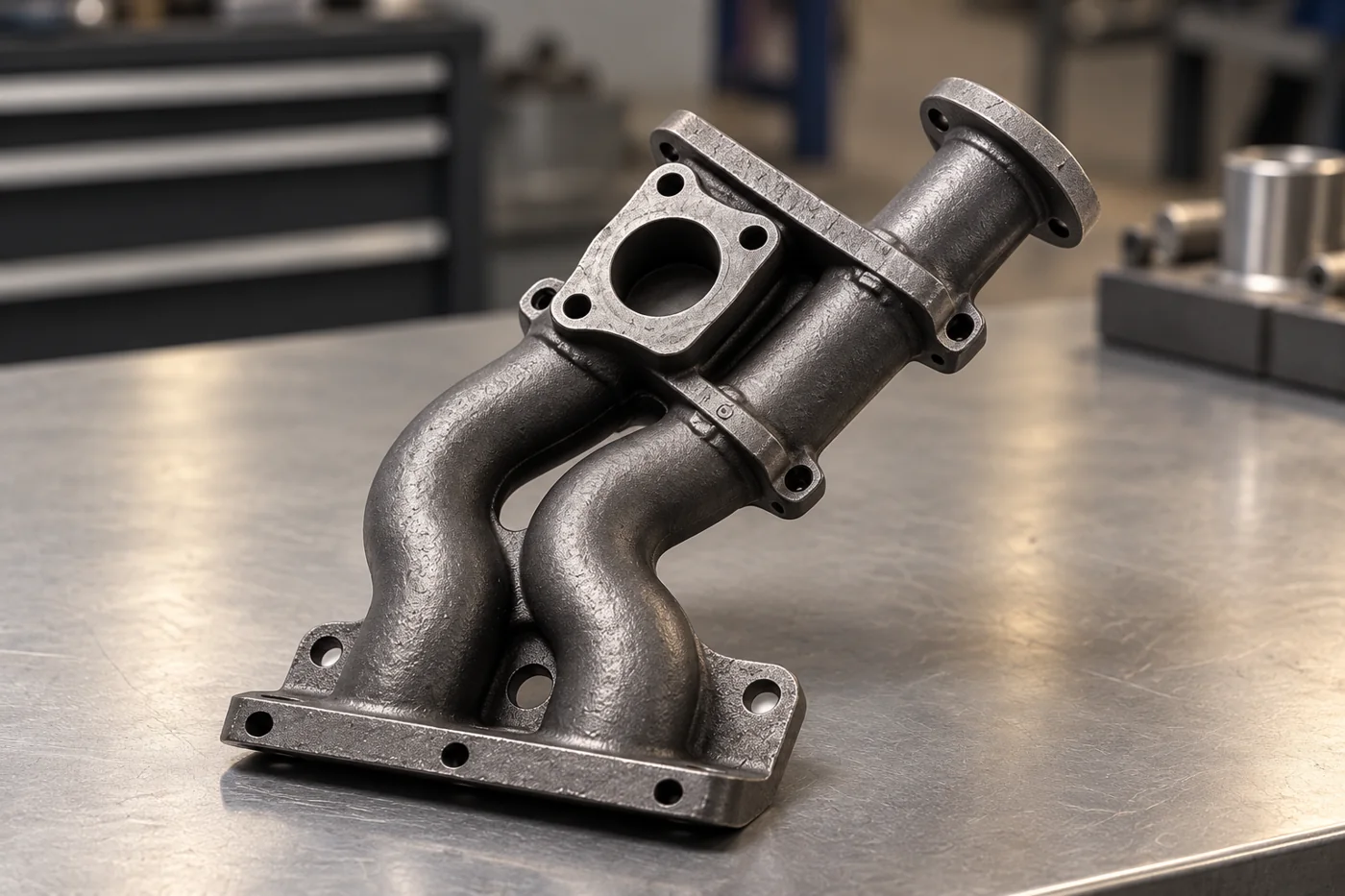
Build the replacement around the manifold’s heating cycle and actual engine connections. Relia offers cast-iron exhaust-manifold enquiries with mould work, selected casting and CNC services. Bring the crack location, released geometry and service history, then define the material and finished flanges. This supports a component-specific replacement proposal without assuming that added thickness or a reference engine name establishes fit or life.
- Review
- Thermal cycle + restraint
- Define
- Branches + engine interfaces
- Supply
- Selected grade + finished flanges
02A CLEARER CASTING PURCHASE
The service cycle explains the thermal restraint
Relia’s manifold offering connects the selected material and casting route to the machined engine and pipe interfaces. Sample manufacture and inspection precede customer confirmation and batch production, with the actual design-validation requirements kept explicit.
Record cold start, warm-up, sustained operation, shutdown and any rapid temperature changes relevant to the failure. Temperature varies through the branches and walls; adjoining regions do not necessarily expand at the same time. Restraint from flanges and connections can convert that movement into stress and repeated inelastic strain.
Technical manifold research includes the cylinder-head connection, gasket and fasteners when evaluating thermo-mechanical fatigue. Use that assembly perspective in the replacement brief. A peak gas temperature alone misses the heating/cooling history and contact constraints that can influence the actual crack location.
03A CLEARER CASTING PURCHASE
Fixed interfaces define the permissible redesign
Retain port shape and position, cylinder-head fastening geometry, outlet connection and installation envelope. Identify the regions that cannot change and those available for design review. This keeps the replacement compatible with the intended assembly definition while allowing a proposed local change to be evaluated explicitly.
Do not reconstruct the new manifold simply by copying a distorted or cracked part. Separate measured service damage from the required new geometry. A released drawing can preserve the original interfaces while identifying revised wall sections, transitions or supports that your engineering team chooses to assess.
| Interface | Required reference |
|---|---|
| Head interface | Port location, mounting pattern and required sealing-face geometry. |
| Outlet interface | Mating face, connection dimensions and downstream arrangement. |
| Envelope | Clearance to adjoining structures, heat shields and service access. |
| Change zones | Explicitly identified wall or transition changes under engineering control. |
04A CLEARER CASTING PURCHASE
Wall transitions affect heat flow and stiffness
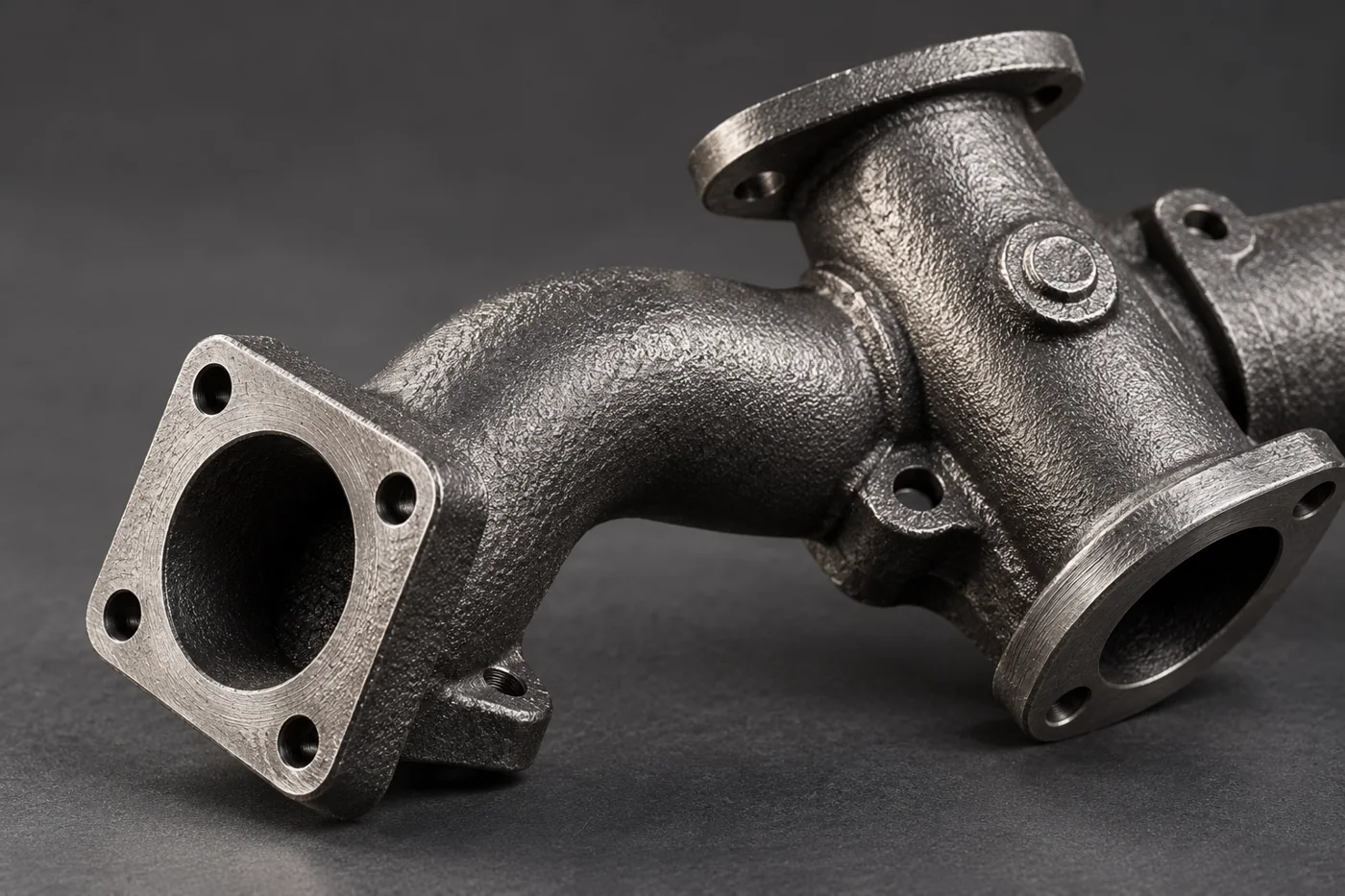
Thicker material changes both thermal response and stiffness; it is not a universal correction for thermal fatigue. A local heavy section can heat differently from a thin branch, while a sharp transition can concentrate deformation. Show the sections around the crack and any proposed thickness change in the complete model.
The same review should consider assembly restraint and external loading. Published manifold investigations demonstrate that mechanical vibration can combine with thermal stress. Treat that as a reason to examine the actual system, not as a diagnosis of your part. A controlled proposal keeps material, geometry and operating assumptions connected.
05A CLEARER CASTING PURCHASE
The selected alloy and route define the replacement
Our manifold catalogue distinguishes cast-iron requests from separate stainless-steel, aluminum-alloy and titanium-alloy enquiries. Select one complete material grade and delivered condition for the actual manifold. A material alternative should include the properties and service basis used by your design, rather than rely on the word heat-resistant alone.
The manufacturing scope includes mold work, CNC machining, five-axis milling and CNC-lathe processing for defined requests. Retain the actual compatible route in the quotation, with finished interfaces and inspection stages identified. The catalogue’s broad process terms should not become a mandatory sequence applied to every manifold.
- 01MaterialComplete grade, required condition and design-relevant acceptance.
- 02Cast bodyReleased branches, wall sections and transition geometry.
- 03Finished connectionsSpecified flange, port and fastening operations.
- 04EvidenceMaterial, dimensional and surface checks for the delivered version.
06A CLEARER CASTING PURCHASE
Flange machining preserves the sealing geometry
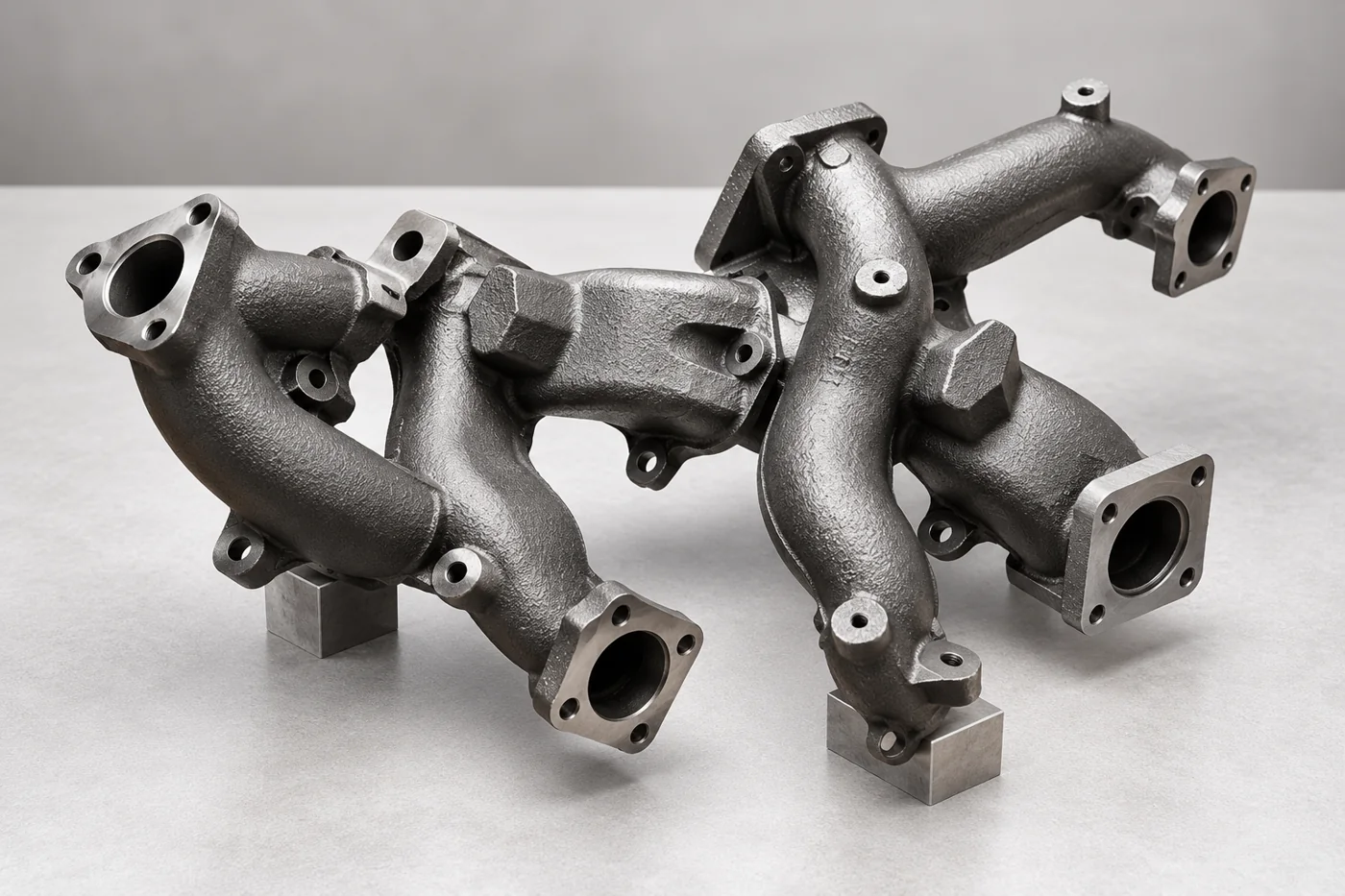
Mark sealing faces, port connections and fastener features with the datums and limits your assembly requires. A flat face and a correct hole pattern address different characteristics; both can matter when the manifold is clamped to the engine. Include the final acceptance condition and any surface requirement at the gasket contact.
Sandblasting and acid washing are named in the related listing. Specify their areas and required final condition without carrying a treatment into a functional contact by default. Any selected finish must suit the actual item and environment, especially where a hot working surface and an external appearance region have different needs.
07A CLEARER CASTING PURCHASE
Part inspection and thermal validation serve different decisions
Full-process inspection is named for the manifold enquiry, while testing in the KA24DE-reference range needs an agreed method and acceptance. Define the relevant material evidence, finished-interface measurements and any specified soundness checks for the supplied sample.
Then define the replacement validation in the intended assembly: temperature cycle, restraint, attached components, duration and acceptance observations. A room-temperature dimensional report cannot establish thermal-fatigue performance. Equally, an engine trial without a documented sample version makes it difficult to transfer findings into the next order. Connect the two evidence sets through a clear part identity.
08A CLEARER CASTING PURCHASE
Trial findings identify the next controlled version
Record the sample’s grade, treatment condition and drawing revision before installation. Retain initial measurements so post-trial distortion or local changes can be compared to a known baseline. Document the operating cycle and any changes to fasteners, gaskets, supports or downstream connections during the evaluation.
If the result leads to another proposal, identify whether the change concerns material, wall geometry or the assembly. The next release should contain the affected dimensions and checks. This creates a usable development record rather than repeatedly ordering a part described only as the stronger replacement.
- 0101Identify sample material, geometry and initial interface condition.
- 0202Run the agreed duty with recorded connection and operating conditions.
- 0303Inspect the specified crack, sealing and deformation outcomes.
- 0404Release the accepted version or a clearly defined next change.
09A CLEARER CASTING PURCHASE
Packing protects flanges and branch extremities
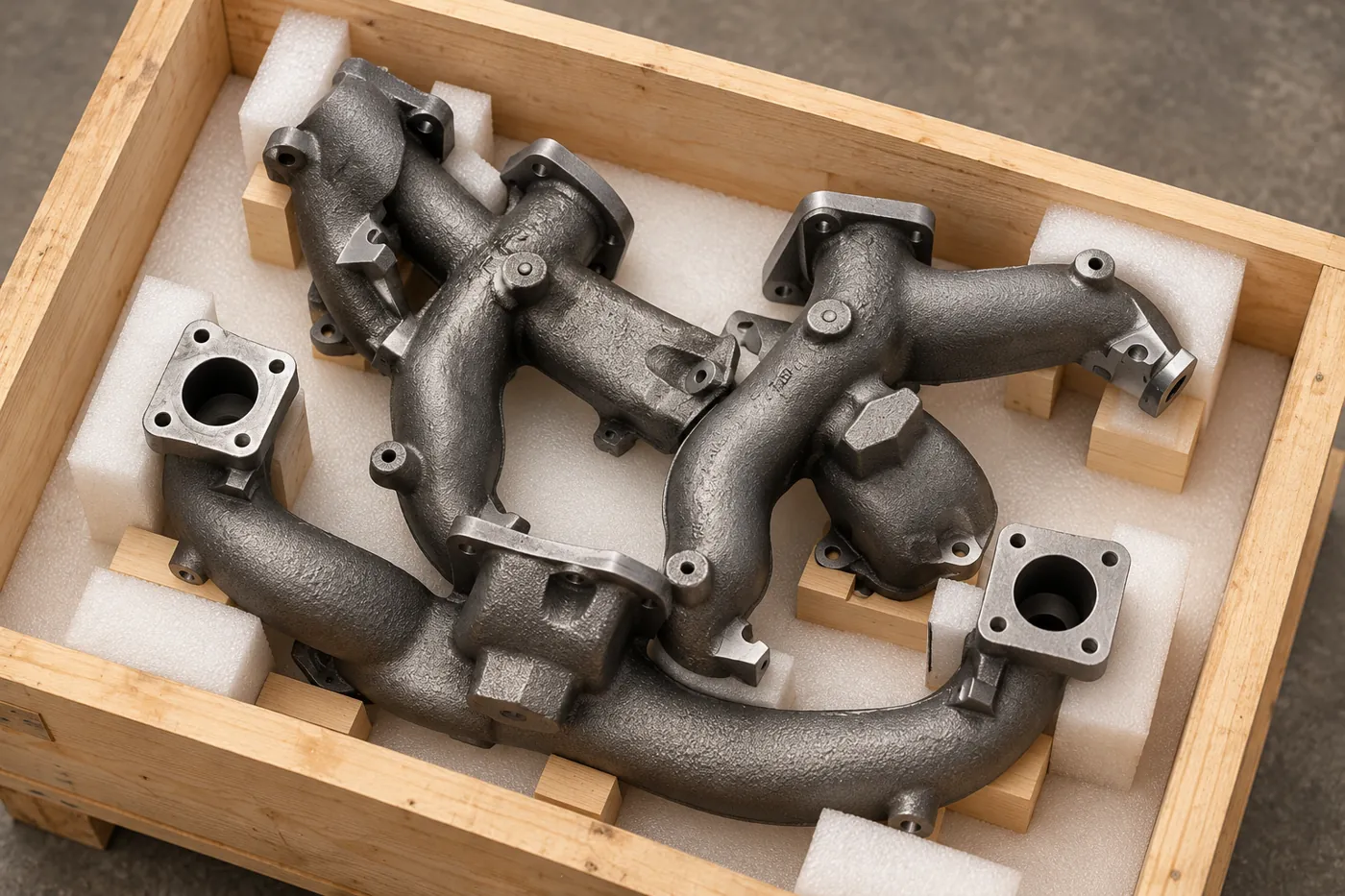
Support the manifold so transport loads do not concentrate on a branch end or a machined sealing face. Separate connection faces from rough castings and protect the openings against loose packing or contamination. Preserve any required corrosion protection without obscuring identification needed at receiving.
The package record should connect the part to its drawing and material version, especially where several trial manifolds are visually similar. Your team can then verify the correct sample and its documents before assembly, maintaining the link between manufacturing evidence and the planned thermal-cycle evaluation.
10A CLEARER CASTING PURCHASE
A replacement manifold RFQ includes the failure baseline
Send the controlled drawing, crack photographs, current material information and relevant assembly references. Add the service cycle, mounting constraints and the proposed replacement grade or geometry change. Include sample and repeat quantities with the required machining, finish and inspection scope.
We can review the actual casting and CNC package for that replacement. A useful first order establishes a manufactured sample and a measurable validation purpose; it does not assume that more thickness, a familiar engine reference or a generic material upgrade has already solved the service problem.
11 YOUR NEXT STEP
Bring your component into the conversation
Tell us which component you need, the material, quantity and required supplied condition. Relia will connect your enquiry with the casting, machining and evidence relevant to that part.
Technical reading and scope
Technical references explain the process. Component specifications and agreed order records define the actual supply.
SAE: Thermo-mechanical fatigue of cast exhaust manifoldsSAE: Combined manifold thermal and mechanical loading- [email protected]
- Phone
- +86 18561762631
- +1 404 203 0971
- Company and address
- Qingdao Relia Industries Co., Ltd.
Shuyuan Road, Qingdao, Shandong, China