
01A CLEARER CASTING PURCHASE
Iron Machine Beds with Machined Datums
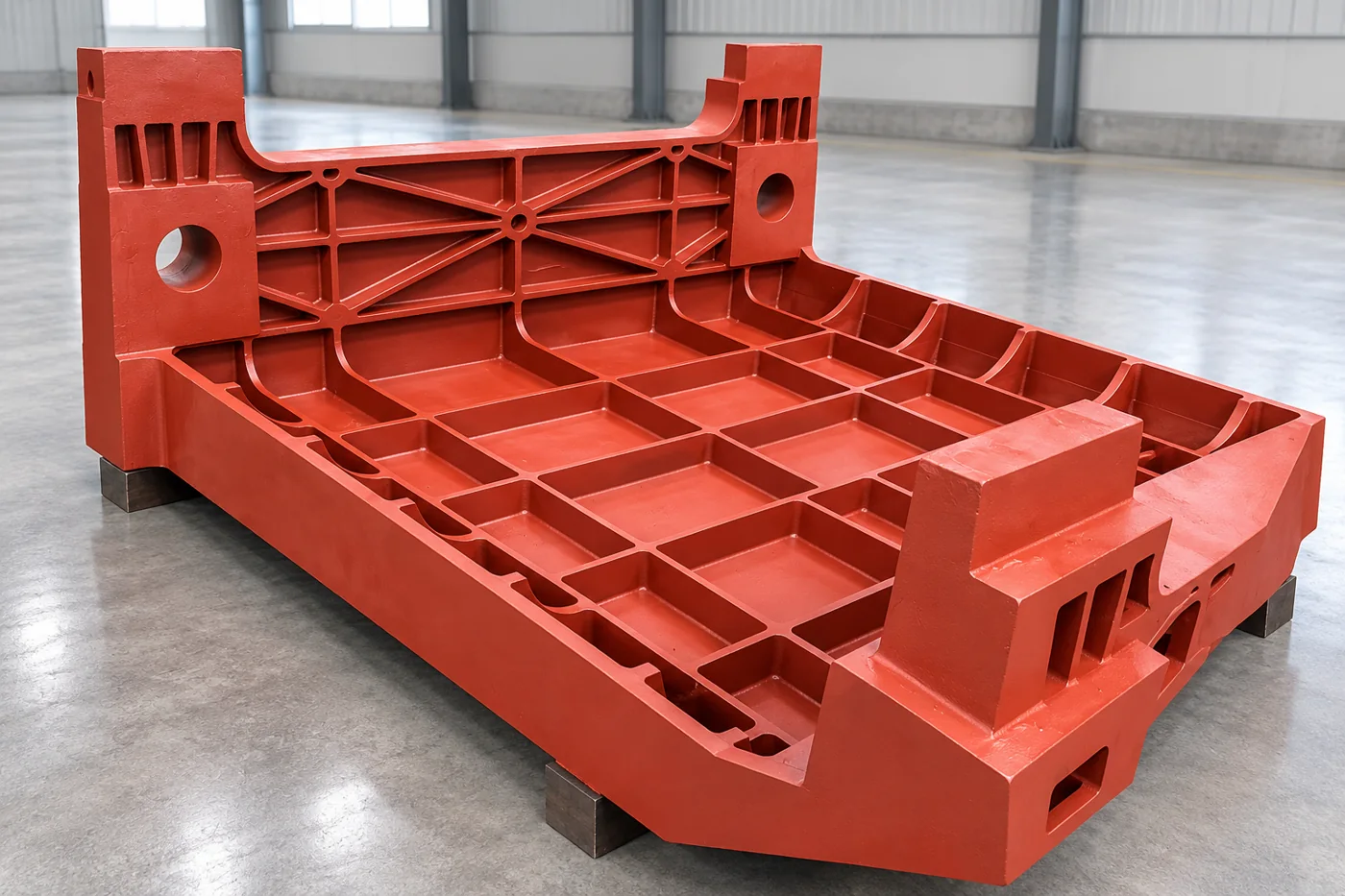
Buy the cast structure in the handover state your machine build needs. Relia offers iron beds, bodies and platforms through selected casting routes, with raw, rough-machined or nominated finished-interface scope. Connect the ribbed blank to guide lands, column seats and workholding references, so the sample checks both the structure and the datums used for installation.
- Structure
- Bed, body or platform
- Iron
- Selected grey / ductile iron
- Handover
- Blank, rough or finished
02A CLEARER CASTING PURCHASE
Machine structures with tooling and interface scope connected
Relia Casting's machine-bed range includes sand- and lost-foam-casting enquiries, with client-specific packing. Our large one-off sand scope lists wood and aluminum patterns, optional machining and selected surface preparation. We have our own sand-casting and machining production; the actual structure, envelope and supplied stage define the work package.
For a machine builder, guide lands, column/headstock seats, table contacts and base supports are the important map. Relia can provide real workshop/equipment photographs and material/dimensional reports for assessment. Those records need the support and final machining state used by your installation, so the component evidence explains the structure your assembly team receives.
03A CLEARER CASTING PURCHASE
The casting route carries the ribbed geometry into machining
A bed's underside, cavities and rib intersections can drive the moulding plan as much as the top surface. A sand route needs a pattern/parting and core arrangement that releases and supports those features; a lost-foam proposal uses its own forming approach. Our one-off sand offer includes wood or aluminum patterns, selected for the actual tooling use and structure.
Connect that tooling definition to local machining stock and accessible cleaning paths. After casting and preparation, the blank must leave sufficient metal where long datums and mounting features will be created. A useful handover record links the accepted pattern revision, cast geometry and stock-sensitive regions to the subsequent machining plan. This keeps an underside manufacturing change from quietly becoming a different machine structure.
- 01Structure modelRibs, cavities and fixed installation regions
- 02Forming routeSelected pattern/parting/core or lost-foam proposal
- 03Prepared blankClean access and stock at future references
- 04Machining handoverCast revision linked to the datum and removal plan
04A CLEARER CASTING PURCHASE
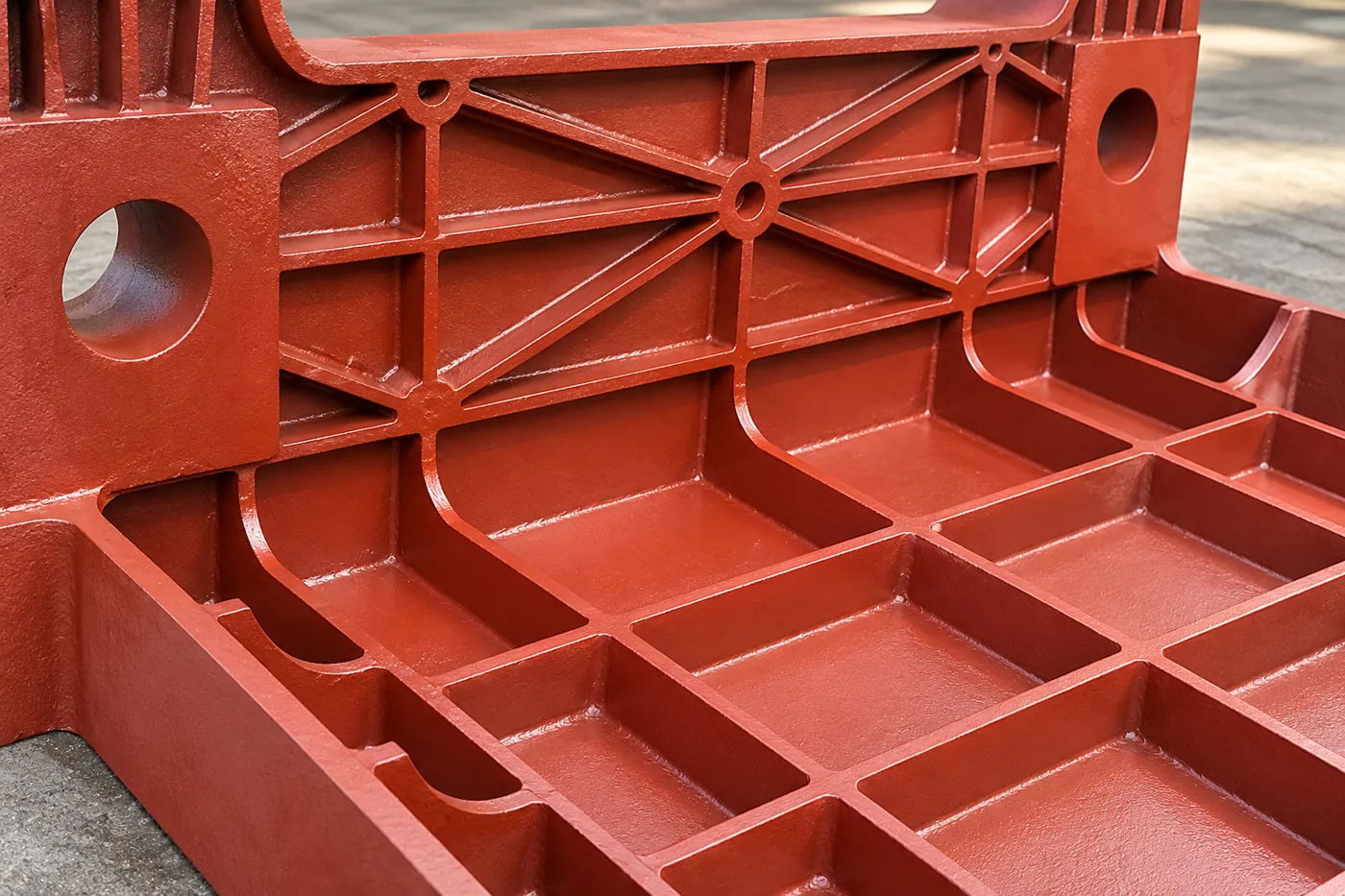
Rib junctions and access kept in the design review
Ribs distribute the structure's geometry and create local section changes. Show their intersections, wall transitions and openings so the casting proposal can address feeding, core location and cleaning access. The same detail affects tool and measurement access during later work.
If a rib or opening is changed for manufacture, assess its role in the machine structure before approval. Keep the accepted section and mounting relationships in the model rather than allowing an unseen underside change to become a different structural component.
- Structure
- Rib junctions and wall transitions
- Access
- Core removal, machining and measurement reach
05A CLEARER CASTING PURCHASE
Rough work and final machining need a deliberate sequence
Removing substantial metal can redistribute residual stresses in a casting. The sequence therefore deserves attention before final long datums are produced. State any required treatment, roughing allowance and hold or recheck stage in the process proposal, with evidence for the selected component.
We can quote the agreed casting and machining stages; a particular ageing or stress-relief route should be an explicit requirement rather than an assumed operation. Keep the final acceptance after the operations that could change the geometry being delivered.
| Stage | Decision to preserve |
|---|---|
| Cast condition | Selected iron and accepted blank geometry |
| Roughing stage | Planned stock removal and intermediate references |
| Required treatment | Specified condition, sequence and associated record |
| Final datums | Finished geometry and acceptance after relevant operations |
06A CLEARER CASTING PURCHASE
The measurement setup includes support and temperature
A large structure can present different geometry when supported at different points or restrained by clamps. Identify the support locations, orientation and any restraint used for acceptance. Use a repeatable setup rather than pulling a flexible region into a favourable reading.
Temperature also changes dimensions. NIST identifies a standard reference temperature for dimensional specification; the actual part condition and any relevant correction need to be understood. Record these conditions with long datum or plane results so your receiving team can compare the same geometry meaningfully.
07A CLEARER CASTING PURCHASE
Long datums checked as relationships rather than isolated spots
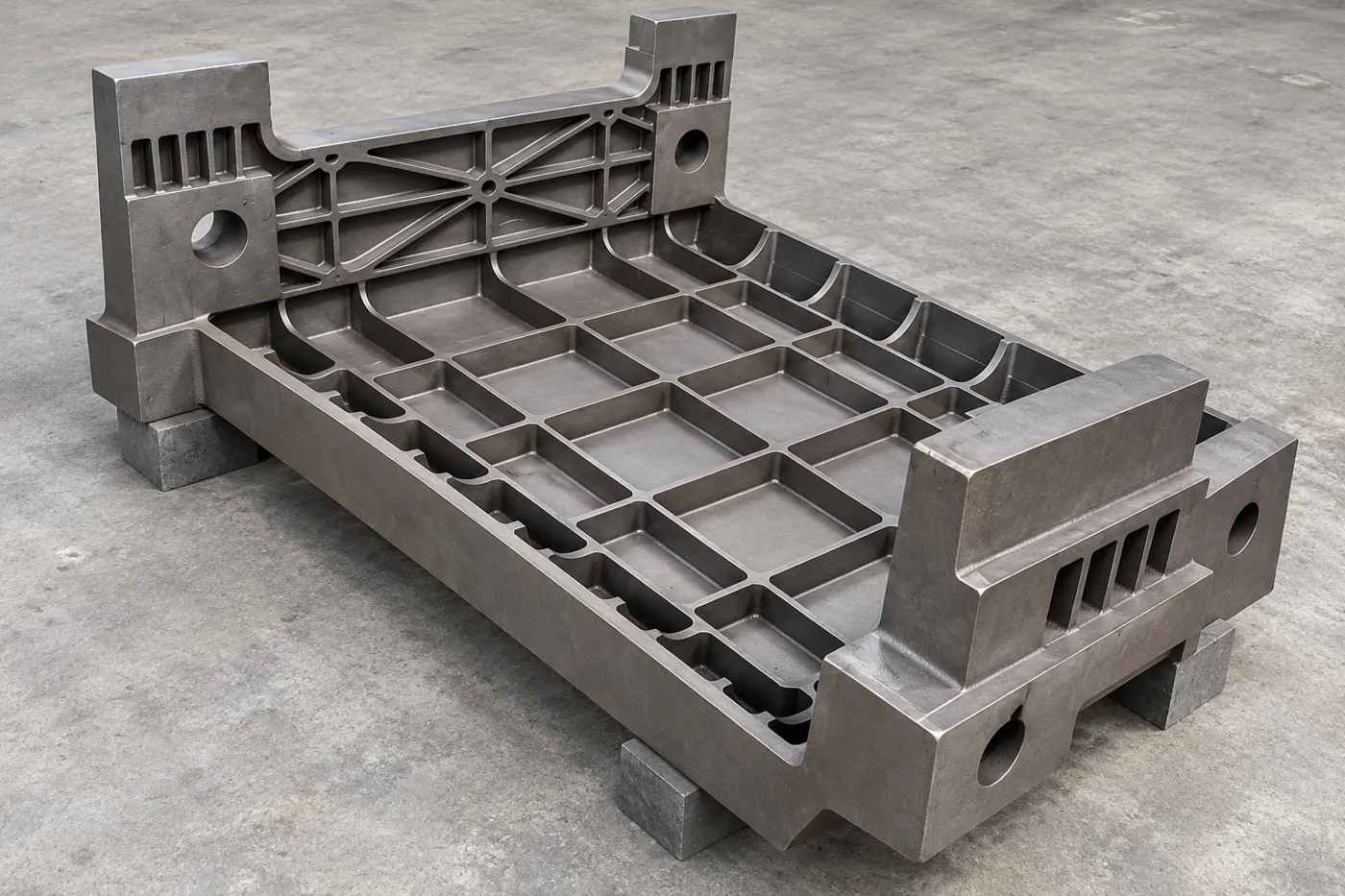
Give guide lands, table regions and mating pads their individual size and surface requirements plus the relationships between them. The inspection layout should show where readings are taken and how the datum is established across the structure. Measuring a few easy points can leave an important region unrepresented.
Relate hole patterns, locating features and mounting pads to these finished references. A useful report lets the machine builder understand how the bed or table will be located and assembled, while leaving the finished machine's operational evaluation to its own test plan.
- Long datums
- Measured relationships across the structure
- Support
- Specified measurement and installation references
08A CLEARER CASTING PURCHASE
Handling loads and transport supports planned before dispatch
Identify engineered lifting or handling arrangements from the actual design, together with receiving limits such as access, crane approach and support locations. A ribbed casting photograph does not identify a rated lifting point. Protect the surfaces that must not carry sling, clamp or packing contact.
The transport arrangement should support the component without concentrating load on a finished guide or unsupported wall. Record orientation and receiving support requirements so your team can unload and inspect the same delivered structure without introducing avoidable damage.
- 0101Use the actual design handling and support references
- 0202Keep lifting/packing contact away from protected datums
- 0303Agree transport orientation and receiving constraints
- 0404Retain identity and measurement/support records with delivery
09A CLEARER CASTING PURCHASE
Protection retains the final datum condition
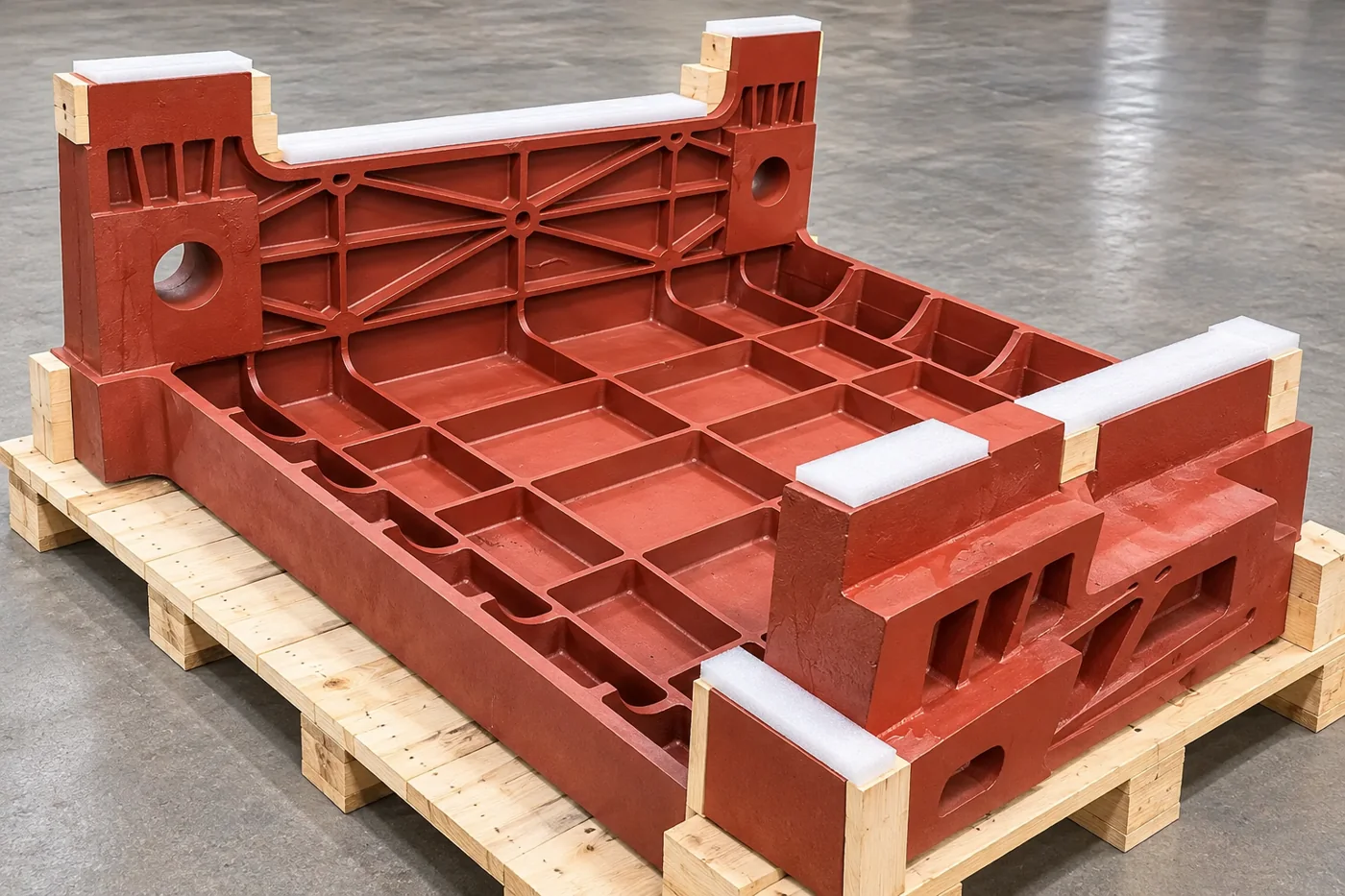
Anti-rust primer, shot blasting and sandblasting are listed options for suitable surfaces in the large-casting scope. Define the treatment boundary and masking around machined datums. A primer coating on an assembly reference can change how the structure seats or is measured.
Client-specific packing is available for the machine-bed enquiries. Protect finished lands against corrosion and impact, keep chips and loose abrasive out of cavities and maintain the agreed support arrangement. The next receiving operation should preserve the geometry established during final acceptance.
- Surface
- Selected blasting/primer with datum masking
- Delivery
- Preserve agreed support and finished lands
10A CLEARER CASTING PURCHASE
A delivered structure that supports the next machine-building stage
Relia can supply the agreed casting and machining stages as a coherent machine-structure package. The important outputs are the selected iron and section design, usable stock or completed references, a reproducible measurement state and supported delivery. That lets purchasing compare the same amount of remaining work at your plant.
For a new structure, the drawing review and inspected sample or first component lead to your confirmation before batch work. Keep any required treatment, intermediate recheck and long-datum acceptance explicit in that approval. The finished machine's alignment and operating test then build on an identifiable supplied structure rather than an undocumented workshop adjustment.
11 YOUR NEXT STEP
Bring your component into the conversation
Tell us which component you need, the material, quantity and required supplied condition. Relia will connect your enquiry with the casting, machining and evidence relevant to that part.
Technical reading and scope
Technical references explain the process. Component specifications and agreed order records define the actual supply.
Residual stress redistribution during casting machiningNIST — dimensional measurement reference temperature- [email protected]
- Phone
- +86 18561762631
- +1 404 203 0971
- Company and address
- Qingdao Relia Industries Co., Ltd.
Shuyuan Road, Qingdao, Shandong, China