
01A CLEARER CASTING PURCHASE
Metal Caster Components for Heat-Exposed Duty
Choose the wheel body or complete caster against its actual temperature and load duty. Relia’s range includes iron or steel wheel enquiries with selected bearing, guard, swivel and brake configurations. Define what is included, then identify the performance each part of that configuration must provide. A metal wheel alone does not establish the complete assembly’s heat capability.
- Deliverable
- Wheel body or caster
- Duty
- Temperature + load
- Configuration
- Bearing, mount + brake
02A CLEARER CASTING PURCHASE
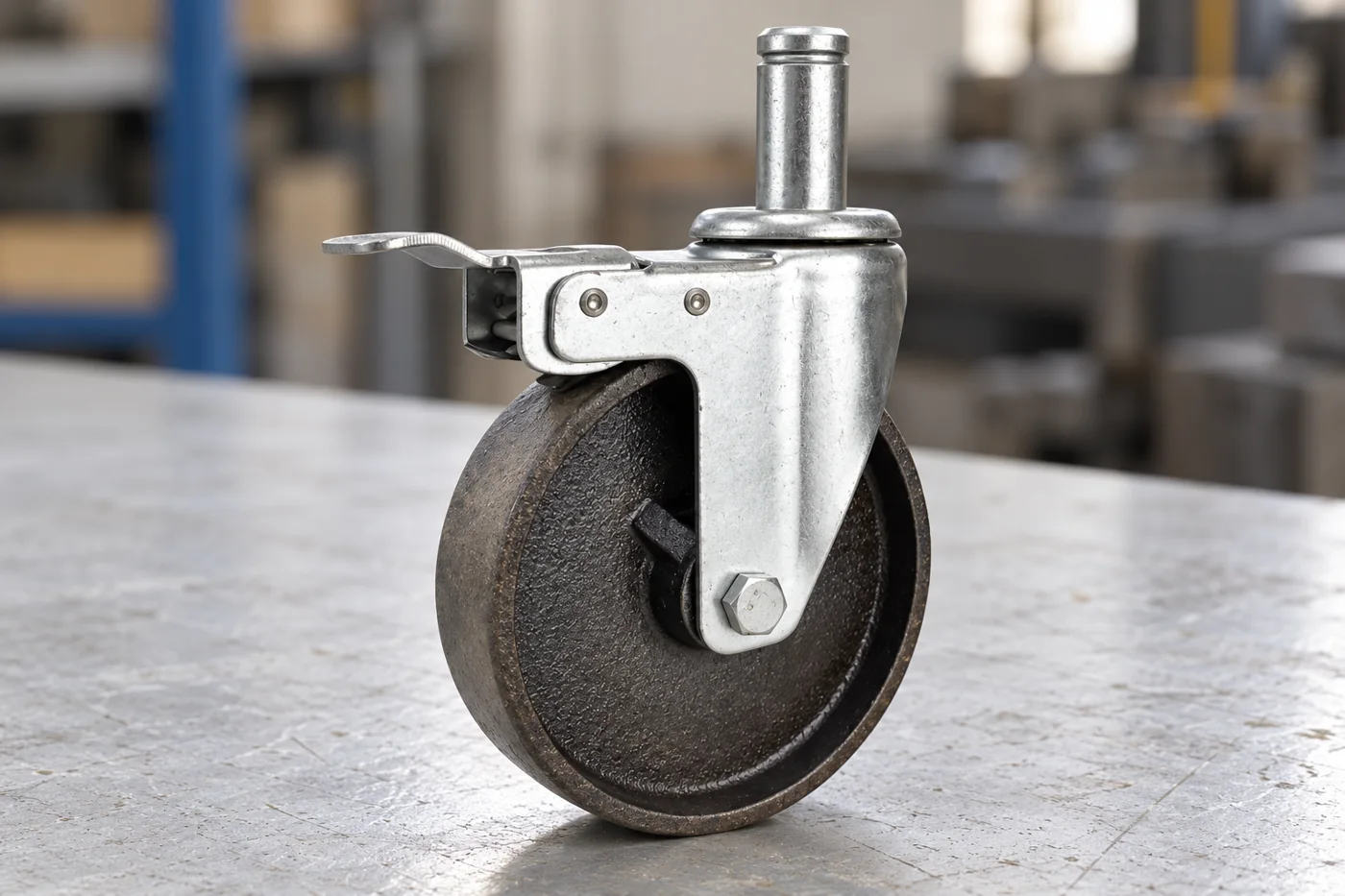
Cast wheel bodies and selected caster assemblies
Relia Casting's caster offer includes iron/steel wheels, double bearings, thread guards and rigid, swivel or braking configurations. Actual listed wheel diameters are 2.5, 3, 4 and 5 inches, with a stated 30 mm width. A wheel-body purchase and a complete caster purchase include different parts, and we keep that hardware schedule visible.
Our own sand-casting and machining production supports the wheel blank and nominated finished interfaces. For a complete unit, the selected fork/mount, bearings and brake need to work with that wheel under the specified duty. The exact temperature and load rating belongs to that configuration and its assessment; a metal rim alone does not establish the assembled caster's hot-service performance.
03A CLEARER CASTING PURCHASE
Temperature exposure and load described as one duty
State temperature in °C or °F, with continuous exposure, short peaks, dwell periods and whether the caster moves while hot. Include equipment dead weight, added load, supporting-wheel arrangement, travel speed, floor condition and obstacles. These inputs define the duty being purchased.
The complete arrangement must be assessed under that duty, including the bearing, lubricant and any brake components. An enquiry described only as high temperature or high load leaves the temperature unit, operating state and acceptance unresolved. Choose the required rating for the selected configuration and conditions.
04A CLEARER CASTING PURCHASE
Diameter and width set installation and contact geometry
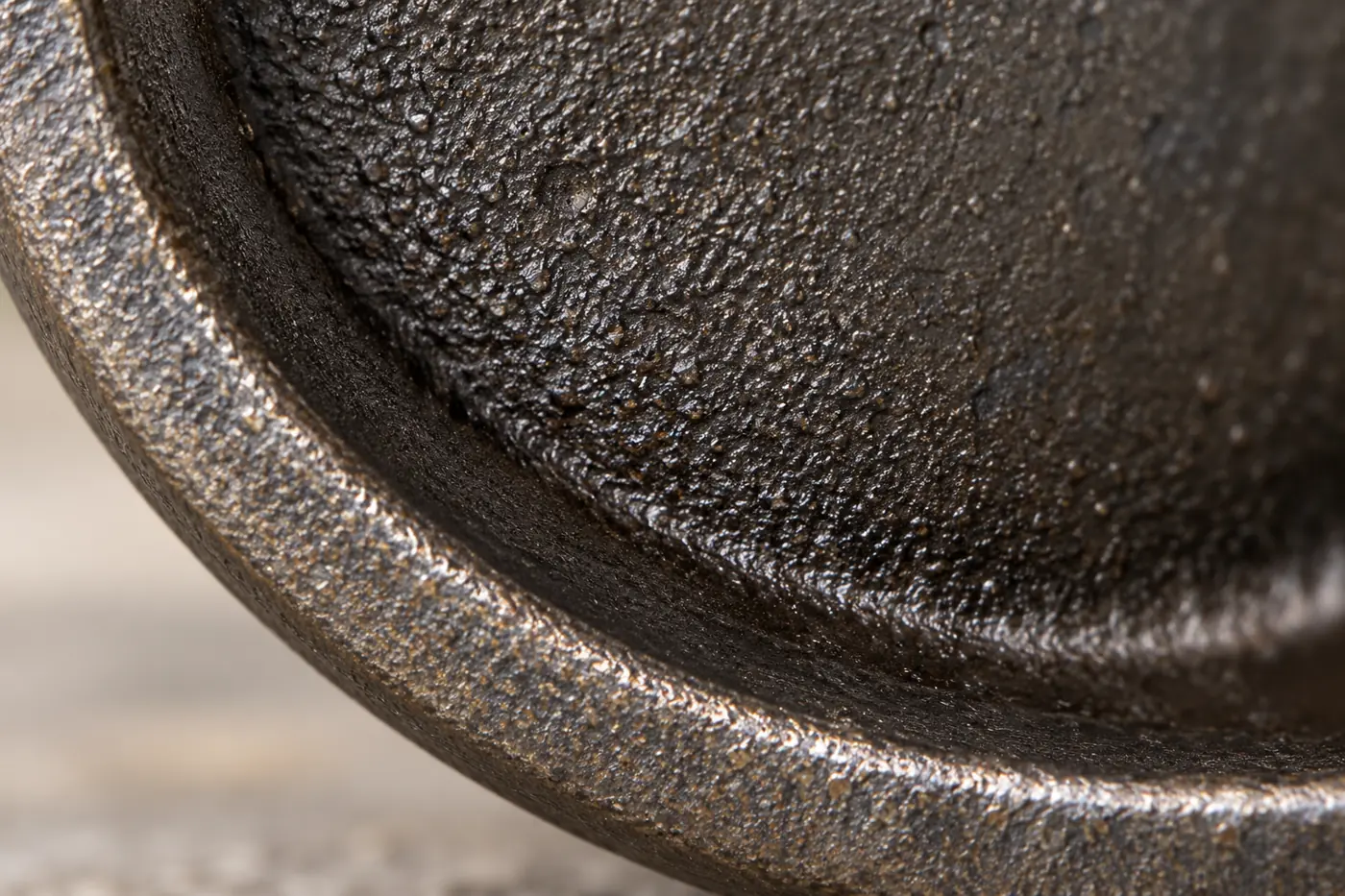
Actual catalogue diameter selections are 2.5, 3, 4 and 5 inches, with additional nominal size enquiries listed separately; the stated wheel width is 30 mm. Select the actual dimensions from the required installation and release them on the drawing.
Include the rim profile, contact condition, hub width and clearance inside the fork. A wheel that shares its outside diameter with another can still have the wrong axle fit or installed height. The visible wheel geometry must stay connected to the mounting arrangement selected for the equipment.
- Listed diameters
- 2.5, 3, 4, 5 inches
- Listed width
- 30 mm
05A CLEARER CASTING PURCHASE
The axle connection and equipment mount require separate checks
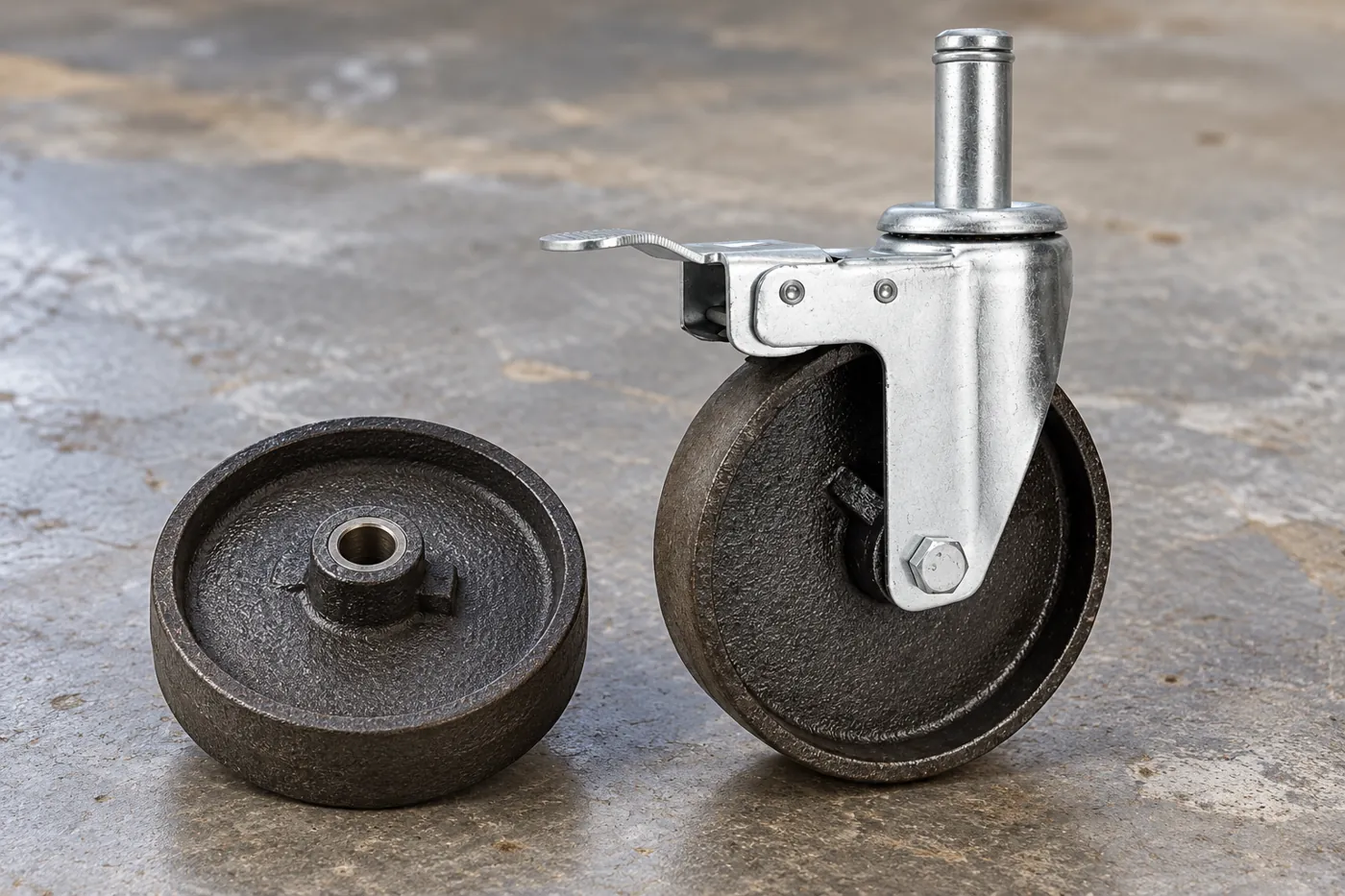
Specify the wheel's bearing seat or bore, axle interface and hub width, together with any spacers used by the assembly. If the complete caster is ordered, add the stem or plate geometry, mounting-hole pattern and installed height. Their functions differ and need separate acceptance features.
For a braked or swivelling caster, show required movement clearance and access to the brake control. The supplied configuration should keep the wheel free to move as intended without interference from the mounting or neighboring equipment.
| Assembly interface | Required definition |
|---|---|
| Wheel/axle | Bore or bearing-seat fit and hub width |
| Equipment mounting | Stem or plate, pattern and installed height |
| Movement envelope | Fork rotation, wheel clearance and neighboring parts |
| Brake access | Selected function and usable control position |
06A CLEARER CASTING PURCHASE
Make the wheel interfaces before assembling the selected hardware
The casting plan must preserve the rim and hub sections while leaving local stock at any finished axle or bearing location. After cleaning and gate removal, machine the selected bore or seat, hub width and locating faces from a coherent reference. Their relationship controls how the wheel sits on the axle and clears the fork; a correct outside diameter alone cannot establish that fit.
For a complete caster, the assembly plan adds the actual axle, bearings, guards, fork/mount and brake or swivel arrangement. Check the selected clearances and movement in that final configuration. Any required thermal/load evaluation then uses the stated exposure and operating condition, not a generic high-temperature label. The output is an identified wheel body or caster assembly, with its manufactured features and ordered functional evidence kept together.
- 01Cast the wheelRim/hub sections and local finishing stock
- 02Machine the interfacesBore/seat, width and locating relationships
- 03Assemble chosen hardwareActual bearings, guards, mount and function
- 04Check the selected dutyConfiguration-specific movement and ordered evaluation
07A CLEARER CASTING PURCHASE
The hardware schedule makes the quotation comparable
List the included wheel, axle, bearings, guards, fork or mounting parts and brake/swivel option. If hardware is supplied elsewhere, identify its controlling interface. This makes the price comparison meaningful without assuming a photograph establishes every component in an order.
For repeat purchases, keep diameter, width, installed height and mounting version together. A similar-looking caster with a different stem, bearing or brake arrangement can require a different assembly check. The schedule should make those differences visible before the shipment reaches your equipment line.
- Body scope
- Wheel and machined interfaces
- Assembly scope
- Selected mount, bearings and function
08A CLEARER CASTING PURCHASE
Component checks and caster-duty tests linked correctly
Accept wheel material and dimensions against the drawing. For a complete caster, add the selected mounting, movement and brake checks and any specified heat/load evaluation. ISO 22878 addresses caster/wheel test methods, while ISO 22883 has a defined industrial application and speed scope. Use the standard appropriate to the actual equipment.
Special heat duty needs stated conditions and acceptance in addition to a general standard reference. Identify sample configuration, load, movement and thermal exposure in the record, so the evidence describes the caster your equipment will use.
- 0101Accept wheel material, size and axle/mounting interfaces
- 0202Check selected rigid, swivel or braking function
- 0303Apply the defined duty/test specification to the actual assembly
- 0404Retain configuration, exposure conditions and accepted results
09A CLEARER CASTING PURCHASE
Packing preserves the selected moving assembly
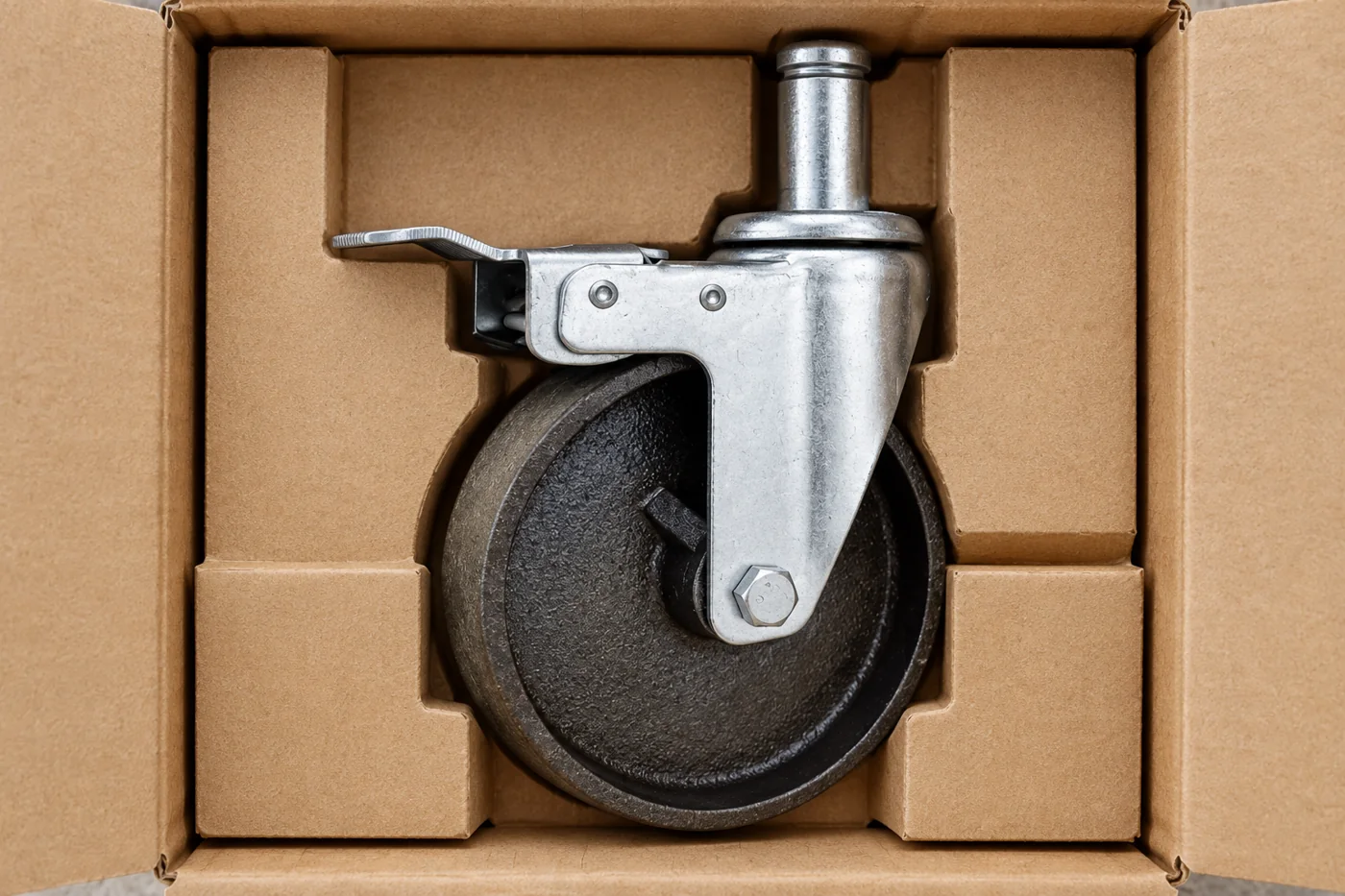
Protect wheel bores, mounting threads or plate faces and brake controls during delivery. Separate variants by configuration and identify the parts that arrive assembled or loose. Your receiving team should be able to reconcile the hardware schedule without treating similar wheel sizes as interchangeable.
If heat-duty service calls for a particular lubrication or supplied condition, retain it through packing and receipt. Keep the accepted component identity and required inspection records with that configuration before the caster is mounted on equipment.
- Protection
- Bores, mounts and brake controls
- Identity
- Hardware version retained through receipt
10A CLEARER CASTING PURCHASE
A configured caster that your equipment team can accept
Relia can supply the selected wheel or caster package with the material, size, mounting geometry and hardware schedule clearly identified. Real workshop/equipment photographs and material/dimensional reports are available for manufacturing assessment. A required hot-service rating needs the corresponding configuration and test conditions in the acceptance package.
Use the inspected sample and your equipment trial to confirm mounting clearance, movement and the specified duty before batch production. Keep later bearing, brake or mounting changes visible in the revision so a similar-looking wheel is not substituted for the assembly you accepted.
11 YOUR NEXT STEP
Bring your component into the conversation
Tell us which component you need, the material, quantity and required supplied condition. Relia will connect your enquiry with the casting, machining and evidence relevant to that part.
Technical reading and scope
Technical references explain the process. Component specifications and agreed order records define the actual supply.
ISO22878 — caster and wheel test methodsISO22883 — industrial caster/wheel requirement scope- [email protected]
- Phone
- +86 18561762631
- +1 404 203 0971
- Company and address
- Qingdao Relia Industries Co., Ltd.
Shuyuan Road, Qingdao, Shandong, China